Magnifica Humanitas: An Inside Look
Explore the wisdom of Pope Leo XIV's first encyclical, in which he considers the age of Artificial Intelligence and the possible effect of this new and powerful technology on the value of the individual and the function of society at large.
Transcript
Read the full transcriptAuto-generated · 1,483 words
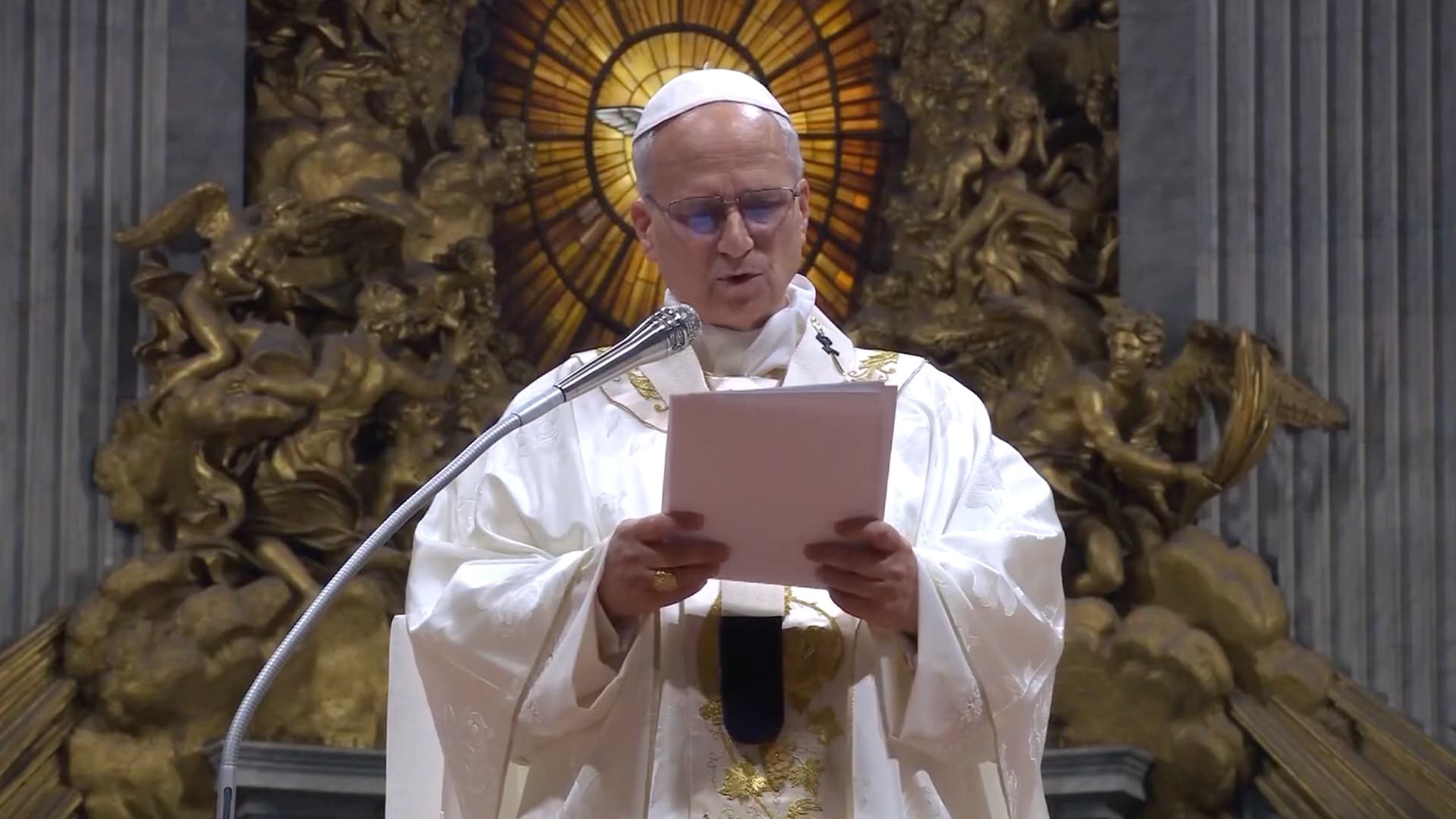
Imagine a world where medical choices, financial decisions, and even our deepest desires are filtered by an algorithm. This is not a distant future, it's our present. Artificial intelligence is reshaping the boundaries of existence, placing us at an epochal crossroads. In the face of this crucial challenge, the voice of the Church has been raised through the first encyclical entirely dedicated to the theme. Magnifica Humanitas, signed by Pope Leo XIV. A historic document that places the human person back at the center. To fully grasp this document, we must first understand the structural diagnosis of our era, a time where the underlying challenge is far deeper than the machines we build.
As sadly evidenced by the unbridled promotion and implementation of technology at the expense of human dignity, the damage caused when chatbots and other technologies exploit our need for human relationships, we are truly experiencing an eclipse of the sense of what it means to be human.
It is therefore all the more imperative to recover an understanding of the true meaning and grandeur of humanity as intended by God. It is in this sense that the challenge we currently face is not technological, but anthropological. When evaluating artificial intelligence, we must move past the illusion that technology is merely an objective, innocent tool.
Its very implementation carries a choice about the type of world we wish to build, demanding high moral responsibility. Artificial intelligence now demands to be disarmed. Freed from logics that turn it into an instrument of domination, exclusion, and death.
Like nuclear energy, it must be at the service of all and of the common good. Decisions about technology must never be separated from conscience and responsibility. Artificial intelligence, in the view of Pope Leo XIV, is an instrument. Every instrument can be used for good or evil. At the same time, not every instrument is just neutral. If we think about the nuclear weapons, well, if I use nuclear power, I'm accepting something that is very destructive for humanity somehow. So, maybe there are instruments that we should stop using.
The risk extends far beyond the tool itself. It threatens human agency. By delegating our most vital choices, such as clinical diagnoses or financial planning, to mathematical probabilities, we risk trading human critical thought for passive compliance. And it should not be separated from the integral development of people and communities. It should be avoided that in the overload of information and in the void of wisdom, new forms of dehumanization, It could also lead us to be unable to understand reality. The problem with the critical thought is that maybe I would take for granted what artificial intelligence is telling me, and it will come for financial decisions, it will come as a result for medical decisions, and I will just trust artificial intelligence.
It is an important instrument, but also we need to think carefully how we want to use it, and we want to understand in which cases we should not give our trust to the judgment of artificial intelligence. This is somehow what the Pope is trying to help us to think about.
Ethical abdication shifts directly onto a global geopolitical scale. Large digital platforms have acquired unprecedented power, bypassing traditional civic accountability and creating a massive accumulation of data that can easily turn into an unmanageable modern idol. How can we ensure that the development of artificial intelligence truly serves the common good?
And it's not just used to accumulate wealth and power in the hands of a few. As I'm sure you're aware, the commodity that's most valuable today on the markets is precisely in the area of artificial intelligence. I hear very troubling accounts of algorithms that can block access to health care, employment, and security on the basis of data tainted by prejudice and injustice.
And I've heard the silence of those who have no voice when decisions are made. We can use artificial intelligence to lead the life of people, and therefore, sometimes it could happen that we will be unable to take a decision for our life, especially when I will trust my whole life and desires and possibilities and dreams to this artificial intelligence. Then, the owners of these big data companies, they will know a lot about us. We should not be afraid of artificial intelligence in the sense that this could be something that is against humanity, but at the same time, we need to be conscious about the best way to use it.
Pope Leo XIV is trying to say in Magnifica Humanitas is that we should consider that the digital platforms can become... Even more powerful than nations. The capacity of these tech companies to own the data and to own the trends of society is very big, and they don't need to answer to voters. They don't need to answer to investors. They don't need to answer to nobody but to them. So, that's why the Pope is asking.
That we should think about this, because if not, we always have the risk to create a sort of an idol, someone that is so powerful that I just go with it because I cannot control it. It's not to be afraid. The Pope is very positive with this artificial intelligence, but he's just saying, okay, watch out that we should not become like slaves to a platform that we don't know.
Where this power hits closest to home is the workplace. The Christian perspective dictates that advanced automation must never become a convenient excuse to cast aside human workers for profit, but should instead expand human capability and social equity. Artificial intelligence, in the view of Paul Leofortin, can be a great help to humanity, but we need to be sure that we have people in front of this artificial intelligence. And I give you an example. One of my friends, he has a big, he's a lawyer, so he has a big firm, and he told me, now with the artificial intelligence, I'm doing things faster and better.
And I think I will just get rid of some of my employees. And he spoke with his partner, and the partner told him, you're not thinking as a Christian. You're not thinking as someone who believes in God. I mean, if we can do more things thanks to artificial intelligence, the answer is not to get rid of the people. The answer is to do more things with the artificial intelligence. So, if society would stop, Instead of helping human beings, because we can do more things thanks to these instruments, then we fall into an idol, and we are not doing this harmony and understanding between humanity and technology.
And this is what we need, to put people in front of everything we do. In the final analysis, the Church emphasizes that technology contains an inherent potential for higher spiritual integration. Rather than operating as a mechanical threat, the digital ecosystem can be elevated into a profound environment of communion and shared purpose.
The Church wishes, with humility and frankness, to be part of conversations on artificial intelligence. We do not possess the technical answers, nor do we seek to displace those with expertise. But we bring a wisdom concerning the human that our present time desperately needs.
Every person is unique and irreplaceable, a free and intelligent subject with a conscience, capable of seeking God, serving one another. Caring for our common home. Magnifico Manitas is an encyclical that is not only about artificial intelligence. The milestone of this encyclical is human work, is the capacity to find God in these platforms. And I think for the church, it's a great opportunity to transmit her message. Her spiritual mission, and to be present there. The dream is to write to evangelize, thanks to this artificial intelligence.
And as believers, we can use it for a great good. So, the more and the better we use it, the best will be for the rest of humanity. So, the Pope is very positive. And on the one hand, we should not be just super optimistic, as the Pope is saying. On the other hand, we should not be afraid. But we can learn how to use this for the service of the Kingdom of God, and this is part of the call.
We're brought right back to our starting point. Every day, artificial intelligence interfaces with our personal and collective reality, shifting our ethical and economic paradigms. The baseline question remains entirely open. Will we allow this technology to erect an isolated digital tower, or will we direct it to build an authentic home for human dignity? The choice belongs entirely to us. How will you navigate your digital presence? Will you use your technological power to serve the community, or will you use it solely? To serve yourself.