An American Pope: The First Year
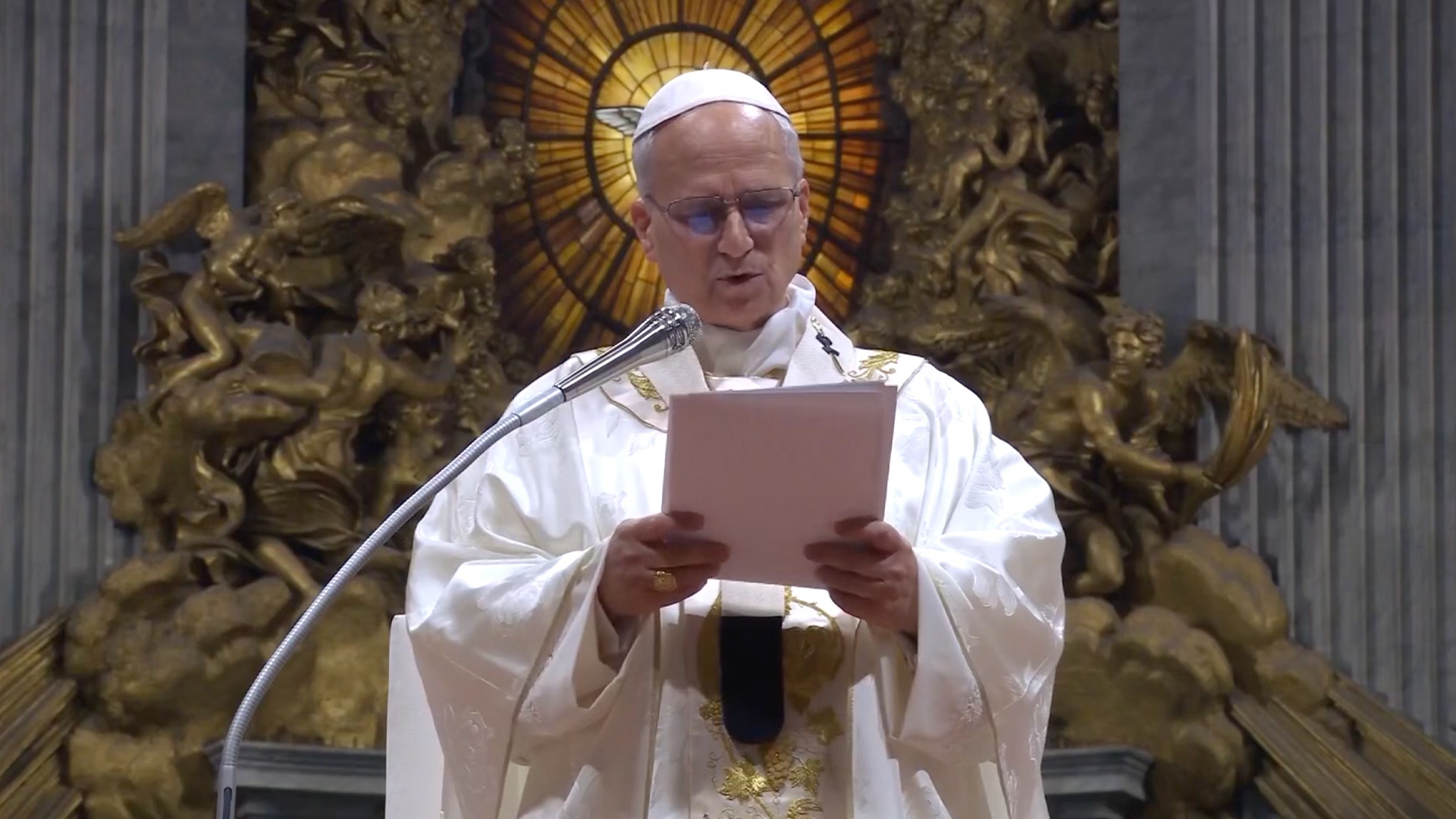
Enjoy a look inside the first year of Pope Leo XIV’s papacy and see how his calm energy, his desire to listen, and his hope for unity are building him a reputation as a Pope of peace.
Transcript
Read the full transcriptAuto-generated · 1,178 words
His concern for peace is found in his very first words. Peace be with you. This is more than just a liturgical greeting, as it was not performed as a liturgical act. From the very beginning, it is an invitation to peace, specifically the inner peace of every individual. He seeks peace within the Christian community of the church to resolve issues of division, and then, naturally, he seeks peace for the world and within society.
You know that feeling when everything changes, but your heart somehow keeps the same steady beat? It's been exactly one year since the world discovered that the American dream could wear white and speak with a Chicago accent. Robert Francis Prevost, a man from the halls of Rome with a soul forged in the missions, suddenly found the weight of a church in the middle of a jubilee placed on his shoulders.
And yet, look at him. It doesn't look like a burden. It looks like the mission he's been waiting for his whole life. It's been a year of shifts, smiles, and an energy that has kept us all watching closely.
There is one image that really captured the public's imagination, a pope who still keeps his high school yearbook, and who, with total simplicity, welcomed his brothers here to Rome during the first year of his mission. It's the normalcy of a man who hasn't forgotten his roots while walking the halls of the Apostolic Palace.
It's a side of him his fellow friars saw years ago. This profile is very well suited to the mission of a pope. He knows the church intimately, from its highest leadership to the most remote parish in the most forgotten country. He is a mild and reserved person, yet very warm.
His profile is exactly what one expects of a pope. Like, from that very beginning, and even when he met with locals, and he met with journalists, and he met with people from Italy, he immediately was able to make the connection. And I do believe that it was because of his ability to speak so many different languages. The fact that he had worked in Peru for so many years, the fact that he understood United States culture, the fact that he had spent a lot of time here in Italy, way before he became the Pope, that he had...
Pope Francis spent time with Pope Francis, that he knew the other popes. He immediately set the tone that he wasn't just going to be an American pope representing the United States, but that he was going to represent all nations of the world.
If we had to find the engine behind these past 365 days, we'd find it in a concept dear to the Augustinian tradition. Restlessness. Not the anxiety of staying busy, but the tireless search for God and for humanity. We see that restless heart in him, a sense of never stopping, even when a goal has already been achieved. It is a constant search, above all, for God. In my view, the Augustinian charism is highly flexible.
It allows you to address any necessity you might identify. In this case, that applies to the life of the Church. As we often say, following the rule of Saint Augustine, we are free under grace. This is the freedom to sense what God may be asking of us, the liberty of not being strictly confined to specific norms or rules that might prevent us from moving forward in different ways.
That restlessness he learned from St. Augustine has pushed him to turn words into action. We saw it at the event for the marginalised, when world-class music became a gift for those who have nothing. And we saw him sitting at the dinner table, not at the head of it, but right there in the crowd, breaking bread like one of us. It wasn't the sermons that struck us most, but his way of being close to people without any barriers.
In a world that screams, Leo XIV has chosen active silence. His strength lies in listening, and in a very modern kind of practicality. His team isn't a power hierarchy. It's a squad built for unity. I continue to see Robert Prevost in the way he faces problems, not setting them aside, but confronting issues, problems, and challenges calmly.
Gathering all possible information about the subject, or the person involved, before making the decision he deems best at the right moment. His manner is very mild and quiet, yet also very firm. The fact that he doesn't generate major newspaper headlines doesn't mean he isn't working hard. On the contrary, he works in a discreet, but certainly courageous way.
His 12 incredible months weren't spent looking out a window, but walking through some of the world's most wounded lands. It is through travel that one can truly understand the program or project of a pontificate. He always said that his first real apostolic journey would be to Africa.
He knows Africa very well. He understands both its challenges and the need for African Christians to feel not only supported, but visible to the rest of the world. Starting with Algeria is also a personal gesture. On one hand, Saint Augustine was born in what is now Algeria, but it is also a sign of dialogue with Islam.
More than the statistics, the story of this first year is told through the rhythm of a constant encounter. The Vatican has become a global stage, a universal crossroads of human stories. We have seen the Pope shake hands with the titans of sport, and share moments with international music icons.
Amidst this sea of faces, one constant theme has set the tempo of his mission. Over 120 times, his voice has risen to call for peace. It is a heartfelt appeal issued nearly every three days, a persistent reminder to a world in danger of forgetting its own brotherhood.
Leo XIV has spent this time in deep reflection. It has been a year of listening, walking the halls of the Church to capture its soul, and to give a face to the reality of our time. During this first year of his pontificate, he has been analysing and studying the situation of the Church and the world.
Regarding the management of the Catholic Church, he is looking at how to address various challenges, and is beginning to develop a programme. In observing Leo XIV, I believe he follows a methodology of calm, avoiding unnecessary discord. Ultimately, he seeks to move forward, not necessarily by pleasing everyone, but by studying each situation and making firm, deliberate decisions. While peace is a central theme, when it comes to the internal life of the church community, the key word for me is unity.
The journey has just begun. There are many blank pages left to write, but the rhythm of the story is that of a man who has no intention of stopping, and the question is, are we ready to follow him?