The Forgotten Irish History of New York
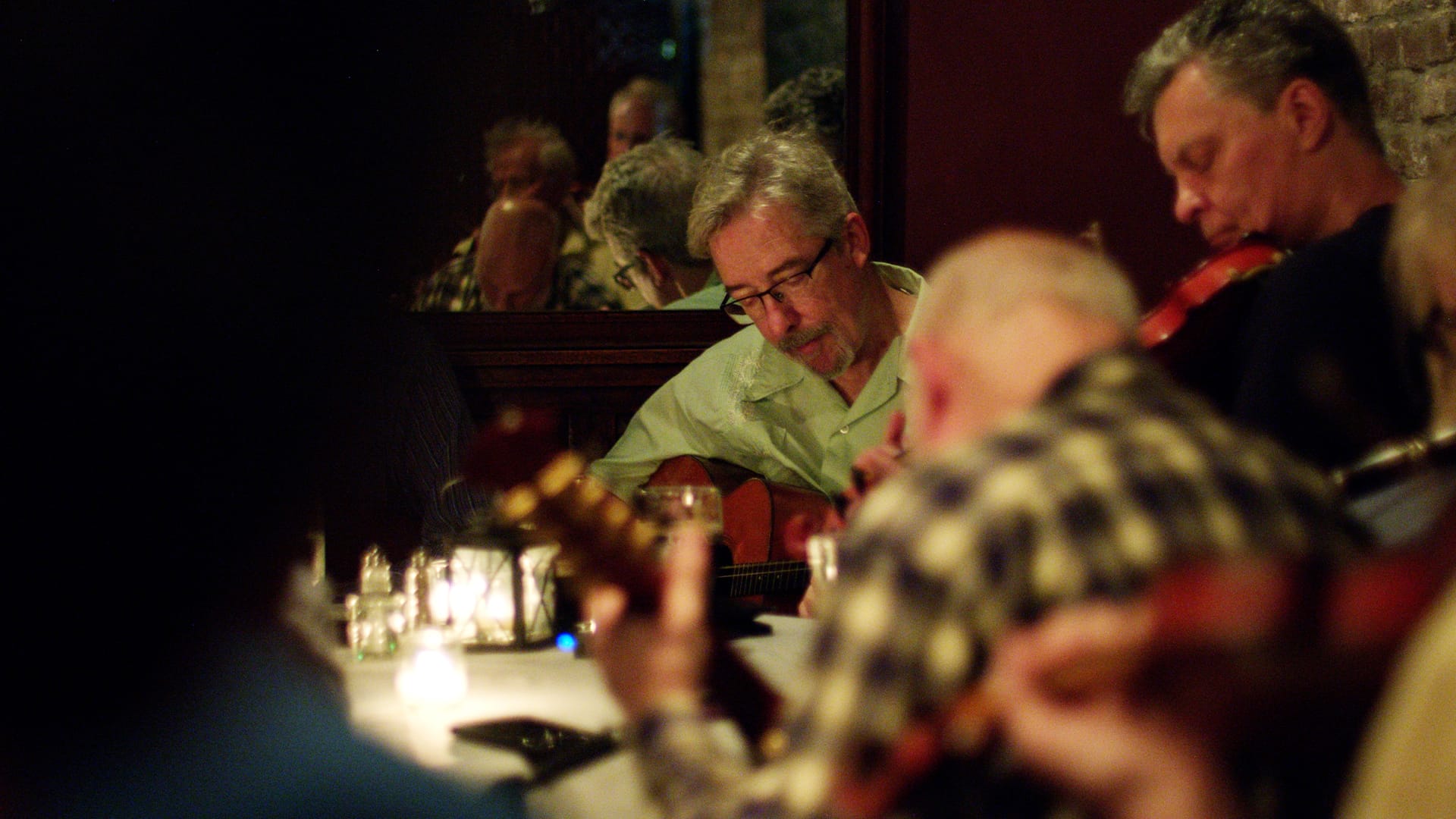
A journey into the past begins at a 19th century Irish pub in New York’s Hell’s Kitchen, where musicians gather to play the traditional music of Ireland. They also celebrate a legacy of courage, strength, and perseverance in both body and soul. Discover the history of the Irish in New York.
Transcript
Read the full transcriptAuto-generated · 3,429 words
New York City stands as a monument to the dreams of those who came here from around the world. But beneath its towering skyline lies a story all too easily forgotten. In the 19th century, hundreds of thousands of Irish men, women, and children were driven from their homeland by famine and forced to fight for a place in a world that often rejected them.
Their struggles helped build this city. And their legacy became part of the story of America itself. To find the Irish story of New York, you have to know where to look. Sometimes it's found in an historic church in lower Manhattan, like St. Patrick's Old Cathedral, and sometimes it's found in a neighborhood pub in Hell's Kitchen, where Irish immigrant Patrick Carley opened his doors in 1868. More than a century and a half later, the Irish heritage of New York lives on in a rather unexpected way.
There is a very long tradition of Irish traditional music in New York City. It goes back as far as Irish people came to New York, and New York became an incredibly Irish town. After a few years in New York, I discovered a deep Irish music scene based among immigrants who'd come here and played the traditional dance music of rural Ireland, the fiddles, the illin pipes, flutes, tin whistles. I was totally fascinated with that. I moved to Hell's Kitchen, historically known as a neighborhood of Irish gangs and Irish tenements.
And it got its name because... Yeah, the Irish were very poor. There's kind of a dark sense of humor, and so they said, well, what's hotter than hell? Hell's kitchen. And as a good Irishman, or at least a descendant of good Irishmen, the first order of business was to find my local pub. I wandered a few blocks and found the Landmark Tavern. The Landmark Tavern is not the oldest bar in New York, but it's one of the oldest. That's one of the great things about it.
Just, you walk in. And you're in the 19th century. There's just something about that, I don't know, I feel like I'm walking into a place that feels like home. Every Monday night, we have an informal gathering of people that want to get together and play jigs and reels and horn pipes and occasional songs.
After a certain point, I became a designated leader of the session every week. At the moment, we are going on 19 plus years here at the Landmark, so we are on a good roll. I really enjoy traditional music sessions. It is my main outlet for playing music. We are playing tunes that go back hundreds of years.
There's never a stage. You're not even sure when the music is going to start or who's really leading the music. It's a complicated set of unwritten rules that guides how the session takes place. There's no microphones involved. People aren't getting paid. They're just, you know, sitting there and playing more or less for each other. It's not uncommon to see 8, 10, 12-plus musicians all at the same time. The people who come here are doing it for the love of the music and for a chance to play with other people who are as excited about it as they are.
I might be having a chat with somebody while drinking a... Pint, and all of a sudden, a musical instrument they pull out from a bag, and it's from a century long ago, and they start joining right in. You can't substitute for actually sitting down and playing together with live people. The session is a lifeblood of traditional Irish music.
Beginning in 1845, a devastating potato blight swept across Ireland, destroying the crop that millions of people depended on for survival. What followed was years of starvation, disease, and unimaginable suffering. The Irish famine in the 1840s was, of course, one of the pivotal reasons why people came over, and we're actually filming here at the famine memorial, the Irish Hunger Memorial.
You know, you had over a million Irish pass away in Ireland as a result of that, and, you know, close to two million that would leave Ireland looking for a better life. People were dying, and the British didn't do enough to sustain the Irish citizenry, so people got in boats and came to America. When you got on that boat, and you left Ireland, your family members assumed they are never going to see you ever again.
Most of them would funnel down to the gateway of America, you know, which was New York Harbor, Castle Garden. For the poor, you know, everybody ended up in the five points, and this was a fetid slum, you know, shanty houses built on, you know, muddy hills and all. It was densely populated, crime-ridden, and this is where a lot of the early Irish got their start.
The book, Gangs of New York, the Herbert Asbury book, the famous film by Scorsese based on, you know, gives you a really good account for what living was like and how tough it was for these early immigrants, and they all congealed into their own watches or, you know, gangs.
You had the Mulberry Boys, members of the Roach Guard, the Dead Rabbits, the 40 Thieves, you had the Plug Uglies, and you had Protestant gangs like the Bowery Boys, which were a big adversary. The caricatures of the Irish were they were criminals, they were no good, they were people you weren't going to want to associate with. You have to understand, New York City had a Protestant identity, especially coming out of British reign. Under the British, it was dangerous to be Catholic.
You couldn't openly practice your faith in New York. There was a lot of prejudice. The British heritage was still very much alive. There was an anti-Irish feeling. And it was a fear. There was a false fear of the Pope, the papacy coming in and dictating how they would live their lives. There was a lot of conflict there. There was a lot of Irish need not apply when it came to trying to get a job. The Irish who came here basically had nothing.
They were poor. They were viewed as being uneducated, illiterate. Coming from tough times back home, being marginalized and stereotyped. It was really tough. These anti-Catholic forces centered around the know-nothing party, the nativist party. The gangs formed their own political parties. You had the know-nothings, okay? If they were ever questioned, you know, I know nothing. It was a political movement to stop immigration and to control how many Irishmen could come in. Imagine, from 1785, 200 Catholics growing to 15,000 or more by 1815, when we get our jurisdiction in India.
The cathedral is built here. Within 50 years, maybe 75 years, they're now building their own cathedral. This is the church that most New Yorkers are unaware of. It's overshadowed by St. Patrick's Cathedral in Midtown. Most locals don't even know that there was an older version of that cathedral, and that's this church here. This would serve as the cathedral from 1809, when it first had a service, up until 1879, when it would transition to the new cathedral in Midtown.
You know, you look at this church from the outside, you have this foreboding wall around the whole perimeter of the graveyards here. You look at the front of the church today, there's no windows. It looks like a fortress. But if you step beyond the veil there, if you enter this church, the inside is a gem. It's this hidden gem inside of this ordinary rock church, and that's what people miss. So, this was the respite. This was the sanctuary.
For persecuted Irish to have a safe place here in New York. There were a series of attacks. A number of churches have already been burned down. It's pretty hot. Catholic churches are literally under physical attack. So, whenever we had incidences here at the church, you know, the police department, the mayor didn't send anyone here in force to help the Catholics. And it was this kind of sentiment that would forge, you know, personalities like our first Archbishop, Archbishop John Hughes, a tough Irish priest, one of the most important Catholic figures in the country, or at least here in New York.
Whose nickname would become Dagger John? The history books will say it was a reference to the way he signed his name. You know, every priest, bishop puts a cross before they actually sign their name, and they say that his took the shape of a dagger, but it was really his persona. He was a very powerful figure, really shaped Catholicism as we know it across the country. He was a firebrand, he was a very strong force, and it's just what this church needed at a very turbulent time.
Archbishop Hughes went I talked to the leaders of New York in the political sphere and said if you allow this in New York, I can't control my people. If you burn down my church, they're going to burn down another church and it's going to go on and on. Archbishop Hughes said no, we're going to defend the rights of Catholics.
The nativist and the Know-Nothing Party forced them to have to defend this church that they could finally build of their own. He actually sent men around Old St. Patrick's Cathedral to ring the cathedral, and they were armed. Well over a thousand men, armed with rifles and muskets. They would position themselves around the entire perimeter. Those guns were loaded and ready to fire a shot at anybody that would threaten the cathedral with violence.
I've been going to Old St. Pat's for years, and I always noticed this big, beautiful brick wall, which now you'll see a lot of fashion shoots taken in front of, and all these cool things, because it's just a kind of majestic-looking, beautiful wall that you usually don't see, obviously, in a place like New York City. I had no idea it was a defense mechanism.
We're looking at a fortress. That's essentially what it is. It's a fortification. It would be 1834 when the trustees had the walls constructed, built strictly as a defense position. To help keep the anti-Catholic gangs of New York at bay, coming out here with their rifles and muskets on multiple occasions, punching loopholes through the wall. Imagine a bastion of armed men here, ready to fire a shot at anybody that would dare to threaten their house of worship here.
I've walked past this thousands of times and scrutinized it, trying to find evidence of loopholes. Oh, this may be one right here. That was successful in stopping that kind of arson, violence, and the like. Shots were never fired. Nobody was ever injured or killed, and they always thwarted any attempts for those gangs to get their way in burning down this church.
All sessions are different, week to week, depending on the personalities that show up. We have a dedicated crew of regulars that attends the Landmark Tavern session, along with other people from all around the world that wander in, because having been going for 19 years, it is pretty well known.
It does not get scripted. It is sort of an organic process. You just have to see what happens. So, after I've been at the landmark, I found out that it's on 11th Avenue, but for those that know New York City, 11th Avenue is not the western end of Manhattan. It goes to 12th and even 13th Avenue on the water. Well, 100 years ago, 11th Avenue was the water.
After the Irish moved north from Five Points, from Lower Manhattan, they eventually settled in this area because they were all working on the docks. When this bar opened, the waterfront was across the street, and a very heavily Irish neighborhood. So, the landmark would have been a resort for waterfront workers, longshoremen, and sailors.
So, you can imagine a lot of these longshoremen, after working 10, 12 plus hours on the docks. They come to the Landmark Tavern, they want a pint, they want to have some good conversation, and they hear that Irish music, and I'm sure it feels like a pub or even somebody's living room back in County Clare or Galway or Limerick or Waterford, and it was a little piece of home right here in New York City.
For some of the people who play Irish music, it is central to their ethnic identity. The heart of the music is still connected to Ireland, and rural Ireland especially, so it is still very much connected to Irishness. It became a place that I would go every Monday night just to be around that Irish culture that I never feel that separated from.
The Irish character of the neighborhood has certainly been eroded over the years. Now it has become altogether a different neighborhood. A lot of upscale buildings have displaced old industrial and commercial establishments. So, I don't know what the future will bring, but for the moment, there is a tremendous wealth of Irish traditional music to be heard and played in New York City.
And the landmark tavern might be the last real fortress of Irishness left in Hell's Kitchen. The Hibernians, you know, it's an Irish Catholic fraternity. They're still very active, and so I joined the Hibernians. I thought that the best way for me to be able to understand and to present this very special story for the Church was to really get down into the trenches. We honed this narrative to be a tale of immigration that's told through the lens of the early Catholics and the Irish Catholics.
I mean, the catacombs are the most striking feature here. So, we just entered the threshold of the center corridor of the catacombs here. Not only the only active Catholic burial ground here in Manhattan, but probably the only active catacombs in the entire country. You are going to see mostly Irish families here, an Episcopal and clerical vault for our second Bishop of the Diocese, John Connolly. Dominic Lynch, a very prominent man from Galway. He was one of the 300 guests invited to George Washington's inaugural ball.
The Delmonicos, the family that started the restaurant industry, Andrew Carrigan, one of the founders of the Irish Immigrant Bank, the Countess, Annie Leary. Now, this sarcophagus where Monsignor John Carney is resting peacefully. Now, Carney, while the church is burning to the ground, he refused to leave. He wanted to go down with the ship, and they literally had to drag him out, passing by a syndonic crucifix of the Shroud of Turin.
William Hart, he was the undertaker. He was the one that carried and stacked coffins. This is Honest John Kelly from Tammany Hall, the first Catholic voted into the U.S. House of Representatives. Charles O'Connor, nominated twice for presidency against General Grant after the Civil War. John McKeon, another member of the House of Representatives.
This is the only one of its size. This is the only one designed to be visited by the living, and this is the family vault of General Thomas Thompson Eckert, Brigadier General, confidant of Abraham Lincoln, and these are actually two original Thomas Edison light fixtures. The original bulbs still work. Whenever Lincoln wanted to dodge the press, he'd slip out of the White House and sit down at Eckert's desk. Then one afternoon, he drafts the Emancipation Proclamation on Eckert's desk.
So, the Civil War, you had young, healthy Irishmen washing up on the shores here, instantly signed up as conscripts to go fight in the war. The Union started drafting people into the Union Army. That included a lot of the Irish immigrants.
What was resented was that if you were drafted, you could buy yourself out by paying somebody to take your place. And naturally, poor people say, we can't buy our way out. Why do you have this system, which allows wealthy people not to risk being killed in the Civil War? In the movie, Gangs of New York, very touching. There's one scene, the song, so sad, like all the old Irish songs from the potato famine days. The song is about the men coming here.
Looking for a better life and then being shipped back home in a pine box, and the scene is the men coming off the ship and then being signed up as conscripts right there, handed a uniform, and then in the background, the pine boxes are being hoisted onto the ship to be sent back home.
These men were put into what would be called the Irish Brigade, the 69th Regiment, and they fought long and hard in the war, had many conflicts with General Robert E. Lee, and they gave Lee a heck of a fight, and he would be the one to dub them the Fighting Irish.
I think we have to admire the adventurousness of people who, when facing a life-and-death situation, took any money they could scrape together to cross the ocean to come to an unknown country with the promise of religious liberty and for economic self-advancement through labor and education.
Prior to the potato famine, Ireland had right around 8 to 8.5 million people in population. Today, they have 7 million. So, they have never recovered the pre-famine population. They are the only country in Europe that has fewer people now than they did in the 19th century. Statistically, there are exponentially more people that claim Irish heritage than could actually demographically be Irish. So, the fact that so many people want to be Irish that may or may not even have any Irish ancestry.
It tells you that our greatest export is our sense of community and our sense of welcoming and making people feel at home. This memorial has taken stones from all the counties in Ireland, including Roscommon, where my family comes from, and I am ever grateful for the intrepid ancestors who got on the boat and started a new life. This is a fitting memorial to where they came from and their aspirations for freedom and religious liberty and economic opportunity.
The history in this country is that all the Irish are Catholics, and they, by and large, go to church. And that certainly was the case earlier in our history. Nowadays, it's less so, but... It can certainly be said the Irish presence continues in the Catholic Church in the U.S., and it's a strong element right to this day.
The seeds that they planted are starting to bear fruit in maybe a different way than we expected. We've been seeing churches full here in New York. Old St. Pat's, often you can't get in the door. On a 7 p.m. on Sunday, which is obviously kind of young adult mass, if you don't get there 15 minutes early, forget about it. They've now added a 5 p.m. mass just to handle the overflow that's happening from the 7 p.m. I've been here 15 years.
That was not a scenario I could have remotely imagined. And the good that's produced, for a few steps from 9-11, I was down here 9-11, and that's when priests and ministers were all welcome, because they gave consolation and guidance and the last rites to the victims of that horrible attack, and that's continued to our day, and that should never be forgotten.
You know, we should never think of religion as a crutch that my ancestors, who were poor, needed. Now that I'm wealthy and educated, I don't need it. No. Everybody's going to die. Everybody wants to know what happens when I die. Religion is not just philosophy, which gives you a theory. Religion gives you a revealed truth.
Looking out at this field reminds me of my first visit to Ireland, when I said, everything is green here, and indeed, green is the color of Ireland. Green in the Catholic Church represents hope. When life crumbles in one place, we have a new opportunity here in the United States, and I thank God my ancestors took advantage of that, and it is a reminder for all of us. There is always hope, and look out at the beauty of nature. You see, God's goodness has no end.