The Center of Existence - What Made Flannery O'Connor
Beneath the surface of Flannery O’Connor’s literary brilliance is a place, an atmosphere, a local culture that shaped the world of her fertile mind. Visit the small, intimate Georgia city that set the stage for many of the stories she told.
Transcript
Read the full transcriptAuto-generated · 2,381 words
She was really one of the best writers of the 20th century. She's a master of the short story. She's the one who said that she wasn't a Southern writer, but she wrote with a Southern accent. She's taught widely in universities, nationally and internationally.
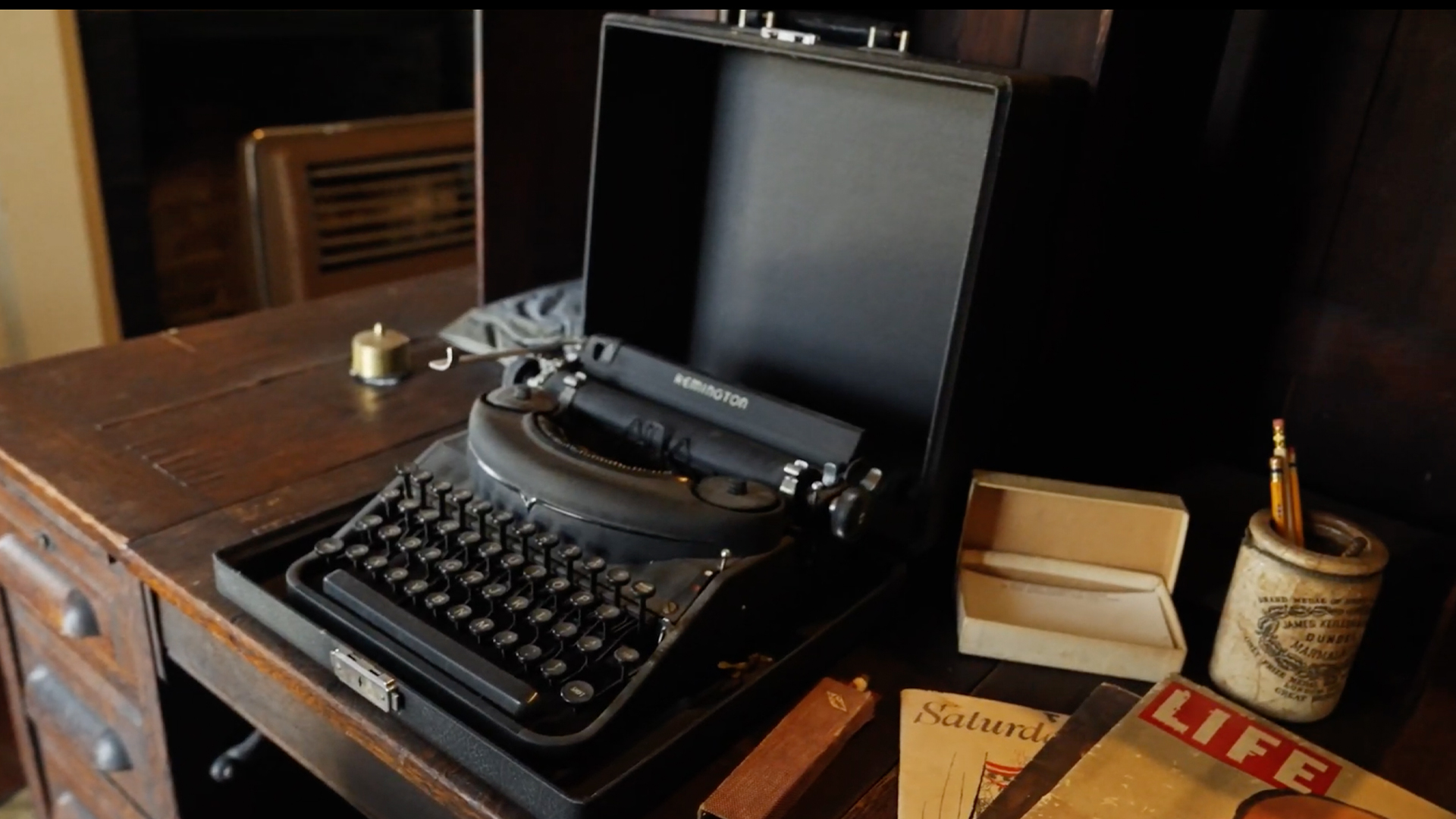
She's still having a positive impact. The next generation is finding her work. She believed that writing was what God wanted her to do. She said she was his typewriter. Totally ambitious. She wanted to be a great writer and remembered, and she knew that she was tapping into something. She takes no prisoners. Everybody's up for blasting.
Themes of redemption, grace. I think a lot of that is really reflective of her Catholic faith. She tells us a lot about grace transcending the mean, ugly parts of human nature. The big point for Flannery's story is a moment of salvation. Faith just kind of comes and, like, smacks him in the head. It can be very, very violent.
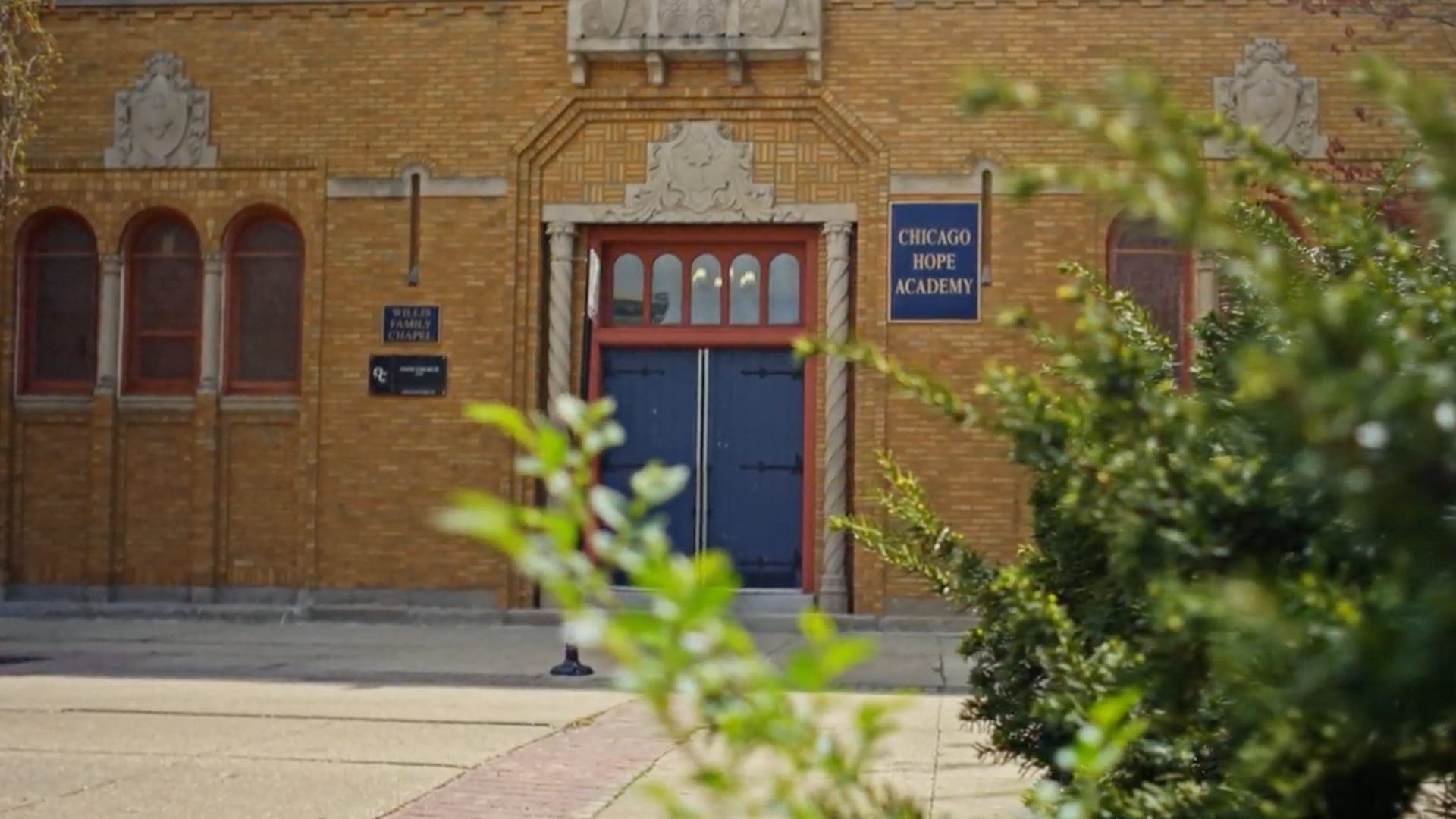
Flannery attended here. She was a daily mass goer. Flannery O'Connor's faith was everything to her, and that's not an exaggeration. Her love for the Eucharist nourished her faith, especially as she carried her cross of lupus. It definitely shaped her art. It gave her a kind of monastic purpose. I think she thought of writing as a kind of devotion.
I'm originally from southeast Wisconsin, and so in my AP English class, we read Wise Blood by Flannery O'Connor, and I read the book thinking that it was about this guy who was making fun of religion, and it kind of is, but I sort of liked him because I didn't believe in God.
When I got to class and found out that actually the whole point of the book is that he loves God and is trying to run away from him but can't, then I was like, okay, that's an opportunity for some self-reflection. I guess that's kind of where it all started.
I didn't really know where to go to college, and so at the very last minute, I applied to Georgia College. I was like, I want to study Flannery O'Connor at ground zero, and I just decided to come here. Definitely the best decision I've made in my life so far. Yeah, and it was all because of Flannery. Wiseblood is, it's that.
The weirdness of Southern Gothic. When Wise Blood came out, it was the talk of the town. Lots of people did not like it. As Flannery's mother famously said, why couldn't she write anything nice? Hazel is very concerned in that story about his salvation. And he rejects Christ, and so creates the Church of Christ without Christ, and he becomes a preacher, and goes around and tries to spread his message, and so he makes himself blind in order to be able to see salvation.
He's strange, and he's a character that sticks with you. I think a lot of people saw their cousins, their friends reflected in her writing. There are still a lot of people that knew Flannery, that grew up, that still continue to talk about not really knowing what to do with Flannery and her writings for the city of Milledgeville.
She grew up in Savannah and lived there until she was 13. When Flannery moved here with her parents, they had moved from Savannah to Atlanta, and then ultimately here, this was a family home, so this was a bustling place. O'Connor was a really precocious young child, super smart, an only child. Her father really encouraged her artistic interests. We have here at Georgia College many of the books that she had as a child, and she would write a little commentary in them, like, this is not a very good book, you know, and a terrible book.
You know, she was very opinionated, even as a young child. When you see her room, you can also see a place that was a place of refuge for her. We have her dresser. You can still see her suitcase here.
You know, she was doing things that teenage girls were always doing. This was a place where she could go and really begin that craft of story writing and storytelling. She had a clear writing talent that needed to be honed, and she went off to the program at Iowa, and I think that's really where she began to be noticed. Initially, she attended the University of Iowa, got her MFA, and she lived in New England for a few years. She was up in New York.
She was starting to become this. You know, great literary figure. I think on some level, desire to stay in New York or Connecticut and make those sort of literary connections and live that kind of life. And then, she knew something wasn't right. Flary had lupus, and that brought her back to Milledgeville.
When she moved back here in her early 20s with lupus, she wasn't by choice. She came back to live with her mother. They moved out to the farm at Andalusia. That was a blessing that she had a home to return to, a loving home, and was cared for. They moved out to the farm because of lupus.
This is a 500-acre property, and I think about O'Connor sitting here, and she can sit every day on this front porch and watch the sunset. It's truly spectacular. She loves birds. She had peacocks. She had peafowl. This also, on the edge, was a sort of bird sanctuary, and very important to her.
The kind of pastoral setting. Because of the unique circumstances that the house was left in, Andalusia is about 95% original materials because of that decision that was made to leave everything where it was. You know, you're really going to see exactly how Flannery lived, where her mother operated the farm, where the family ate, where Flannery slept, where she wrote her work.
She's one of the greatest writers of the 20th century, so for that reason, you have people coming here from around the world. They will come, they will do a pilgrimage. I come out here all the time, and it's deeply spiritual to be here.
I myself, when I came here in 2010, had a spiritual experience, I feel. Sitting in the kitchen, like I've been in this kitchen, I was in it in her stories. It was an uncanny feeling. When I went to the barn, I had a feeling that I've been here before, because I had read it, it was exactly how she described it, and it was exactly how I pictured it when I read her work. She's that much of a genius, that she could conjure this place.
Her only documented romantic relationship with a man named Eric Lankier, who was a Danish man. He was a bookseller. They had met when she was living in New York, and he came down and visited her a couple times.
They went on one singular date, kissed once, but he would go on, and he would leave her behind in Milledgeville, and then get engaged to somebody else, and didn't tell her directly. She found out through mutual friends. So, after that, she wrote Good Country People. Good Country People tells the story of a Bible salesman who comes down and visits a farm, and there's a woman with a fake leg. She's college-educated, very smart.
She lures him out to the barn, and she gets up in the loft of the barn. It is revealed that the Bible salesman is a swindler. And he ends up taking her leg, and then she can't get down, and he leaves her. And this woman, who is now stuck and is abandoned by this man, has that moment of...
Salvation and grace, but it's not a happy ending. A lot of people have interpreted that short story to be about that relationship, him essentially tricking her. Eric himself actually ended up accusing her of writing Good Country People about him.
There would be no Flannery O'Connor without Milledgeville. You can see it in the vernacular she gives her characters, and definitely as someone living in Milledgeville, you run into people that feel that they were characters in O'Connor's work. People have identified who some of the characters were probably based on. She's writing and observing. She found her subject here.
One of the standard lines is that characters have to experience violence in order to be shocked. I mean, she said, for the hard of hearing, you have to shout. So in The Good Man, It's Hard to Find, the grandmother, you know, she's content to be a racist, classist, um, quite self-centered until she encounters with this, you know, the misfit who's a sociopath.
She wants to stay alive, and she starts embracing a Christian perspective, which is, you're my child, you're my own child. Would she have done that if she didn't have a gun to her head? And that's the famous line, you know, that the misfit utters, that she would have been a great woman if she had a gun to her head her whole life.
It's a southern town in the 50s and 60s. That's a lot of conflict, just inherently, with race, and then Milledgeville also has the added element of the mental hospital. Living in Milledgeville, with the shadow of Central State, which was at the time the largest mental asylum in the entire nation, and one of the largest in the world, it probably weighed pretty heavy on her.
She's dissecting and cataloging the realism of a violent culture. Some people say that's so hyperbolic, a serial killer. Yet, if you think about Central State, it's full of serial killers, and there's a penitentiary there. The fact that Central State hospitals A couple miles from her house, there's 12,000 patients. Right now, it has, I believe, the largest cemetery of disabled bodies in the world. So, there's all these disabled people right here in town, and she herself is grappling with a disability, lupus, which she knows is going to kill her.
She was in a lot of pain. She struggled a lot with it, and you can see that I think there are opportunities in her life that she wished she could have taken. She said, I came with one eye squinted, take it all as a blessing, and I think that is a good way of summing up how O'Connor felt about her lupus.
So, for Flannery to be disabled, to be chronically ill, to need crutches and mobility aids, there's a lot of photos that she took for more formal publications. When you zoom out of the photograph, they're always visible. There's a death sentence on her head. She knows it. And so, today's the day. You better figure it out now.
In some ways, O'Connor's illness was the gun to her head, too, and so she kind of is staging that over and over in these death scenes for characters. What's going to happen when you die? Are you right with God? The violence serves that purpose.
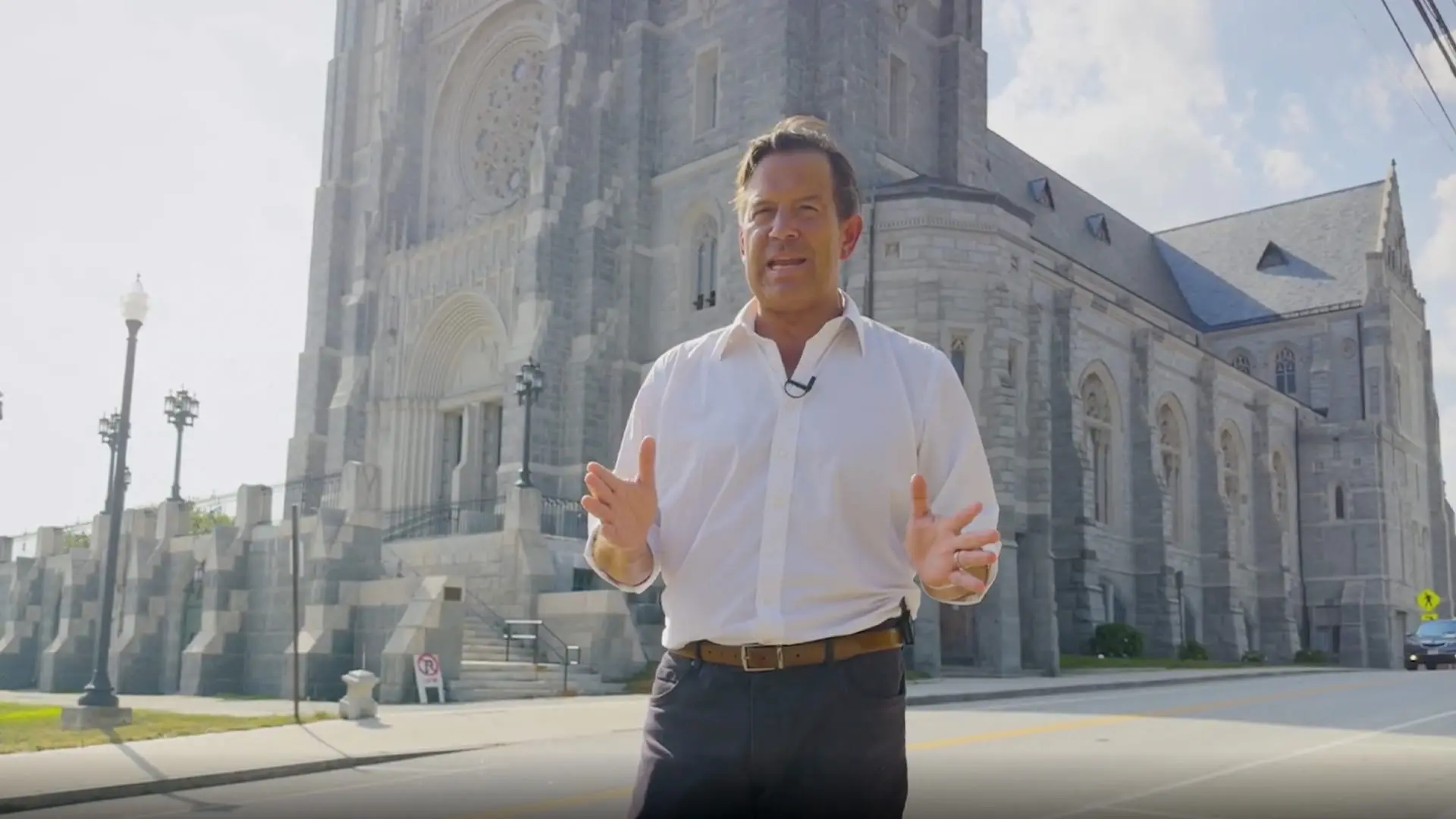
Flannery's ancestors helped build this church, and it's essentially the same structure. It's been a landmark here in historic downtown Milledgeville. This is where I come every Sunday. I'm actually sitting in what we believe is Flannery O'Connor's pew. There's some debate, but this is the one I go with.
Flannery O'Connor's faith means everything to her. She went to daily Mass every day. She would encourage people to go to adoration, receive communion. She prayed here in this church as she struggled with her cross of lupus. We can see her love for the Catholic faith and the Eucharist. I think she also said, paraphrasing, that the Eucharist is the center of existence for me. Everything else is expendable.
She would actively debate people on their faith, on her faith. There's a very famous quote where she's debating Eucharist. She says the famous quote, essentially arguing that if this is not an actual mystical rite, then what's even the point of doing it? That sentiment really defines her faith. You know, since I... I've arrived here. I've tried to, in the spirit of Flannery, you know, increase devotion to the Eucharist, expanding adoration, and to have Eucharistic processions through the downtown area to kind of show the community what we're about here.
Flannery O'Connor really changed my life for the better. I feel like I have a purpose in life, and I feel like she sort of gave that to me, you know, from the dead. I think literature has the potential to do that in ways that we don't expect or can't predict. We find out new things about Flannery O'Connor all the time, and that wouldn't happen if there weren't people dedicated to preserving that history and preserving her legacy.
I am here at Georgia College, and part of my job is to keep the legacy of O'Connor alive, and O'Connor's legacy is sort of the portal into a time and a place, and we've received this gift, and we are the stewards of this.
The people here are in the presence of a great writer, and should know that. Going to Flannery O'Connor's grave is always sort of a reverent experience for me in a lot of ways. I like to buy her flowers. Specifically, I get yellow roses, just to kind of thank her, but also to thank God through her. I was able to discover my faith and sort of find my career and my calling, and it's just kind of a way to pay homage to that.
So, if I met Flannery O'Connor in the hereafter, you know, I don't know how that kind of thing works, but I would say, can I please have a coffee coke, and I would present her with a coffee coke. She drank one every morning, and I would say, here's a coffee coke. Thank you for changing my life, and hopefully, she would hang out with me. I think she would. She was humble. Unless she's been watching me this whole time, then she might think I'm kind of creepy.