The Mission: Make America Healthy Again
The United States is the wealthiest, most advanced country in history. It's also significantly less healthy than the rest of the developed world. Chronic diseases are widespread but it didn’t used to be that way. Join Steve Cortes as he explores a movement to Make America Healthy Again.
Transcript
Read the full transcriptAuto-generated · 4,368 words
We spend more money on health care than any nation in history, and yet, America is sicker than ever. We have technology that our grandparents, they couldn't even dream of it, yet we're losing the grand battle versus chronic diseases. We are the richest superpower on earth, yet we are the laggard in every health category versus developed nations. Meanwhile, the American body crumbles. Half of our kids now live with chronic health issues. That number was 1% a few decades ago. Nearly 40% of young adults are pre-diabetic.
Autism rates have gone from 1 in 10,000 in the 1980s to 1 in 36 today. Life expectancy just hit a 20-year low. But there are fixes, real ones, tangible solutions, and we will dive into them in this film to get the very best answers. We travel to Virginia, a state that in many ways started our nation. The home of founding father George Washington himself, and there, some amazing and motivated patriots, they provide us with a roadmap for a second founding of sorts.
That rebirth, it flows from the commitments of regenerative farmers, involved parents, And brave, free-thinking healthcare providers. A rebirth of health that will make our society more vibrant, energetic, and optimistic. And to get there, it requires an entirely new class of leaders, because those atop the system that existed for decades, the so-called public health leadership in Washington, they have failed us. Failed us on nutrition, on chronic disease, and on the pandemic.
That COVID panic, and it was a panic, it revealed so much. And all the so-called experts like Fauci, all they did was spread unscientific hysteria. They then took almost dictatorial control over all of American life, and they stayed there long after the irrational fear that they had stoked had already passed. Why?
Robert Malone is a physician and researcher. He got his MD from Northwestern University and became one of the leading medical voices for the Maha movement, serving as a key scientific advisor to Robert F. Kennedy. Dr. Malone, as a physician, as a scientist, can you explain to us the difference between scientism and real science? So, real science is a very dynamic, open-ended process. It never ends. Real science is not something that can be owned. It is a continually evolving process of trying to understand the nature of the world.
Whereas, scientism is almost a cult. Almost a religion. Of course, during COVID, we all saw it with the various pronouncements that were coming out as if they are revealed truth, when in fact, what we learned is a lot of those pronouncements, like the six-foot distancing or the use of masks, were totally arbitrary. They were just people, whether it was Anthony Fauci or Rochelle Walensky or some bureaucrat within the government, coming up with some Well, it was probably going to be helpful.
So, the lockdowns were another example. You remember two weeks to flatten the curve. That was all aspirational, but it was pushed into the culture through media and everything else as the gospel truth. Scientism is really... A modern religion. It's become a belief system in which there is a final product, the science. The idea that science is a thing that can be possessed.
It's that it is an endpoint, whereas it's not. It's a dynamic process. The infamous Tony Fauci statement having to do with, if you're attacking me, you're attacking the science, as if he personally embodied the science, okay? So, if you are trying to get at me, you're really attacking not only Dr. Anthony Fauci, you're attacking science. He was functioning as a high priest.
In a belief system that we call scientism, that has approved narratives, approved messaging, approved interpretations, that means that they cannot adapt as efficiently. We cannot have the range of possible solutions explored that will allow us to adapt to changing conditions efficiently, so we end up in a world that is boxed in. Physicians are no longer approaching patients as individuals, but rather as representatives of a category, and then says, oh, this is how we treat that category. Well, the insurance company has already bought off that that's the correct treatment for that category.
Matter of fact, they're stakeholders, right? So, they constrain how that patient can be treated. Furthermore, remember, physicians often... Often in corporate medicine, they only encounter the patient typically for 15 minutes. Beyond that, the company is losing profit. They have no choice other than to deal with the patient as an example of a category, and this is what's been taught in medical school now, and by the way, this is what the insurance companies say we can do to treat you, and the insurance companies are in the same scientism space as the pharmaceutical companies that are producing the products.
You got a good, hard taste of it during COVID, where there was a There was a protocol that was basically promulgated by the likes of Rochelle Walensky and Tony Fauci, neither of whom practiced medicine. That was promoted globally, pushed down through insurance companies, hospital chains, etc., down on physicians, and any physician who disagreed with that, who didn't follow those protocols, they were subjected to all kinds of adverse actions against them, including losing their license. With the first MAHA commission report.
The president emphasized a key fact. If we don't do something, our children will live shorter, less healthy lives than their parents. That's profound. That is the essence of our core mission, is to turn that around. Maha, to me, is one of the most... It's one of the most powerful, true grassroots movements since the Tea Party. It is fundamentally nonpartisan. It comes from the left, frankly, whereas MAGA comes from the right, traditionally, and they've met in this middle ground that everybody agrees on.
We want good health. We want good health, not just for ourselves, but also for our children. We've got a lot of incredible people right now. I really feel blessed, as an American, that we have people like you, Callie Means. Dr. Bhattacharya, RFK Jr., to pursue the public good and the common good. Bobby's position, which I strongly endorse, is that... We shouldn't have mandates. I think that people deserve the respect to have the information that they need to choose how they live, but if they want to live an unhealthy lifestyle, I think they also should have that choice.
We shouldn't keep it from them, and as Bobby is pointing out now with the vaccine policy that's just being implemented right now with the mRNA products, his position is we don't want to take anybody's vaccine away from them. But we also don't want to mandate it on people. The school mandates and those kinds of things, that is not okay. The idea that we have to constrain what people can do for their own good, that creates a society that is just dark.
That is the roots of the Make America Healthy Again movement. It is so much more than just personal health. It is personal thriving, and it is enabling... Children, in particular, to live in a world where they aren't bombarded by industrialized foods, highly processed foods, constantly being pushed at them through all kinds of channels. This message of respecting the individual, respecting culture, respecting community, respecting religion. Empowering people to make their own choices has a lot of resonance with them, and I'm grateful for the opportunity to be part of that, too.
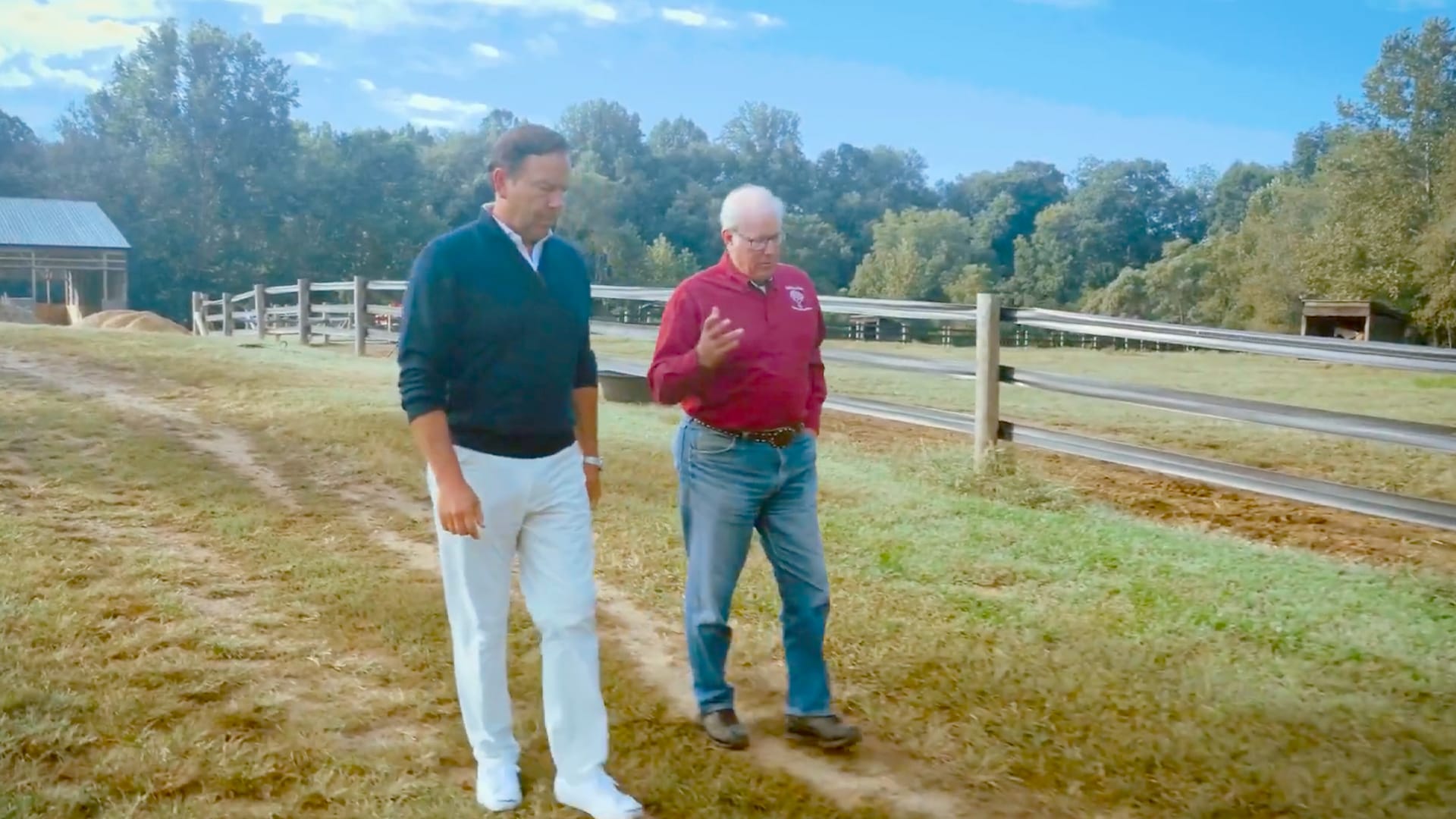
Well, we're grateful for what you've done for so many people for this country, and I'm grateful that you hosted me at your fantastic farm. Dr. Robert Malone, thank you. Thank you. For everything you do. Our model is not even designed to prevent disease or to cure it. Instead, it is designed to manage sickness, to keep you alive but not thriving. Also, consider that you pay lavishly for this awful model. You pay twice, actually. First, in subsidies to private conglomerates.
Then, in crushing costs to manage chronic illnesses. How did we get here? How did this astounding national decline unfold? Well, first, big food floods our shelves with ultra-processed, chemically-laced products, all massively subsidized by your own tax dollars. The food seems appealing at first. Believe me, I know. And some of it is indeed cheap. At least it's cheap in the near term. It's filled with processed sweeteners and seed oils, which makes it very addictive. But we pay for it. Oh, we pay for it in so many ways later on.
Physically, mentally, and eventually financially as well. Which brings us to the inevitable second phase of this awful, dreadful marriage. Big food leads directly... To big pharma, which steps in to treat the predictable fallout, diabetes, obesity, depression, heart disease, and treat them how?
There's real problems. When you turn on CNBC, it's a nonstop infomercial for pharma. It's a Sky Rizzy commercial, followed by Scott Gottlieb saying how Bobby's killing people, followed by a breathless coverage of the measles outbreak, and no mention of the mental health crisis. How does cutting a bunch of HHS solve that problem? It is insane.
It is insane for you to insinuate that the thing standing between us and better health is more government bureaucrats. That's not what I'm insinuating. That is what everyone's saying. That's Cali Meads, Senior Advisor to Health and Human Services, and he doesn't exaggerate. The system is built to keep you sick, ill, but alive. It is not designed to prevent maladies, and not designed to make you truly well.
He labels it insane, and it is. It is insane. We are lighting trillions of dollars on fire every year to produce a population that is sicker, with shorter lifespans, and that is simply unhappy. Why? Because the inputs are poisons. The outputs are pills, but the profits, they are astronomical.
Joel Salatin is an American grower known as the lunatic farmer. He is one of the country's leading advocates of regenerative farming and truly healthy eating. So, Joel, what is wrong with the way factory farming is done in this country now? If you wanted to create a diabolical, pathogen-friendly livestock system in this country, you couldn't be more efficient and successful than the factory farming system we have. It is unhygienic. It is anti-immunological function, I mean, bird flu, nutritionally deficient. It is stressful.
Why are they stressed? Well, first of all, they're stressed socially. Take pigs. Pigs are supposed to be able to root and run around. No, they're confined in little cages where, on slatted floor, they don't even touch dirt. They don't even touch the soil. They're never really relaxed. They're just in this state of turmoil. And all animals have a social component like this. So, the obvious question for me is, well, can you eat? Happiness, and I suggest that you can. We say we want the chicken to be able to express its chicken-ness, the pig its pig-ness, the cow its cow-ness, because the society doesn't ask, how do we make happy pigs?
We'll not ask how we make happy people. Yeah. Joel, let me play devil's advocate. However, that factory farming model does produce food cheaply, okay? So, can you be cost effective with regenerative farming, with your brand of the way nature intended us to farm? Yeah, yeah. Let's be honest. You cannot have a cheap food policy.
And have a healthy population. So, first of all, the fact that our nation in the last, whatever, 50 years, has gone from 18% per capita expenditure on food. 9% on health care to 9% on food and 18% on health care, those two numbers have inverted in the last 50 years, is a telling signal. Might be a relationship there. I wonder if there's a relationship there. So, you're going to pay your farmer or pay your doctor? Yeah, yeah. The cash register price of conventional food does not address the externalized costs of pollution, of antibiotic, you know, superbugs, MRSA, C.
diff. Those are directly attributed to, you know. To antibiotic use in animals, more pharmaceuticals, more drugs are administered to our livestock in our country. than actually to the people, and so the question is, who's drugging your dinner? So, Joel, it seems to me, regarding food affordability, it might be near-term cheap, but long-term, really expensive. Yeah, you either pay at the cash register, or you pay down at the hospital. Convenience food is not that cheap. I mean, Lunchables, $14 a pound, half of it's bread.
Well, you could buy two pounds of our world-class grass-finished, you know, chemical-free, GMO-free. Beef for two pounds of that for one pound of Lunchables at $14. This stuff is actually not cheap. Ultra-processed is not cheap. Big food is extremely skilled at making ultra-processed foods.
Addictive, or at least close to addictive. Is that a fair assessment? Well, that certainly is a fair assessment. I mean, you realize that half of the ultra-processed foods we have today have been manipulated in the old repurposed tobacco labs from Philip Morris and those kind of companies after the tobacco kind of took a back seat.
Warked into food companies. Yeah, yeah, and they've bought in, and they're manipulating this just like they did cigarettes and other things, and so we're seeing a highly sophisticated... Sophisticated, manipulative construction, concoction, if you will. The ultra-processed food is where all of this, you know, Red Dye 29 and all this stuff that RFK Jr. is working on. Convenience food doesn't need to be that way. You don't need to put monosodium glutamate in a chicken pot pie. It doesn't need it, all right?
And so, this is where if farmers and domestic culinary artists... In our neighborhoods, could access neighbors with convenience food, then suddenly... Not only do we give an alternative, a choice, in the food system, but secondly, we suddenly provide an on-ramp for young farmers to get into farming. The average farmer in America is 60 years old. So, in the next 15 years, half of all America's agriculture equity, farmland, buildings, equipment, is going to change hands. Is it going to go to Bill Gates, Vanguard, and BlackRock, or the Chinese, or whatever, or is it going to go to a new generation of...
Bright-eyed, bushy-tailed, savvy, entrepreneurial young farmers who are going to steward this into the next place. If we're going to have a secure, safe, and stable food system, ultimately, we need to allow consenting adults exercising freedom of choice to give their microbiome agency...
The freedom to engage in a food transaction without asking permission from the government. That is where we need to go. It sounds like we should all be lunatic farmers and lunatic consumers. Hey, thank you. Thank you for everything you do. Thank you for having me. Appreciate you. Big food dominates nutrition policy and research, pushing fake science like the ridiculous food pyramid.
The food pyramid that made us all sicker and fatter. Believe it or not, soda companies fund massive amounts of just this kind of research. Their perverse incentives, they're all aligned. So, there is this unspoken choreography. They've built a system where your sickness is their revenue stream, but the people have had enough.
And a new movement arises. Moms demanding healthier kids. Farmers growing real food. Physicians who heal root causes and not just treat symptoms. Americans who've thrown away the pill organizer and reclaimed their lives through nutrition, movement, and sunlight. We call this movement Maha. Make America healthy again.
And it's not just a slogan. It's a declaration. We will reclaim our food supply. We will reclaim medical freedom. We will reclaim our right to a strong, vibrant, and joyful life. This movement, it has muscularity, because a strong America requires strong Americans.
That's why voters chose leaders like Secretary Robert F. Kennedy, who's been exposing public health lies for decades. It's no wonder that he polls as one of the most popular political figures in America today. And thankfully, he's joined by world-class physicians.
Dr. Jay Bhattacharya, Dr. Marty McCary, Dr. Vinay Prasad. And Dr. Mehmet Oz, all of whom could make fortunes in private practice right now, especially if they would simply submit to the thought repression of the expert class of public health, but instead, these brave patriots, these leaders of science, they choose to fight, to fight for a healthier America. They choose to enter the bruising world of politics and policy. And in doing so, they represent millions of Americans who have similarly stepped forward to regain agency over their lives and their bodies.
Free thinkers who will no longer accept the prevailing pressure to just surrender, to just submit to managing illness. Michael Caputo is one of the leading campaign strategists in America, and previously served in senior leadership at the Department of Health and Human Services. Let us talk about Robert F. Kennedy, RFK. What are your thoughts on him? He is the origin story of Maha. You know, when he endorsed the president, it was a surprise for everyone, and a senior campaign leader told me, listen, Bobby is endorsed.
He wants to do something with childhood chronic disease. Can you go spend time with him since you were assistant secretary of health? I was sent there by the campaign to figure out how to handle it, because I went there, I did not want to like him. I really wanted to hate him, because the things he said about the president. One of the first things I remember that we talked about was a messaging issue, and I said, you probably need to say it this way.
And he said, Michael, I won't say it that way. And I said, why? He said, because that's a lie. I said, well, it's not a big lie. He says, I don't do that. He's physically incapable of lying. Within 24 hours, I understood that he was a totally different person than I thought he was. He would wake up in the morning praying to figure out what he could do to help children with this chronic disease epidemic that we have for kids. It was a profound experience to me.
Bobby supports Donald Trump 110%. Somebody would bring up, well, we have to disagree with the president on, I don't know, Operation Warp Speed. Nope, not doing it. You know, let's talk about how the COVID response could have been, nope, not doing it. That's not helpful. He has no interest in making life difficult for the president. In terms of the reforms that will both make us healthier and save us money, it seems to me that the most important ones are not on the treatment side, though that's important.
It's on the input side, particularly food. It seems to me that if we increase and improve the inputs… We are going to be way, way healthier. Isn't that key for us to simply have better, healthier food? The most powerful lobbyist in the country is Captain Crunch. The people behind big food, they are powerful. And by the way, they have hired lobbyists close to the president. Not just food, but pesticides. This battle is going on, raging, in the White House, in the HHS.
When they go to bed at night, they are absolutely exhausted, because the battles they're fighting aren't just the ones we see. The ones behind the scenes are far more difficult. Try to lobby against big food. Good luck. I can tell you, The Maha world doesn't donate anywhere near the amount of money big ag and pharma donate. Nowhere near it. But what we do have is a cabinet secretary who is absolutely singularly focused on childhood chronic disease and Maha, and a president who has told him, Michael, when you say, though, that the MAHA movement is focused on chronic disease, it's preventing and reversing it, not just managing it, correct?
We've been managing chronic disease for decades in this country. We're a disease management healthcare system. And why should we be? Why should we accept that? I'm telling you, Dr. Robert Redfield, who is head of the CDC and now is working with me on other projects, Bob and I talk almost every day. He absolutely is against the disease management angle of public health, completely against it, argues against it publicly, privately, all the time. We can go into the chronic disease in general with diabetes, hypertension, etc., where I think he'll start focusing heavily on our medical system to build a health system around managing chronic disease more effectively and actually preventing chronic disease than the current system that we have right now that is just sporadic.
Acute care medicine. The first phase of Maha is the kids, thank God, right? The second phase is the lessons we learn from the children we are going to deploy in older demographics. That second phase of Maha is going to be phenomenal, because what we learn from kids is going to be out of this world. I can tell you, just listening to the doctors. Let us be specific on that. So, you mean what we are learning from kids may help us with Alzheimer's?
Absolutely. Is that what you are saying? Right now, I got into a long conversation with a friend of mine who was an NIH scientist for many years, and he is now in the private sector. Peptides. This man, for example, developed a peptide that would reverse memory loss, reverse Alzheimer's, reverse dementia, reverse their symptoms for three hours. They learned this, you know, 15 years ago, three hours, and then they would sundown, and they would go back to being a dementia patient. Well, this young man, he has developed this into, it tastes like a protein shake, and it lasts nine hours.
He gave it to his mother when she was in memory care, full-time, in an Alzheimer's home, and they had to release her. She had nine hours with her grandkids, acting like she always did. These things were developed by NIH and then not developed any further. Peptides, they could actually change the way we deal with memory care, completely. Bobby is totally into it, and I can tell you. Dr. Bhattacharya is lighting up the research over at NIH to do things like this, not just peptides, everything.
Wait, wait, Michael, the corporate media tells me that the Trump administration is killing research, is killing medical research. Yeah, yeah, the corporate media is full of it. This bold movement, it transcends politics. So, whatever you may think of MAGA.
This populist movement coalesces into a maha surge that is undeniable, and it unites a lot of seemingly disparate people who largely do not even view themselves as partisans at all. So, what unites them? It's a vision. It's a fight bigger than politics. It's a moral mission. It's a spiritual quest. We believe every person, every person, is made in the image of God, designed for strength, vitality, and joy. We are created for work, for active recreation, and for procreation. We will not sit idly by.
And watch, as infertility soars among young Americans, the Maha movement will not abide that kind of mass decline. We have been given an earth meant to provide bountiful nutrition, not Frankenstein ingredients that cannot even be pronounced, which poison our bodies. And when illnesses do unfortunately strike...
The answer cannot always be simply a pill that does not address the underlying causes. Feeling down? Here's an SSRI. Your son isn't doing well in school? Here are some psychotropics for him to take. High blood pressure? Take this stat. Ann Miller is a nurse practitioner and mother. Who encourages medical care and lifestyle choices that address the root causes of disease and poor health? It seems to me that this isn't just about better health. That is crucial, of course, but that there is actually a spiritual component to Maha.
Absolutely. That, you know, if we are created in the image of an all-loving God, of our Creator, that we have an obligation to care for our own bodies and each other's. And we are not doing that very well as a society, right? We are managing sickness. But what are your thoughts about the spiritual side of Maha? Well, spirituality and wellness go hand-in-hand, because that... That is critical for mental wellness, and it's important in every aspect of your life as well. Is it part of your motivation to care for a person holistically?
Oh, absolutely. And actually, that's a part of a lot of my conversations when I'm talking to someone that's struggling with an issue, is to find out what support they have spiritually. Because if you're struggling spiritually, you eventually are going to have some physical symptoms as a result of that. So, that's a critical underlying concern. But where has that dominant pharmacological approach taken us? Right now, how many Americans can run down the street? How many can lift a heavy bag of topsoil for their gardens?
We can do better. And we refuse to accept a future in America where 75% of young men are unfit for military service, where testosterone in young men collapses. Where girls reach puberty six years earlier than their mothers did. We will not accept a country where sick children become the norm in the richest nation on earth. No more. This madness ends now. We choose, we choose instead to live the good life. And a golden age, it isn't just a time in history.
It's a decision. A decision to stop playing defense, to stop losing slowly. We will break the cycle of chemical food and managed sickness. We will expose the systemic conflicts of interest and how much we pay for them. We will end the perverse incentives that make sickness so profitable, and we will raise up a generation stronger. And more capable than the one before it. And together, we will make America healthy again.