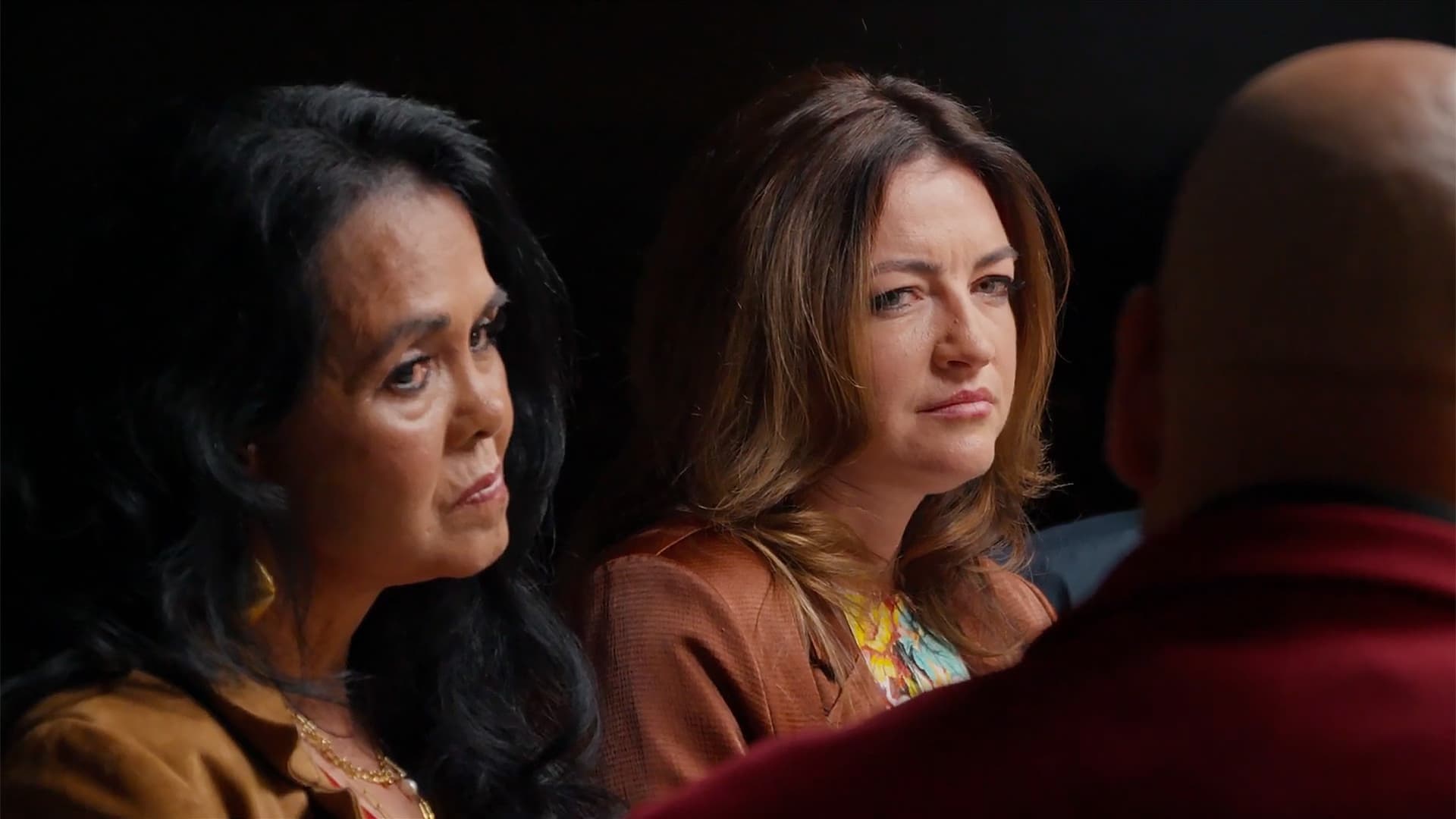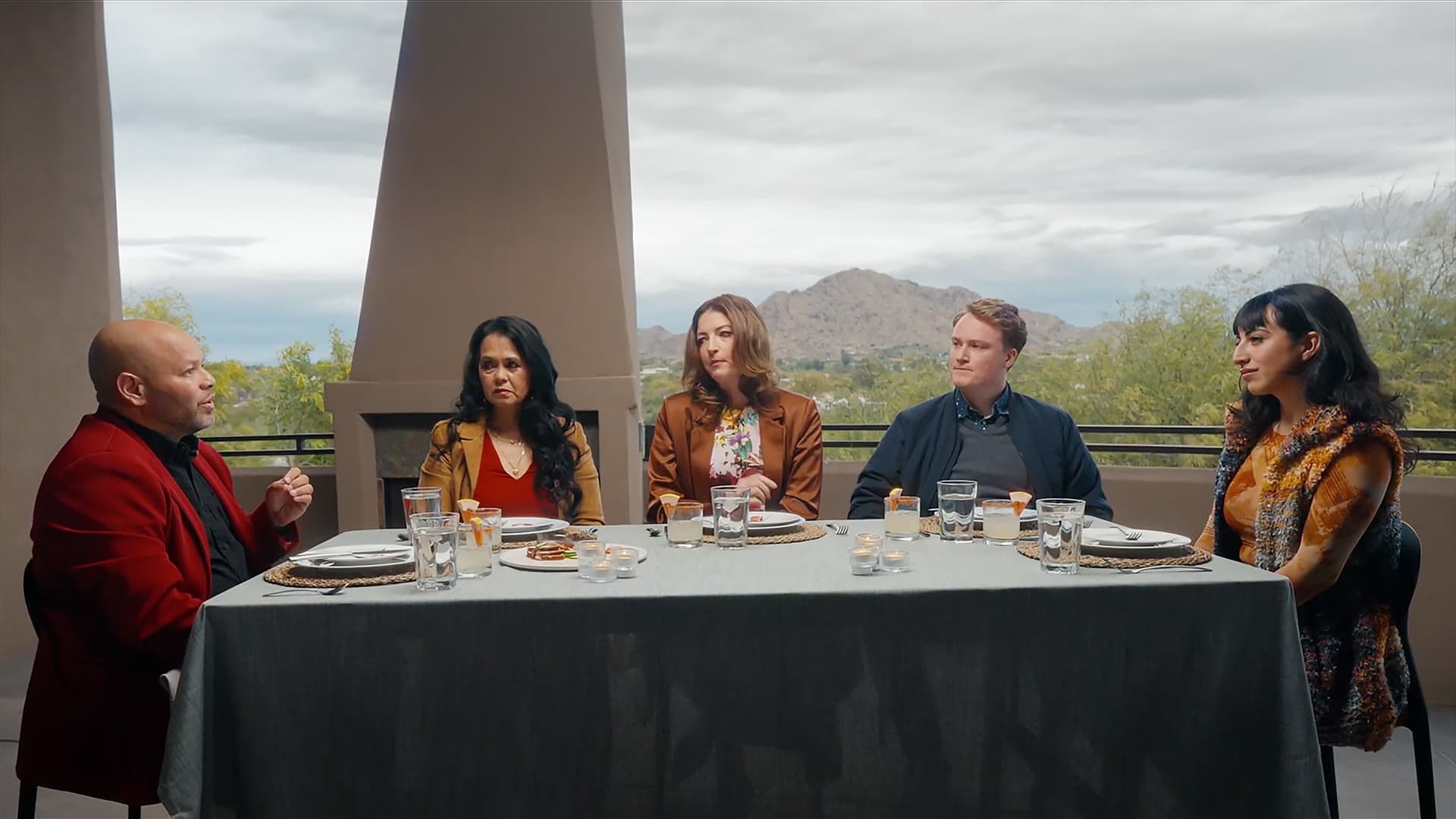
Can 5 Strangers Agree on Faith, Socialism & Science?
Part 2: Food Fight’s Los Angeles conversation continues as five strangers debate democratic socialism, faith and family, MAHA, vaccines, and trust in government and science.
Can socialism solve the problems Americans are facing? Are faith and family disappearing? Has public trust in science been broken? As personal freedom collides with shared responsibility, they challenge one another - and unexpected common ground.
Food Fight is a Zeale Original series bringing people from the same communities back to the table talking again - away from their keyboards and face to face for real conversation.
Transcript
Read the full transcriptAuto-generated · 4,331 words
If he was an employee, he would have been fired a long time ago. Wait, if you're saying he's a liar... He's an absolute liar. Well, so is the president we have now. I do think there's unfortunately corruption in the government. I thought you were liberal. You're speaking like a conservative. I'm liberal. Does anyone support ICE? Surprise.
Bad behavior of an immigrant does not excuse the bad behavior of ICE. What it looks like is an attack on the Hispanic community. It's what it looks like. We have to get him out. I really believe that. They let in 20 million people. That brings in good people, bad people, and really bad people. But how do you explain ICE killing Americans? I don't know if we want to go there. They have gone into people's church. Actually, my dad's church. He really?
A basic lifestyle is just not affordable anymore. Defund the police. Open all the borders. He's an absolute liar. I got to stop you right there. Our main dish tonight is inspired by Los Angeles' famous Koreatown. Everything's delicious, no matter where you go, and it is a local favorite for hanging out and getting together with friends. It's a Korean braised short rib. They're seared off. Into that pan, we add some gochugaru, which is a Korean spice, and then we braise it with beef stock for about four hours, with crispy potatoes, grilled market vegetables, and a scallion salsa.
Wow. This is so exciting. Thank you. You're welcome. What do you guys attribute the rise of the progressive DSA movement to? I think it's the fact that the two-party system does not seem to be making any progress, and it doesn't seem to be working. You know, affordability is obviously obvious, and people are feeling disenfranchised, but I think there's also a little bit of exploitation, you know, saying, hey, the shiny object is we're going to give you the free stuff, we're going to take care of you, and we need to break the system, and that system is, you know, the Death Star capitalism.
I mean, you know, I grew up in England, and I think in its concept, it's the idea that people fall on hard times. You know, you sometimes, like, ride the line, and I think it's the idea that there is systems in place that will protect you if you fall in those hard times.
That's part of the definition, but true socialism is the control of production, right? And they control everything, and everybody's going to be equal, and we make sure everybody gets this. And the problem with that is it takes out incentive of working, and that capitalism thrives on. I can make a widget, I can make money, I'm going to go, and that betters everybody.
Socialism is more handout-y. I think right now, you know, the rise of Mondami and whatnot, they're like, okay, you know, we're going to get free groceries. We're going to get free housing. They're going to lower the rent. Those are all very sexy, but who pays for them? And if there was a socialist society, would the idea of a millionaire or billionaire disappear? Yes, very much so, they would be after that. But then the sort of flip of it is, you know, when...
The banking system failed. When the car industry failed here, the government essentially stepped in, saved the... That is what you're talking about. I agree with you. I wish they didn't save them. It would have been hell to pay, and we would have reset. Incentive is what makes the system go. If you go full socialist, which they've done many times this century, it not only lowers the standard of living, it also can end up in a very bad place, a violent place.
So, I do believe that there should be the ability to get wealth, but then I do think some areas of socialism would probably be beneficial as well, but I don't think getting rid of capitalism is the solution. I think that it's where's the balance. Like, socialism is rising, and I certainly, like, I don't agree with, like, with...
Most of these people. It's identified the right problem, right, is that people feel the squeeze, they feel that a basic American lifestyle is just not affordable anymore. So, it is very easy to play on somebody's anger and fear with a message.
And I think a lot of it is very disingenuous and is actually masking a lot of, yeah, dangerous and masking a lot of other motives and agendas. But I don't think people understand exactly. What that movement in particular, the democratic, socialist... They're coming in with that as their cover, but they have so many other things they're talking about that I think if people knew, they wouldn't agree. Defund the police. Open all the borders. Get rid of the Constitution. Empty the jails.
Right, and they're coming in at the entry point of affordability. Yeah. So, people need to pay attention and really see what these candidates are talking about, because they're getting elected. I think it's very easy for all of us at this table to say, oh, socialism is very bad, very bad thing, progressive movement, bad, bad, bad, and maybe it is bad, but then there's also going to be people on the side of town where having rations would actually be really good, you know, waking up and not having to fear for my life, getting to sleep somewhere, that would be really nice.
Everybody has the goodness of wanting to help, but what I think is lost is the true... It is very unaffordable in LA and it can be very difficult to live here, to live a healthy lifestyle here, to have a gym membership here. To me, it's just a matter of whether you understand how the world works, how economics work, and I feel like in some of their arguments, they don't really understand that yet. It's not mutually exclusive. You can have capitalism and still have the rations and help people.
I see, yeah. Problem is, is where does that money come from? I think it also... It does not incentivize people in our generation to want to do better for themselves, because they might think to themselves, oh, I'm just going to get taxed more, and eventually I'm just going to have to leave America. I mean, California, for example. I disagree with that. Okay. I don't think you suddenly see, you start taxing wealthy people more that young people are going to be like, you know what, I don't want to be wealthy.
I don't want to get to the top. I just don't agree with that on any level. I would much rather, it's like, you know. Yeah. Something of something is better than something of nothing. So, I'd rather pay more taxes and be wealthy than, you know.
Then just not have any wealth. To me, the wealth tax is so silly because, first of all, the billionaires, in California, it's a billionaire tax. They're gone. They're already leaving. So, now, you don't only not collect the tax, you've lost the tax revenue of those billionaires, and they're pissed off. So, they're going to move their companies out, too. I would just say for me personally, as a Christian woman and as a Catholic person, I believe it's our fundamental right as human.
It's not the government's role to help everybody obtain that dream. I think it is the government's role to foster and provide a society. That provides people that opportunity still comes down to, like, somebody's personal drive, their work ethic, their desire. Problem is, all is the answer is more tax, but there's no production.
So, like, you tax and tax and tax, eventually people are going to run out of other people's money, and it doesn't further us. So, maybe short-term, the money they collect goes and helps a fund, education, whatever. But at the end of the day, if you're constantly, your answer is more taxes, you're just slowly degrading the lifestyle, and we see it.
It's happening right in front of our eyes. For dessert tonight, we're going to make a chiffon cake. It was invented in Los Angeles in the 1920s, and we're going to be serving it with a Meyer lemon, creme fraiche, as well as some peak season peaches, because they're the best right now.
So pretty. I've eaten more flowers today. Oh, this is amazing. I love peaches. What change in our culture do you guys find to be the most promising or most concerning in America today? I think the most concerning is definitely loss of Christian values.
I do think that because we don't have a unified belief system anymore, now that's led to confusion. But you think everyone should be Christian? I would want everyone to be Christian, so yes. But what about people who are just atheists or people who don't believe?
Well, I'd want to know why they don't believe. Like, I feel like you can believe whatever you want to believe, and I can believe whatever I want to believe, and it doesn't have to be the same thing. I think, for me, there's a social contract. And I think it's... What I think is... I see as the biggest problem is I think people have lost faith in the system. As simple as people... You know, not waiting for you at a stop sign, people not holding the door open, and I think that is, I think it is this idea that people are just, they're out for themselves, and I think that's what I really worry about, is they don't trust the system, they don't trust the system of governance, and I think that's where we're really losing people, and we're really, like, as a culture and a society, like, really in trouble.
I agree with you that I definitely have seen a decrease in really just basic manners, honestly, in general, and basic respect. I mean, we were talking about this earlier. The conversation that we're having right now is very, it's a very healthy one, in my opinion, but if you go on social media and we were trying to achieve what we're doing right now, it would probably get pretty ugly really fast, and I don't believe in that. Like, it would probably end up, and it's an exchange where people are insulting one another because they don't agree.
The point of America is that it's okay for us to disagree. It's okay for us to come from different backgrounds. It's okay for us to come from different religions. I don't know what religion you all are, but I respect whatever religion you all are, and I respect how you live your lives, as long as you're being a good person and living out the values that I believe in my head that Jesus would live out. People can unite around freedom, equality, and human rights.
Without sharing a religion. More than religion, spirituality and belief in God, I think, is a wonderful force in a society. You have to believe in something greater than yourself to propel yourself and your family through this thing we call life. I think one of the biggest problems is that we don't promote the family.
Without it, you don't have the nuclear family, and without the nuclear family, you're not creating the best individuals, the individuals that have the spirit like you have, you know, to go out and work and dream. They're affected by that. And just from a sheer math standpoint, if you're not reproducing in the nuclear unit, you know, at 1.4 kids per family, you eventually die out. And I think that our culture is in trouble in that regard, because we glorify a lot of things that really aren't great for us.
I mean, you know, divorce happens, I get it, but, you know, why is it 70% in California? I was just going to say, I think we kind of glorify, like, independence, and being independent is nice to a certain extent. You want to be able to rely on yourself, and you want to love yourself, but there's also a value in having community and having a village behind you. And I feel like, unfortunately, I feel like maybe a lot of people my age kind of forget about that and kind of want to just, like, fend for themselves, but I think there's nothing better than having community behind you and having a village, because, you know, when I do go on to get married and have kids, like, you need to have people.
You can't do it all on your own. I don't think you should do it all by yourself. I think there's beauty in having other people. I think that's why we're here. Do you think women don't need men anymore? I think there was once upon a time... No, I think once upon a time, marriage was more popular because a woman... And I think now that you are able to provide for yourself, being married, having a child, it seems like less of a pro to you guys versus when you absolutely needed one to provide and to survive.
That is so interesting. Well, it's happening. And because of that, the liberation, there are less and less people getting married and having kids. And eventually, we don't. Reproduce the culture, and it happens. It has consequences. Whether they're bad or good, they have consequences. I'm not married, and I don't have any kids. I do have a niece and nephew that I love. But I am not the decline of society. You're not. No, nobody thinks that way. I think the central thing here is that every woman should decide for herself what she wants to do.
I think that there's nothing more beautiful than finding a partner that respects you and loves you, and it's a really amazing and wonderful thing, and I hope that everyone is able to find it. But if you don't, you could still live a really fruitful life, and I think it should be up to each individual. And society shouldn't blame you for its decline. I think family benefits society as a whole. It definitely allows you to be a better member of the community.
You have someone to talk to, you have someone to love, and you have that support. I think family is like, it's a, you know, there's that saying, like, in your 20s, your friends are your family. And I think, like, I certainly feel now, like, my community is my family. Right, and it's not just like my kids and my wife. It is that, and I think that's what people need as well. A lot is learned in the home of a dual parent, you know, a lot.
It's a good thing. It doesn't mean it's always that way. We always talk about ourselves, and we want to, and I want to do this, but the family is like the most divine thing there is. A marriage is the consummation of that divinity. It's like you're supposed to become one, and there's this... Today, it's going to feel like I'm preaching. I'm sorry. But it feels like we've lost sight of just that spiritual element of man, woman, family, and it's all about me.
I'm going to go out and do it. I'm liberated. I'm not just blaming women. Everybody. Yeah, so I think that we can all agree that we want everyone to be healthier and to prevent disease. Are you referencing, like, what's going on, like, with Maha, maybe?
Yeah, definitely. Well, this summer alone, we've had the diarrhea lettuce. That sounds so attractive after that salad I just had. That was an iceberg. Okay, good. You can't eat the jalapenos, they're recalling the eggs, something's wrong with the beef, like... RFK, like, cleaned house and got rid of...
People that were doing important jobs, and now everyone's got diarrhea. That's good. I mean, we've got diseases coming back that had been wiped out. Oh, and measles, right. I forgot about that. I mean, the proof's kind of in the pudding. One thing I do think is important that we ask questions, and the Maha movement, it is asking the questions like, why are 20% of our kids... Why are 20% of our kids... That's fair. When in 1960, only 2% were. Why is 70% of, like, their calories coming from ultra-processed foods?
Why has autism gone from 1 in 300 to 1 in 19? Why did it kind of coincide with the vaccine schedule tripling up after the 86th vaccine law that Reagan signed in? So, we're just asking questions, and everybody's demonizing that we want to ask these questions. And then the last thing I'll say is...
The reason we get charged up on it, the people that defend what's going on, is because COVID was the biggest lie ever about the vaccine. They told you that you do not get COVID if you get vaccine, and if you don't vax, you are shamed off this earth, like I was. And it's now been proven that you had natural immunity. It's proven that there were many vaccine injuries. It's proven that you didn't die from COVID unless you were... Obese or old?
And so, we've lost trust in the institution, and that's why I support what's going on in the new fashion at Maha. I feel like you say things with a lot of authority, but just because you say it like that doesn't mean it's true. I don't think that's why I'm saying it's true. I mean, there were definitely people who weren't old or obese, and they died from COVID. I'm sorry. I didn't say that there wasn't people who died like that, but by and large, it was...
You had to have a COVID. But I never heard anyone say, like, if you don't get a COVID shot, you're going to die, or that. It wasn't that. Well, you are watching. I got shamed off this earth every day by every mainstream media. It is a disease of the unvaccinated. Fauci said it. Chris Cuomo said it. Don Lemon said it. They said it 24-7 for two years. I walked across the street in L.A., and I was yelled at by people because I wasn't wearing a mask.
Come on. I mean, but that's like anything. People, like, jump on a bandwagon or this or that. They shut down the whole economy. That's not like anything. But also, people didn't know. They didn't know, and I feel like at that point, they were doing... They did. I think in hindsight, it was a big mistake. They probably made mistakes, but I think they were trying to err on the side of caution. They didn't just make a mistake. They knew what they were doing.
I don't know. I don't think so. That kind of rhetoric undermines confidence in science. I think it is good to be skeptical and ask questions, but at the same time, the things you're talking about... In terms of vaccinations, in terms of, like, the food we eat, is the medical industrial complex, the food industrial complex, and those are... Kind of products of American capitalism from that profit motive that we were talking about earlier. How do you fix that without completely unraveling the whole system?
When he says, you know, you find out the FDA, Fruit Loops are okay, but then you find out half the people working at the FDA used to work at Fruit Loops and are getting paid. Right. But how do we fix that? Because that is what we're talking about, right? But my point, that is truly what they're trying to do. People are dying. Because the stuff that, the crazy stuff that they're doing is overshadowing the good stuff. I agree with you on processed foods and dyes.
It's newsworthy. Diarrhea from like Taco Bell lettuce is newsworthy. You know how many people got a bad case of diarrhea and it moved on? That always happens, and then they try to politicize it and say it's because of what they're doing at the FDA. I don't know if it is or it isn't, but that is small potatoes compared to shutting down the Maybe there's a problem and a causation with vaccines not being great for you. Can we at least have the discussion?
That's all I'm asking. My first reaction to the word vaccine is, don't get it. Which one? Which one? Don't get vaccinated. At all? At all. Wait, really? I believe the body heals itself. Wait, actually? I mean, I mean, I mean, do you think all, I'm just asking, do you think all societies have always had vaccines? And I know there were. No, actually, no. No, but people used to die. Yeah, but not all of them died of diseases. From polio. A lot of them died from war, hunger, starvation, uncooked food.
So, I think we can just say, like, a lot of people died from disease, but it wasn't just from One cause. It was from a lot of lack of technology. I think if they had technology that we do now, I don't think that they would have been at risk to as many diseases as they were. So, now we have the technology, so this is what you're saying. Medicines and vaccine, you know. Yes. To prevent things that they couldn't prevent before, that people used to die from, that they don't die from anymore.
When Salomon said that he doesn't believe in vaccines at all, I was shocked, honestly. Just because I feel like me and him had a really good repertoire for most of the night, and we agreed on most things. I don't know that I agree on not getting vaccinated at all. It's interesting. My mom was a militant anti-vaxxer.
And I grew up very sceptical of vaccines. Now I have children. I certainly have found a balance where it's like, I absolutely see the necessity for vaccines, but I ask questions. So, when I go to my paediatrician and they want to give three vaccines, I don't just say, yeah, go ahead and stick them in their arm. I want to know why.
And what I love is that they're not trying to force them. They're like, you know what, these two you really should get. That one. That's a, that's a you, that's a you call. So, for me, that goes back to, like, ask questions, educate yourself, make sure you're doing the right thing, but I do, I see the need for them. And the FDA just approved, they said, let's, let's cut some of these out, but let's, the big thing was spacing them out.
Is that such a big deal? Don't we have common ground? Kids are still getting vaccinated, but let's space it out. Let's not give a three-year-old 14 shots at once. You know, I know there's a lot of misinformation. You have to respect. The advancement in science and technology is the driving force behind, like, the progress of the world. Because science changes all the time. That's what scares me. I would just rather take the risk of not taking one, because then if I did, I wouldn't be able to live with myself if something did go wrong, and I decided to get it.
I think that goes to what you said, like, it should be your personal choice. Yeah, but... It shouldn't be mandated. But to be fair, if it was truly a disease that wasn't in our population, and it was, like, mumps or whatever, and we've killed it... And then if a lot of people didn't vax, the argument on the other side is that eventually you'd actually bring it back into the population.
So, to be fair, from my point of view, we have to have that discussion, too. The problem is I think there was just too many of them, and it was partially money-motivated, and when they shut down the conversation of whether there was causation to autism and Crohn's disease and other things that are happening now that didn't exist 30 years ago, that's when I got suspicious. So, I'm not completely like Solomon, where I'm like Novaxing, but I want the questions, I want the true science, and I want to have a real, honest conversation.
You know, I thought it was really great, because today's age, when you talk about topics that you don't agree on, it always turns into a fight, and you just start yelling at each other, and I thought it was very civilized tonight, which is the one thing I took away.
The food was amazing. Overall, it was a really good conversation with people who have different ideas about things. I had so much fun tonight. I loved my experience. I loved hearing different people's point of views. There were even a few that really surprised me, and I had to giggle because I was like, you actually think that?
I think a lot of their perspectives and opinions were things that the media already says. I don't think there were a lot of really unique and individual opinions that I heard or were shocked by. You know, I'm 42, and I think it was interesting hearing from somebody in their 20s, somebody in their 30s, and how they see the culture, the world. That was really interesting and eye-opening for me. Nobody interrupted each other. We listened. And we need more of that, regardless of what side you're on.