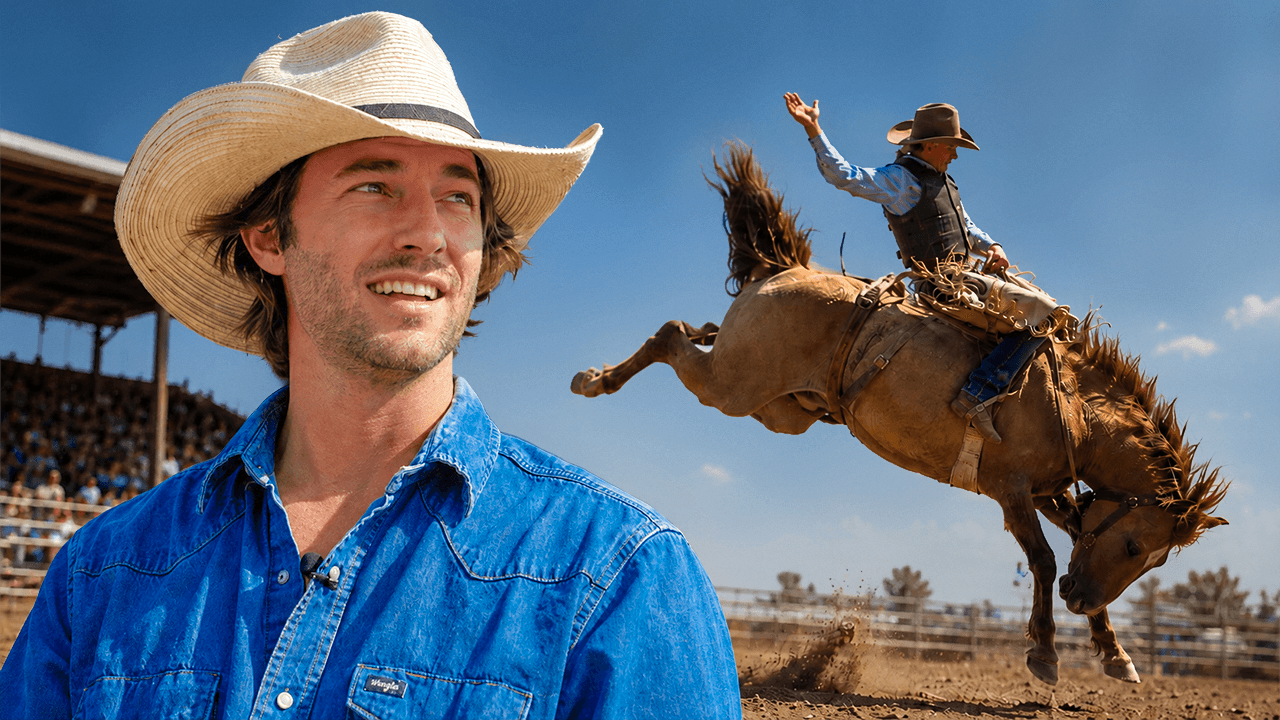
Chad Flores isn’t your typical lawyer. After starting in a big law firm, he carved his own path as a one-man appellate specialist—arguably a modern-day “samurai” of the courtroom.
In this episode, Chad shares how personal crucibles—from caring for his mother after a life-changing accident to navigating early career challenges—shaped his approach to law, life, and adventure. Hear the story of a scrappy Texan who turned hardship into craft, discipline, and a love for the extraordinary.
Transcript
Read the full transcriptAuto-generated · 12,736 words
So, Chad Flores, welcome to the Walk Up Podcast in your office, in fact. Thank you. Welcome. It is a pleasure to have special guests here. Very few people come to the office, so it is always a nice occasion to have a friend here.
If I had this office, I would be showing it off all the time. Oh, man. I would be having unnecessary meetings just to get people in here. So, thank you for providing both your hospitality and the set design. I mean, this is like, you know what people would pay to have a podcast set like this?
You know, with the paintings, and the dead animals, and such. Yeah, yeah. One of the central reasons to have your own law practice is so you can create your own dojo. So, yeah, that is why I did it. That is half the reason. So, yeah, we should start with that, and then we will do a little more background, but we are at Flores Law. It is true. It is true. Your law firm. It is, yes. You are like a big grown-up with a law firm.
Yeah. In Houston, Texas. So, define for people what type of law you practice, how it works. What's the magic that happens here in this room? Okay, I'll give you two answers. One is the sort of objectively correct answer, and then one is the more theatrically aspirational answer. So, the objective answer is that I run a law firm here in Texas. I'm a litigator, so I don't do any transactional law like putting deals together and making the world better. I'm something of a mercenary, and my litigation practice is super specialized.
I just have a niche of law. I only deal in appeals. Talking to judges. So I don't do the jury stuff about getting the witnesses and getting the guy on the stand. It's just judges, and it's usually the end game in the really big cases that end up at places like the Supreme Court and the federal court. So I argue about things like in a commercial case, what a contract means. In the more fun cases, what does the statute mean? What does the constitution mean?
What does the president can do? That kind of stuff. So that's my practice. I'm sort of a one-man litigation shop now. I spend a lot of time in a... A big tall building law firm and cut my teeth there, and now I have my own shop. So, that's what I do, is I'm a commercial litigator that specializes in appeals. I have a board certification in yada yada. So, that's the objective version. The aspirational version is that, on my best days, my practice is like a modern American legal ronin.
Right, so if you're a nerd like I am, right, the samurais are sort of the masters of their craft, and they devote themselves to a craft that is righteous. It's something of a game, but it also pursues really important ends, and the samurai spends their life usually serving a feudal lord or a feudal house, but occasionally, a samurai will become separated from the lord or the house they serve, and they become a ronin, and the ronin is the samurai who's masterless.
Ronin? Ronin, yeah. R-O-N-I-N. Ronin. There are movies about some Ronins. I do remember that. Yeah, yeah, yeah. So, it is a classic character, pretty rare, where a samurai, who would usually be part of a group, but an institution, is now on their own, and they choose which battles to fight and which causes to take on. So, on my best days, that is what the practice is like now. I really love being a litigator. It is a very nerdy craft I have, but I love it, and it is a little bit of a game.
It is a competitive game. It has got interesting elements of philosophy sometimes, problem solving, a little bit of poker playing if it is a big pot of gold, righteous do-gooding when we get things right, some theater as well. So, that is my craft, and I really love it. And now I have it as kind of a one-man shop, and so sometimes it is a little bit of a Robin Hood game where I get to do some fancy commercial work for important cases and overcharge those clients a little bit so I can undercharge the public cases that I really care about, and this is where it happens.
And so, besides the obvious differences between being a big law firm versus being your own shop, what are the things that you really see the contrast in? In having your own practice now versus being part of a much larger operation.
Lawyering is basically the same for everybody. We're all supposed to read the books and write the things and go to court. Conventional wisdom says that over time, a really successful lawyer builds a practice by, at first, having their boots on the ground and being a maker, and then over time, you start managing lawyers and leveraging and things like that. So, my law firm doesn't do that. My law firm is just me. I love the craft, and I'm dedicated to sort of staying boots on the ground, doing the actual lawyering all the way through.
So, it's just me, and I love it. I tend to, you know, the codex for this law firm, for my practice, is like Cal Newport's deep work, right? Some zero to one, Peter Teal stuff, and some of these samurais. So, the model is that I take on cases that are interesting and hard. They're usually cases that require a lot of reading and a lot of writing, so I sit here in the dojo and do that stuff. I pair up with other lawyers, but it's more of an independent kind of game.
You could think of the model like a military analogy, right? I'm not going to war. I do safe litigation stuff, but on our best days, we're like... The special operations sniper you bring into a team. You know, the lawyers you think about most of the time are the guys who are kicking doors down, the infantry people doing the work, but occasionally, in the really big operations, you want a guy to come in with some special skills and deploy to do something really particular.
That is what I get to do. So, it is cool. And is there more, I mean, obviously, there is always reputational risk. Generally, in the legal profession, but do you feel, is there more of it because your name is on the door? Because at the end of the day, it's really, I mean, you can't really pass it off to anybody else. Sure, yeah, yeah. There's a little more repetition. It's like any industry, like in the car industry, you know, the people who make Hondas and Toyotas and Fords, I drive a Ford, right?
They make lots and lots of cars. They're really great cars. They make a lot of money. Then there's that guy who makes the bespoke Lamborghini, and he only makes 10 of them every year, and they're not really for every purpose. Some of them are for show.
Some of them are for racing, but that guy really loves the engine and the mechanics and is a gearhead. On my best days, that's kind of what the practice is like. It's like a bespoke, you know, cobbler, watchmaker, suit person, right? Sometimes, for these really, really big cases, the controversy justifies the kind of work that I get to do, which is awesome. So, I get to spend a ton of time reading every case on a topic and thinking really deeply about where the law should go on something, and that's an awesome day to have in my work, and that just doesn't happen at big firms that are...
More like a commodity. They're doing important things, but they're churning out a kind of legal product that doesn't require and doesn't let their lawyers do what I feel like is kind of a craftsman law practice. So then... We all have our origin story, and there's the superhero origin story. I guess this is a Ronin samurai origin story. The cooler you can make a civil appellate specialist sound, the better. So far, I've compared myself to a ninja, special operations guys. I've got a good Batman analogy.
I can do Han Solo, too. We would link them all in. A lot of fancy dressing for sort of nerdy typist guy. Well, I think what the headline ends up being, this would be like, Ninja warrior, you know, lawyer meets something else. So, we've already got the cool title for it. So, origin story, because I want to kind of identify where this passion for the law comes from, right? And also your particular angle that you come at it. So, where are you from?
How did you get here? What's your background story? I like to think the background story is... A simple kid from nowhere kind of scraps his way into an interesting field. I'm a Texan. I grew up in sort of central Texas, outside of Austin, kind of the middle of nowhere, really small town. My mom had moved to Texas to run track. She was an athlete, and my dad was also from around the same spot. So, I grew up in the hill country, only child.
I had a dog and a lot of wilderness to run around in, and my childhood was really good. It was very Humble beginnings with not much around, but it was great in the sense that my solace and all the fun I had was outside, running around outside, doing kind of simple stuff. So, that's where I'm from, a Texas guy, and coming through high school, I was a debate nerd. That was one of the things I did. It was a small school, so I could do anything I wanted to do.
If you were a little bit athletic, you could play all the sports in the school. If you were a little bit smart, you could try all the things. And so that, I think, bred in me a... An appreciation for the kind of classic American Renaissance way, where you really get to draw on a little bit of everything in life. You know, a great day is when you do a little bit of this pretty well, and a little bit of that pretty well, and a little bit of that.
So, I grew up in a little town outside of Austin, and I had designs to go off to college on the East Coast to go to a fancy school. And then at the end of high school, I had one of my big crucible events where my mom and I were involved in this really big car accident. We were on the way to church one day. Being on the way to church is an important part of it, deep down.
And we got in this huge car accident, and my mom was really hurt, and she suffered a traumatic brain injury, and she became paraplegic for a long time. So, she was in a coma for six months, and then she came out of a coma.
And for the next four to five years, instead of going to college, away, I lived at home. And so, that was the real formative event in the early part of my life. And my mom is still with us today, and she's awesome. She's great. So, she's a hemiplegic, so she can use one of her arms, and so she can compute and do things like that now. And her headspace is great. She retained virtually everything, but the physicality of life is dramatically different sort of in an instant.
So, as a child, I had this great upbringing, single, only child in a family that was pretty nice and loving, and then kind of out of nowhere, there was this... Well, we had a hugely chaotic event that kind of sent our family into a tailspin, and happily, we sort of, you know, we banded together in a really awesome way. So, for the next four years, about five days a week, I would take care of mom, and I would stay at home and do the blocking and tackling of life.
Now, when you're talking about taking care of your mom, I mean, this is... It is a broad categorization. I mean, the reality of that, of somebody that was paraplegic and then got a little bit more use of at least one of her limbs, I mean, you are talking everything from like feeding, bathroom. I mean, that has to, I mean, as a child, because you are like 18-ish at this time, right? So, you go from where you don't... Start to think of one of your parents as a dependent on you until much later in life, right?
My dad passed away a couple years ago. I went through that process. My mom was taking care of him, needed a lot of help, but that is later in life. So, what is it like to go from, I am about to go off to college, independent, right? That is the beginning of your real first independence of leaving the home, to now having a dependent.
Mother, where she's reliant on you for her meals and use of the bathroom and that sort of stuff. Was that something you were able to embrace easily, or was it like, I guess this is just what it is now? How did you approach it?
It's definitely not something that, in the moment, I think anybody thinks about. A lot of people have these... Events in life that just befall you, and your instincts and your family values kind of kick in. Our family instincts were always very much of a service archetype, and so it worked well for us. We gelled as a family. We got closer. We got really in sync. It was weird, and it took me a long time to process, and I probably am still processing it, but in the moment, it felt very much like kind of a service deployment, sort of in a foxhole with somebody.
And the demands of that kind of environment aren't something you think about, because you don't really have a big choice. You just left foot, right foot, and push forward. The contrast for me was always, I think, a source of... Yeah. So, I spent five days a week with my mom doing the blocking and tackling of life, and her attitude was awesome. She was really positive, very optimistic, despite having gone through this extraordinary event, smiling on her face every day, looking at the positive things in life.
Really? And so, for her to have that kind of positivity was an example to me and an inspiration for me. I think she is and was always kind of a, there's like a book, you know, like the Tao of Poo, like she has like a very simple piece about her, I think drew a lot of peace, you know, from God and those kind of things, so seeing that five days a week was great to be with somebody and have that kind of relationship, and then the other two days a week, I would go to college, you know, I would commute for a little while, I had started out at Southwest Texas State, So, you know, I went to Texas State University, you know, the home of the fighting cats, and then I transferred to Texas.
But on those two days, the contrast made me sort of an elite student because it felt like a vacation where I could go and just read books and do the things. And so, in the way that, you know, for a lot of people, if you get… When you're whacked with an extraordinary force of some kind, it can either bounce off of you, you know, and that's, I get that. Sometimes it can give you some supervillain things, but you try to capture it in a way that gives you some superpowers, and so for me, the experience of, you know, taking care of my mom at kind of a young age in like a very physical way painted this contrast for when I was able to go to school.
That was easy. And that is when I really flourished and was able to appreciate the simple joys of reading a thing and toying around in class and those kind of stuff. So, that was my formative thing when I was young, and we worked a really long time. My mom made a lot of progress with communicating and sort of through the magic of computers and stuff, corresponded with lots of people, and so we got to a pretty stable place, saved up some money, and then I decided I should either become a physical therapist, So, I could help my mom, you know, continue to improve, or do something that would make some money to take care of the family, and I had been a debate geek back in the day, and people were like, oh, are you going to go to law school, and I didn't have any particular designs, but I thought, well, now is the time to go.
So, I took the test and went off to law school. So, law school for me, I moved away to D.C. to go to American University. I didn't really know anything about law schools. Nobody in my family was a lawyer, but I thought, hey, this will be great. So, that was my real first time away from home, and it was awesome. It was super cool. I spent a little time playing, so on my oats, you know, dated a girl in D.C. for the first time and made kind of bad grades.
But then things started clicking, because to me, the law had that mixture of those things I was mentioning. A little bit of philosophy. I liked government classes as a kid. A little bit of problem solving. The competitive part really kind of stokes it for me, being a small kid from a small town. I always would see people with fancy resumes and fancy things come in, and I just had that notion that there should be a... Playing field where meritocracy really works, and so I like that part of the law where you had a stack of documents, and I'm going to read it, and you're going to read it, and we're going to see who can sort of game it better.
So, the poker playing part talked to me. The theater was also a thing, too, a little talking. So, that was a big jumping off point, and off I went. And what was it like leaving? Was it difficult to leave your, not leave your mom, but not be there? Oh, yeah, for sure, for sure. I mean, because obviously you've made this decision to stay very local for undergrad, and then you're going off to the East Coast, obviously for great reasons, to go to law school and maybe help your family in the long run and all that, but I mean, take us back, like, what was that?
Was it a hard decision, or were you considering still going to school locally to stick around? Were you definitely going to work it out with your dad in terms of caregiving and all that? Yeah, it was hard in all the ways you think it's hard. My family was maximally supportive, which was great. My mom and dad both said, Go, do you, fill your cup, be the right kind of person, which makes me, as a young guy, feel like, oh, that's great, and also, jeez, guys, now I feel like a total, you know, I get a little guilty for sort of trying to pursue my own thing.
It's a kind of... A decision that a lot of people face a lot of times, right? If it's a kid helping their parents, if it's a spouse deciding if they should pour into their person versus their own, it's kind of a classic kind of Shakespearean problem. I didn't really think about it at the time, but it was really optimally set up for me by them. In my family, there's a deep service archetype about serving the family so that the next person can go a little further, and it's not a...
It's not a kind of archetype that people talk about a lot. You just kind of do it, sort of live through doing. So, that's how it was for me. They always pushed me out to go do those things, and it ended up working. It worked really well. But yeah, when I first left, it was amazing, and of course, I missed the cadence, and still today, I think about it. But that's sort of how life goes, right? You have to figure out which buckets you're going to pour into, and that one worked out well for us.
Now, you mentioned before that it was Somewhat significant that you had to be on the way to church when this terrible accident happened. What role did Faith play in the immediate aftermath of dealing with your mom's injuries, and then over the long term, because they're two very different, there's the shock of, okay, this new reality, and then, as you mentioned, kind of the blocking and tackling of every day, right? So, how did Faith, both for you and for your mom, play into these things?
It cashed out in really interesting ways, depending on who I was thinking about, and still does. Whenever I look at my mom and think about my mom, I see the best parts of God, the best parts of faith, in the way that you see people smile through suffering and survive through those things, and that is a truly inspiring thing every day that I get up. In a very simple way, it is not that complicated, but it is powerful, like every day.
In contrast, when I think about Questions for me, like in this particular scenario, the causation of the accident was always kind of vague, and for a long time, I was like, was it my fault? I was driving. Was it my fault? Was it the other driver's fault? Was it no one's fault? It was the kind of incident in life where things were hazy and fuzzy, and the stakes are really high, and over time, it's something that you think about, and you gnaw on, and you think about, and for long seasons of life, I'll kind of decide.
Maybe that was on me, and so you have those feelings about, you know, guilt and how you're supposed to do that, and then for a long time, I thought, oh, it wasn't my fault, and a lot of people I know go through some season of, you know, why does God allow suffering, and I had a huge dose of that. I think that's one of the most foundational questions and why people...
Struggle with the idea of a loving God that permits suffering. Yeah, yeah, indeed. So, I still wrestle with that today. It is kind of an evolution. Over time, I come to be more at peace with it. I think the big crucible events in my life tend to have some elements that are very defined and very teaching, like the joy I get and the inspiration I get from my mom's reaction to that.
And some of the lessons remind me that parts of life are a mystery. There's part of the plan you just will never know and won't understand, and that has to be okay. You have to kind of understand what you can and move forward. So, parts of that are baked into that, too. And do you think that...
Change in your life brought a focus? Did you have a different urgency with the way that you approached law school and career, or were you always motivated and this just brought it into greater focus and maybe getting into law? But you know what I'm saying? Was there a sense of like... Well, you had to grow up a lot faster to some degree, because being an only child, right, there's the notion of caring for your parents has probably always been there, right?
Because you're not splitting the responsibilities amongst several siblings, but now it would come into sharp focus much earlier than you would have anticipated. Yeah, yeah. I had the mission orientation much earlier and with a much higher urgency than I think I would have otherwise, which is probably a good thing. I think it was good for me to push more. I was disciplined in my practices to give me a sense of purpose. Who knows where I would have wandered off if not for that event?
The path not taken could have gone a million places. So, yeah, that was one of my big crucibles. It had other impacts, too. When I was a young kid in high school, I was big. I graduated high school, and I weighed 362 pounds. I was huge, because I ate my feelings, and I had kind of typical stuff, and then I got in this huge accident with my mom, and I was like, oh, she's fighting to lift her hand today, and so I lost my weight, and that was another thing that sort of pushed me in a direction.
But, I mean, I knew that you'd... It's been heavier in an earlier life, but I don't think I knew it was that size, because to be that big at that age, that takes a lot of work. In some ways, it takes a lot of work to put on that much weight. Yeah, yeah.
So, that process, so your mom's injury, the accident, also then had a physical impact on you in the positive way, where you're like, I've got to get myself in shape to help take care of my mom? Yeah. Was that the primary motive? Four college years for me were transformative in a lot of ways. One of them was the transformation of being in it with my mom the whole time. The other part was transformative in transforming my body and thinking about a mission-based thing.
And then starting to taste sort of the gratitude you have for being able to, you know, go out of modern America and decide what, you know, what first world career can I make the best of for my family.
That was all really empowering to me. That really kind of sent me out of the chute pretty hard and fast. And then, did you just kind of... So, research on your own, I mean, was it just simple as like, I'm just going to start exercising in some way every single day? Was there a particular plan for it? Did you seek out some sort of mentor or coach or somebody that could help guide that journey, or how did you figure out kind of the...
At the beginning, it was easy, because when you're that big, it's easier to lose some of the first weight, right? You know, eat less, do more. And then over time, I started getting acquainted. You know, I lost the weight. I didn't get particularly fit or athletic or... Well, I've been sports-oriented until later in life, but then I just kind of by comparison, I thought, man, mom's going through this. Like, I got to get it together. And it's a different motivation. So, you know, mission and tribe are always valuable.
To really direct people, and as a kid, you get to play, and you sort of have playful things, but not by my choosing. I had immediate mission and immediate tribe really early on in a way that drove the family together, and then for my parents to say, you need to go find your own mission and start building that was huge. That is everything.
And then, so then by the time you are graduating law school, I imagine confidence for you is at a sky high, no? I mean, you are graduating from a very prestigious law school, getting physically, transforming yourself physically, you have now got… A degree to go out in the world. I was like, were you feeling that, or was that… Somewhat. I still had a big chip on my shoulder, because I felt like I had good, raw ingredients, but I hadn't gone to the fanciest of law schools, and I came from a small town, and the resources were somewhat different.
So, I had a very scrapper mentality. I played around at the beginning of law school a little bit, and I was getting social, and so my grades the first semester weren't perfect. So, I had to grind up a lot of my stuff to get where I wanted to. I went to… Well, I was at American University's Law School, and we had a really famous Supreme Court specialist who came out, Tom Goldstein, who founded SCOTUSblog. He's in the news for other reasons now, but he was like the guy, and he was a scrapper, kind of like me, who… Got to the top of his game with raw skills, plus like a real hustler mentality.
And so, that I enjoyed taking on. It felt good. You know, I watched a lot of movies growing up. I was like, oh yeah, who doesn't like the hustler who's kind of gaming it? So, that was my approach early on. You know, clerkships out of law school were a big thing you needed to get, and so I remember out of law school, I applied for clerkships with federal judges, and I applied, and you know, I had to kind of cast a wide net.
So, I applied to literally Every single federal judge in this, like 437 judges, like, hey, this is my resume. I think I'm going to get one of these, and I got zero offers. Wow. It's like, whoa. And so, then I started applying again, and so I landed a job. During the summers, I had worked at the state solicitor general's office, the sort of top appellate lawyer for the state of Texas. It was Ted Cruz at the time, and I made some good relationship there.
I scrapped it up, and so I got a clerkship on the state Supreme Court, the Supreme Court of Texas. Which is a really cool way to look behind the scenes and see where those judges work. And then I sort of parlayed that into another job with a federal judge. And then I stumbled into law practice. And I did the first 15 years of practice kind of in a traditional way at a big, elite law firm. That was cool. Like that is the way to learn the trade.
At my law firm, it was, it felt a little bit like an Old school Jedi system, where there was a master and apprentice, and the master at my law firm was really, really good at what he did. He was kind of a low-key guy, so I got to learn the ropes. Argue a bunch of cases, write a bunch of briefs. To any normal person, this is like the most massively geeky stuff in the world, but I was psyched, man, because I would get to stand up and argue about what the contract meant and what the statute meant, and it was checking all those boxes, and I started really appreciating the craft.
So, it worked out nicely, like in the grand scheme of things. As a young kid, I had spent summers digging ditches and those kind of stuff, but to have been waking up in the morning at 8 a.m. to, you know, Take showers with mom and do that stuff, and then to wake up and go to the tall building and move around some papers with some guys, that was a cool moment to be able to help things out there. So, what does your family think now?
Your own shop, your own law firm in Houston, how do they feel? About your current situation, but also just like the whole journey. I mean, it's kind of amazing for your mom to have watched this process, no? It's great. My mom had her own business as an adult. She was into this thing called desktop publishing. So, in the early 80s, she got a desktop computer from Apple Computers. She paid like $15,000 for the very first Apples. And so, she was one of the first people whose job it was to like, in your local newspaper.
She would arrange the advertisements, you know. So, the thing went over here, like in the phone book and stuff. So, she had owned her own business back in the day, and that was a real point of pride. She called it MMI Unlimited, which stood for Me, Myself, and I Unlimited. It was a little clever turn of phrase.
And it meant a lot to me to have my mom, you know, around and to be at the family and to sort of see her, you know, doing that. It was never a big, super successful business, but she had a craft at home that she liked. And it let her kind of integrate with the family. And that's probably why we survived that storm so well. So, now for me, to have my own practice with my own name on it is kind of a cool way to bring things full circle.
I really like it. It just makes you feel like that's the kind of thing we do. And then on a personal level, I mean, you're also… You're going to a small town, you go to D.C., you come back, you're now in Houston, but you're also getting to meet, you're hobnobbing, and you're starting to be part of elite circles, whereas there are a lot of... Imposter syndrome going on for you? I mean, you're taking that scrapper mentality you mentioned, but you're eventually getting into some pretty elite circles.
Sure, sure. I think that's right. I think it's part of the American ethos that no one wants to feel like they started out on top. Everybody wants to feel like they're an outsider that sort of broke in, and I think we all are in a way, but yeah, I for sure feel that still. I really love my craft. I really love the law. I don't like hanging out with lawyers. I don't like hanging out with fancy... I'm always kind of stuck with the...
The back-slapping of the golf courses. Yeah, oh no, I hate that stuff. So, outside of my law practice, I tend to veer the total other direction. I like outdoor adventures. I think that the path not taken for me would have been to maybe go to one of the military academies. I was pretty close to doing that as a kid. I have a lot of service in the family, so when I'm not doing... Super geeky law stuff. I'm usually hanging out with buddies who were probably doing some fun military job, and we're running around outside doing those kind of adventures.
Yeah, I think you were messaging me that you were with some friends of ours in common that I think, one was CO, right, I think? Yeah, yeah, yeah. Or maybe I'm wrong. Yeah, he was on, yeah, special operations, yeah, team's guy. And then fighter pilots. Yeah, yeah, yeah, yeah.
And they say they get to hang out with an appellate lawyer. Yeah, exactly. The super lawyer. Yeah, that's right. I can tell you, I read in your bio that you've been given the super lawyer status. Oh, yeah, yeah. Among the nerds, I have some special nerd status.
Well, I'm sure you can outperform the other attorneys at the gym at this point. I mean, I joke about it, but that is part of the ethos and why I do what I do. I think in sort of the modern world, we have crafts that are interesting. They're usually with computers, you know, sort of. The knowledge economy is some nerd doing nerd computer stuff, but to live a really fruitful life, I think, is to Try to draw from all the fields that really fill your cup.
And so, I have a cool profession that involves reading and writing and, you know, thinking sort of lofty things. And the best way for me to pair that is to try to be a wannabe adventurer. So, I really enjoy, you know, like I was into CrossFit for a long time and those kind of fitness things. Now, I like getting deep in the wilderness and going to explore those things because it makes you feel like a full-fledged American. I think part of the...
Like, part of the ethos is to be on the frontier of things, and to be pushing, and having come from a... You know, a youth where I was at home thinking a lot about what it means to just be able to be an able-bodied person, it makes me a better lawyer. You know, yeah, I can probably deadlift more than any other member of the Supreme Court bar. You know, what? But it is good for the mind, right? So, I went down that rabbit hole, you know, thinking about how to optimize my sleep, my productivity, and make it a practice of deep work and slow things.
It's a good day. It's a simple good day. It's not particularly lofty, and there are people who have really, really righteous jobs that are different, but my little craft is a cool one. So, I sit in my office, I think deeply about the law, and then I go deadlift with my friends and try to go shoot my bow.
That adventurous spirit that began in part from the childhood, having kind of like wide open space to kind of be outside, that sort of thing, or is there also some, what do you think the desire for adventurousness or even risk-taking, where does that originate?
For me, there are a couple of origins. One is the deep-seated one, that when you're kind of born in the outdoors in a place like Texas, you feel like God is in the wilderness. For me, God is in the church. God is in the words, but really, if you push me to really find God, like if you told me, go find God, I would go out alone into the wilderness. That has always spoken to me in an innate way. When I see stories about it, that kind of sings to me, and so...
At a lot of important points in my life, when I was going to go do something really interesting or difficult, I would first go on a walkabout of some kind, so before I went to law school. And on your own, this is… Yeah, yeah, yeah. Specifically, and that is kind of your retreat, your meditation time. Yeah, and it is not something I discovered. I think it is kind of a gift that sort of showed up on my doorstep, so that works for me.
So, part of it is deep-seated like that. And then part of it stems from maybe another one of my… My sort of, you know, crucibles. I was, after law school, when I was in my mid-20s, I married a girl, and we were deeply in love, and we were married for four or five years, and she and I had a huge breakup, totally by surprise, and I was divorced by email, you know, and so one day I was married, and then the next day I got an email, and I never talked to my wife again, never saw her again, never heard from her again, and It was the kind of thing that you see in movies.
You're like, wow. And so, in the long arc, I had this one instance where, with the car accident, this event happens out of nowhere, kind of throws your world into shambles, and I was able to really double down with my family and go through that crucible together and made it stronger.
And then later in life, I was divorced by surprise and very heartbroken. We didn't have kids, and so that was a really blessing there. So, there were consequences, but they were just between the two of us. And again, there was this super surprising moment, and it had me wondering again, why do these things happen? What do you do? And that moment drove me back into the wilderness.
I had, at that time, my law practice, and so I had a craft, and so when I was trying to figure out what does it all mean, why did this happen, I kind of adopted this Batman ethos. I was like, ah, me heart is broken, so I'll take me heart and put it away like a good pirate, and I thought I will devote myself totally to this craft, and did a lot more lawyering, and started paying a lot of attention to who I was fighting for.
And then when I was in lawyering, I had to kind of repair, you know, part of my heart, my soul, and I had to convince myself that I can be safe as sort of just an individual, you know, not married guy, and so the way I did that was by starting to go on adventures. So, I would find the, like, you know, go backpacking for a long time, and I would go for a long time in the middle of nowhere, or I went dog sledding, you know, for like weeks up in Sweden.
I would learn how to, like, go scuba diving, all the kind of things where it was like, man. Versus nature, for man to prove to himself, I can exist independently, and I can sort of survive anything, right? And that was an interesting season. So, that for me was when I discovered, I became more fit and adventurous, and I discovered all kinds of beautiful parts of the wilderness, and had some good deep talks with God off in the middle of nowhere about, man, what does this all mean?
And it was another instance of learning to understand what you can, and learning to accept what you can't, and have a real appreciation for what you got. The stuff that all seems very trite in the movies and books, but when it's your foxhole, and it's your crucible, that stuff comes home. Well, I mean, you drew the direct comparison to the... The car accident and then this whiplash of a divorce. I mean, were there explicit ways in which you feel like you were prepared in a different way for the divorce because of what you have been through with your mom?
Or was it more just, broadly speaking, I understand, sudden shift in life, or were there direct kind of parallels? I don't think they were related, except in the sense of sometimes life has these really unpredictable, explosive events that I didn't see coming, so sometimes it makes a person check their gauges. You're like, oh, am I seeing the world right? And it requires me, I think, to have more faith in what the universe is going to bring. Eventually, when you... Test yourself, like I was testing myself, you know, can I survive this, that, this, that, this, that, you know, and I was running some experiment of, if I get involved in another relationship with anybody, is it going to be okay?
Am I going to be hurt? Is something, is a calamity going to happen? And of course, over the... That exercise, I learned not that I'll be able to stay unhurt, you know, or unsurprised, but that you will be hurt, you will be surprised, and it'll be okay. You know, to have that kind of faith and to have more of a peace about things. Well, that's what I was wondering, is because you mentioned your mom goes through this traumatic event. Keeps a smile on her face, has persevered, obviously with the support of you and your family, but I'm an armchair psychologist over here, but I wonder if there's some subconscious belief that, okay, this traumatic thing happened.
In my mom's life, and in your life, she kept a smile on her face. She remained optimistic. I wonder if she had a different approach of her... Of responding to that traumatic event, whether you would have had a different response to the divorce, you know what I'm saying? For sure, for sure. Yeah, I think my mom's model is the true gift, right? That one should smile, one should have faith, this too shall pass, even if it looks like it really shouldn't.
Yeah, it was the key. Because then, I was motivated to really be myself. You know, there's a lot of service archetype in my family. I think a lot of us have an urge to be ourselves, and I think that's the key. I think a lot of us have an urge to be ourselves. To be the person other people want us to be, and at that point in my life, oh, this relationship had come crashing down, and I was starting to sort of rebuild myself again.
That kind of version of myself was more me, and the genuine version of me, I decided I don't need relationships anymore. I'm just going to do the fun adventures that I like and pursue this practice. And, of course, After a time when all I was trying to do was enjoy what life brought me, and I wasn't looking for it, you know, the best gift ever in my wife now, Lila, came out of nowhere, and so God was like, ha-ha, I got you now, Flores.
So, that was perfect. It sort of sent me through that crucible to bring me more peace, and now it brings me to the sort of beautifully happy. Kind of a comeback story that I feel like I'm in now. Yeah, for sure. So, I was adventuring and having fun and, you know, just doing the stuff that I wanted to do and not trying to make anything happen, and then a friend said, hey, when are you going to seal the deal with Lila?
And I said, what are you talking about? There's no, oh, oh, crap, oh, no, I'm falling for this girl. So, out of nowhere, yeah, big comeback. And was there... Did she have to do convincing for you? Was it marriage or something you should think about again, or was it you convincing yourself? Like, what was that? Oh, yeah, yeah. My gauges were all off. It was totally screwed. You know, she invited me over one time to watch a movie. This was like in what anybody else would identify as obviously first date territory, you know, where the guy is supposed to like, she said, come over, let's watch a movie.
And so, I came over, we watched a movie, and she made this beautiful snack spread of stuff. You're like in your workout clothes or something. And she, I think it was around, she put on The Holiday, like a great romantic comedy. You know, and so the movie ends, and it's that time of the day, and I'm obviously supposed to, like, stretch and go for the smooch, and my gauges are just totally not registering anything, and so I said, oh, that's great, and started to walk off, and said, would you like to watch another movie?
And I was like, oh, gosh! So, her totally reasonable approach to developing a relationship was just bouncing off of my silly radar until I, you know, got more in touch with stuff. But then we hit it off, and it's been pretty cinematically great since then. And how did you ultimately, because there is the idea of dating again, okay, that is one thing, but then opening yourself up to the idea of intimacy, vulnerability, because that is where the opportunity to get hurt comes from.
Yeah. You only can get hurt if you allow yourself to be vulnerable. Yeah. Right, so what was that process like to go, I am going to choose to... Trust this person with my heart when my last experience ended so painfully.
For me, I think it's good that I kind of stumbled into it without trying. A lot of us tend to overthink these things and try too hard, so it was good that I wasn't aiming for the target when it just came to me. So, I think that is probably an element of faith that, you know, the flow of life brought just the right person to me, because if you had told me, go try to find the right person, I would have screwed that up a million times.
So, that part of my story is another kind of dumb luck, the right place, the right time, but probably part of a grander plan. So, now we've been married for three years and change, and we have a 10-month-old daughter, which is great. Our daughter's name is Dale, and Dale is named after my grandfather, my mom's dad, who was a decorated fighter pilot in his day. He fought in Vietnam and didn't come back, one of the ones that paid the sacrifice. So, the service archetype and the sort of ripple effects of those big crucibles kind of come.
All the way through life, and for me, it is a beautiful thing to say that my big second chance that God gave me. Comes to fruition with a beautiful girl named Dale, who is named after my grandfather. Also, Dale Evans, the country singer, the cowgirl, who is a cool cat. And Dale, in Old English, means the lush valley between two mountains. My wife, Lila, had her own path and had some other paths, and so we kind of came to second chances together.
So, it is a pretty cool season for us now. So, fatherhood, I'm still an unmarried guy, so I don't know, I have my own experience of it, but what was that experience of becoming a father in a second relationship where you kind of probably closed yourself off to the idea of... Being married again, or certainly having children. So, like, how has fatherhood been received at this particular point in your life?
I received fatherhood with probably, like, the normal level of fulfillment and joy times, like, 11. Because of my prayers, right? So, you know, I... Because I spent so much time with my mom, you know, kind of like living with someone all day long in what was sort of a negative environment, you know, caring for somebody all the time, to have the flip version and to care for a little tiny baby in sort of the same fashion, but for it to be magically joyful was like the biggest trampoline double bounce ever, you know.
A lot of people have suffered through a lot of things that are tricky, but like I had done years and years of sort of staying up all night and doing crazy stuff. So, I was kind of trained in that. So, I was ready to go, except my daughter has much less complicated situations, and she's great. She's smiling and doing the things. So, for me, this is like a lovely, I don't know if fringe benefit is the right word, but this is the kind of thing where you think, ah, this is why God lays out the plan like this, so that later it gives me the context to do that.
Yeah, but that's interesting, because you had been in a caregiving... So, you are in a caregiving role, unexpectedly, and for a parent, and now you are in a caregiving role, but to your own child, and so the, yeah, you are right, because you were already, those muscles are already there of what caregiving is. It requires, but it's just kind of like every 15 minutes there's something to do, or every 30 minutes. It's like I've experienced caregiving myself, and it's hard to describe to people what it's like until you've experienced it, where it's not like you're busy the entire time, but you're always...
There's always something that needs to be done every 30 minutes or an hour, or something pops up, and so you've got that muscle memory, right? But then if you're doing it for your own kid, that's pretty awesome. Yeah, yeah. So, over the course of the day, I find the mixture to be that an excellent day is when you get sort of a high-definition day in all of the great fields of life. You know, you wake up, and you have a super high-definition, rich experience with your baby girl, and you're just rolling around the floor doing silly stuff, you know?
Yeah. And then later in the day, I go to my, you know, my Ronin, my samurai law practice, and I try to fight some injustice and do some cool stuff with cutting-edge constitutional law, and galactically, it is not that big a deal, but in my little craft, like, it feels great to work on a great little project, and then if I get to go, you know, adventure with my buddies and go on adventures, that is a good thing, too. So, getting that mix, I think, is great individually, and, you know, an average Tuesday for me is pretty good right now.
So, when I tend to walk in these good little days, it's because of those past crucibles, and I've learned some things that are good. A lot smarter people than me have thought about the nature of suffering, the nature of pain, and so I try to think a little bit about it, but not overthink it. And so, for me, the peak moments are like when I take my daughter into the wilderness, you know, and I think about my history and what that place means to me, and I see her eyes light up, and things like that.
That is all pretty satisfying. And you say you try not to think about it too much, meaning like overanalyzing it, or you are trying to come up with some grand theory, or because there is a… Is there a boundary there? Is there like, I don't want to explore this too... Too much. I think my type A lawyer personality wants to solve this problem, and produce a legal brief that explains the nature of suffering, and allocates the fault, and be like, aha, behold!
What philosophers could not do. I have assessed the justice in the situation. It turns out Chad is 2.3 units of fault for this. So, my path has been one of kind of cordoning off my lawyerly thinking, and learning to accept things, maybe not always with the The intellectual part of my head, you know, but accept them with other parts of your person and things like that.
So then, talk to me about where friendships have played a role for you, because being an only child, right, did that make you feel like you had to create kind of… Brotherly level friendships outside of the home, or were you more of a loner, and then later on, because you've mentioned friendships a lot of different times, and adventures, and these camaraderie that you had, but where do friendships, how have they formed you, particularly being an only child?
Friendships for me were late in life. I didn't have them when I was young, right, in part because I was a loner when I was young, and then I was kind of cording down with mom, and so now they're sort of the core, one of the core parts of my game, is building a real fraternity with people. That's the best. I think that I'm not the first person to talk about sort of modern men feeling a sense of loneliness and detachment.
In my little part of the world, it's pretty common, you know, lawyers. Well, I think that people tend to feel that way a lot. A lot of professional people in the family stage. When I was going through my Batman phase of adventuring and walking out, I really bonded with a lot of other guys who were going through similar stuff. So, when you talk about the feels, people tend to come out of the woodworks and talk about those kind of things.
But yeah, now my long-term arc is to be really intentional about the time we spend with sort of the internal fraternity of people, because it is easy to put no extra effort into those relationships, but if you put in just a little, you get all kinds of awesome yields. Well, and especially as your life, you know, marriage, now a child, like the fungible time gets… A little bit less. It's not like it's, you know, obviously you can control a lot of your own schedule and things like that, but what about the...
With vulnerability when it comes to guys, right, I think this is like a topic that, like, you mentioned, like, all right, we actually get into some stuff. You've always been very refreshingly open and honest in our conversations, in our friendship. I don't know if that's just because of the context of things, or that's just always been your approach, but that, you know, trying to approach vulnerability with other guys, I feel like guys don't know how to stick a...
They don't really know how to approach it a lot of times. So, is that something that came to you naturally over time, or how did you discover that that was like an opportunity for bonding and an opportunity to kind of grow in a friendship in a different way? Because there's a lot of guys, I've got friendships where I've never had a real conversation with guy friends that I've had for 20 years, because they just don't want to go there. Oh, yeah.
I'm not particularly good at it. I think it's just a necessity, mother of invention situation. You know, if you're in a ditch, you're like, ah, I've got no choice. I think everybody at some point in their life is probably in a ditch, and they reach out for the tools that are there, and so for my silly cohort of buddies, like you find your gym buddies, you know, and you all get, you know, you go to the sauna, or you get some silly workout, and you get really tired and laid out, and then you can let things open.
I mean, I'd be curious, like, about the other guests, you know, that you've had. What do they say about vulnerability? Because for people that really think about it, really, sometimes... I wonder if there are easier ways to connect with people if you're more direct or doctrinal, because I don't know. I have this yearning to connect, but what have you found so far? Well, yeah, I think people, you mentioned some of it, which is you start with the shared activities, right, that finds something to bond over, right, that gives you some, and I think for some people, it's the context of whether it's faith or, you were talking about.
Exercise, adventures, some people, they have some sort of, whether it's like a Bible study, or a meditation class, or even yoga, whatever, they've got to kind of like, which puts you in a more proximate environment, it seems like, to kind of get a little bit deeper, right? And so, I don't know that I've explicitly, like, Plumb the depths of vulnerability with multiple guests. It is just kind of where this conversation is leading, but I am curious about that because of the being an only child, oftentimes.
Friendships take on a different meaning, right? But you say you're kind of like a late bloomer on that, so to speak. But then, were you open in your friendships previous to having gone through the divorce? No. Okay, so that was a really... I added a little bit of theater and a little bit of trickery, right? So, after the kind of divorce fallout and the heartbreak then, I was really trying to rebuild myself. And so, I started experimenting with really rudimentary stuff, like I got really into sleep, and fitness, and arranging my day, because I wanted to sort of be an adventurer, a law guy.
Control. You have some control over that. Oh, for sure, for sure. And I listened to a lot of Tim Ferriss, and so I remember I decided, here is what I am going to do. I am going to use this as an opportunity to run experiments on me, for the benefit of my friends. I was like, hey guys, in case you hadn't heard, I am like real in a tailspin right now, trying to figure stuff out. But I have maximum flexibility. I've got all this time.
I have this sort of practice. Suppose you had like a year to adopt some new habit, and you wanted to like be really crazy by doing that habit. What would you do? You know, and I would sort of farm it out, and some guy was like, you know, I would like, I would do this sleep habit, or like I would install red lights in my place, or I would do yoga for whatever, and I just started doing it all. And if you play with people and just jump right past that first little part and be like, yo, I'm going through some stuff.
Let us talk tactics and tools. That, to me, suddenly opened up these little roads, where if you just show someone a little card and say, hey, I am on the team, I have got some hurts, and then you go play around, a week later, they come back and say, hey, I am going through the same. Yeah, so it is not particularly tricky.
Yeah, it is interesting, but it is the risk-taking there, right? Because you are opening up. The kimono, so to speak, is what you would say with these analogies. Because for men, it is identity, pride, ego. And so, in your case, because it was, I guess, something… Public, right? I mean, marriage is a public institution, right? Everyone knows you're married, and then you're not, right? So, was there a sense of like, I can't hide from this, so I'm just going to lean in?
Yeah. Okay. Yeah. It's nice sometimes when you have no choice, right? So, necessity is kind of a thing. Yeah. Sometimes people, I think, say that raising the intensity in life is probably good. Like, in some other relationship context, if you have a relationship that's... So-so. People would kind of stick around in an eh-so-so relationship too long, because they don't realize they should probably move on or something.
Yeah, it's kind of that lukewarm. Yeah, something like that. So, you know, mine was pretty intense. It was like, whoa! But I don't know. I don't have a trick to the vulnerability question. It's probably different for everybody. I tend to, I think that if I...
If I think too hard about a problem like that and try to solve it with my intellect, that is probably the wrong way to solve it, you know, and I need to solve it with some other field of life. I should pursue something else and see how it comes about. So, in the same way that, like, I didn't try to solve the problem of opening, you know, my heart again and finding a wife. I tried instead to pursue things that I thought were meaningful and deep, and lo and behold, someone else who really believed in that came along.
Right. Vulnerability can maybe be that way, too. Yeah. I don't recommend going to guys and saying, yo, let's be vulnerable. Wait, wait, no, wait, let's get in a sauna and then be vulnerable. Yeah, yeah, that is usually the sequence I like to do. So, don't try to solve that problem, and then it will probably get solved. No, I think there is a lot of wisdom in that, in terms of, we know for sure everyone has sufferings of various types throughout their lives.
For sure. And so, that is kind of categorically true, and yet, we don't necessarily, we live oftentimes, especially as guys, in this like, I'm going to pretend as if I'm impervious to things. Now, we shouldn't be handing out our feelings to everybody we meet, right? It has to be a trust level and all that. But yeah, and I think the wisdom I see in that, and what you described, is that if you take that first risk of like, hey, I'm going through some stuff.
Even if they are not immediately ready, because they might be a little, oh wait, I didn't really want to hear about your stuff. But then they reflect on it a little bit, and they are like, actually, now I am going through some stuff too.
I got to see that a little bit. One of the groups I work with is... Recovery organization, anti, you know, I hope people get through addiction and all that sort of stuff. And I got to witness some of the retreat programs.
And there was something about, especially some of these guys, I mean, they're like, and these guys, some of these guys have, like, been there, like, helping, you know, after 9-11, you know, Ground Zero, like, helping to, like, you know, to.
Clear bodies and fine remains, and they had lived some lives, right? These guys have been through some stuff, and my wife left me, and my daughters committed suicide, and this, that, and the other. They've lived some lives. That's tier one trauma. Yeah, and to watch these guys, and especially the different generation than us, right? The older generation where vulnerability really was not a thing. I mean, if you... My dad opened up a little bit towards the end of his life, but if you ask my dad, like, so how do you feel, and then you've, about fill in the blank, he'd be like, ah, the F word.
I don't really understand the question. Like, it's honestly like I don't actually get what you're saying. I told you what I did. How did you feel about that? How did you feel about your father being facial in his relationship with your mother, like my grandparents?
Not good, is what he told me. And I was like, okay. I think there is a little bit more behind that, but do you want to unpack that for me? Yeah. So, watching these guys at these retreats, and I was very blessed to just be in the room, for them to trust me to be in the room.
There is something about saying, I am broken, I need help, I don't have all the answers, I need you guys, and I need God. And I was thinking to myself, like, man, if that is actually the experience people have when they walk into a church most of the time, we would have a lot more people coming in the door and feeling welcome. Like, we would lead with, I need you, I need this community, I need God, and I am broken. Right?
I mean, we are all in need of healing. It was so disarming. Because it did. I started sharing stuff. I wasn't even part of the retreat, but I was like, all right, well, if we're in the trust tree, I guess I'm going to jump right in. Yeah, for sure. So, there's, yes, I mean.
Have you been able to, like, in your trying to hack things, like, is there a way to promote this more? Like, is it just get into more environments where you're encouraging taking that risk of opening up, or is it you got to find your little community of enthusiasts or whatever you're into? Like, is there any part of you that's like, ah, man, we need more of this, and here's my hack for it? You know, I don't think, my tip is to not aim at the target of vulnerability.
Right, don't aim at that target. You know, do life with people, and you'll get closer. If you do real life with people, right, not, you know, stupid happy hours with people, not that happy hours are bad, but like, do real life with people, and that tends to bring it out. I think for real intimacy, if it's your friends, if it's a spouse, if it's your, you know, your parents, your family, whatever, like, do the real parts of life, people, and get in it, and then you start getting those connections that you really want.
Suffering is Really bad, but I think the worst part about suffering is suffering alone, and this is what draws people to good art, is that they feel like their suffering is known and they're not alone. And for me, the acquaintance with suffering brought me back to God, right? Because there are institutions in the world that think of a lot of beautiful things and a lot of wonderful things and also know the nature of suffering, and the church is one of those places.
Yeah, so how is that the second time around with marriage and now having a child? Informed your faith? It feels to me sometimes like I was always asking questions in the early part of my life. Why does this bad thing happen? You know, this feels like a net negative, and then as life goes on, you start to feel the perspective creation, you know, side of things. You know, I experienced this so that it lets me appreciate this later. So, some of it is like that.
I don't know, man. I mean, I still struggle with it all the time. You know, I don't have any particular solutions, but there's more of a piece to it. Struggle in what sense? Like making sense of suffering? Yeah, yeah, suffering. Struggle with faith, generally? Yeah, I think the nature of suffering is one of the most interesting problems, in a personal way, when I think about my experience. I like toying with the academic studies of the nature of suffering, and the Bible.
I think that's a very interesting problem that I haven't solved. But it's like an everlasting problem, right? This is what humans do, is they toy with the nature of suffering. Yeah, I mean, being a Catholic, we're always fond of saying, offer it up, you know, because we are, I mean, I think it broadly in other Christian faiths as well, but in particular, the offering up of suffering for Others. Yeah. And we even look at it in a metaphysical, but also, because we think there are three parts to the church.
There is the church militant, which is those on earth. We are the ones in the fight every day, right? There is the church triumphant, the church in heaven. And then the church suffering, which we believe is those in purgatory that are going through that purification process before they can enter into the beatific vision.
And so my friend, unfortunately my best friend, passed away a year and a half ago. You know, a lot of stuff. It was cancer and it was quick. It was five months. And, I mean, from no symptoms to, you know, this is colon cancer and it's bad. And watching him, he never went through a, like, you know, why is this happening to me? This isn't fair, which was amazing.
Watching his transformation of how to, what do I do with this suffering? Because I can't get out of the way of it now. Yeah, you're stuck in it. It's either going to be a lot of suffering to hopefully get healed of this thing, or it's suffering and the ultimate end of life.
And so, we talked about that, about, he's like, I want to offer up these sufferings for... Those in purgatory, I want to offer up these. So, we looked at it as this opportunity. Yeah, dedication. Like, I've got this thing that I'm dealing with now, and what can I do to make it transformative for the lives of others? And that helped him give it meaning and give it purpose. Yeah.
And he had talked to a couple of priests about it. How exactly do I do this, you know? Yeah, yeah. How do I channel this into the show? Yeah, like how do I, like this wave of pain is coming through. You turn to the left a little bit. Yeah. If you cross your fingers while you are suffering, then it goes to count. But I saw the best, I mean, I don't know if it is the right term for it, but salvific suffering.
So, it was... Part of, hopefully, is his own salvation. I hope he's in heaven. I pray for him if he's got a little time in purgatory to work off, I don't know, but it ended up being this huge gift, and it also created just enough time to get right with certain relationships and with God, and he had said, there were certain times I'd say, well, do you want to meet with So-and-so, where there was a friendship, and he's like, I've got to work through some stuff first before I'm ready to talk to them.
Or, do you want to meet with this priest? And he's like, well, I'm scared. I'm not ready to have that. I'm not there yet. But he eventually got there with, from what I could gather, most of those relationships. And so, in a very quick way, I watched this.
There is a tenderness and a vulnerability, and it puts everything in perspective, because it is like, hey, man, I am dying, so let us have this conversation now. It was really, really powerful. I was only witnessing it, I was not participating in it myself, but his way of doing it was like, all right. What can I do to transform the suffering for the sake of others? Yeah, yeah.
I'll sort of end on a sad note. No, that's all right. I told you an hour. We went a little over an hour, but no, I mean, you asked me before how these conversations, how these podcasts usually go, and I'm like, I never know, and I think that's part of the...
That is part of the magic of the format, is that we can just let the conversation unfurl as they should. So, thanks for giving us a peek into your world and how you got to where you are, and hopefully people can pick up little bits of wisdom through this conversation. For sure. My pleasure. Thanks, man.
More from The Walkup
Faith, Sexuality, and the Fog of War (Iris Bahr & Father Rick Riccioli) | Ep. 02
E2
Church, Conflict, and Community (Iris Bahr, Father Rick Riccioli & Rob Long) | Ep. 03
E3
Hope, Vocation, and the Global Church (Colm Flynn & Colin Nykaza) | Ep. 04
E4
Tech, Justice, and the Fight Against Trafficking (Kim Thompson) | Ep. 05
E5