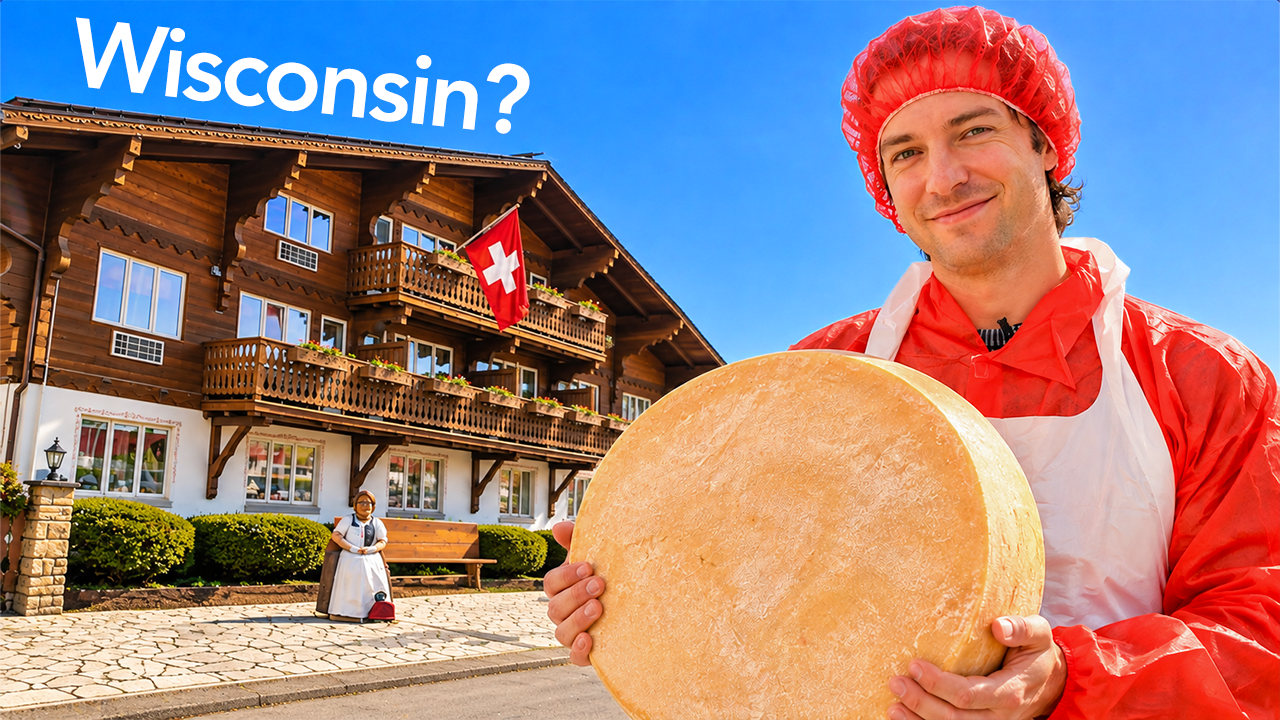
I Found the Hidden Swiss Town Behind Wisconsin’s Cheese Empire
Wisconsin makes nearly 1 out of every 4 pounds of cheese in America. But what's the secret behind its cheese empire?
Deep in Wisconsin's dairy country, the towns of New Glarus and Monroe are keeping centuries-old Swiss traditions alive. From world-famous cheesemakers and family-owned dairy farms to legendary breweries and neighborhood taverns, I discovered a corner of America where craftsmanship, heritage, and community still mean something.
In this episode of Tom Across America, I go behind the scenes at Chalet Cheese Cooperative, home of America's famous Limburger cheese, visit the dairy farmers who keep Wisconsin's cheese industry running, and explore New Glarus Brewing Company, the makers of Spotted Cow.
Along the way, I uncover how Swiss immigrants helped transform this region into one of America's great cheesemaking centers, and why the people here are so determined to preserve what makes their home special.
Subscribe to Tom Across America for more adventures exploring the people, places, and traditions that make America extraordinary.
Transcript
Read the full transcriptAuto-generated · 4,821 words
The cheesemakers here, they're not just proud, they're competitive. Green County is the center of cheesemaking in the world. Wisconsin is famous for two things, cheese and beer. And for good reason. Wisconsin won more awards this year at the World Cheese Championships than any other state or country. And Wisconsin gave America some of its most iconic beer brands. But how did Wisconsin become such a powerhouse in cheese and beer? And why have these two products become such an important part of the state's identity?
I found the key to those questions in Greene County, a little corner of southern Wisconsin that contains some of the best cheesemakers and brewmasters in the country. I got hands-on in the entire cheesemaking process, from the cows to the factory, I went behind the scenes at a legendary Wisconsin-only brewery, where I met the man behind one of Wisconsin's most famous beers, and attempted to eat one of the stinkiest cheeses in the world at a traditional Wisconsin tavern. But I didn't come here just to eat cheese or drink beer.
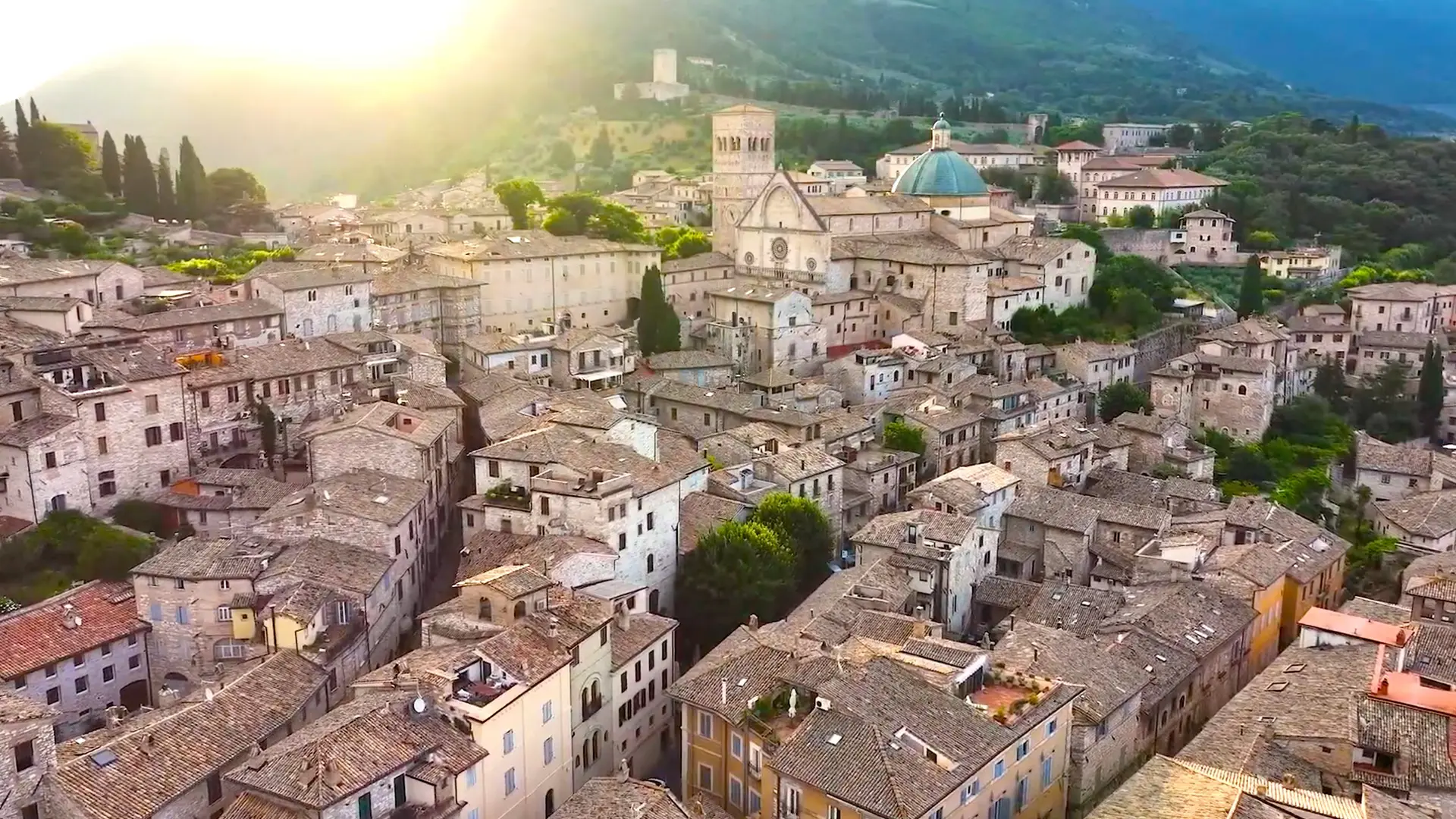
I wanted to understand the soul behind this culture, and why the people here take so much pride in what they do. As I made my way through southern Wisconsin, one of the first things that struck me was the architecture. Everywhere I looked, there were Swiss-style chalets, bars, banks, and even gas stations. It felt like I had stumbled into a little town in the Swiss Alps. This whole area was largely settled by Swiss and German settlers. The hills here weren't conducive for, like, cropland, but they were really good for dairy farming.
So a lot of the Swiss and Germans came here, opened dairy farms, and then the milk and the cheese industry follows along right with it. This is New Glarus, Wisconsin, named after the region of Glarus in Switzerland. Where the town's original settlers came from.
In 1845, they established New Glarus and began building a new life in America. And they continued the craft they knew best, dairy farming and cheese making. Small cheese factories began popping up all across Greene County, collecting milk from neighboring farms and turning it into Swiss cheese, Lindberger, and other varieties.
By 1910, Greene County alone was home to more than 200 cheese factories, making it the leading cheese-producing county in Wisconsin. And what's remarkable is that nearly two centuries later, you can still find that Swiss dairy heritage alive and well in Greene County. Just outside of New Glarus is a farm founded by Swiss immigrants in 1854, where generations of the same family have continued raising dairy cattle, and today, they're known for raising one particular breed with roots in the Swiss Alps, the brown Swiss cow.
So, I went to meet the family and see where Wisconsin's famous cheese begins. The butterfat and protein content of our breed's milk works very well in making cheese, ice cream, all sorts of products, cottage cheese. It takes fewer gallons of milk.
To get cheese made. So, you're a part of the cooperative, so you technically own Chalet Cheese, are part of it. Yep. Our end product is completely at Chalet. Chalet makes just fantastic, tasty cheeses. Do you want to stand here and have them nose the camera?
I mean, they're like giant kittens. We are 100% registered purebred. Brown Swiss, so every animal has a lineage we can trace back. We have some that can trace back well over 20 generations. So, you talked a lot about genetics. What are signs that these are good cows for what their purpose are? If you look at an animal like this, you can see one of them has good stature, height, a back that is essentially very straight.
You want the hips, which we call hooks to pins. Those are the big knobs. You want them to be level so that they can bear a calf without any troubles, but the big item is the big fat udder under here. You want a lot of ligament and a lot of ability to hold a lot of milk for many years. Our particular breed is a little more hardy and can take We have elevations and can take heat. So, we have a great market for Mexico and South America and Dominican Republic is one of our biggest.
Customers, we have a lot of farms down there. We used to, and we still do, sell and ship the live animal to all these countries. It is, again, a big business, and we used to do it all the time, but now, with the advent of frozen semen, especially frozen embryos. We have the chance of, now we can just ship the artificial semen tank, you know, liquid nitrogen-filled tank. And you're saying, so yesterday was a big expo in Madison. Yes. And your father actually founded that.
Yes. So, what is that? So, it's called World Dairy Expo. It's the largest dairy exposition in all the world. Each breed has their own show, and so then they have classes, and they judge them according to the size of the mammary. They judge them according to their height and strength and legs. They want an animal that will last in a herd for a long time. It's something that my father and a couple other guys started coming on 60 years, and it's been just an amazing experience, and I'm very proud of it.
There's just a lot more technology than people think. Right. And the thing behind this is a good example. So, this machine is actually milking the cows? This is milking cows. The cow comes in, gets a little treat. And then an arm comes out and washes, disinfects the cow, and lasers help hook the cow up, and it milks it. The machine senses when the cow is done and is empty of milk, pulls it off, disinfects the cow, kicks it out, next one in.
The idea is for them to milk themselves up to three times a day. Old school milking was where we would bring them into a barn and hook them up by hand and everything and do that twice a day. But this, again, increases the production if you get one more milk. So, I'm farming right now. Yeah, yeah. Milking a cow, is this that easy? Doing it with a beer, huh? With a beer, yeah, cheers, yeah.
Now I know how the milk is produced, but how does it become cheese? I went down the road to find out. Chalet Cheese is a cooperative, which means that we're owned and operated by local dairy farmers. They're the ones providing us with the milk on a daily basis, and it's our job to make the cheese, make it as fine as we can, so that we can promote their product, and promote their business, and promote their farm. So, we're just a local operation.
The farmers and the cooperative have been around since 1885. So, we're one of the oldest dairy cooperatives in the United States. And that we're very proud of. We were known for making Limburger. We're the last remaining Limburger manufacturer in the United States because over the years, people's palate changes. We also make world champion Swiss and baby Swiss, and that's really the majority of our product is Swiss and baby Swiss.
So, you guys have been going since like 3 in the morning? There are a couple of us that start around that time, and then we kind of dribble in usually 5 or 6 as the rest of the show goes on. Gotcha.
The process of making cheese was mostly a mystery to me at this point, so Mike gave me the opportunity to work with the cheesemakers through a full cycle on the Swiss line. The process starts with the milk. It gets tested and pasteurized.
Then, the starter culture is added. This bacteria begins converting the milk's natural sugars into acid, developing the flavor and texture of the cheese. And what it does is it starts eating over the lactose in there, and it starts making lacto-acid. That's what we're looking for. Next, we add rennet, an enzyme that causes the proteins in the milk to coagulate. In other words, it turns the milk into something solid.
Yeah, it splits. A little more and it's ready. Once the milk is set, the cheesemakers cut it into small curds. This helps separate the solid cheese from the liquid whey. From there, the curds are heated and stirred, allowing more whey to separate. That's what the curd looks like before it gets pressed. Like I said before, one big curd becomes a little, little curd. They put a couple of these on there, and now they're going to put the rams on there.
And they'll press it. The way that's sitting on top, we'll pump all that off, and then we'll cut it into 40-pound blocks in the morning. Everything is very intentional. The temperature, timing, acidity, and moisture all are carefully accounted for. It is a unique combination of both personal touch and scientific precision.
When we make our cheese, it's our cheese, and we're putting the care and attention into it. In some industries, which I have a lot of experience in other industries, you're just kicking out. Items or widgets or whatever. And it's done and it's gone and that's it. But we get to make a product that we can enjoy, we can sample, we can be proud of because we're taking it to people, maybe to events, showing them our cheese, maybe creating something new and unique.
I returned the next morning to help with the final stage of the process. After the whey was removed, the cheese had to be formed and salted. The salt helps regulate moisture, control microbial activity, and influence how the cheese develops over time. But in order to accomplish this job, there was a little bit of heavy lifting involved. 40-pound blocks of cheese, to be exact.
Now, before I left, there was one last thing I had to experience. Chalet Cheese is the last remaining cheese factory in America that still makes Lindberger, a cheese notorious for its unique and strong smell. What's special to you about Lindberger? I know it's kind of an unusual cheese. Oh, it's got earthy flavor and stinks.
And you're on the record. I know you've been making it for a while. You like Lindberger cheese. Like, you like the taste? It's okay. Okay. I'm not really into it too much. Have you met some people that are just obsessed with it? Oh, yeah.
To make it, Shelley uses a traditional technique called smear ripening, where each block of cheese is washed with a saltwater solution containing a special bacteria, then left to age on wooden boards. As the cheese ages, the bacteria breaks down proteins and fats, creating Limburger's famously pungent smell.
Historically, a lot more people used to enjoy this cheese, but changing cheese preferences has made it more of a novelty. I heard there is a historic tavern in town that serves a famous Limburger cheese sandwich, so naturally, I had to give it a try. But first, there was another Wisconsin specialty I wanted to learn about, beer.
I keep telling everybody I'm still a retired cheesemaker that bluffed my way through 15 years of beer. How did you get your start on cheese? I moved into a cheese factory when I was five years old. It was a little farmer-owned co-op that my parents owned, and I started managing it when I was 16 and took it over shortly after.
Sold it when I was in my early 50s, something like that. And so then, was that your desire to get into beer, or did that just kind of happen? Accidental. I was bored, couldn't be retired. And so, you've had the quintessential Wisconsin career arc, I think, beer and cheese. You see Hoseley's Meats right there? Yeah.
If I plan this and time it out right before I'm completely crippled and can't walk, I want one paycheck making brats, so I can say I did the Wisconsin trifecta. You tripled right, yeah. Just one paycheck. I want to stir a brat, hand me the check, and I'm okay. Then I can say I did it.
So, what were you doing in the fermentation cellar? I was in charge of scheduling and production. Yeah, in those amount of years, I probably made a million and a half or two million barrels of Spotted Cow. Wow. Hey, I got to shake your hands. I'd probably drink a little bit of that. If you've ever been to Wisconsin, chances are you've had Spotted Cow. It's New Glarus' legendary farmhouse ale. Light, smooth, a little fruity, and inspired by the state's German tradition. It's become an absolute phenomenon.
So, I was excited to get the story behind my favorite beer. Spotted Cow is 70% of what we make, and there's a lot of people that don't realize there's other brands. They think this is a Spotted Cow brewery in New Glarus. They don't realize we do 30 to 35 different brands a year.
1993 was our first partial year, 1994 was our first full year, and we brewed 900 barrels our first year. Last year, we brewed just short of 240,000. We are by far the biggest single-state brewery in the country. We don't advertise. Our sales crew is actually smaller than our lab.
We work on quality and consistency, trying to make the same beer every day. One thing I heard Dan say in an interview was, he gets pushed all the time, like, you could take this capital money and expand. Go national, go global, you can go everywhere and get into these different markets. And he's just totally resisted that, it seems like, on a mission statement. Why? Why has Dan made adamant, like, no, we don't want to advertise, we're not going to take any kind of money, we want to do our thing here.
Number one, they never planned on getting big. They wanted something that would support their family, but then it accidentally got a little bigger, and they needed help, and then they wanted to support that family. There has never been a goal to get bigger. Could we have gotten bigger, better? Yeah, we could have gotten huge.
They could have walked away with multiple millions of dollars years ago, pre-COVID. We had a lot of big breweries, the big three, chasing us, and instead of selling out, taking the profit, and going like this, we became employee-owned. We tried going Midwest one time, and that was one of the few mistakes Deb ever made. We sold into the Chicago market, and we couldn't keep up.
And store shelves ran out of our products, so then you lose your spot in that store shelf, you have to... Finally, she decided, you know what, we're going to pull back. Where do you draw the line around New Glarus and limit it? And she said, let's just pull back and say Wisconsin only. It's an easy perimeter, you can see it. We're good at making beer here. We can't satisfy the Wisconsin market, so why go any farther? The gift shop started posting all of the week as people load up 30 or 40 cases in their truck and heading back out of state.
I remember 15 years ago, two little girls in the parking lot up there on a weekend, they had all their luggage sitting beside the van, the van full of beer, trying to figure out where to put the luggage, and it's like, Are you okay?
We don't know if we can get our luggage back in here. I said, maybe less beer? No, no, we can get new clothes at home. We can't get more beer. For all their success, Dan and Deb Carey have kept a pretty low profile, so I wasn't expecting to meet Dan during our tour. I was told he'd probably just be busy brewing, but as we were walking through the facility, we happened to spot him working in the lab.
And before I knew it, he was out in the hallway shaking our hands. What does the town of New Glarus in this part of Wisconsin in particular mean to you? Some years ago, 1992, I drove through New Glarus and stopped by gas. I was on my way to my road to visit a brewmaster friend at the Uber Brewery, and I stopped in this town, and... It reminded me of Bavaria. I had been an apprentice brewer in Bavaria near Munich, and it reminded me of that town.
I had that feel, and so I called Deb, and I said, you know, this is a really nice town, and it is near Madison, and Madison was a town that Deb had identified as a really good place to start a brewery, but we did not want to be in the city of Madison. We wanted to be in the country. There was just a Good feeling here. It's a nice town, good people, farming community, so people have been very helpful to us.
Comfortable. We made the cheese, and we saw the beer. Now, it was time to hit the bar. But not just any bar. Baumgartner's Cheese Store and Tavern in downtown Monroe, or as Dan called it, Swiss America Central. So, it opened in 1931. It was actually a cheesemaking supply store, and then during the Depression, a lot of cheesemakers would bring in cheese and trade for cheesemaking equipment, and they would sell the cheese to the public as how they made their money back, and then sometime a couple years later, they decided to put a keg of beer in the back room, sort of a leave a nickel, tap yourself a beer type of thing, and then they went through some beer, but there were no nickels in the box, so they put a bartender back there, and it has grown ever since then, right?
Cheese will always be, like, our first and foremost priority, even though it's now, like, not even a tenth of our business. We're mostly a restaurant and bar. When you walk in, you'll always have the cheese up front. Back then, there were, like, 130 cheese factories in Greene County because, I mean, cheese is used as a way to preserve milk, right? So, every intersection out in the country would have a cheese factory in the corner, and then the farms that were within a wagon ride from there would bring all their milk to that cheese factory.
To turn their milk into cheese, a lot of them were cooperatives owned by the farmers. Now, I think there's probably like 15 or 16 factories left in Greene County, because as trucking has gotten easier and more expensive, milk can travel further, and so now the milk doesn't have to just go right over there to the corner factory, right? It can go anywhere. The cheese makers here are such a proud and storied group of people, and it is such a huge part of our identity.
Culture, and so, like, our menus will always be, like, our traditional cheese and salami sandwiches on rye bread. Like, that will always be the thing that we promote the most. Like, we do serve other things now, but, like, that is the classic Bumgarner's experience. It's like a bowl of chili and a cheese sandwich, and people are like, oh, grilled cheese, and we're like, no, room temperature cheese on rye bread with onions and mustard. Like, that's how it was in 1931, and it's how it is today, and, like, we really try to Like, honor that.
You can get a burger anywhere in America, right? Right. We make a really good burger in the evening times, but, like, we'd rather you eat a brick cheese sandwich and try the brick cheese that comes from eight miles down the road and supports our entire industry.
The culture. It's like people, man. I just like the staff, the customers. We get customers. You guys saw the map on the wall. We get customers from all over the world come to Little Mineral, Wisconsin, you know. It's honestly like my favorite thing about this place is like when you see like some...
40-year-old, roughneck, biker-looking dude sitting at the bar next to, like, an 80-year-old woman having, like, a full-blown conversation for an hour together, and then some, like, 22-year-old will walk in and sit on the other side, and then the three, you know, like, just seeing that, like, people that are outside of your normal circle and having that conversation, it is, like, a social thing. People are inherently good and fun and happy, and, like, we get to see the best of that in here.
And now it's time to try the sandwich everyone had warned me about. A room-temperature Limburger cheese sandwich. Taking it in. How does it smell? It smells. Let me get a little closer. I think we're overreacting. I don't think it's that bad. I mean, it's strong. It doesn't have the mustard in it yet, or no? No mustard yet. This is a horseradish brown mustard. This is Bumgarner's recipe, tangy. This is a sweet and hot honey mustard. It's from the Mustard Museum out of Middleton.
Sticky and sweet. Neither one carry much heat. I think this is my favorite mustard, but for the Limburger, this cuts the bitterness. So, maybe try them both. Try it without. Let me do a horseradish. And so, the traditional way to have this would be, this is at room temperature. Room temperature. Not grilled, not heated up. Correct. Okay. Room temperature on a dark rye with an onion.
I've had Limburger at least 50 times. It's not as, it's the up front, no problem. Mild, creamy. Then it's like the lingering aftertaste is where that robust, pungent odor comes in and kind of sticks around. Dang. A little bit of that sharpness. I feel like I'm waiting to be punched in the face, but that's nice. Yeah. It's just like, that's really nice.
It's kind of a love-hate relationship for most people, either love it or hate it kind of thing. I'm not a huge fan. We also turn it into our Limburger Chowder as well. Does the soup version smell, too, or is it kind of when you heat it up, it does? You know, I've dealt with it for the last 20 years, so it's right there. I know exactly where it's in the room.
It does smell pretty bad. I need you to lock in. The taste is not like the smell. It's weird. But the smell affects the taste, you know? It's so present. What about the lingering aftertaste? Yeah, that's a weird aftertaste, for sure.
Yeah, it's weird. The aftertaste hit. It's got the flavor of something with an onion, so. Yeah. It probably makes you want to drink more beer as you're having it. Yes, it actually did. And before we left, I had to ask, what is up with all the dollar bills in the ceiling? The tourist story is that Emil Baumgartner owned this place in 1931. His wife liked to spend money, so most of the money that he took in was coins. So, anytime that he got paper money, he would take it and throw it on the ceiling so she could not get to it and spend it.
That is the tourist version. I like that. The more accurate, probably, story that we have been told is that Bob Halen, who owned the bar from 1951 until 1986, He and his friends were big hunters, and they would go on these hunting trips, and their favorite bar they ever went to had this really low ceiling where people would stick a dollar in the ceiling, and then the rumor was that if you ever were really hard up and you lost your last buck, you could go in there and you'd still have money for a beer or whatever.
So, they came home and decided they were going to figure out how to stick dollars in the ceiling at Baumgartner's. The money just collected until the 80s, and then there was a local farm family, and there was a tractor accident, and the husband was killed. So, they climbed up on a ladder, took all the money down, and donated it to the family, to support the family. And then over the years, it just grew and grew and grew, and now we take it down every year and donate it to local charity.
Here is the dollar on the ceiling trick. We take one dollar, we stick a thumbtack right through the center of the dollar. We use 75 cents wrapped in masking tape on top. Put an angle fold over the top of the quarters and the bottom of the quarter.
Welcome that into place. Point sticks out the back, opposite side of the point. It is a 45 degree fold over the sides. That locks everything in nice and tight. If all goes well, we go ahead and toss the dollar at the ceiling. The way the quarters push the film tap into the wood, the dollar stays. The quarters come back down in a perfect world. If that happens, staff notices, they will ring the bell signifying a successful donation, and if I miss, they will boo me.
So, feel free to do that. They already know the introduction, so. Alright, here goes nothing. Right? Yeah, let's do it. So, thumbtack to the first. Through the... Through the dollar, sorry. Oh, gotcha. And is that just one point? Yeah, we want 75, so just take that. Oh, right. Yep. It goes right on top. Right. And some people just do like the hot dog bowl, right? Yeah. Like a small angle bowl, something like that. Okay. And then, same way back the other way.
This feels like a paper airplane. Yeah, some dollar gummies. The only time you can throw up in a barn is so good. So, here? Yep. Just like so. Flat it down. You need to pick that up a little bit. Okay, wait, wait, wait. So, what is the technique? Stay square-framed, bend the knees, and just toss the ceiling. And you are trying to keep this quarter flat. It will stay flat. You are holding your hand like all over your chest, and then you start to toss the ceiling.
Like this? I am just trying to hit it straight up. You got it. Yay! I've met a lot of people from Wisconsin over the years, and one thing I've learned is that you usually don't have to ask where they're from. You can usually tell. She is a Wisconsinite. Not only do you worry about you, but you worry about the people around you. They take tremendous pride in their contributions to the world and revel in sharing it. Cheese and beer might seem simple on the surface, but they represent something much larger here.
History, excellence, and hospitality. For us, it's not even a thought anymore because it's just part of how we grew up in business was that that was something that you do, right? You're visiting some of the proudest and most...
Shining examples of that sense of locality. Like, it is not just this place, it is the culture around it, too, right? There is really something refreshing about encountering a place like this. In a world where everything seems to be getting bigger, faster, and more disconnected, it is easy to forget how important our connection to a particular place and a particular people can be.
And I'm sure Greene County has its challenges, just like anywhere else. But what I saw here was a community that still takes enormous pride in its history, its traditions, and the things that it produces. And maybe even more importantly, people will understand that their own success is connected to the success of their neighbors. We're creating a food, you know, we're creating a product that we are proud of and want to get out as much as we can. And everybody in the community, including like beer and everything, they all benefit.
We all benefit if we all do well. And so, cheese has always been... And beer, in many different ways, has been a big product in Greene County that we have wanted to try and market throughout the world. And indeed, everybody prospers if we all prosper.