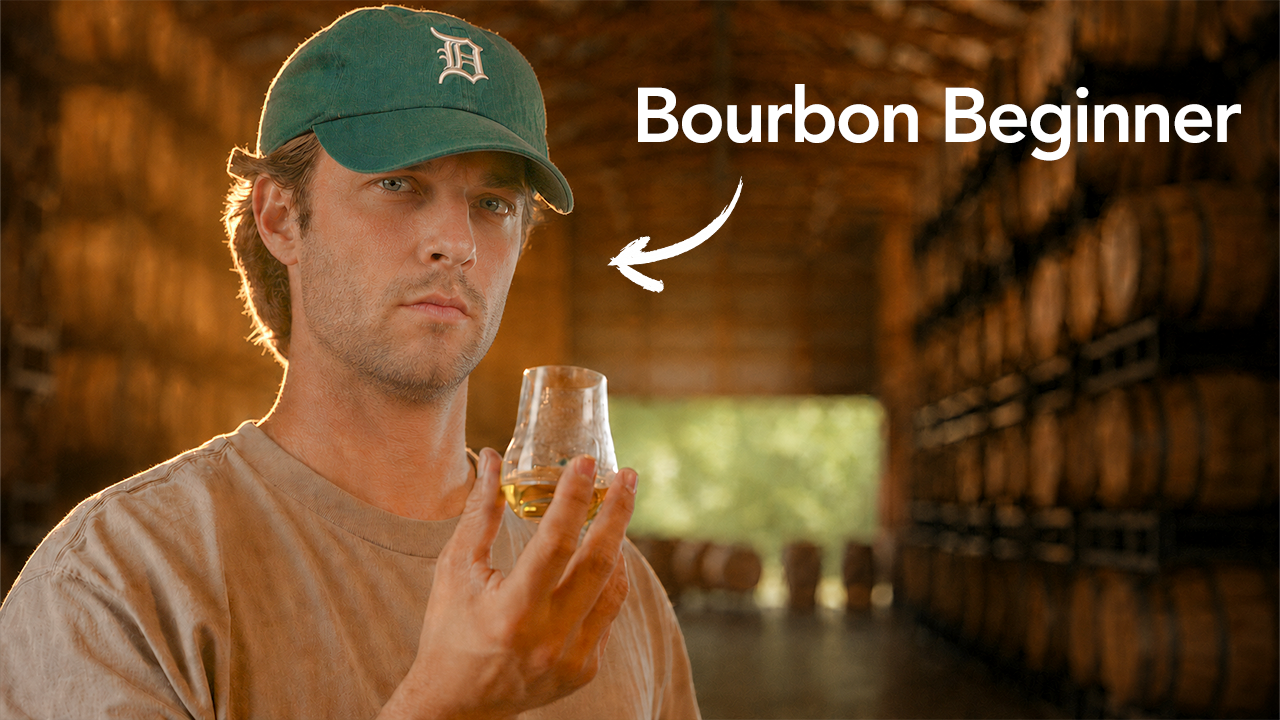
I Never Understood Bourbon. Then I Went to Kentucky.
Why are people so obsessed with bourbon? I traveled to Frankfort, Kentucky, the heart of bourbon country, to understand how a frontier whiskey became one of America’s most celebrated traditions.
Along the way, I explored the Kentucky River, toured the historic Buffalo Trace Distillery, learned the complete bourbon-making process from Lisa Wicker at Whiskey Thief Distilling Co., tasted whiskey straight from the barrel, and joined the local bourbon community at Kentucky House of Commons.
What I found went far beyond mash bills, barrel proofs and expensive bottles. In Kentucky, bourbon is connected to the land, generations of American history and (most importantly), the people gathered around the glass.
This is bourbon country from an outsider’s perspective.
Subscribe to Tom Across America as I travel the country exploring the people, places and traditions that make America what it is.
Transcript
Read the full transcriptAuto-generated · 4,188 words
You know, I learned a long time ago the worst thing you can ever do to a bottle of bourbon is put it on a shelf and stare at it. That ain't what it's built for. Bourbon was built and designed and created to make memories with the people in your life you care about. If you pop a bottle of bourbon and you bring your friends over and you pour some drinks, you're going to spend time with them, sharing stories, memories, creating that bond and that friendship, and that's what it's for.
Bourbon. It may be the most American drink ever made. Born from the ingenuity of Kentucky's frontier settlers, the smooth contents of charred barrels sparked nothing short of a centuries-long American obsession. From this obsession sprang a genuine culture. As an outsider, it can feel almost intimidating. Can I admit that I can't really taste the difference? But in Kentucky, I discovered something surprising. The people who understand bourbon best don't seem very interested in telling you how you're supposed to enjoy it, because here, bourbon is more than what's inside the bottle.
It's connected to the land, to the Kentucky River, to families and distilleries whose histories are woven into the history of the state itself. And most importantly, it's meant to be shared. So, if I wanted to understand why bourbon became America's native spirit, I couldn't do it from a liquor store shelf in Indiana. I had to go to Kentucky. Today, I'm traveling down the Kentucky River, exploring one of America's oldest distilleries, drinking bourbon straight from the barrel, and meeting the people who have dedicated their lives to keeping this tradition alive.
We made a road trip down to the Kentucky River to start our journey, but long before there were highways in Kentucky, there were traces. Herds of buffalo carved paths through the wilderness, searching for water and salt. Then, explorers and settlers used those same trails to cross the Appalachian frontier. The governor of Virginia at that time was a fellow by the name of Tom Jefferson.
Yeah, that one. And he said, you know what? I think I'm going to send boys out west to see what's out there. At the time, gigantic herds of buffalo roamed the area, right? From Salt Lake to Salt Lake, water source to water source, pasture land to pasture land. One of those paths led to a crossing on the Kentucky River, marked on an early map simply as a buffalo trace. More than two centuries later, that name belongs to one of the most famous distilleries in the world.
When Kentucky became a commonwealth in 1792, this was still the American frontier. Settlers arrived with whiskey-making traditions brought from Scotland, Ireland, Germany, and elsewhere, but Kentucky changed the ingredients. Corn grew abundantly here, and turning excess grain into whiskey made it easier for farmers to preserve, transport, and sell. But the land was only part of the equation. Kentucky also had rivers. They're using it for medicine. They're using it for money. Well, then they hear about a place, a mystical place that I'll actually buy whiskey.
Heck, yeah. What's this place called again? New Orleans? How are we going to get down there? Well, there's no roads, but we are on the superhighway of the day. All we got to do is we got to build a raft. We get out in the woods, cut some trees down. We've got a flat bottom raft. We got to figure out what to put the whiskey in. Well, we got barrels that the wagon's brought in, but we got to clean those barrels, because some of them smell like vinegar, or pickles, or fish.
We got to clean those barrels out, don't we? And we did. Somebody tell me how we figured it out. Burning it. That's right, flame. Just a little bit. Burn that inner layer off. Now, we put the clear whiskey in on it. We broil them on that river. By the time we get down to New Orleans, we want to make some money, so we sell the logs. Then, we try to find somebody to buy those whiskey barrels that we brought down. We pour some out.
It is as brown as that sweet tea, and they are like, what is this? Why is this brown? What have you done to it? We didn't know that when you burn the barrel, it opens the pores of the wood so the whiskey can flow in. We didn't know that when you burn the barrel, you caramelize a chemical, natural chemical in oak, and turn it into something called vanillin. Well, guess what that tastes like? We didn't know that.
Whiskey has been made around this site for more than two centuries. But in the 19th century, men like Colonel E.H. Taylor, Jr. helped transform distilling from a rough local trade into a modern industry. Taylor rebuilt and expanded this distillery, invested in new technology, and became one of bourbon's most relentless advocates.
Then came prohibition. In 1920, legal alcohol production nearly disappeared across the country. Distilleries closed, brands vanished, generations of knowledge were almost lost. But this distillery survived. Under Albert B. Blanton, a Kentucky native who began working here as a teenager, the operation received permission to produce whiskey for medicinal purposes. It was one of the rare places where Kentucky's distilling tradition remained alive through Prohibition, the Great Depression, and the Second World War. But surviving Prohibition didn't mean bourbon's future was secure.
By the 1960s, younger drinkers were turning towards vodka, cocktails, and eventually wine coolers. Americans were not buying whiskey in the 80s, 70s and 80s. Everybody was drinking tequila and vodka, and, you know, tequila sunrises and vodka. The disdain on your face. I don't remember all the trash. I was drinking Jack Daniels. In my defense, I was drinking Jack Daniels.
Thanks to the Americans who preserved and pioneered it, Kentucky today produces and ages an estimated 95% of the bourbon sold around the world. I think there's something like seven barrels right now of bourbon aging in Kentucky for every person who lives here. Wow. So, yeah.
After experiencing the history of bourbon, I wanted to see how it is being made today. A few miles down the road, I found Whiskey Thief Distilling Company, a smaller, younger distillery doing things very differently. Here, I wasn't observing bourbon from behind a rope. I walked into the rickhouse, pulled whiskey directly from the barrel, and became a part of the process. A whiskey thief is a copper tube about this long that distillers have used. Since the dawn of whiskey being made in barrels, that allows people to put the tube into the barrel, you create a little suction by putting your thumb over the end of it, and you can pull samples of the whiskey out of the barrel.
When I first got into this business, before I even knew about this place, I got invited to do a single barrel pick. I walked away going, this is the single coolest experience that a human could have. If you're a whiskey fan, this is the way to taste whiskey. Straight out of the barrel, uncut and unfiltered. The way God and nature intended it, at barrel strength, no water added, nothing, you know, not cleaned up, you get a little char in your glass, all that kind of stuff, and I thought this is the most authentic thing you could possibly do, and so I immediately knew, like, this has got to be the experience.
So, when you come here, we've got five barrels, and we let you taste right out of the barrel using a Whiskey Thief, so mere mortals can come to Whiskey Thief. They don't have to be specially invited by a wholesaler, distributor, or retailer. They can come to Whiskey Thief, taste straight out of the barrel, and uncut and unfiltered. If they like any of those five barrels, they can use that Whiskey Thief to fill their own bottle, which nobody lets you do that, and seal it and label it and take it home.
But before picking out of the barrel, I got to pick the brain of Lisa Wicker, the director of distilling at Whiskey Thief. This was my first glimpse into the intense fandom of bourbon culture. Lisa was stopped by a fan of her work at Widow Jane, a bourbon distiller in Brooklyn, New York, of all places. And before she came home to Kentucky, she got the chance to make bourbon in the home of George Washington himself. For seven years, my volunteer project, I was senior consulting distiller for George Washington's whiskey at the historic site at Mount Vernon.
And they used to let me stay on the grounds at Mount Vernon, just outside. There's some beautiful housing just outside the mansion. And my son is an attorney on Capitol Hill in Washington, and he used to come out on the weekends and help me stir mash and things, right? Because... You know, comic relief from his day job, right? And I just remember one night, he and I, before we went to dinner, we were sitting on the portico of Mount Vernon by ourselves.
I'm going to cry. Overlooking the Potomac River, it's like, I felt Washington's presence. He still talks about it. He goes, that was just like one of the most moving things ever. We just sat in silence for 45 minutes, you know, on the portico.
Every batch starts with the mash bill, the precise ratio of corn, malted barley, and other flavor grains. The grain is weighed, milled, and fed into the cooker. Everything's named after country music singers. Ah, there's Merle here. There's Merle. We've got Johnny. Here's Willie. I didn't even see this. Oh, that's awesome. Dolly's our cooker. The government makes you name, like, label tanks, but they don't say you have to, like, have a number system or anything, so we have Merle.
And Dolly, right? Merle and Dolly. Yeah. Water and corn are heated first to break down the grain and release its starches. As the temperature drops, the remaining grains are added, allowing enzymes in the malt to convert those starches into fermentable sugars. After that, it gets transferred over to the fermenter. It gets filled up to about here with mash, sometimes as high as here. We have, obviously, open tops, so when you do that, too, you get some environmental influence on your whiskey.
Yeast converts the sugar into alcohol. The result... is a distiller's beer, a low proof liquid containing alcohol, grain solids and the flavor compounds created during fermentation. That liquid is then distilled, concentrating the alcohol and separating out the portion that the distiller wants to keep. We do a two pass whiskey. So this gets loaded. We've got mash in here, right? That's all fermented. Heat the pot. The distillation is coming up and over. It is unusual to have a horizontal condenser. Generally, they are vertical, but that is what is cooling on the outside, and then there is a coil on the inside that is condensing the alcohol vapor into liquid.
And so, that is what we are collecting, is that liquid. It is coming back down through. What comes off the still is a clear spirit, commonly known as white dog or new make. To become bourbon, that spirit must enter a new charred oak container at no more than 125 proof. And then, once it is here, does it go right into a barrel? It gets proofed down, depending on barrel entry proof. It varies dramatically from product to product. We add water to it, so we add filtered water or our reverse osmosis water, right?
Everybody has a different... We plan for how they're going to cut their whiskey, cut it down to the proof that you want, and then we pump it into barrels at that point in time. How do you develop a good palate to taste properly? It's practice. It's practice. When people ask me that, I usually recommend eat a lot of different foods.
Chicken tender French fry guy, you're not going to have all those flavors in your head library, right? You're not going to have all those different things, and so I always encourage people, even to the most simple things, like make sure that, you know, get a bunch of extracts and smell and taste all those extracts, right?
Different homemade, like the handcrafted soda pops. Get the cream soda, the sarsaparilla, the birch beer, all of those things. It will just put more and more flavor things into your head, right? But eat a lot of different foods, eat a lot of different spices, eat a lot of different things, right? Different textures, different colors, different flavors, and then you are building your library in your head. And so, when you hear somebody, there is a joke about marzipan in this industry, it is like, oh, it tastes like marzipan, right?
And so, that is a running joke, right? But I encourage people to taste marzipan. Marzipan, right? So, yeah, just like I said, just experience, like, you know, everything from chocolate to spicy stuff, right, and just do that, and then that'll help you, and then you can start tasting, like, oh, right, this has got a note of licorice in it. This has got a note of, and I know people sometimes, like, well, you can't taste that. It's like, this tastes, smells and tastes like grandma's medicine cabinet in her bathroom.
Very floral, too much. Over the top, something's not great here, right? Sometimes it'll be like Band-Aid. Band-Aid's a flaw, right? But it's people like, well, do you taste Band-Aid? It's like, no, but we all know what that tastes like, right? You smell a Band-Aid, you kind of know. So true.
And now, it was time to put my palate to the test in the purest way possible, tasting straight from the barrel. We're good. All right. Okay. So, what we got here is a seven-year weeded bourbon. Okay. You see the char in there? I do see that char in there. Okay. That's natural. We don't filter this at all. Okay. So, you'll get the natural char off of these barrels, and you'll also get not only the char, but the natural oils that come off of this.
So, this is a truly different way to drink whiskey. It's the way God made the whiskey. The way God intended it. That's what I'm here for, man. That's right. Yes, sir. So, what should I be tasting here? Well, as far as tasting notes, I don't really think it's appropriate to give tasting notes because everybody's palate is different. I may taste things. Tastes are a memory receptor. Smart play. Everyone's told me that, and you passed. That was a test. Yeah, absolutely. You passed.
Yeah, I mean, I can't tell you what your history of flavors will be, but you're going to associate it with what you're familiar with. So, what you will taste is good whiskey. I can tell you that. Good answer. This one is so easy. This is not like... It is very easy. It does not attack my throat at all.
That is the lowest proof we have on the line. It is the only weeded bourbon we have on the line today. The next three are traditional bourbons. The last one is a rye whiskey. And what do you mean by weeded? Does that mean there is no corn? That means, no, the weed in place of rye. Weed in place of rye, okay. So, the weed is a softer noted grain. So, it is used, and other makers use wheat quite a bit. So, a wheated bourbon is not going to have the complexity that rye will.
It also does not have the slightly more aggressive flavors that rye has, traditionally speaking. I am ready. I am going with the rye. I am going with the rye. I like the rye quite a bit. So, just as easy as it looks. Big copper straw, right? So, this is how we do it. Put it down in here. Let it sit there for about 10 seconds. I use my middle finger on my thumb. Okay. Just like so. Cap the top. Put it up.
That is easy. Okay. Let go just like that, just like a straw to a drink. Okay. Give about 10 seconds in between your pours. You will be gold, all right? Sounds good. Whiskey Thief showed me how bourbon's tradition is carried forward by the people who make it. But once the whiskey leaves the barrel, where does the tradition go?
Back in downtown Frankfurt, I met Dave Sandlin, a man whose connection to Kentucky bourbon is deeply personal. I'm from East Tennessee. My mom grew up in Frankfurt. In fact, my great-grandmother was born at OFC Distillery, which is Buffalo Chase today. Sorry, born at? Yeah.
Today, Dave preserves that history in a different way, not through a museum or a distillery, but through a neighborhood bourbon bar called the Kentucky House of Commons. We moved here five years ago to help start a church plant. Fell in love with bourbon history. I was already kind of dabbling in and liked bourbon. I would spend my lunch breaks at work at the local liquor store, and I would just hang out in the liquor store, which is so weird. Most people would be concerned, you know.
My wife's like, no one spends this much time in the liquor store. Are you okay? Yeah, are you okay? But I would go in, and I made friends with the ladies that worked in the liquor store. I would go to the store, and I would go in, and I would read the bottles, and I would read where they told me it was distilled, if they told me it was distilled, was it bottle and bond, not bottle and bond, what was the proof on it, did they give me an age statement, what was the color like, where did I think it came from, and when I posed questions, I would research them, maybe the next day on my lunch break, or that night after the kids were put to bed, and as this is happening, one of our friends from church, he approaches me, and he's like, hey.
I know you're into bourbon. I know you like hospitality. My uncle is renovating this building downtown Frankfurt and wants to put a bourbon bar in it. I'd love to introduce you to him. And he tells me, he's like, hey man, listen, I need bar owners. I was like, dude, I've been here three months, but I'll keep an eye out. He was like, why don't you do it? I was like, yeah, why don't I just start a business? He's like, I've never worked behind a bar in my life.
Your wife prayed about it, and you're like, yeah, oddly enough, as crazy as it sounds, I feel like God's leading us to own a bar. We came in with this kind of mentality of, we're going to serve bourbon, and we should probably have cocktails for people that don't.
We want bourbon neat. Like, bourbon neat was the goal from the start. But we were like, hey, the cocktails we make, we're going to see that through the lens of like, with respect to the spirit. Because there are people that this is their livelihood. This is their career. We have friends and family that like, this is what they've chosen to give their life to as a career is producing the spirit that's enjoyed worldwide.
We want to honor the spirit. We don't want to mask it. You know, we want to honor it, and we want to build things that are balanced and complement that. It turns out, the night we visited Dave's Bar, the Frankfurt Bourbon Society was meeting there. They were rowdy, had deeply entrenched opinions on bourbon, but above all, close.
I developed friendships that are now family, like the group that I came in with. Like, they just welcomed me in, and it honestly has been such an amazing part of my life. And I wish I had those friendships, and they weren't for bourbon. They were a perfect example of Dave's vision coming to life. The intention was to feel like it was a time capsule. Ben created space as an homage to the past, but then, like, with these kind of modern touches, I intentionally chose not to put TVs up.
I intentionally chose to not do QR codes, even though everyone and their brother wanted me to do a QR code. I hate those. Well, I hate it because you've come to a place, yeah, okay, maybe just to get a drink, but at the end of the day, we want to become a place where people can come to experience hospitality, connection with the spirits, connection with the...
We call them bourbon librarians. Yeah. You know, the person behind the bar. Or with the people you came with. People come in, and their natural inclination is, can I see a menu? Our natural inclination is to not hand them a menu, because we want them to lean into the experience if they're interested in whiskey. We want to come alongside people and walk through it with them, so that we can help make it not intimidating. Because I get when you come in, and there's not a menu for you to look at.
And then you're like, okay, you're probably thinking like... Are they judging me for what I'm going to say I like, or are they going to judge me for what I say I'm looking to spend? But, you know, my goal was that you could come in and have a curated experience, like what you would have at a fine dining restaurant with a sommelier for $25, $30. You know, we've built flights as low as $15. It all depends on what that person is looking to taste.
Service is something that is... It is a gift that I believe was given to me from God, and so, like, to be able to use that gift to help people to feel welcome and warm and to have an experience that makes them feel kind of that, for lack of a better term, love, you know, and to feel seen is something that is...
That I'm really passionate about, and that I feel like some of our team shares, and we want to create an environment where people can come in, and that it goes beyond just grabbing a drink. It becomes a community.
So, vodka became very popular in the late 60s, early 70s, because it was quick, it was easy, you could go to the disco, have vodka drinks, do the thing. Bourbons and whiskeys and scotches and all the different kinds of whiskeys are something that you savor. It's something you drink slowly, right? It embraces kind of a slow culture. It takes a really long time to age it. There's a complexity, there's a sort of intensity, because they're usually higher proof than vodkas and seltzers and things like that, or champagne even.
And people commemorate life with the whiskey. Unlike other spirits, they celebrate the good things, they celebrate their blessings, they remember their sadness sometimes, they can remember people that they've lost. My father passed away four or five years ago, and I think of the times that I sat listening to Kingston Trio, which was one of his favorite bands, and drinking whiskey and bourbon with him.
You'll hear stories, oh my gosh, we drank that at my dad's funeral. Oh my gosh, we drank that when my daughter was born. Oh my gosh, we drank it on our wedding day. People drink whiskey when they're happy. They drink it when they're sad. They drink it, you know, for celebrations or disappointments, right?
I came to Kentucky to try to understand why people became so obsessed with bourbon. And yes, there's plenty to nerd out about, but the deeper I went, the more I realized that whiskey was only a part of it. I met people who moved back to Kentucky to take their place in a generational industry. People who spoke about the names on the bottles, not as brands, but as men and women whose work they were proud to continue.
At the heart of it all was hospitality. Bourbon gave people a reason to gather, to celebrate the good times, commemorate the hard ones, and share the history of a place they deeply loved. And maybe that's the point of bourbon. Not simply what's inside the glass, but everything, and everyone, it brings together. Yes, that I made up.