I Thought Cowboys Were a Myth. Then I Went to Wyoming.
The American cowboy has reached a mythical status in our culture. Yet, I had never actually met one.
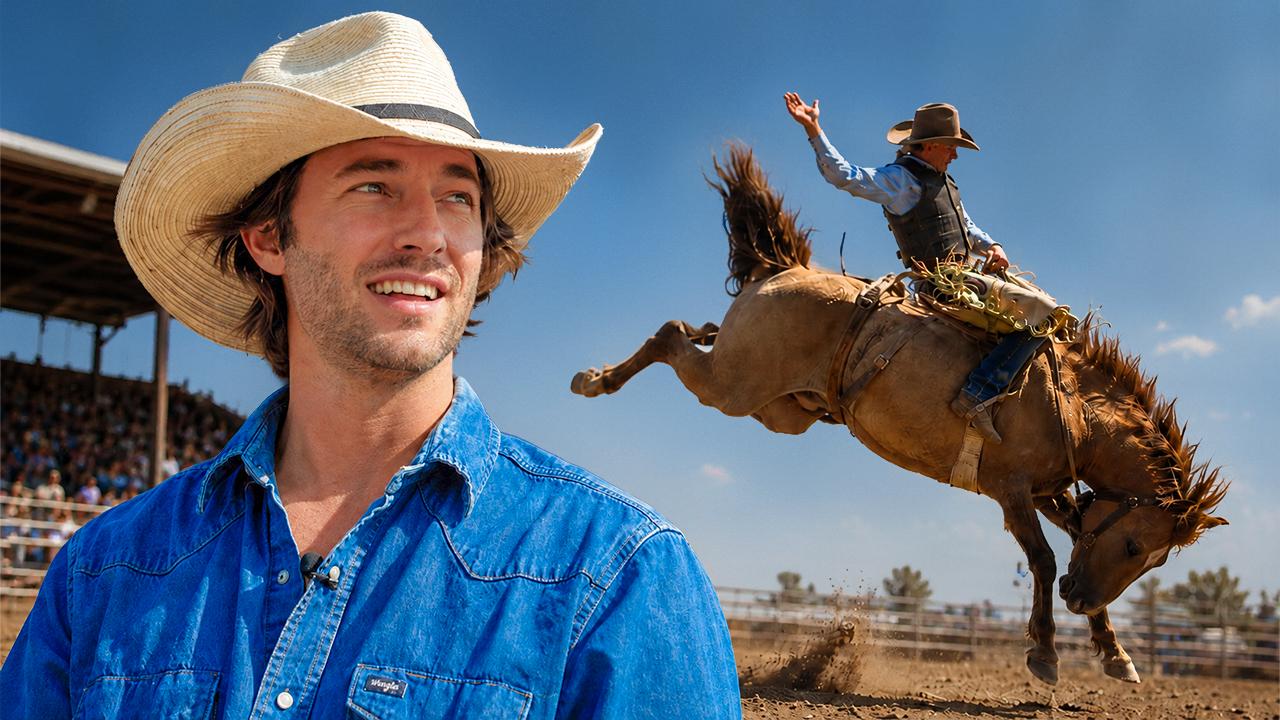
So I traveled to Buffalo, Wyoming, to experience a place where that identity is still very much alive. Along the way, I got fitted for a proper cowboy hat at Lou Taubert Ranch Outfitters, learned to saddle and ride with a Wyoming cowboy priest, explored the history of the Old West at the Occidental Hotel, and experienced the Johnson County Fair and Rodeo firsthand.
This is the American West from an outsider’s perspective.
Subscribe to Tom Across America as I travel the country exploring the people, places and traditions that make America what it is.
Transcript
Read the full transcriptAuto-generated · 3,871 words
Cowboys. I'm not sure there's a more iconic American character. The hat, the boots, the horse. For generations, we've put them in our movies, books, songs, commercials, basically turning the cowboy into an American myth. And to a guy from the Midwest, I always wondered, are these people still real? Where I come from, cowboy culture mostly exists in line dancing halls, country concerts, and old western movies.
So, if I was ever going to understand cowboys, I had to go west. More specifically, to Buffalo, Wyoming, a small town tucked beneath the Bighorn Mountains, where ranching, horses, rodeo, and the traditions of the American West are still part of everyday life. Today, I'm stepping into the world of Wyoming cowboy culture. I'm learning how to saddle and ride a horse, getting fitted for a real cowboy hat, walking through one of the most historic hotels of the West, and getting considerably closer to Angry Bulls than I ever imagined.
Because I wanted to find out firsthand, did the cowboy disappear into American mythology, or is the West still alive? One of the most recognizable symbols of the American West is the cowboy hat. So, when I got to Wyoming, I wanted to make sure that I at least looked the part before heading to the fair and rodeo. Everyone told me I needed to stop at Lou Talbert Ranch Outfitters. They've been doing business in Wyoming for more than a century, with generations of the same family taking pride in outfitting people for life in the West.
And most importantly for me, they could fit me in a proper cowboy hat. Hats and boots are nostalgic. When the travelers came this way, they wore hats for a reason. You know, it was to keep the sun off them, keep the rain, the moisture, the wind, you know, from bearing down on them. You know, boots served a purpose of those travelers that rode horses. You know, it had a purpose so your foot wouldn't go through the stirrup high enough that maybe a rattlesnake couldn't bite you down around the calf.
You know, the thing about western wear, it's... It's comfortable, kind of a lifestyle. I mean, here in Wyoming, if you can't go to a nice event in a pair of nice jeans, a nice Western shirt and a hat, a pair of boots, you probably don't want to be there. You know, we have a group of felt hats, and then we have straw hats. My take on hats is you can wear a felt hat year-round.
It might be a little warmer in the summertime, but then there is also straw hats, and straw hats, more of a summer hat, you would look funny, or I know you were not from here if you came in wearing a straw hat in January and February, and wearing that straw hat, you just would not look right. You could wear that felt hat year-round. So, what you are wearing now is a straw hat? Straw hat. Okay, cool. All right, here we go.
You want a hat to fit snug, but you see, that's not even going down on your head. So, do I have a big head? You're saying people have big heads? No, 7 1⁄8, 7 1⁄4, and not yet. I don't know where we're going yet. Oh, that feels pretty good. See? This is a 7 3⁄8. You want a hat to fit a little bit snug. Okay. You don't want it to give you a headache, but you don't want the wind to be taking it on, too.
See, you're not a big guy. No. And this is the same hat that I got on. It's a 5-inch brim. Okay. It looks great on you. You may feel a little bit... Ostentatious, I guess is the word. A little bit out of style, being that big. But if we went to another hat, see this is a little lower crown. Sides are up a little bit higher. It is a little square here. See, you want a hat to go on just like that.
You would probably feel more comfortable in a... You know, this is a good hat. You know, this hat here is made of, they call it a Guatemalan palm. You know, it's one hat that you can put in a creek and kind of rehydrate you. Okay. You know, we shape this with water, you know.
See, that looks pretty natural on you, too. That would be a great fishing hat, you know? Yeah. It is reasonably priced, and all hats are different. That is western wear. It does not go out of style. You buy something good, you will have it a long time.
See how this fits you, Tom. Here we go. That is going to make a difference in the way it looks and feels. Okay. Yeah. Perfect. Yeah. You'll get a lot of use out of that. Now that I had the proper attire, it was time to get to work.
Wyoming is so cowboy, even their priests saddle up horses. Father Bryce Lundgren was born and raised in Wyoming, and before becoming a priest, he worked as a cowboy. Now, he's serving a different kind of flock. But he never quite shook off his inner cowboy, so he took me out to his family homestead to learn how to saddle, ride, move around some cattle, and share some insight into the Wyoming way of life. So, just brush him down. Saddle's going here. You always brush with the grain.
Okay. So, I don't go that way. You can kind of see how it's laying here. To kind of navigate your way around a horse, you can do this, so I can come up under the neck and I stay close. How you do it around the back is you just stay close.
I mean, you know, so like he knows I'm here, and then I just do that. So, chief come, he's what I call a renegade horse. He was running wild on the reservation, but he came running in on the hoof. So, just like, just wild horse, come into the mission where I was assigned, an old Jesuit mission, St. Stephen's.
They got him corralled. There's other horses he's getting in trouble with. He's got all his war wounds on him, and about that time is when I showed up. They didn't know what to do with him. It was just super good timing. I needed a project like that, kind of getting me out of my head, and so I took him on with the help of others, and so he was a wild stud, and now he's a tame horse, and he wants to do what you want.
He's in the game. So, he's like way better trained than he was wild, getting cut up in fences, fights with other studs. So, then we did kind of figure out where he came from and stuff, because the outfit on the mission that leases the ground has horses, but he doesn't look like them.
But anyway, the guy was going through his annuals and came across a picture of a foal who... A light bulb went on in his mind of this foal that got away from him as a yearling on the other side of the river, and just never came back. Horses carry their same markings all the time, and that foal had this, and he went out and looked, and was like, sure enough, it is the same horse. So, grab your blankets.
I am a little high here, so I am bringing it down, nice and even. It is all about the look, man. If you are going to be a cowboy, you have to show up. Navajo blanket, that looks good.
Bring this good and straight down. That has got a twist in it. Then you duck under and just grab that nice, good, swift motion. You make a couple of rounds. And then, when you pull it up, so now grab that and start kind of cinching it up.
That is like keep saddle on, and so you want it kind of good and tight. Look good? Okay. Grab your back cinch, and that one is around your belly, so you do not want it tight, but you do not want it too loose, so go to the second notch, see what it looks like. Right hand, come up over his pole, and hold it like this. So, now I got to take the other hand and kind of feed him the bit. Okay.
Yep, and then pull it up tight. There you go. Now, kind of bring it around. Make sure you're kind of rigging it up. Yep. Now, just do the flop. Nice. Now, you got to kind of, yep, check the mane, you know, make them look good. We're going to the parade. How horses operate is with pressure. We teach them to go away from the pressure. So, like...
So, he just, he feels that, and I know to move away from it. That is the whole language here. So, if I put a boot in his front shoulder and put pressure there, he is going to do this. So, I think we are ready to go to the pin and ride.
So, yeah, kind of the mentality is like he wants to follow you. You are not dragging him, right? There's a relationship that's formed there already. So, yeah, this was just an old pen that Grandpa had, just an old Corel, and we fixed things up. We just made it a riding pen. Yeah. I usually kind of like warm her up a bit.
Put your belly up close to the center. Now, just stand up. Swing around. Nice. Okay, good. Looking sharp. You know, some of the basic commands, so you are way at the end of that rein, and so if I were to stop him, I would be like clear up here. When I brake, it is this. It is pulling back, and then turning is basically pressure on the neck.
Now, how do you go forward? Your language is going to kind of say that a little bit, but it would be a little bit of a, it would be a kick in the ribs, like a tap in the ribs, but you don't want to just be flopping. You don't want your legs to just kind of be flopping, because then when you do give him a command, he's just going to be kind of dead-sided and not, versus when you command, he knows it and you do it kind of thing.
But there's three gates, walk, trot. And then a lope is a run. We won't get into a lope. But I stand up, and then I take two pounds with my ass, and then I stand up, bam, bam, stand. That's how you drive.
After spending some time on horseback, I was starting to understand the pull of the West. I think a feeling of being on a horse might be top five American feeling ever. I think it is like essential. If you want to say that you are an American, you have experienced America, you have got to be on top of a horse. So the old saying is, the best thing for the inside of a man is the outside of a horse. That is a good cowboy saying.
Yeah. The space, the simplicity, the connection to the land. There's a kind of freedom to it that was hard not to romanticize. In generations before me, plenty of Americans felt that pull, too. Some of them eventually passed through places like the Occidental Hotel in Buffalo, one of the oldest surviving hotels and saloons from the Old West, and a place that gave me a window into how this part of the country actually came to be. So, on this wall are some famous faces.
The Occidental has hosted people from actors to authors, musicians, presidents, outlaws. Butch Cassidy and his gang stayed here when it was the old wood structure, so that would have been pre-1900. Ernest Hemingway did stay here. Teddy Roosevelt stayed here quite often. He would come with his good friend, Owen Worcester. Owen Worcester is the author of the book, The Virginian. He wrote a good portion of the book while he stayed here at the Occidental Hotel. The Occidental opened up in 1880, right as Buffalo was becoming a growing frontier town.
In one industry, more than almost any other, began defining this part of Wyoming, cattle. The open grasslands could support enormous herds, and as ranching expanded, so did the need for cowboys, merchants, blacksmiths, hotels, saloons, and entire towns to support them. And it turns out, the Wild West was based on some truth. So, you said there's no documented examples of shootouts in Knox. Right. But... There are bullet holes in the saloon. Is that what your next question was going to be? Yeah, yeah.
There might be some physical documentation, if not paper documentation. Right. In the saloon, there's about 24 bullet holes. Those bullet holes might not have come from some famous saloon shootout, but they're a reminder that violence was a real part of life on the frontier. And in Johnson County, some of the biggest tensions weren't just between men and a bar. They were over cattle, land, and who controlled the range. Those tensions eventually exploded into one of the most famous conflicts in Wyoming history, the Johnson County War.
More than 130 years later, the Johnson County War still feels surprisingly close here. Nate Champion's last stand is memorialized with a statue right in downtown Buffalo, and there are still local families whose ancestors lived through, and even participated in, the conflict. Eventually, of course, the fighting stopped. Buffalo settled down, the open range was fenced, and the Wild West became the Old West. But that frontier identity never completely disappeared.
Today, the horses, cattle, competition, and pride that shape this place are still on display at the Johnson County Fair and Rodeo. The fair dates all the way back to 1885, the first county fair in Wyoming, and today, the rodeo is still one of its centerpiece traditions. But what makes this rodeo special is how local it is. Only people from Johnson County can compete. That means these aren't strangers riding against each other. They're neighbors, friends, cousins, people who grew up together and will see each other.
Long after the arena clears. And when the whole county is watching, bragging rights can last all year. It's just a big late summer party that we have here in the county, and everybody just, no matter how good or bad the year has been, everybody just stops, comes to town for a few days, and we see and sit around and visit with people that we haven't seen for a year, maybe. Long before the crowds, scoreboards, and buckles, Cowboys were already doing versions of these events every day.
In a lot of ways, rodeo is just ranch work turned into sport. Roping came from the need to catch cattle for branding or treatment. Bronc riding grew out of breaking and training horses. Eventually, this is how we get the job done became, I bet I can do it faster than you. So, if I was ever going to understand rodeo, I figured I should try one of these skills myself. Luckily, some of the youngest cowboys and cowgirls were willing to teach me how to rodeo.
Between the hamdut and your hand, that is called spoke, and you want it as long as your arm, and you want at least maybe a foot between your hands so that you can swing, and these are your coils, and you always want...
To have it not a small coil. Not a small coil. There you go. Yep, just right over? Yep. Oh! Oh! Oh, you came close! So, put your hand right there, yeah. And then keep that out, out. You can keep your oil pan off. You can get it.
When you lay it down, there's kind of a... Point your hand. Throwing is more of a finesse than it is a power. Oh, you had it! You did it! What really stood out to me was how intentional this rodeo was about bringing kids into the tradition early. They weren't just sitting in the stands watching the adults. They were learning the skills, entering events, getting cheered on by the whole community, and becoming part of it themselves. And nowhere was this more obvious or more entertaining than button busting.
And that focus on passing the tradition down created something else I didn't expect. This wasn't just parents watching their kids compete. In some events, they were competing with them. Mothers roping alongside their sons, different generations working together in the same arena. I mean, I think the cowboy culture in general is really good at involving youth, because we've got to build that next generation to take on what we're doing. I would say that's really what raised my kids. At home, we actually have a rodeo wall.
My hallway has rodeo pictures of my kids and I and all the horses we've ridden growing up. It's really special. It is one of our favorite things when we put it together in our whole house, and it is a walk down memory lane every time, and, oh, remember that? That was the first day you kept the poles up, or, oh, that was the day Katie won her first rope and buckle. I can remember as a kid coming here, as just a toddler, watching the 4-H kids and stuff show, and thinking, man, I wish I could do that someday, and I did.
We grew up through the 4-H programs, and I did a little bit of rodeo on myself, but not a lot, and my kids, and now my grandkids are going through this process. So, it's been a real family affair for us.
And, of course, the most iconic event, Ruffstock. It just seems objectively crazy to me. Why would anyone do that? That is a good damn question. If I get the answer to that, I will let you know. The goal is simple. Hang on for eight seconds. Don't get bucked off. Don't get stepped on. And if you can manage it, show a little style while you are up there.
Then, as soon as those eight seconds are over, get off the ball and get to safety as fast as humanly possible. There's just no other feeling like it in the world, man. You know how you get that one sudden urge of adrenaline. You want to keep chasing that, chasing that, chasing that. Not everybody can do it. It's not easy. Just something I'm able to come out here and prove through God's name that I'm able to do this through his holy name.
Just be blessed. Have fun while doing it. Throughout my trip to Wyoming, I began to realize I wasn't the only one that saw cowboys and the West as mythical. Almost everyone I encountered had a story about how a family member, or they themselves, became obsessed with the way of life and chose to drop everything to join it. And after being there, it became pretty obvious why. I grew up in a small town outside of Minneapolis and never seen a rodeo in my life.
And when I was overseas and I ended up in the hospital for some injuries, and I watched a college rodeo and watched the black world champion, Charles Sampson, and I said, I got to do that. You know, there's two kinds of people here, and those are the people that grew up here and stayed, and there's other people like myself that got here and fell in love with it.
And I can't call myself, you know, a true-to-life, born and raised, born and bred here in Wyoming, but in my heart, I feel that way. My saying is like, you know, cowboys aren't born, they're discovered. You know, so it's not like you've got to grow up doing it to find your inner cowboy. I think you wear your hat well, and you sit a saddle well, and so we just appreciate you coming out and enjoying our culture.
I think it very much teaches a guy patience being in Wyoming, but it makes a guy durable and tough. Being out here, being in the cowboy culture and the rodeo culture our whole lives, being raised in it, it's kind of like home being back here doing this. For people, so this is going to go out to people who are not from Wyoming, what should they know is special about people from here?
Some of the most kind, friendly people, but we don't put up with a whole lot of crap. It's just taking care of your neighbors. Somebody's got a cow or a calf that got out and just putting it back in and never asking for a thank you, not even telling them, fixing somebody's fence because you went by and seen that it was open. About every state in the U.S., I could probably call somebody, maybe not every state, but a lot of states I could call somebody that I haven't even talked to in 10 years, and they would drop everything and come help me change a tire or bring a truck and trailer and help out any time.
Maybe there's people that would say, hey, why don't you just ride a four-wheeler to, you know, drive your cattle, or, you know, it's easier, they're predictable, you just use gas, it's not a big deal. I think it's more so it goes back to the roots, you know. A hundred years ago, you couldn't just go jump on your four-wheeler or jump in your side-by-side and go move your cows, and it's a way to stay connected. It was never about the machinery, it's about the experience and the history.
There's a picture from 1908 of my great-grandfather riding a bucking horse right here in front of these bleachers, and he's got his hat off, and he's waving to the crowd. I read the back of that picture the other day, and it was 1908, and he said he won the first place money at the Buffalo Rodeo.
Growing up, seeing that picture a lot and knowing, okay, that is my relative, it kind of gives you something to shoot for, right? And I have never been able to do that. It makes me proud because we can do it as a family, and it keeps us connected, and we all love doing it together.
you know just on on behalf of johnson county no way yeah just uh no way you've earned it man oh my goodness 1986 and no way bear buck champ no way