This homeschooled son of of a dynamic and persevering widow, having received from his mother the gift of her Catholic faith, gave us a wondrous tale that brilliantly reflects the reality of God without ever mentioning His name.
Transcript
Read the full transcriptAuto-generated · 575 words
John Ronald Royal Tolkien is one of those names that, once spoken, instantly opens a whole world. Hobbits, elves, magic rings, enchanted mountains and forests. The Lord of the Rings isn't just a story. It's an entire universe. But who really was this quiet man? An Oxford professor, a lover of tea, Latin, and pipes.
John Ronald Royal Tolkien was born in 1892 in South Africa to English parents. At just four years old, he lost his father. Shortly after, his mother decided to return to England with her children. Tolkien's life didn't begin on easy terms. His father's early death left the family without real financial support. They weren't wealthy, quite the opposite. Life was tough, and they had very little. Tolkien's education was entrusted to his mother, Mabel, a cultured and passionate woman. She homeschooled him, passing on her love for botany and languages.
Imagine this. She had him learning Latin while he was still a young boy. But the hardest blow came when Tolgin was just 12. He lost his mother as well. It was a devastating loss, and yet his mother left something precious to her sons, the Catholic faith.
Mabel Tolkien had converted to Catholicism when John was still a child, and she raised him with both love and firmness in the faith. After her death, a priest, Father Francis Morgan, became his legal guardian, a steady presence, almost like a second father.
But Tolkien wasn't a saintly figure. He was a brilliant young man, passionate about ancient languages, mythology, and fairy tales. He studied at Oxford, then went off to fight as a soldier in World War I. He served in the horrific Battle of the Somme. He saw many of his closest friends die. And there, in the muddy trenches, an idea was born. A world where good and evil were clearly defined. A world where sacrifice had meaning. A world where hope endured. But let's be clear.
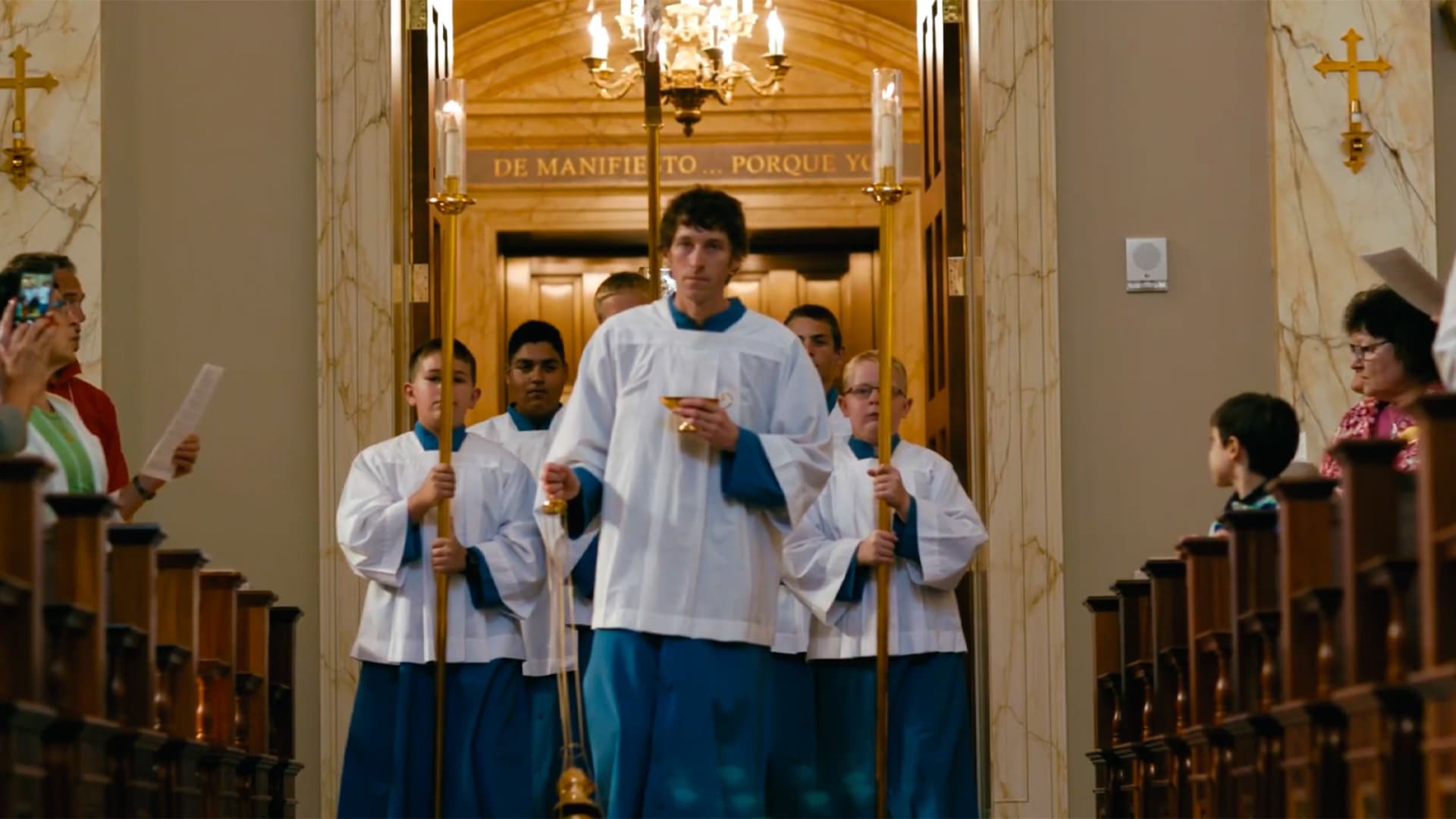
Tolgin didn't set out to write a Christian novel. He said so himself, plainly. He didn't want to preach or push an agenda. For him, faith wasn't a label to stick onto a story. It was the ground beneath it. It's what gave his characters depth, made their choices meaningful, and gave the journey a soul. And his faith wasn't theoretical. It was lived. Every day, Tolkien went to Mass. He prayed the Rosary. He wrote to his children with deep honesty about his faith, his questions, his struggles.
To him, the Eucharist was the greatest thing to love on this earth. In his masterpiece, The Lord of the Rings, there's never a scene that directly mentions God. But every page is permeated by the quiet, steady presence of mystery.
Frodo is the small one who dares the impossible. Sam is loyalty, hope, and grace. Aragorn is the hidden king, returning when all seems lost. And then there's mercy, forgiveness, humility, and strength. All of it born from a faith that passed through suffering, loss, and war. And maybe that's what makes Tolkien so universal. He doesn't preach to us, he doesn't try to convert us, but he gently shows us that there is a good worth choosing, a hope that doesn't die, a light that endures, even in the deepest darkness.
Tolkien gave the world a modern myth, but maybe, deep down, he left us with a question. What if this story we're living is bigger than we think?