ANALYSIS | Part I: Understanding the most interesting cases on the Supreme Court’s docket
The U.S. Supreme Court is gearing up for a new term, and with that comes new cases to examine. From religious liberty questions to immigration law disputes, these are three cases worth paying attention to.
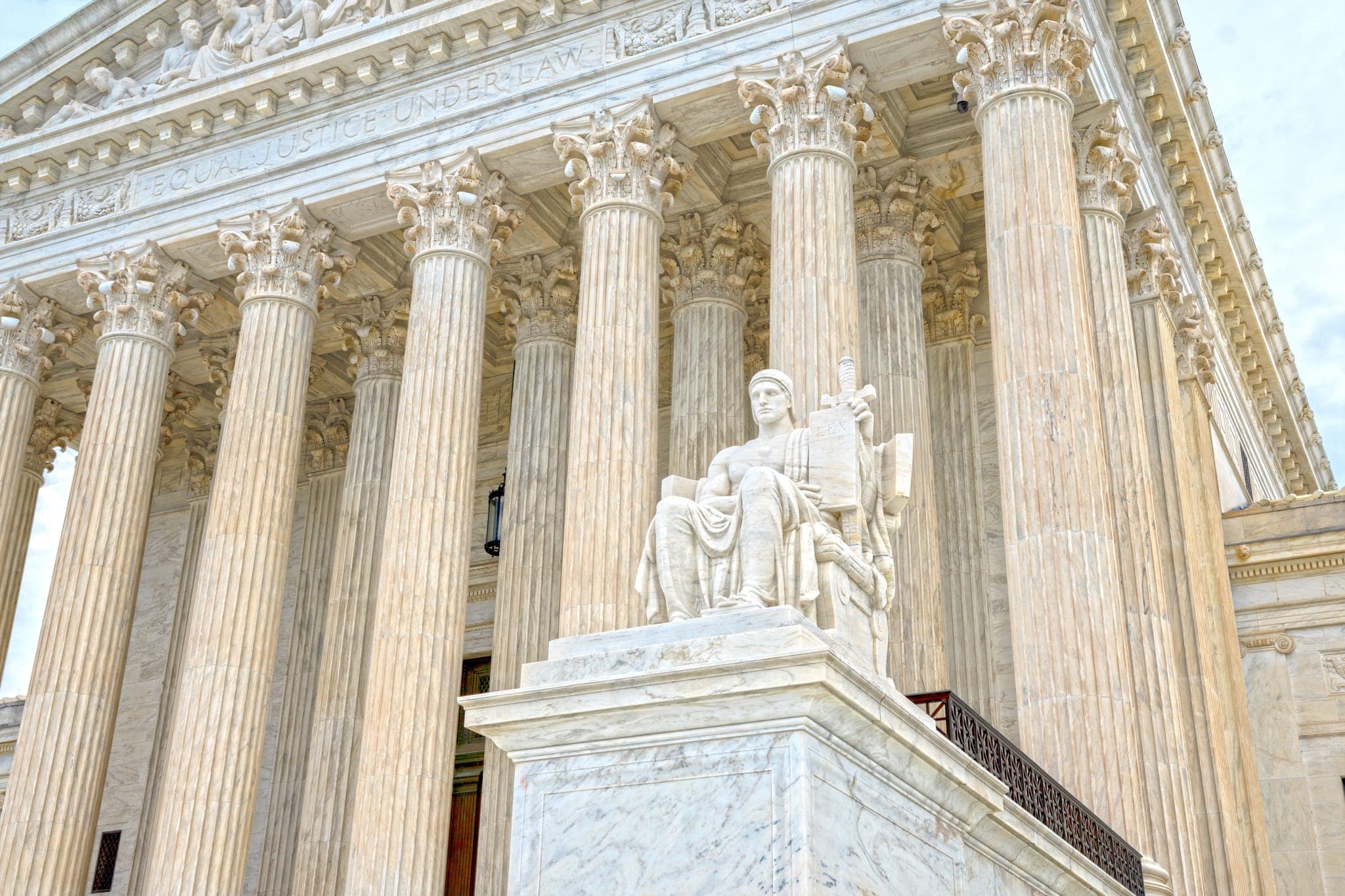
The U.S. Supreme Court will begin its next term on Oct. 5 and already has at least 25 cases on its docket. Although it is possible that the nation’s highest court could add more cases following its conference later in September, Zeale News has put together a list of some of the most consequential cases the court will consider:
Genalo v. Black
Essentially a holdover from the first Trump administration, Genalo v. Black centers on whether prolonged mandatory detention of certain noncitizens with criminal convictions without an individualized bond hearing eventually violates the Fifth Amendment’s Due Process Clause. In 2018, the Supreme Court ruled that detained noncitizens do not have a statutory right to periodic bond hearings.
The suit was brought by Keisy G.M., a native of the Dominican Republic who became a legal permanent resident (LPR) of the U.S. in 2011, and Carol Williams Black, a Jamaican-born man who became an LPR in the 1980s, against Kenneth Genalo, currently the acting Executive Associate Director of U.S. Immigration and Customs Enforcement (ICE) and formerly the director of ICE’s New York field office.
ICE arrested G.M. and Black during the first administration due to having committed crimes that violated the terms of their legal permanent residency. G.M. pleaded guilty to second-degree assault in 2015, and Black was convicted in 2000 of the sexual abuse of a minor and other related crimes. G.M. spent 21 months in detention and Black spent seven months in detention before a court granted relief under habeas corpus, freeing Black.
Federal law requires that aliens convicted of certain crimes be arrested and detained without the option of release or parole. The statute does not set a time limit for the period of detention nor does it make mention of bond hearings.
At the end of Trump’s first term, one federal district court granted Black habeas relief, while another denied G.M. the same relief. The U.S. Court of Appeals for the Second Circuit consolidated the two cases on appeal and held that the Due Process Clause prohibits prolonged detention without a bond hearing.
The Supreme Court will seek to answer two questions. First, the court will address whether there is a point at which mandatory detention of an alien becomes “unreasonably prolonged,” requiring a bond hearing, before then asking whether Due Process requires that the government justify continued detention.
Of note, lower courts are widely divided on the issue of mandatory detention, with the First, Second, and Third circuits requiring individualized bond hearings for detained aliens. Other circuits have afforded the Trump administration greater deference in its determinations regarding mandatory detention and its length. The Supreme Court’s ruling could introduce a more consistent standard for lower courts to use.
Grand v. City of University Heights, Ohio
A First Amendment and religious land use issue, the case of Grand v. City of University Heights, Ohio, asks whether a plaintiff alleging that government threats chilled his religious exercise and assembly can immediately file a First Amendment lawsuit or whether land use rules require a local zoning process be completed first.
As Zeale News reported, Orthodox Jew Daniel Grand purchased a home in University Heights in 2019. Since Orthodox Jewish religious law prohibits driving on the Sabbath and requires a quorum of at least 10 men for prayer, Grand invited Jewish community members to pray with him at his home, rather than make the lengthy drive to a synagogue.
Then-mayor of University Heights Michael Brennan and then-law director for the city Luke McConville became aware of the planned meetings and issued a cease-and-desist letter, stipulating that Grand’s house could not be used as a “place of religious assembly” or “shul or synagogue.” Doing so, the cease-and-desist letter clarified, would violate the house’s single-family zoning classification and incur building code citations.
Grand subsequently applied for a special-use permit at a Planning Commission hearing in March 2021, but later withdrew his request for a permit. Brennan, however, confirmed that the cease-and-desist order would remain in effect. Over the next year, Brennan encouraged neighbors to report religious gatherings at Grand’s house, police would patrol the street, and the city conducted at least one building inspection.
When Grand filed a lawsuit, both the U.S. District Court for the Northern District of Ohio and the U.S. Court of Appeals for the Sixth Circuit determined that the issue was “unripe” for judicial intervention, citing the Supreme Court’s holding in Williamson County Regional Planning Commission v. Hamilton Bank, which would require a concrete application of the land use classification before proceeding.
In other words, since Grand withdrew his special-use permit application and the Planning Commission never finalized the land-use classification, any “chilling” effect would be rendered “self-inflicted,” in the view of the lower courts.
The Supreme Court will examine whether the First Amendment’s chilling effect doctrine is displaced by Williamson County’s land use finality requirement if a plaintiff alleges that government threats both before and after a Planning Commission meeting chilled religious exercise and assembly.
The U.S. Conference of Catholic Bishops, American Center for Law and Justice, and National Jewish Advocacy Center have written amici briefs supporting Grand’s position. Grand contends that Williamson County‘s holding was designed for regulatory affairs — namely, those where the extent of economic impact must be determined — and should not force citizens to complete a permit process which they say is itself an unconstitutional burden.
International Partners for Ethical Care, Inc. v. Ferguson
Although technically a Due Process, Free Exercise, and Free Speech case, the Supreme Court will review only the matter of standing in International Partners for Ethical Care, Inc. v. Ferguson. That decision, however, will determine whether the case may proceed through the lower courts.
Standing is the legal right of a party to bring a lawsuit or participate in a case, often by demonstrating a real and clear stake in the case’s outcome. One of the common elements of standing involves showing that the challenged law or policy represents a real and imminent injury to the plaintiff.
The controversy hinges on a 2023 Washington law. The state’s Family Reconciliation Act has long required licensed youth shelters to alert parents within 72 hours when a runaway minor arrives, with exceptions for cases where alerting the parents is likely to subject the child to abuse or neglect.
In 2023, the state legislature amended this provision, allowing shelters not to inform parents of the arrival of minors who suggest that their parents do not “affirm” their “gender identities.” Instead, the shelters are instructed to notify the state’s Department of Children, Youth, and Families (DCYF).
The expansion of the law was challenged by five sets of Washington parents who do not “affirm” the “gender identities” of their children, along with International Partners for Ethical Care, Inc. and Advocates Protecting Children, organizations which support parental rights over gender ideology.
The parents argue that the amended law represents a real injury, as they have had to self-censor themselves when discussing gender with their children so as not to “trigger” the children into running away. The parents also fear that, should their children run away, the children may be subjected to “gender transition” procedures, including the use of puberty blockers, hormone drugs, and potentially even surgery, all without the parents’ consent and without the parents even knowing where their children are.
The amended law further chills free speech and free exercise of religion, the parents argue, by pressuring them to avoid discussing particular subjects with their children for fear of being labeled abusive by the state.
Both a federal district court and the U.S. Court of Appeals for the Ninth Circuit dismissed the complaint, concluding that the present injuries the parents cited (self-censorship, adjusted parenting styles, etc.) were self-inflicted responses to a perceived threat, rather than the actual result of state action, and that the future injuries invoked were speculative and not immediate.
The Supreme Court will answer the question, “Whether parents have standing to challenge a law or policy that deliberately displaces their decision-making role as to ‘gender transitions’ of their children, and in so doing creates present and likely future impediments to their ability to parent their children as they deem best for them.”
The Supreme Court has affirmed in recent years that the right of parents to raise their children as they see fit is among the oldest and most deeply-rooted rights recognized and upheld throughout the history of Western civilization. The issue of the standing of parents — especially in cases relating to sex and gender — has emerged as crucial.





Comments