Attorney pens ‘secular love letter’ to Catholicism, says the faith could bridge divided US
As America’s political divides deepen and common ground seems harder to find, a Justice Department attorney is arguing that Catholicism has what it takes to unite a fractured public.

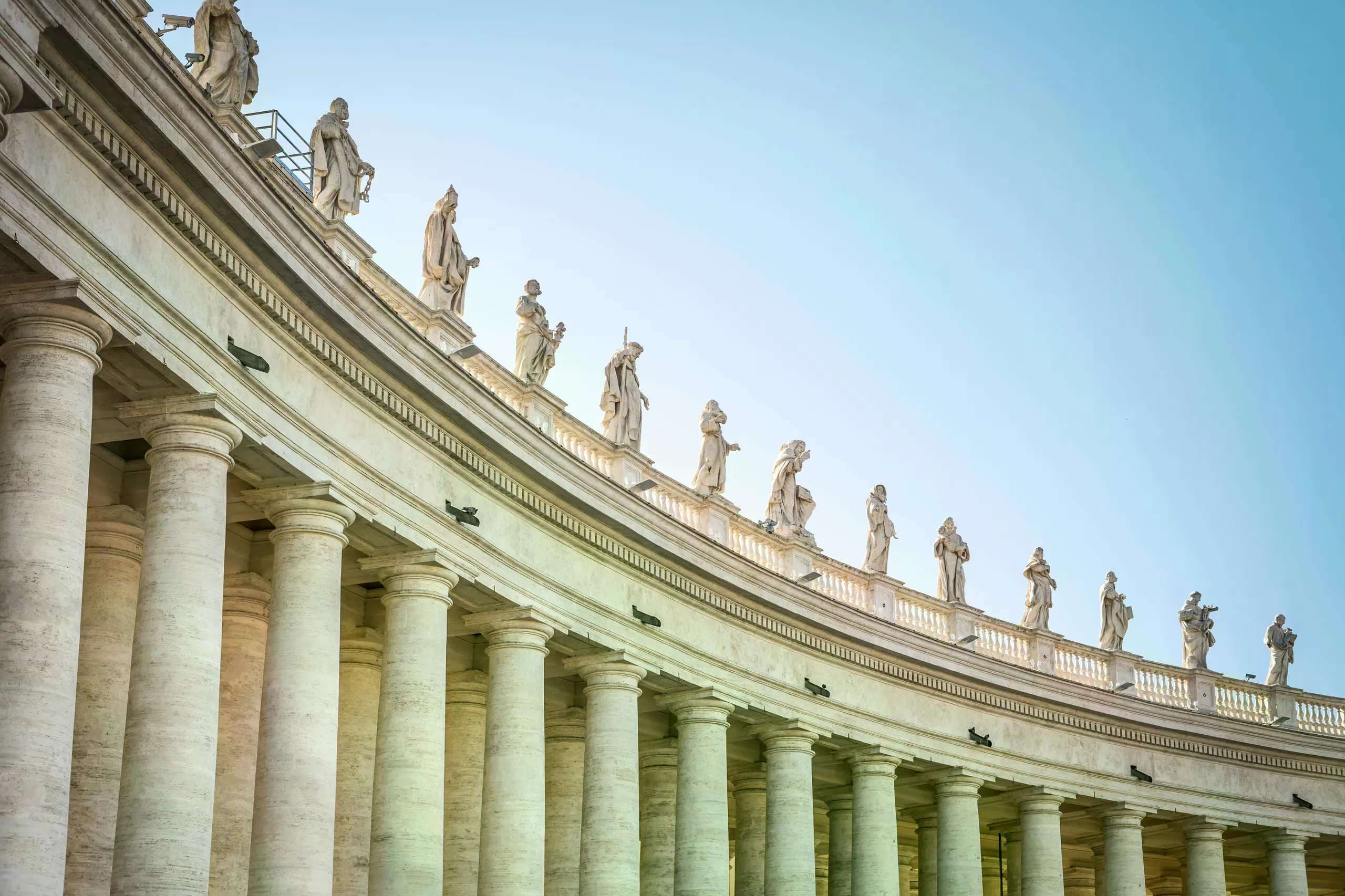
As America’s political divides deepen and common ground seems harder to find, a Justice Department attorney is arguing that Catholicism has what it takes to unite a fractured public.
In a Feb. 3 article published by The Public Discourse, Joshua Sohn, a trial attorney who describes himself as a “mostly secular American Jew,” framed his essay as a “secular love letter” to the Catholic Church.
Sohn opened with an analogy drawn from Jewish society. Secular Jews, he pointed out, will often still view Orthodox Judaism as their spiritual home. In a similar vein, while he does not attend church, “the church I don’t attend is Catholic.”
No other faith tradition possesses the “same synthesis of social conservatism and select progressive values,” he wrote. “And no other faith is better positioned to maybe, just maybe, bridge the awful divisions in our country.”
Sohn attributed Catholicism’s social conservatism to its reverence for “the whole and natural human person,” a framework that grounds the Church’s opposition to abortion, euthanasia, and artificial contraception.
“I don’t fully adopt these moral principles (my wife and I cheerfully used contraception after our kids were born),” he wrote, “but you have to admire a whole-life ethic that has persevered even in the face of fierce cultural headwinds.”
At the same time, Sohn argued, the Church’s ethical foundation has led Catholics to embrace causes sometimes associated with the political left, including environmental protection, foreign aid, and a global perspective affirming the human dignity of all. He pointed to Catholic criticism of cuts to foreign aid under President Donald Trump and to papal support for climate action as evidence that Catholic social teaching does not map neatly onto American partisan lines.
“This is no coincidence: the same Catholic ethic that values the whole and natural human person also values the natural world and human life in foreign countries,” he wrote.
Because of this political heterodoxy, Sohn contended, Catholicism is uniquely positioned to act as a bridge in a polarized nation.
“If there is any force powerful enough to bring together partisan tribes who are careening apart, it is the shared heritage and common language of Christianity,” he wrote. “And within the Christian ecosystem, the largest faith that can credibly speak to conservatives and progressives alike is Catholicism.”
Sohn extended his analysis to modern-day politics, focusing in particular on Vice President JD Vance, whom he described as a “brilliant and devout Catholic” and a plausible future president.
“He can adopt a truly Catholic policy package that aligns with the MAGA right on certain issues while breaking with them on others. Or he can continue with Trump’s MAGA policy package, regardless of whether it aligns with Catholic social teaching,” he wrote. “One can only hope Vance makes the former choice.”
Sohn outlined what he believes a Catholic-influenced presidency might look like, suggesting a Vance administration could pursue stronger regulations on online pornography, implement a nationwide age filter, and “address the Wild West of AI porn.” He also called for reining in sports betting and speculative cryptocurrency markets, arguing that they prey on young and vulnerable people.
“The Trump administration did not take any of these steps, given its courting of ‘Barstool Sports conservatives:’ young, secular, libertine-ish men who are more than a little crude and just want to have a good time. They enjoy their porn, their online betting, and their crypto speculation,” he said. “But a Vance administration, influenced by Catholic concern for the common good, should be willing to push back against libertine excess in a way that the Trump administration did not.”
Sohn also pressed for a more balanced approach to climate change, scientific research, and foreign aid, and called for policies that better support young families.
“Imagine, then, a Vancian policy agenda that is socially conservative, pro-family, and judiciously favorable to climate action, scientific research, and foreign aid,” Sohn wrote. “This would not be a hard-right agenda — it would be a big-tent agenda. It may even be able to bring the country together.”
Such an ethic, Sohn argued, does not need to be invented. A moral framework that marries traditional social commitments with “more progressive positions on other charged issues like global poverty or climate change” can already be found in Catholic social teaching.
“As for myself,” Sohn concluded. “I’ll continue to admire the Catholic Church from afar. I’ll pray that it holds fast to its ethical principles. And I’ll wait to see what the future holds for the Church, for its most powerful American adherent, and for all of us.”



.jpg&w=3840&q=75)

Comments