Bishop Barron brings clarity to Catholic infighting over Zionism and antisemitism debate
A growing and increasingly heated dispute among Catholics over Israel, antisemitism, and the meaning of “Zionism” drew a clarifying response on March 20 from Bishop Robert Barron of Winona-Rochester, Minnesota, following public complaints from Catholic convert Carrie Prejean Boller that she had been “abandoned” by fellow Catholics.
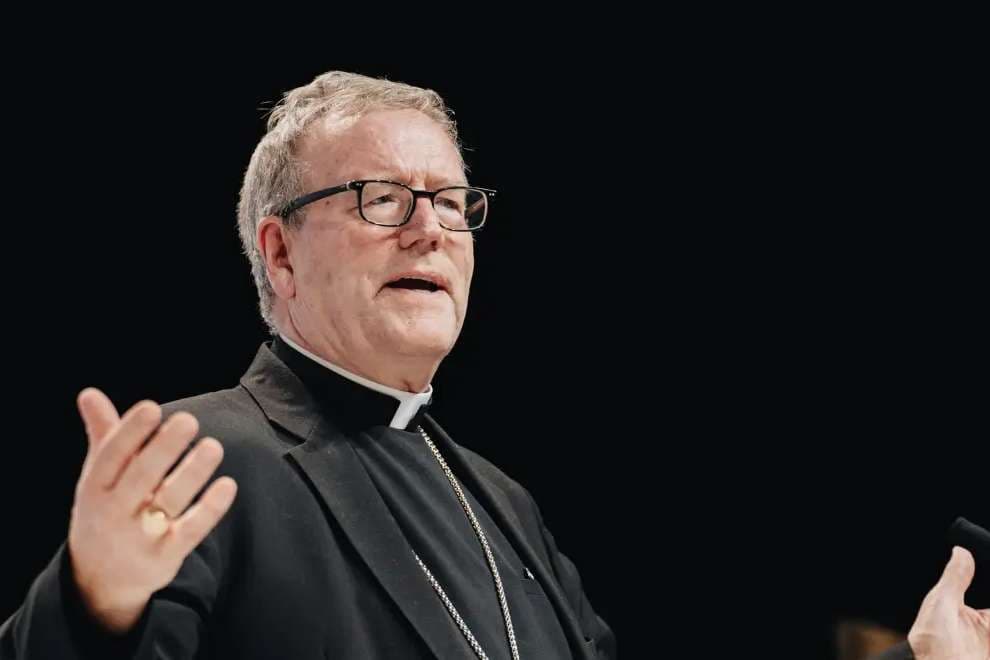
A growing and increasingly heated dispute among Catholics over Israel, antisemitism, and the meaning of “Zionism” drew a clarifying response on March 20 from Bishop Robert Barron of Winona-Rochester, Minnesota, following public complaints from Catholic convert Carrie Prejean Boller that she had been “abandoned” by fellow Catholics.
The exchange comes in the aftermath of Boller's removal from the Presidential Religious Liberty Commission earlier this year, after she disrupted a hearing on rising antisemitism by challenging whether opposition to Israel or “Zionism” should be considered antisemitic.
Boller, who converted to Catholicism in 2024, has since positioned herself as a victim of intra-Catholic hostility, arguing that faithful Catholics are being marginalized for rejecting what she describes as “Zionist” political commitments.
But the broader debate has quickly devolved into a pattern of Catholics accusing other Catholics of either “Zionism” or “antisemitism,” with little precision about what either term actually means.
The controversy traces back to a February commission hearing on antisemitism, where Boller asserted, “Catholics do not embrace Zionism,” while pressing Jewish witnesses on whether criticism of Israel should be labeled antisemitic.
Her remarks triggered backlash not only from Jewish leaders but also from Catholic voices who argued that her claims misrepresented Church teaching and risked fueling confusion at a moment of sharply rising antisemitic incidents in the United States.
Since then, the debate has migrated online, where distinctions between political criticism of Israel, theological claims, and actual antisemitism are often flattened into slogans.
In his response on X, Bishop Barron reiterated a key point often lost in the noise: The Catholic Church’s position is neither ideological nor simplistic, but both principled and nuanced.
"The Catholic position on matters of ‘Zionism,’ to which I fully subscribe, is as follows: all forms of antisemitism are to be unequivocally condemned; the state of Israel has a right to exist; but the modern nation of Israel does not represent the fulfillment of Biblical prophecies and hence does not stand beyond criticism,” Bishop Barron said.
This distinction — frequently ignored in online debates — undercuts both extremes: Those who treat any criticism of Israel as antisemitic, and those who invoke Catholicism to justify sweeping rejection of Israel’s legitimacy.


Comments