Bishop Barron discusses Christianity in American public life, Pope Leo’s role as ‘bridge builder’
Bishop Robert Barron of the Diocese of Winona-Rochester, Minnesota, defended the role of Christianity in American democracy as essential but rejected the idea that the U.S. should be understood as a formally Christian nation during a recent interview on religion, politics, and Pope Leo XIV.

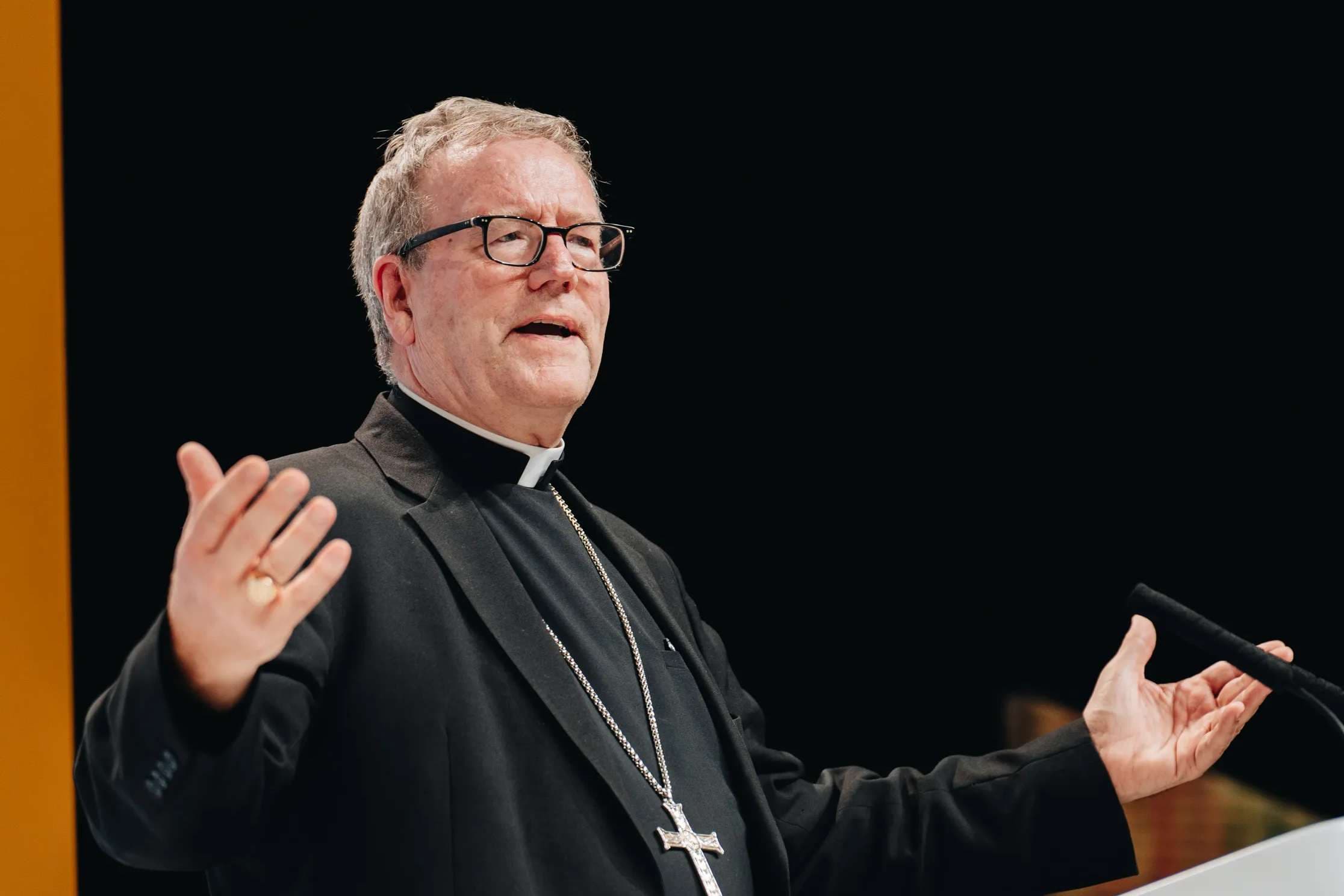
Bishop Robert Barron of the Diocese of Winona-Rochester, Minnesota, defended the role of Christianity in American democracy as essential but rejected the idea that the U.S. should be understood as a formally Christian nation during a recent interview on religion, politics, and Pope Leo XIV.
Adam O’Neal interviewed the bishop on his “Make It Make Sense” podcast, and the episode was published May 29.
O’Neal asked Bishop Barron whether America is a Christian nation, and the bishop said the answer depended on the definition.
According to the bishop, if the phrase means Christianity is the country’s established religion, the answer is no. But if it means that American democracy depends on principles drawn from the Judeo-Christian biblical tradition, he said the answer is yes.
He pointed to the First Amendment as the proper framework for religion in American public life, saying he supports both the Constitution’s ban on an established religion and its protection of the free exercise of religion.
“I proudly and happily and enthusiastically endorse it,” he said of the Constitution’s anti-establishment clause. “At the same time, there’s the free exercise clause, and the founding fathers struck a balance that's still worth emphasizing and can be struck today.”
The bishop said that balance has been distorted in recent decades by what he described as an overemphasis on the “wall of separation” between church and state. He argued that public expressions of faith, including prayer or religious statements in public spaces, should not automatically be treated as an establishment of religion.
“No one's trying to use the state power to impose Christianity or any other religion on anybody. A gathering of Christians or believers in a public space to express, indeed, the great spiritual principles undergirding our democracy. I think that's a good thing. So, that's my general take on it,” Bishop Barron said when asked about his participation in the June 7 Rededicate 250 event on the National Mall, which featured several Christian speakers.
Bishop Barron also addressed the term “Christian nationalism” during the interview, calling it “a completely slippery term” and saying it is hard to comment on without a careful definition.
“I’m for the First Amendment,” he said. “I’m for the First Amendment of the Constitution, which I think was — it was ingenious.”
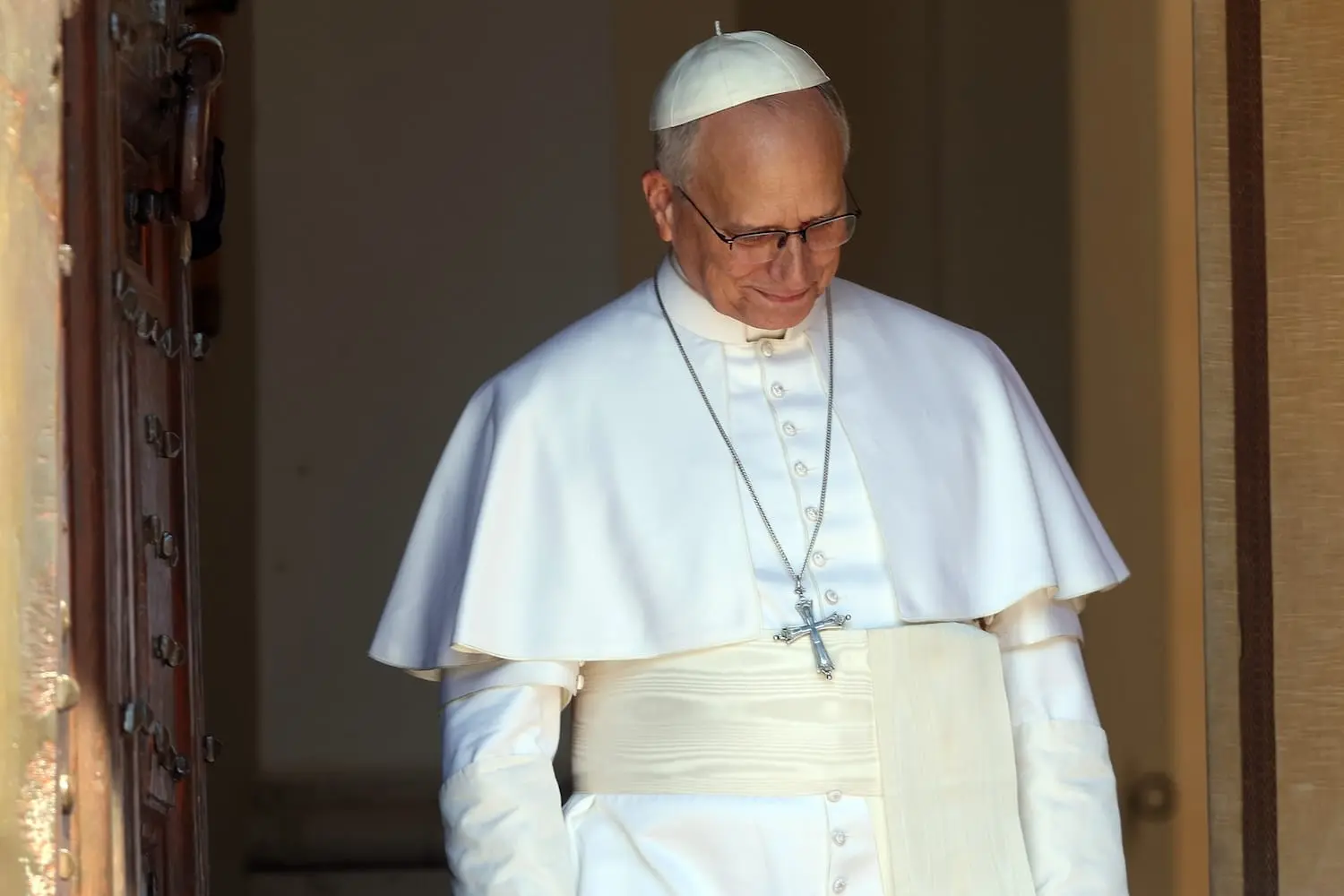
The interview also touched on Pope Leo XIV, the Chicago-born Pope whose election surprised Bishop Barron and other Catholic commentators who had long assumed the Vatican would not choose an American pontiff.
Bishop Barron said the late Cardinal Francis George, former archbishop of Chicago, had believed there would not be an American pope until the U.S. went into “cultural and political decline,” because the world would not want one country to hold major political, economic, military, cultural, and ecclesial influence at the same time.
But Pope Leo’s background, he said, likely helped overcome that concern. Bishop Barron described the Holy Father as an “unusual American” who spent much of his adult life in Latin America and speaks both English and Spanish.
Bishop Barron said Pope Leo appears to be positioning himself as a “bridge builder” after tensions during Pope Francis’ papacy. He cited Pope Leo’s gestures toward more conservative Catholics, including on liturgy and style, while also maintaining an “ongoing reverence” for the synodal process associated with the late Pope Francis.
“I think that's an attempt to say yes to conservatives, yes to more progressives. I think he's trying to be a bridge figure now,” Bishop Barron said, while adding that Catholics are still waiting to see the direction of Pope Leo’s papacy because “we don’t have a big paper trail with him.”
Asked whether Pope Leo risks being seen as an “anti-Trump pope” when he speaks against war or criticizes current conflicts, Bishop Barron said the Pope should speak at the level of “very high authority” about moral and spiritual values that should inform people’s decisions.
He added that “it gets a bit more problematic if a pope gets into the weeds and details of particular issues like that.”
Bishop Barron said popes naturally call for peace and bring moral principles to bear on war, but he believes Catholics may disagree in good faith about whether a specific military action is justified.
Bishop Barron said his own role as a bishop in the U.S. is to teach Catholic social doctrine, not to settle every political question. Catholic social teaching does not fit neatly within the country’s left-right divide, he said, noting that some elements align more closely with Democratic policy priorities and others with Republican ones.
“My job is to articulate Catholic social teaching,” Bishop Barron said. “Now go forth, business leaders and journalists, and now apply it in your situation.”
Comments