CatholicVote asks Supreme Court to hear Native American religious liberty case
CatholicVote argued that the case could have broad implications for religious freedom nationwide and drew comparisons to restrictions imposed on Catholic churches during the COVID-19 pandemic.

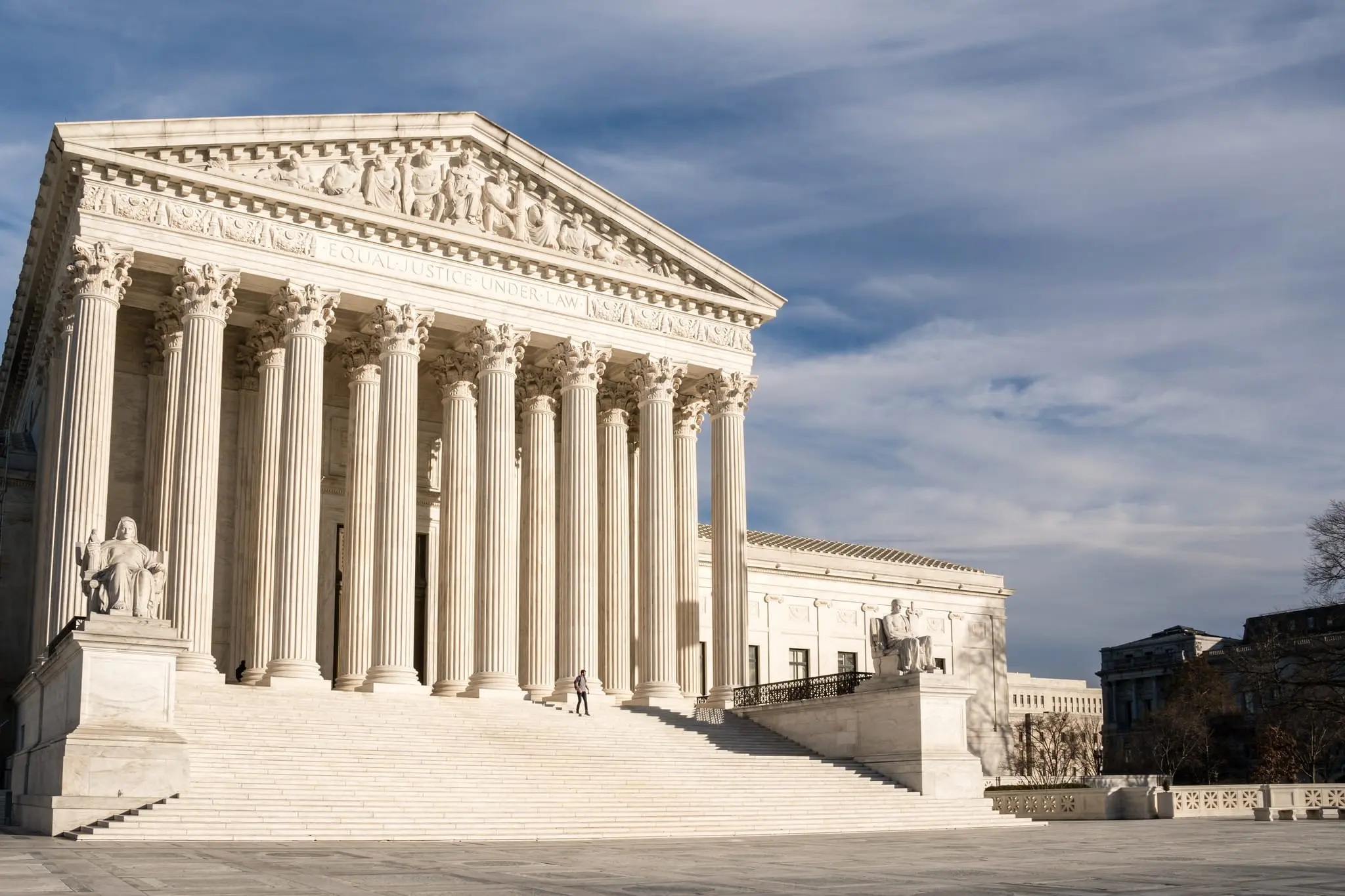
CatholicVote’s Education Fund filed an amicus brief urging the U.S. Supreme Court to hear a religious liberty dispute over a San Antonio, Texas, redevelopment project that members of the Lipan Native American Church say would damage a site central to their religious ceremonies.
The Aug. 31 filing in Perez v. City of San Antonio supports a petition challenging a federal appeals court ruling that declined to block the city from removing trees and deterring nesting cormorants in part of Brackenridge Park along the San Antonio River.
Church members consider the riverbend sacred and say their ceremonies require the presence of particular cypress trees and cormorants and must occur within a specific 20-by-30-foot area on the riverbend’s south shore as consistent with their ancestors’ tradition.
“The Constitutional guarantee of Free Exercise of religion is just that: the ability to undertake worship in the manner, form, and place prescribed by the religion,” CatholicVote Vice President of Advocacy Joshua Mercer said in a press release shared with Zeale News. “It is not the place of any government entity — or the courts — to pass judgment or opine on the value or necessity of any particular religious practice.”
Gary Perez and Matilde Torres sued San Antonio in August 2023 under the First Amendment’s Free Exercise Clause, the Texas Religious Freedom Restoration Act, and the Texas Constitution. They argued that the city’s plans would destroy or alter natural features necessary for them to conduct religious ceremonies as their faith requires.
According to court records, church members believe the riverbend connects the physical and spiritual worlds. The area’s trees, birds, and other natural features form what they call its “spiritual ecology.”
In October 2023, U.S. District Judge Fred Biery of the Western District of Texas ordered the city to provide scheduled access for religious ceremonies but declined to block its tree-removal and bird-deterrence measures.
The U.S. Court of Appeals for the Fifth Circuit ultimately upheld that decision in a December 2025 ruling, concluding that the city’s plans did not impose a “substantial burden” on Perez and Torres’ religious exercise as they retained “virtually unlimited access” to the 343-acre park. It further concluded that, even if the plans substantially burdened their religious exercise, the city had demonstrated compelling interests and used the “least restrictive means” available.
Perez and Torres petitioned the Supreme Court in June to review the case, arguing that the Fifth Circuit improperly substituted its own judgment for their sincere religious beliefs.
CatholicVote argued the Fifth Circuit’s ruling could set a dangerous precedent by allowing governments and courts to judge whether particular religious practices are necessary.
The organization compared the case to restrictions imposed on Catholic churches during the COVID-19 pandemic, when some governments limited access to churches and the sacraments while allowing businesses classified as “essential” to remain open.
“Whether a faith community worships in a Catholic cathedral or along a riverbank, government actions that prevent or alter religious exercise impose a substantial burden under the First Amendment,” Mercer said. “Respect for all sincerely held beliefs is the bulwark of religious freedom in America.”
CatholicVote’s brief asks the Supreme Court to clarify whether courts may reject a worshiper’s sincere theological judgment about what a religious practice requires. It also argues that governments should not be able to satisfy the “least restrictive means” standard without examining the burden on the particular religious practice and actively considering possible accommodations.
The justices have not decided whether to hear it, but the high court has directed San Antonio to respond to the petition by Oct. 30.
.jpg&w=3840&q=75)




Comments