ANALYSIS | Part II: Understanding the most interesting cases on the Supreme Court’s docket
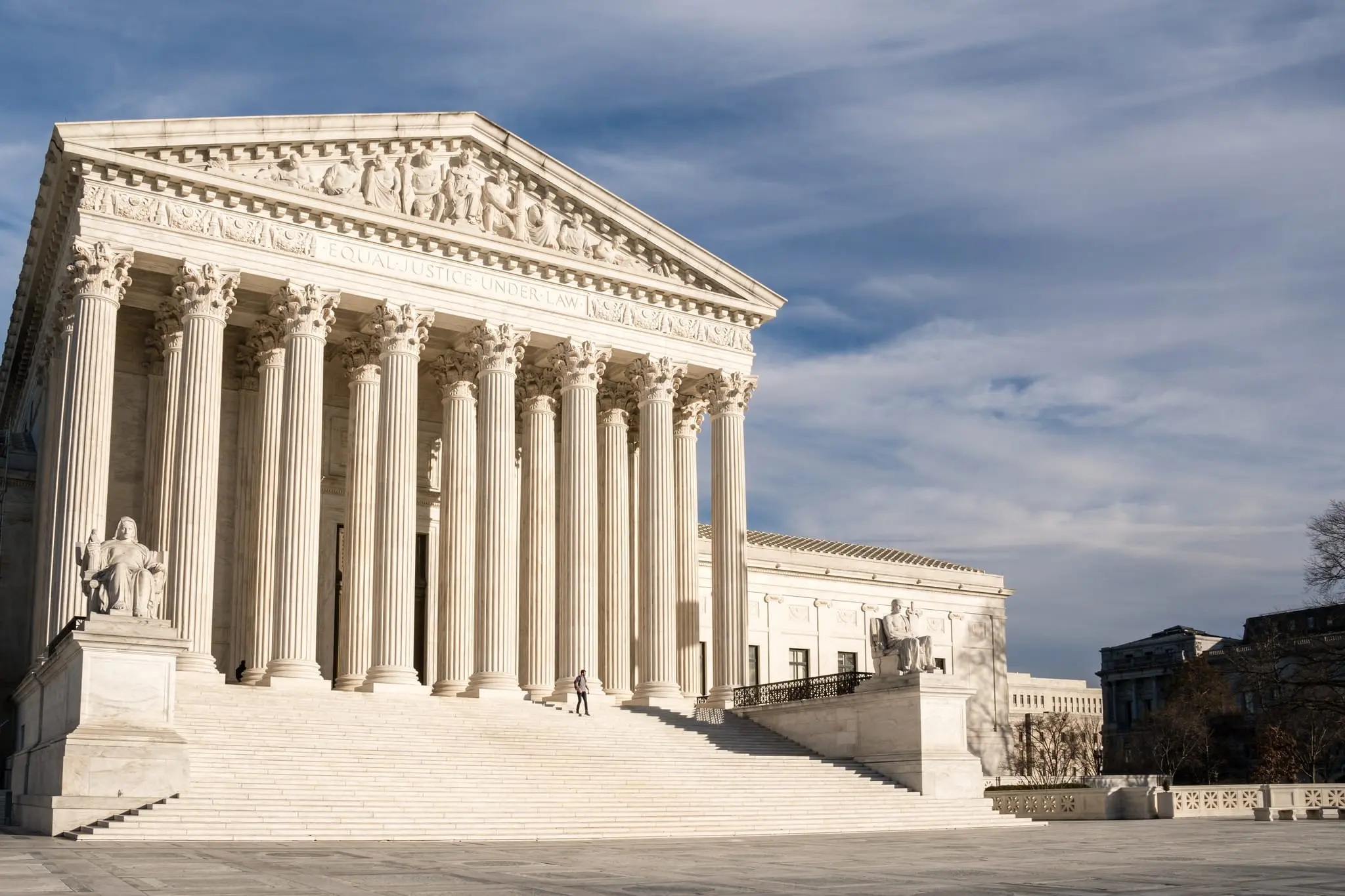
The U.S. Supreme Court is slated to weigh at least 25 cases in the coming term. From religious liberty questions to immigration law disputes, these are another three cases are worth paying attention to.
This is the second part of a series. Read Part I here.
The U.S. Supreme Court is just weeks away from beginning a new term, and the court’s docket is already packed. While the nation’s highest court is scheduled to hear at least 25 cases so far, with the potential for more to be added to the docket, Zeale News has compiled a review of some of the most interesting cases the justices will address.
Republican National Committee v. Mi Familia Vota
The case of Republican National Committee v. Mi Familia Vota centers on two Arizona statutes requiring documentary proof of U.S. citizenship to register to vote and allowing periodic reviews of voter rolls to remove ineligible registrants.
As Zeale News previously reported, the Democratic National Committee (DNC) and Arizona Democrats challenged the provisions, arguing that federal voting laws preempt the state statutes. The U.S. Court of Appeals for the Ninth Circuit largely blocked both provisions, concluding that they are preempted by federal law. The Republican National Committee (RNC) intervened to defend the laws.
The Supreme Court’s 2013 ruling in Arizona v. Inter Tribal Council of Arizona decreed that the National Voter Registration Act (NVRA) of 1993 preempted state laws and that states could not require documentary proof of U.S. citizenship on the federal voter registration form. However, the ruling did not prevent states from requiring documentary proof of citizenship on state-created forms.
Since the 2013 ruling, Arizona has limited voters who do not provide proof of citizenship to only register to vote using the federal voter registration form — and to only vote in elections for federal office. In 2022, the state’s Republican-led legislature approved new laws enforcing the documentary proof of citizenship law and requiring state recorders to cancel the registration of individuals found not to be U.S. citizens.
A federal district court subsequently blocked the laws from being enforced, ruling that a consent decree signed by then-Secretary of State Michele Reagan in 2018 prohibited requiring documentary proof of citizenship and that, even were that not the case, the NVRA would preempt the state laws. The U.S. Court of Appeals upheld that ruling in 2024.
The Supreme Court will examine whether the NVRA does preempt state laws requiring proof of citizenship when registering to vote, as well as whether Arizona is prohibited from removing ineligible registrants from voter rolls within 90 days of an election.
St. Mary Catholic Parish v. Roy
A First Amendment Free Exercise Clause case, St. Mary Catholic Parish v. Roy will test whether a state can condition participation in a preschool funding program on a nondiscrimination rule that conflicts with a religious school’s admissions practices.
In 2020, Colorado voters created dedicated state funding for voluntary universal preschool (UPK). The state legislature subsequently passed the Early Childhood Act, allowing state funds to go to both public and licensed private schools, including religious schools, so that families can benefit from free preschool programs.
To receive those funds, however, participating schools have to agree to a nondiscrimination policy. The parochial schools of the Archdiocese of Denver sought an exemption from the policy, since school administration considers matters such as sexual orientation and gender identity during the admissions process to prioritize Catholic families and cultivate an atmosphere conducive to Catholic education and morality.
The state denied the request for an exemption, and a federal district court later ruled against the Catholic schools. The U.S. Court of Appeals for the Tenth Circuit affirmed the district court’s ruling.
The courts determined that the nondiscrimination rule is generally applicable and neutral, arguing that it does not target the Catholic schools seeking participation in the UPK program. In other words, because Colorado invites religious schools to participate in the program on the same grounds as secular schools, the nondiscrimination policy is neutral.
The Catholic schools argued that the state provides a number of exemptions from other rules, including allowing schools to give preference to siblings of already-enrolled students, which could be considered just as discriminatory as the Catholic schools’ request not to enroll students whose values and family lifestyles conflict with the moral teachings of the Church.
The Supreme Court is expected to examine whether or not exclusion from a public-benefit program because of religious practice triggers strict scrutiny, placing a heightened burden of proof on the Catholic schools in the case.
The Supreme Court’s 1990 ruling in Employment Division v. Smith generally allows neutral laws of general applicability to burden religious exercise without triggering strict scrutiny in judicial review, while 2022’s Carson v. Makin applied strict scrutiny when governments excluded religious entities from otherwise available public benefits solely because of religious status or the religious use of funds.
Wassily v. Blanche
Another immigration case, Wassily v. Blanche, will see the Supreme Court examine whether foreign nationals who were “granted asylum” are eligible to apply for legal permanent residence even after their asylum is terminated. The case consolidates petitions from two individuals whose asylum grants were terminated after they were convicted of “particularly serious crimes.”
Section 1159(b) of Chapter 8 of the U.S. Code enables the Homeland Security Secretary or Attorney General to adjust the status of certain individuals who have been “granted asylum” to that of legal permanent resident (LPR). While asylum “does not convey a right to remain permanently” and “may be terminated” for a number of reasons, including the commission of “particularly serious crimes,” the statute uses the past tense “granted asylum.”
Petitioners Tamer S. Wassily and Byron E. Velasquez Arreaga argue that they are still eligible to apply for legal permanent residence because they were “granted asylum,” even though that asylum grant was later rescinded. Wassily was convicted of third-degree stalking and child endangerment in 2004, while Velasquez was convicted multiple times of driving while intoxicated.
The Board of Immigration Appeals (BIA) ruled in 2022 that an asylum grantee applying for legal permanent residence must have asylum status at the time of the application. Applying that rule to both Wassily and Velasquez, the BIA denied their requests. The U.S. Court of Appeals for the Second Circuit likewise denied the petitions, concluding that “granted asylum” is applicable to those who have been granted and still have asylum status.
The Fourth circuit agreed with the Second and the BIA, but the Fifth circuit held in 2014 that holding current asylum status is not a requirement for adjustment.
Given the significant increase in asylum petitions and especially in asylum grants since 1980, in conjunction with the rampant fraud plaguing the asylum process, the Supreme Court’s ruling could curtail the number of asylum grantees permitted to stay in the U.S. indefinitely, decreasing the incentive to defraud the system.
.jpg&w=3840&q=75)




Comments