RNC takes Arizona election integrity battle to Supreme Court
A 22-year-old state law requires proof of U.S. citizenship when registering to vote. The GOP wants the U.S. Supreme Court to uphold the law in the face of challenges from the Democratic Party.
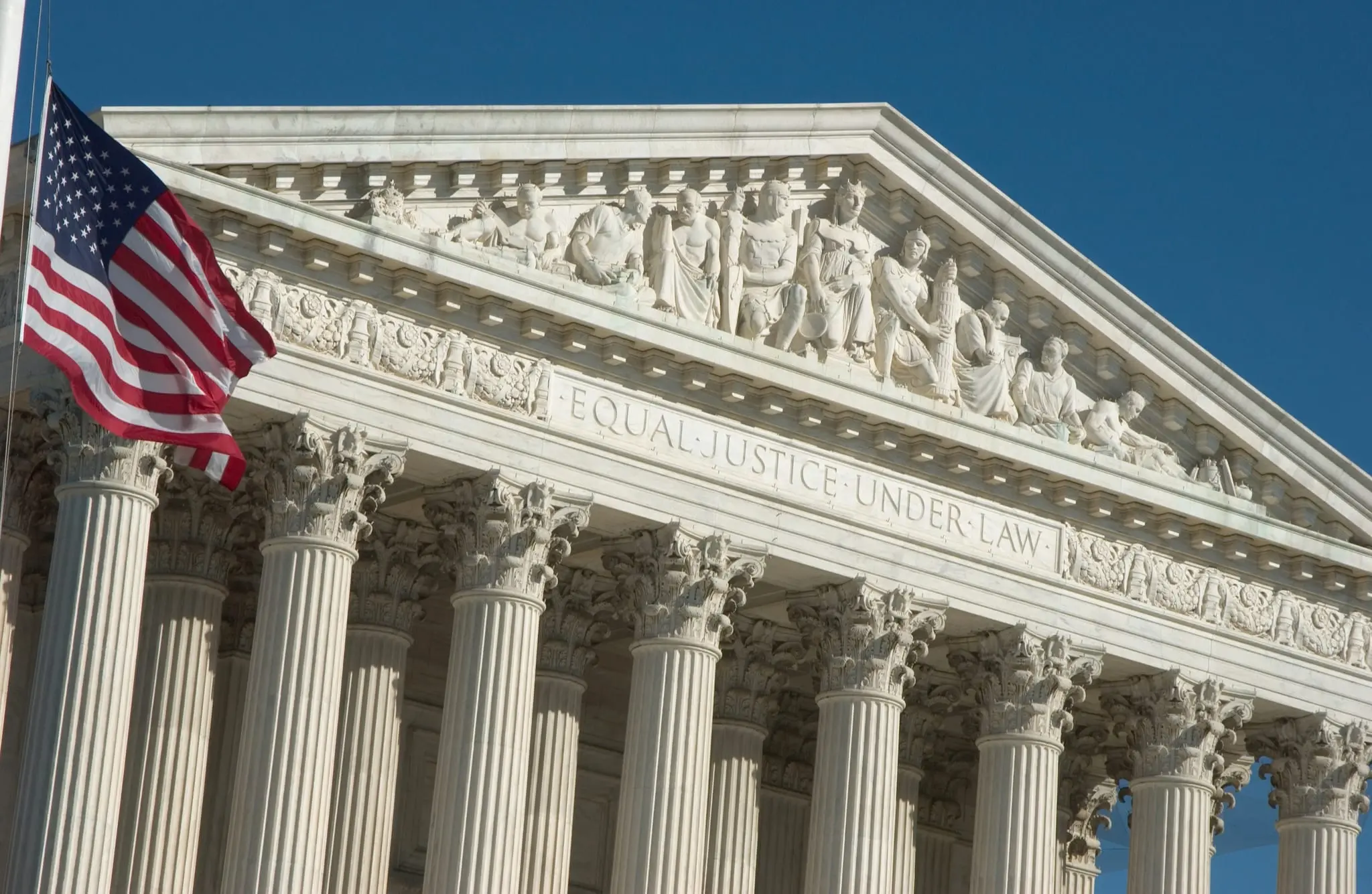
Republicans are taking a major election integrity fight to the nation’s highest court as November’s midterm elections loom. Republican National Committee (RNC) Chairman Joe Gruters revealed in an Aug. 31 Breitbart News op-ed that the RNC is asking the U.S. Supreme Court to uphold an Arizona law requiring proof of U.S. citizenship to register to vote.
“At stake is a principle so basic that most Americans would be shocked it is even being debated: Can states verify citizenship before someone is added to their voter rolls?” Gruters wrote.
“The answer should be obvious,” he continued. “Citizenship is required to vote in federal elections. States should be allowed to check it.”
At issue is a decades-old Arizona law called the Arizona Taxpayer and Citizen Protection Act, which was passed into law by referendum in 2004. That law requires individuals to provide documentary evidence of U.S. citizenship, such as a birth certificate or passport, when registering to vote.
“This state finds that illegal immigration is causing economic hardship to this state and that illegal immigration is encouraged by public agencies within this state that provide public benefits without verifying immigration status,” the law reads.
“This state further finds that illegal immigrants have been given a safe haven in this state with the aid of identification cards that are issued without verifying immigration status, and that this conduct contradicts federal immigration policy, undermines the security of our borders and demeans the value of citizenship,” it continues. “Therefore, the people of this state declare that the public interest of this state requires all public agencies within this state to cooperate with federal immigration authorities to discourage illegal immigration.”
>> Gallup: Americans fear potential election fraud ahead of midterms <<
In 2021, the Democratic National Committee (DNC) and Arizona Democrats filed a lawsuit to block the state from reviewing voter rolls to verify the U.S. citizenship of registered voters, which would effectively render the 2004 law unenforceable.
Gruters wrote that Democrats have fought for years to challenge and block crucial election integrity measures, including efforts to clear deceased persons and noncitizens from voter rolls, and have worked to curtail the tools available to election officials for securing the integrity of American elections. He said, “That position defies common sense.”
The Supreme Court agreed in June to hear the case after the U.S. Court of Appeals for the Ninth Circuit sided with the Democrats in the matter, arguing that federal voting law preempts Arizona’s state law and that a consent decree signed by a former Arizona Secretary of State prohibits citizenship verification from being enforced. The Supreme Court issued emergency stays on both counts while the case is litigated.
The court will seek answers to two questions:. First, whether the National Voter Registration Act (NVRA) prohibits Arizona from requiring proof of citizenship when registering voters and, second, whether Arizona can cancel the registration of noncitizens found on the voter rolls within 90 days of an election.
>> Supreme Court backs Trump’s mail-in ballot executive order — for now <<
Gruters said that the case will essentially determine whether or not states have the authority to protect the integrity of the American elections that have been entrusted to them.
“States should not be forced to ignore evidence that registrants may be ineligible. Election officials should not be prevented from verifying citizenship. Courts should not stand in the way of safeguards that strengthen confidence in election outcomes,” he continued. “At its core, this case asks whether states will keep the ability to enforce election laws as written or whether activist groups can continue using the courts to dismantle commonsense protections that voters themselves support. And the stakes extend far beyond Arizona.”
Gruters, who ran the RNC’s successful election integrity initiatives in 2024, confirmed that the committee is engaged in more than 170 election integrity lawsuits across the country, ranging from proof of citizenship requirements and mandatory voter identification to voter roll audits and protections for mail-in ballots.
“Those efforts have delivered important victories,” he concluded. “But our Arizona case represents the landmark battle in the next chapter of that fight.”
Don Palmer, a senior legal fellow for election integrity at the Heritage Foundation, told Zeale News that the Supreme Court’s decision in the case “should clarify federal law on the fundamental issue of whether states can fully adopt and implement documentary proof of citizenship laws prior to the 2028 election cycle.”
“This case will be a key opportunity for the Court to uphold one of the most litigated laws in the nation requiring proof of citizenship and provide states clear direction that non-citizens on the voter rolls can certainly be removed at any time prior to a federal election — their registration was a nullity as the person was never qualified to vote in the first place,” he continued. “Citizenship is a fundamental requirement and qualification to vote, and a positive ruling by the Court could lead to the sharp expansion in states adopting proof of citizenship laws in voter registration.”
Ken Cuccinelli, a former official in the first administration of President Donald Trump and the chairman of the Heritage Foundation's Election Transparency Initiative, told Zeale News that the RNC has become more "aggressive" in recent years when investigating and litigating election integrity issues.
"They’ve spent most of the last five or six years really upping their game in this space and this is just one important example," he said.
Cuccinelli also stressed the importance of documentary proof of U.S. citizenship when voting or registering to vote.
"It goes without saying that nothing of any significance is protected by the honor system," he said. "Why do we rely on the honor system to protect the foundation of our constitutional republic, that being our election system?"




Comments