DOJ closes immigration loophole for aggravated felony convicts
Immigration law experts have hailed the Board of Immigration Appeals’ ruling as “common sense.”
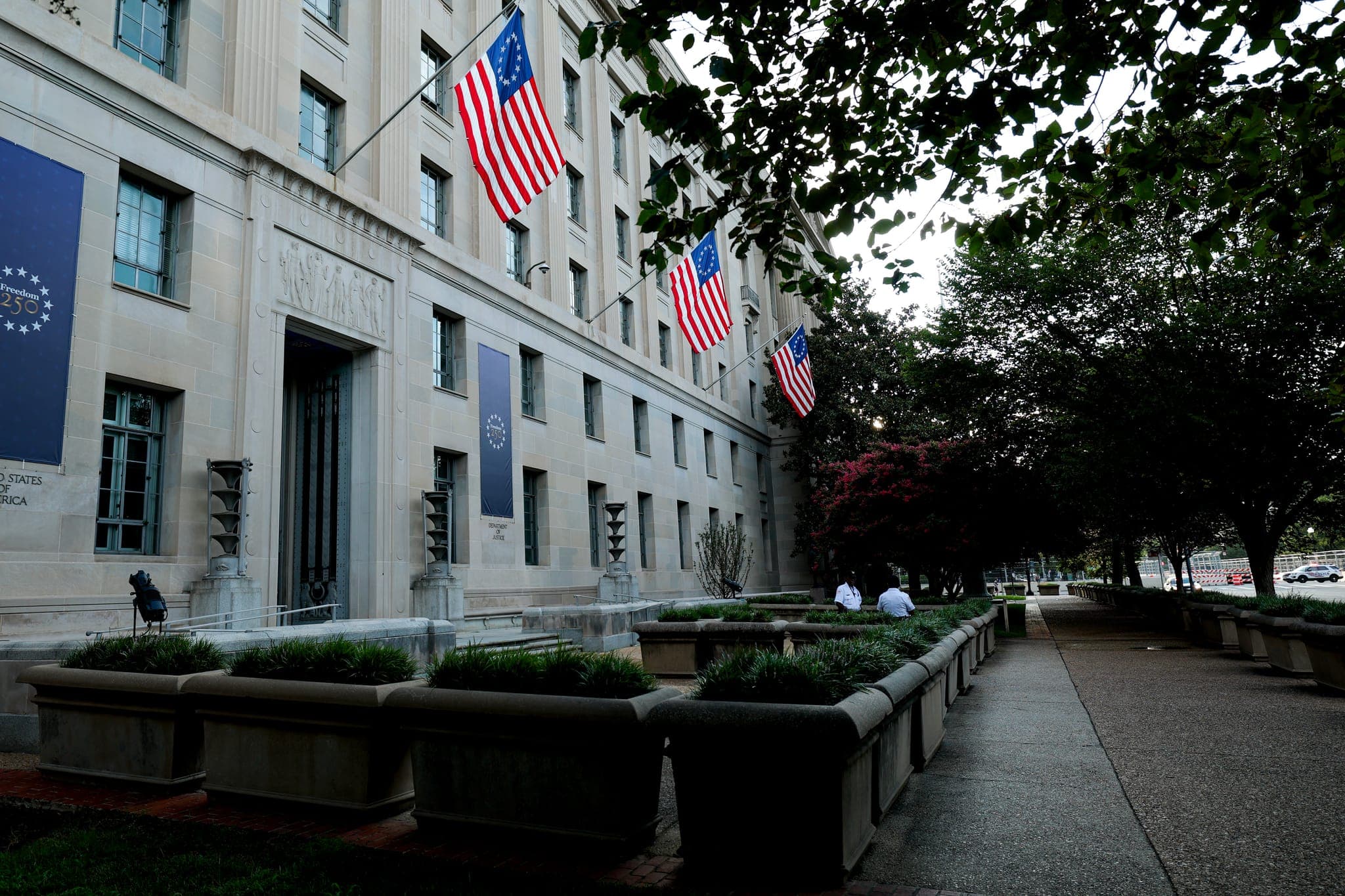
A Department of Justice (DOJ) tribunal issued a significant ruling Sept. 17, overturning its own previous decision and closing an immigration loophole long exploited by foreign nationals convicted of felonies.
The Board of Immigration Appeals (BIA), a division of the DOJ that oversees the adjudication of immigration law, ruled in Matter of A-V-O- that foreign nationals convicted of aggravated felonies are inadmissible to the U.S. and therefore ineligible to apply for adjustment of status, a process which allows foreign nationals in the U.S. on temporary authorities to switch to legal permanent residency (commonly known as a “green card”) without having to leave the country and apply through a foreign embassy or consulate.
The case centers on “A-V-O-,” a Nicaraguan national who entered the U.S. on a nonimmigrant (temporary) visa in 1996. After overstaying her visa, she was charged as removable under the Immigration and Nationality Act (INA) in 2004. Since she failed to appear for her court appointment, the immigration judge handling her case ordered her removed in absentia.
For some reason, A-V-O- was not removed and remained in the U.S. for another 15 years. In 2019, she filed to reopen her case and admitted that she was guilty of the original 2004 charge of illegally overstaying her visa. However, the Department of Homeland Security (DHS) added two more charges.
In 2020, A-V-O- had pleaded guilty in federal court to “Use of Unauthorized Access Device,” which is stealing or forging a credit card number, bank account code, or some other similar item or number used to access or transfer funds; and “Aggravated Identity Theft.” Under the INA, foreign nationals convicted of an "aggravated felony” are deportable.
There is, however, a waiver for adjustment of status, allowing immigration officers and judges to waive inadmissibility linked to certain crimes. That waiver does not apply to cases where the foreign national would be deemed “ineligible to citizenship.”
The BIA ruled in 2000’s Matter of Kanga that the phrase “ineligible to citizenship” referred primarily to foreign nationals barred from citizenship due to evading the military draft. An aggravated-felony conviction therefore would not, by itself, trigger grounds for inadmissibility.
The Sept. 17 BIA ruling reversed that decision. Section 212(a)(8) of the INA states that a foreign national who is “permanently ineligible to citizenship is inadmissible” to the U.S. and therefore cannot receive adjustment of status.
Andrew Arthur, senior fellow for law and policy at the Center for Immigration Studies and a former immigration judge, explained that the term “ineligible to citizenship” is defined in another portion of the INA largely dealing with draft-dodgers.
“That section, however, has a ‘catchall phrase’ at the end, which reads as follows: ‘or under any section of this chapter, or any other Act, or under any law amendatory of, supplementary to, or in substitution for, any of such sections or Acts,’” he said. “Accordingly, an alien who is ‘permanently debarred from’ becoming a U.S. citizen under the INA falls into the class of aliens who are ‘ineligible to citizenship.’”
One of the INA requirements for naturalization is that an applicant “during all the periods referred to has been and still is a person of good moral character.” Federal law also provides that a person convicted of an aggravated felony cannot be regarded as having good moral character.
The BIA reasoned that someone who can never show good moral character is permanently barred from becoming a citizen and therefore counts as “ineligible to citizenship.” On that basis, the Board held that an aggravated felony conviction makes the person inadmissible and ineligible for adjustment of status. The ruling is prospective, meaning that it will be applied to all cases moving forward but does not act retroactively.
“With due respect, the language in those provisions is anything but plain, but in any event, kudos to the Board for slogging its way through them, and for reversing the mistake it made back in 2000,” Arthur said of the decision.
“The key holding in Matter of A-V-O- is that aliens who have been convicted of aggravated felonies are inadmissible for all purposes under the INA, including when they are attempting to get green cards — even though Congress never expressly stated as much, possibly because it never thought it had to,” he added. “Sometimes common sense overcomes convoluted legislative drafting.”









Comments