Feast of St. Francis of Assisi marks 800 years since the beloved saint’s death
Saint Francis’s life of poverty, prayer, and peace continues to draw Catholics toward a deeper imitation of Christ.

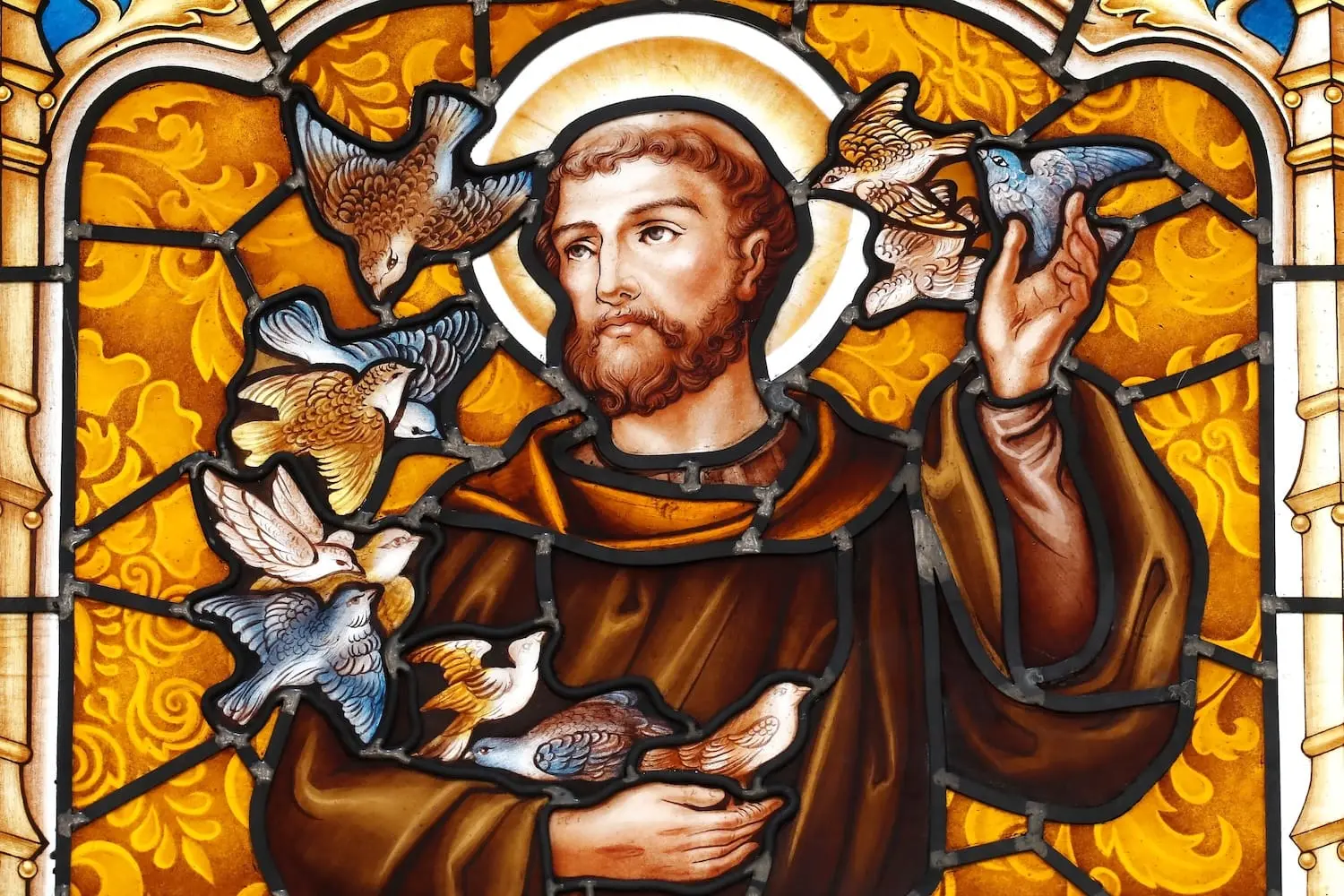
The faithful celebrate the feast of St. Francis of Assisi Oct. 4, honoring the saint whose embrace of poverty and desire to follow Christ gave rise to the Franciscan tradition.
The 800th anniversary is the focus of a special Franciscan Jubilee proclaimed by Pope Leo XIV to honor the saint and his extraordinary witness of faith. His Oct. 4 feast also returns as a national holiday in Italy this year for the first time in 50 years.
“The national holiday will be an opportunity to celebrate an extraordinary man and to remind us, each year, who we are and what unites us profoundly,” Italian Prime Minister Giorgia Meloni said when the measure was approved in 2025.
Born in Assisi in the late 12th century, Francis was the son of a wealthy cloth merchant and spent his youth dreaming of becoming a knight. Experiences of war, imprisonment, and illness, however, began to turn his attention toward prayer.
Francis’ conversion unfolded gradually, drawing him away from the ambitions of his youth and toward a life centered on the Lord. An encounter with a man suffering from leprosy became a turning point when Francis embraced him, overcoming a former aversion to the disease, and began a deeper life of service to the poor and suffering.
During Mass in 1208, Francis heard the Gospel account of Jesus sending His disciples out without money or possessions. He took those words to heart, leaving behind material comforts to embrace a life of poverty, prayer, and preaching.
For the humble friar, poverty was more than the absence of possessions. He embraced it as part of his commitment to follow Christ, leading him to live with remarkable simplicity. At times, he slept on the ground and used a stone or piece of wood for a pillow.
Francis also sought solitude for prayer, spending time apart to deepen his relationship with the Lord.
His well-known love of creation grew from the same devotion. Francis saw the goodness of the Creator reflected in the world around him, calling creatures his brothers and sisters and praising God through the beauty of creation. Near the end of his life, that vision found expression in his Canticle of the Sun, composed even as illness and failing eyesight brought him increasing suffering.
His love for creation is also reflected in traditions surrounding his feast day. Many Catholic parishes hold blessings of animals in honor of St. Francis, the patron saint of animals and ecology.
In 1224, two years before his death, Francis was praying and fasting at La Verna when he received the stigmata, bearing on his body the wounds of the crucified Christ.
Francis died near Assisi on Oct. 3, 1226, leaving behind a way of life that had begun with a simple desire to follow the Gospel and grew into a movement that would endure for centuries.





Comments