Filipino bishop announces potential expansion of Traditional Latin Mass availability in diocese
The bishop said the diocese will look into the expansion to spiritually support those who have been following the Society of St. Pius X, which recently carried out a schismatic act.

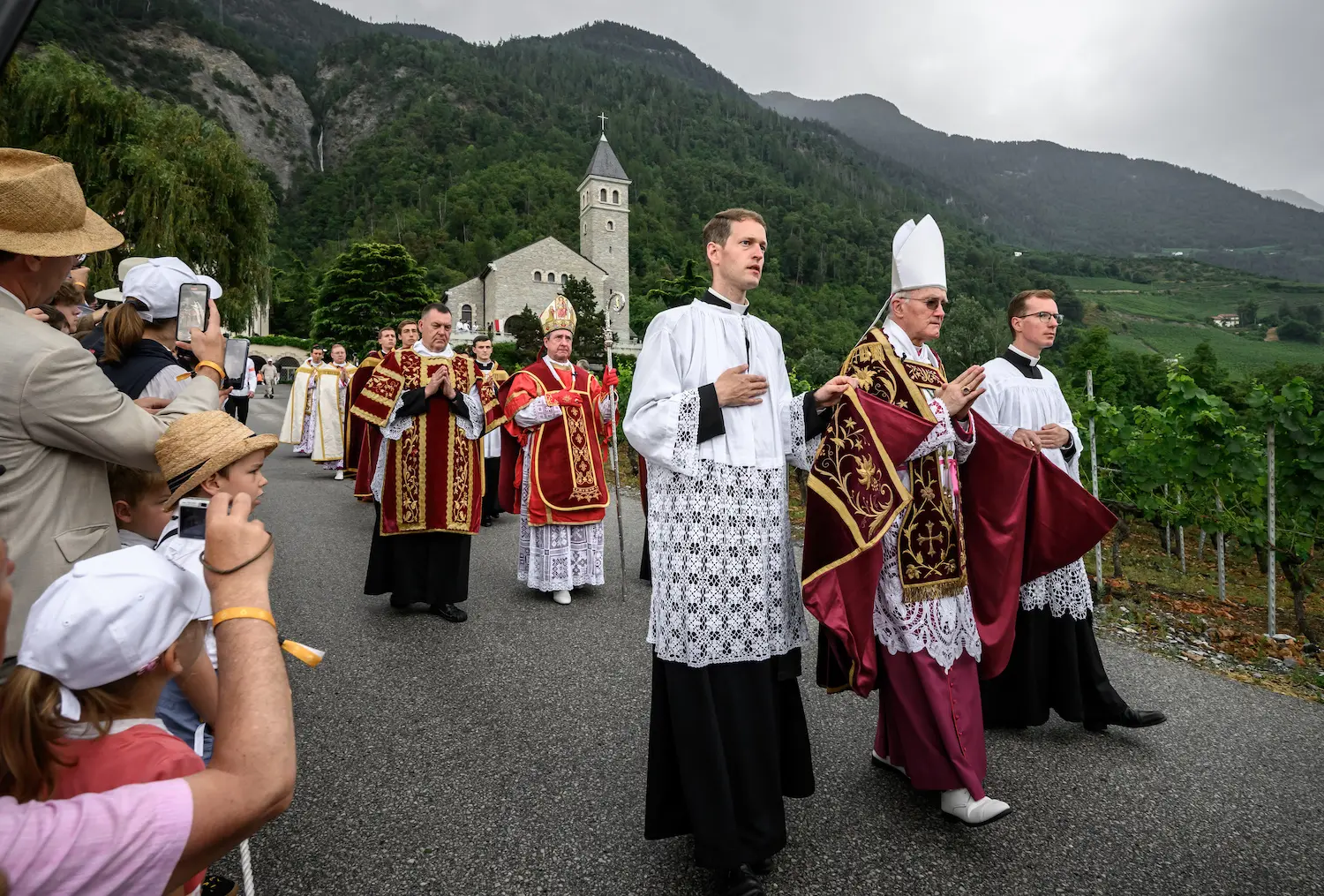
Bishop Elias Ayuban of Cubao, Philippines, issued a pastoral letter this month explaining the repercussions of the illicit episcopal consecrations carried out by the Society of St. Pius X (SSPX), encouraging the faithful to welcome those leaving behind SSPX liturgies with charity and understanding. He also announced that the diocese would consider increasing the number of Traditional Latin Mass (TLM) offerings in the diocese to make this liturgy more accessible.
The Church has always held that ordaining a bishop without the Pope’s permission and in disobedience to his stated will “is an act of schism which is not only a serious sin,” Bishop Ayuban wrote in the July 6 letter, but an act that bears particular consequences.
He extended deepest sentiments to those affected by the schism, saying, “To you, I speak these words from the heart: I am saddened that many of you, our dear lay faithful, who have sincerely worshiped at liturgies celebrated by the Society, now find yourselves not only in a painful moment of discernment but also of being deprived of the sacraments.”
“You are also God’s children — our brothers and sisters who have genuinely loved the sacred liturgy and seriously devoted yourselves to Catholic Tradition,” he said. “I know that many of you never intended to reject what Mother Church teaches you or disobey the Holy Father. I want to assure you, that in these moments of great spiritual difficulty, you remain to be a part of the Catholic Church and you will always have a place in the local church of Cubao.”
In his letter, the bishop also explained the nature of schism and its consequences, which are not punishments imposed by the Pope but self-inflicted effects.
“By its very nature, schism is not only a separation from the Successor of Peter, but also a refusal of being united with the Church,” he wrote. “It is a wound to the unity of Christ’s body and goes against the very prayer of our Lord himself to the Father, ‘that they may all be one.’”
The SSPX carried out the consecrations July 1 without Pope Leo XIV’s permission. The following day, the Vatican Dicastery for the Doctrine of Faith declared that this was a schismatic act and that the SSPX bishops had incurred a latae sentiae excommunication.
Bishop Ayuban explained that this excommunication is self-imposed, because the SSPX ministers “have willfully and deliberately chosen to exclude themselves from the communion of the Catholic Church.”
This means that sacraments celebrated by SSPX clergy are now illicit and that the sacraments of marriage and confession celebrated by them are invalid, Bishop Ayuban said in the July 6 letter. On July 13, the SSPX announced that it has filed a formal request appealing the Vatican’s July 2 decree, and according to canon law such a request suspends the decree’s execution.
In his July 6 letter, Bishop Ayuban added that “bishops and priests of SSPX may be reconciled with and readmitted to the Catholic Church should they decide to leave the SSPX.”
Lay people who follow the SSPX do not automatically incur the same consequence, he added, but now they must pray and decide to not take part in liturgies celebrated by SSPX clergy; otherwise they would risk participating in illicit and invalid sacraments, as well as incurring excommunication themselves through formal adherence to the SSPX.
He called on the clergy and faithful of the diocese to welcome faithful from the SSPX “with charity, understanding, and patience,” taking care to not condemn in preaching and catechesis but approaching the issue “with pastoral tact and sensitivity.” He emphasized that the Church will reflect on practical opportunities and ways to pursue dialogue with members of the SSPX.
In addition to looking into adding more celebrations of the TLM in the diocese, the bishop said that “to provide for the spiritual needs of those who follow the Society,” the diocese will organize a group of priests and lay people who can compassionately provide counseling, information, and pastoral support.
“Let us act with pastoral prudence, doctrinal clarity and brotherly charity,” he concluded. “We renew our fidelity to Christ and the Church and pray for Pope Leo XIV, whom the Lord has set over his flock as shepherd and guardian of the unity of the Church.
“Most importantly, let us fervently pray for unity. As we place our hope in the prayer of Jesus, we beg the intercession of the Blessed Virgin Mary, Mother of the Church, that we may be one body in Christ and the wounds of division may be healed.”


Comments