EXCLUSIVE | Catholic author: How to find peace in a world of endless bad news
Catholic author Melissa Overmyer argues that Christians can stay informed about world events while maintaining peace by anchoring their hearts in God's unchanging goodness rather than constant news consumption.

War, political division, violence, natural disasters, and an endless stream of troubling headlines can make peace seem increasingly difficult to hold onto. But Catholic author Melissa Overmyer says Christians do not have to choose between paying attention to the world and maintaining their joy.
“We live in a world where we can carry the weight of the entire globe around in our purse or pocket,” Overmyer told Zeale News in a July 9 interview. “While staying informed is important, we were never meant to absorb a constant stream of fear, outrage, and bad news. It is like breathing in exhaust fumes and wondering why we don’t feel so great.”
According to Overmyer, the answer is not disengagement from the suffering of the world but a deliberate return to the source of Christian peace.
“Joy and peace are sustained not by ignoring reality but by anchoring our hearts in the unchanging goodness and sovereignty of God — He is our pure oxygen,” she said.
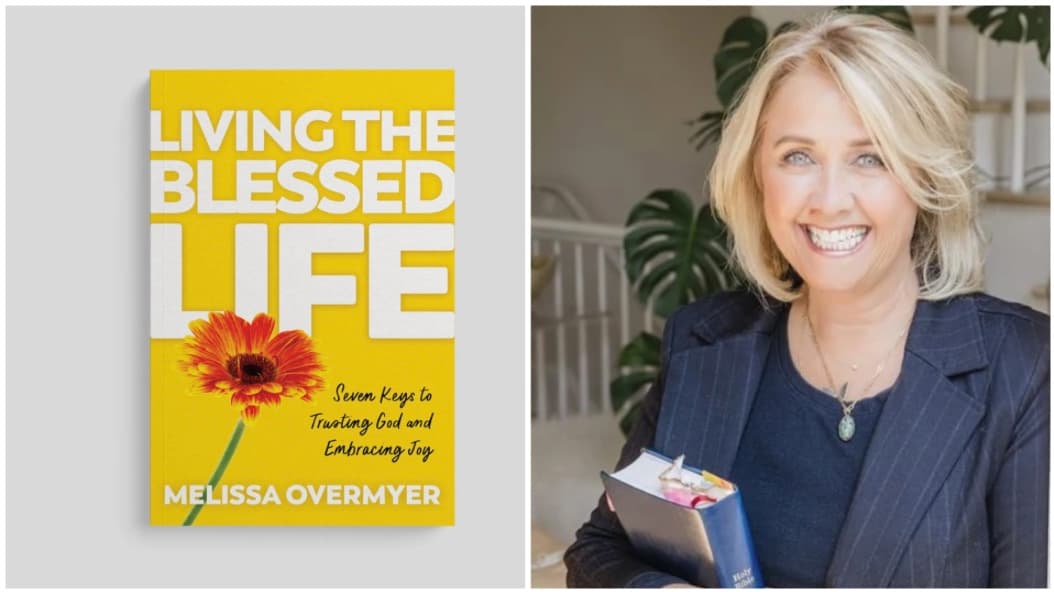
Overmyer explores the pursuit of lasting happiness in her new book, Living the Blessed Life, a seven-week personal retreat centered on seven practices represented by the word “blessed”: beauty, laughter, encounter, song, silence, engage, and distinct.
Drawing on Scripture, Catholic teaching, the lives of the saints and research on happiness, the book combines daily reflections with journaling and morning and evening prayer prompts. Its central premise challenges the idea that happiness ultimately depends upon comfortable circumstances.
“Our culture often defines happiness as comfort, success, pleasure, or getting what we want,” Overmyer said. “Jesus defines the blessed life very differently. The Greek word makarios, translated ‘blessed’ in the Beatitudes, can also mean ‘happy,’ revealing that lasting happiness is found not in circumstances but in becoming the kind of person who trusts in and reflects Christ.”
That understanding, Overmyer said, also shapes the Christian view of hope. Rather than expecting difficult circumstances to disappear, Christians are called to trust that God remains faithful even in the midst of them.
“Christian hope is not wishful thinking or optimism that everything will work out the way we want,” she explained. “It is the confident expectation that God is faithful, present, and at work even when we cannot yet see the outcome. Hope chooses to trust God's promises over today's headlines.”
Staying informed without carrying the whole world
For Christians trying to balance a responsibility to remain informed with the need to guard against anxiety and despair, Overmyer recommends moving from awareness to prayer and concrete action.
“We should care deeply, pray fervently, and act where God has placed us — but we are not called to carry burdens that belong to Him,” she said. “I encourage people to stay informed, then intentionally turn to prayer, gratitude, and service rather than remaining trapped in endless doom scrolling. Peace comes when we remember that God is Savior of the world — we are not.”
Overmyer also shared a simple change in language that she said has helped her deal with anxiety about what could happen next.
“One thing that has given me great release from anxiety is replacing the word ‘Even’ for the word ‘What’ when I am tempted to think, ‘but WHAT IF,’ I now say, ‘EVEN IF,’ knowing that ‘even if’ the worst thing happens, God will give me the grace and strength to get through it, and I pray He will do the same for others,” she said.
That shift in thinking reflects what Overmyer describes as “one of the greatest spiritual battlegrounds of our age:” where we direct our attention.
“We become what we pay attention to,” she said. “When we continually focus on fear, our anxiety grows, but when we cultivate an awareness of God's presence, His peace begins to shape our hearts.”
Citing the instruction in Colossians 3:2 to “Set your minds on things above, not on earthly things,” Overmyer said turning one's attention toward God can change the scale by which present troubles are viewed.
“And when we do, magnifying God in our thoughts and hearts, our troubles get a whole lot smaller compared to His greatness,” she said.
What the saints knew about difficult times
Overmyer said the saints offer a model for Christians seeking peace amid today's uncertainty.
“The saints remind us that peace has never depended on peaceful circumstances,” she said. “They fixed their eyes on Christ rather than the chaos around them, and that eternal perspective gave them remarkable courage, joy, and freedom.”
Rather than seeing difficult circumstances only as obstacles to spiritual life, Overmyer said the witness of the saints shows that periods of upheaval can also become occasions for deeper holiness.
“Their lives prove that holiness flourishes not just in spite of very difficult times but often times, because of them,” she said. “I say, if you are going through a difficult time, God thinks you are ready for an upgrade!”
Building habits of joy
A recurring theme throughout the book is that lasting joy is cultivated through daily habits rather than simply understood in theory.
“Information alone rarely transforms us,” she noted. “Scripture consistently calls us not merely to be hearers of the Word but doers of it. Just as physical health comes through daily habits rather than occasional inspiration, spiritual joy grows through faithful practices repeated over time.”
Quoting St. Anthony of the Desert, she added, “Practice until practice becomes habit and habit becomes nature.”
Christians often develop habits that reinforce unhappiness, she said, but by God's grace those patterns can be replaced with habits that foster lasting joy.
For Overmyer, those habits are more than a spiritual theory — they have been tested through profound personal loss. After an arsonist destroyed her home, she said silence and time spent with God became particularly important.
“In prayer and quiet before the Lord, I discovered that peace isn't found in having all the answers but in knowing the One who holds them,” she said. “Those moments helped transform my grief into deeper trust.”
Of the seven practices explored in the book, Overmyer said she believes silence may be the one most absent from contemporary life.
“Silence may be the most neglected habit because our world constantly competes for our attention,” she said. “Yet silence is where we learn to hear God's voice above every other voice. As I often say, silence is the gymnasium of the soul — it strengthens us for everything else.”
For readers who wake up to another difficult day or feel the impulse to begin the morning by immediately checking the latest headlines, Overmyer's advice is simple: Begin somewhere else.
“Remember that your peace does not have to rise and fall with the news cycle,” she said. “Before you check the headlines, anchor your heart in the Good News — that Christ is risen, He is with you, and nothing you face today is beyond His power or His love.”




.jpg&w=3840&q=75)



Comments