France devolves into ‘urban violence’ as migrant-student riots set Paris ablaze
Over 5,000 arrests have been made since the riots began in late September, and more than 300 police officers have been injured.
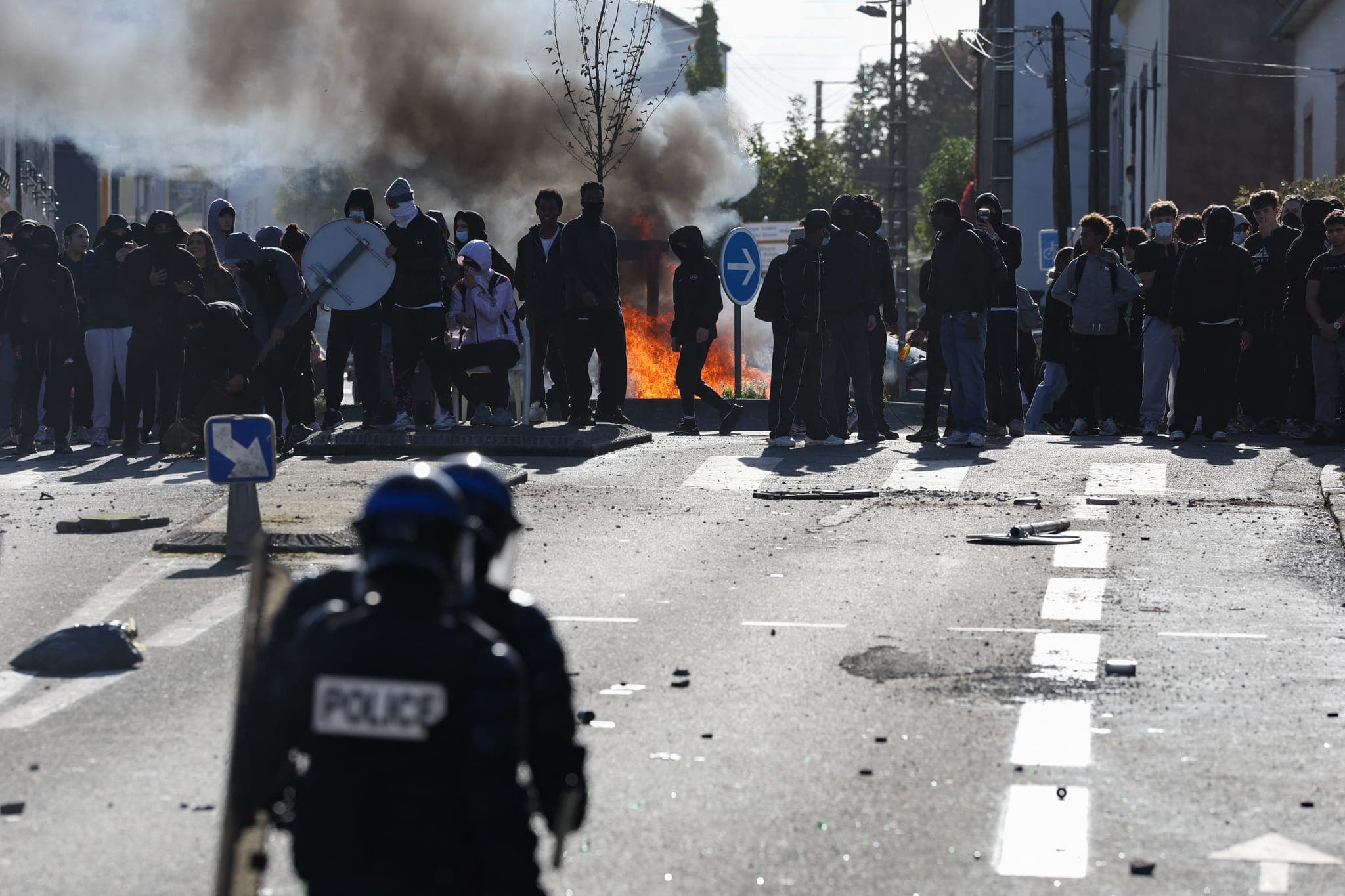
The U.S. State Department’s consular mission in France issued a warning Oct. 5 against travel to France in light of ongoing riots and urban violence in the region — now spreading to nearby countries.
“Student protests continue across France and some protests have become violent. Marches are occurring away from school campuses. Hundreds of high schools are closed across France,” the State Department said in a travel advisory.
Organizations involved in the rioting have planned a nationwide day of protests Oct. 6, the American agency cautioned, noting that protests have often devolved into violence.
“Demonstrations can be unpredictable. Avoid areas around protests and demonstrations,” the State Department said. “Past demonstrations have turned violent.”
The demonstrations began in late September, initially as a means of protesting poor school building conditions and a shortage of teachers in Paris and surrounding suburbs. However, protests devolved into violence by Sept. 28, spreading across the country. While mainstream media outlets have largely remained silent on the rioting, instead framing the protests as rowdy student demonstrations, reports on X have pointed out that a majority of the rioters are second- or third-generation immigrants, predominantly Muslim and largely of Middle Eastern origin.
National intelligence and law enforcement agencies reported that the far-left La France Insoumise party, led by presidential candidate Jean-Luc Melenchon, was involved in instigating the riots, which Interior Minister Laurent Nuñez later described as “urban violence.” Melenchon and his allies have denied any involvement.
By the end of September, approximately 400 French high schools had been shut down, blockaded, ransacked, or damaged. Nearly 800 arrests had been made and dozens of police officers had been injured. In some cases, police officers and firefighters were doused in gasoline and set aflame, while other cases saw police attacked with hydrochloric acid.
Rioting quickly spread from Paris to Lille, Dijon, Lyon, Marseille, Saint-Denis, and other areas. High schools and other municipal buildings were set on fire, and violent attacks on police officers and firefighters continued and expanded to include teachers and school administrators.
As of Oct. 5, more than 5,000 arrests have been made and 305 police officers have been injured. In many cases, police officers have been hospitalized and several have been beaten unconscious by rioters. Civilians have also been injured; in one video posted to X, a rioter uses a makeshift flamethrower to burn the face of a woman at a bus stop. Riots have also spread to nearby Belgium.
Carole Zerbib, the head teacher at Lycée Nicolas-Louis-Vauquelin in Paris, confirmed Oct. 5 that the rioters attacking the school were not students, in line with multiple X posts reporting that the rioters are predominantly immigrants and second- and third-generation immigrants. One Muslim-aligned rioter was filmed Oct. 5 calling for other rioters to kill police officers.
“There are only ten of them. In the name of Allah, we can kill them all!” said the protestor outside of Honoré-de-Balzac high school near Paris.
In Paris, the riots have spread beyond schools, with attackers targeting power grid installations.
Presidential candidate for the National Rally Marine Le Pen called on the government to enact “exemplary punishments” against the rioters. Prior to the riots, Le Pen, whose party campaigns on stricter immigration control and domestic security, was leading in presidential polling and was expected to defeat Melenchon in an anticipated run-off.
This is a developing story.


Comments