Iran War day 53: Trump extends ceasefire, Iran skips talks with Vance
President Donald Trump extended the ceasefire with Iran April 21 in order to give the “seriously fractured” Iranian government more time to present a unified proposal. The extension came just hours before the agreement was set to expire, and after Iranian officials refused to send a delegation to planned peace talks with Vice President JD Vance in Pakistan.

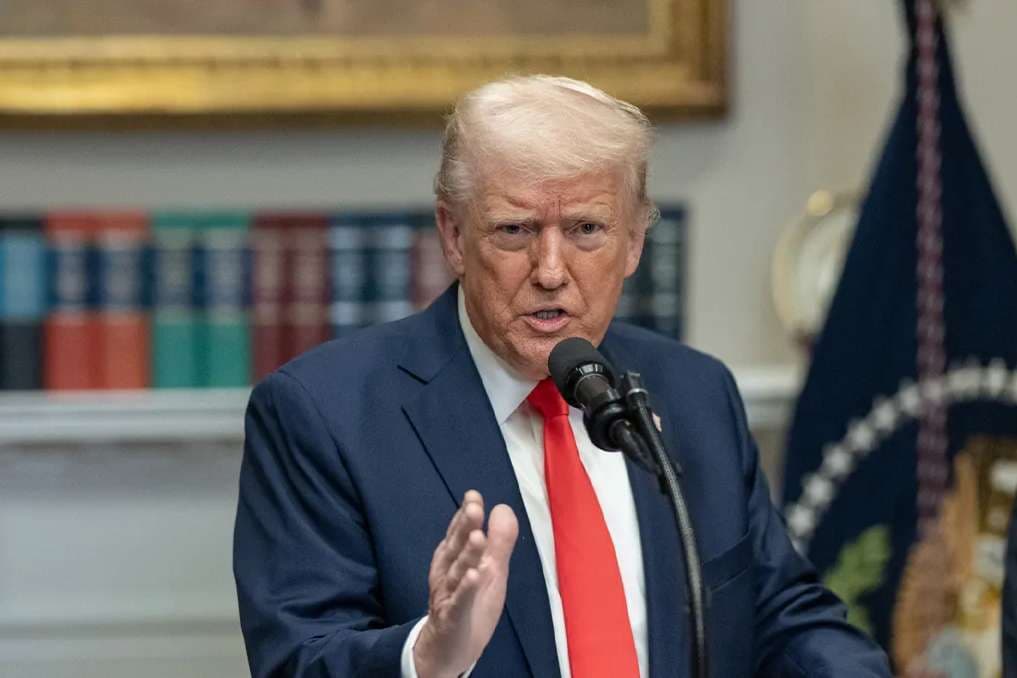
President Donald Trump extended the ceasefire with Iran April 21 in order to give the “seriously fractured” Iranian government more time to present a unified proposal. The extension came just hours before the agreement was set to expire, and after Iranian officials refused to send a delegation to planned peace talks with Vice President JD Vance in Pakistan.
Talks collapse after Iran declines to send delegation
Vance’s planned trip to Islamabad, Pakistan, for a second round of U.S.-Iran talks has been delayed indefinitely, according to a White House official.
Vance had been expected to lead the U.S. delegation at negotiations scheduled for April 21, but remained in Washington, where he met with the President, Special Envoy Steve Witkoff, and Trump advisor Jared Kushner to discuss next steps.
A White House official cited by Axios reportedly said the reason Vance’s departure was postponed was that Iran had not responded to the latest U.S. proposals or formally confirmed it would send a delegation. Iran has also conditioned further talks on the U.S. easing its naval blockade of Iranian ports — a demand Trump has rejected.
As Zeale News reported, Iran’s state news agency said April 20 that the nation would not send a delegation and saw “no prospect” of participating in the talks. Iranian Foreign Ministry Spokesman Esmaeil Baghaei blamed the collapse of negotiations on what he called the “contradictory messages, contradictory behaviors, and unacceptable actions of the American side."
Iranian Parliament Speaker Mohammad-Bagher Ghalibaf, who led Tehran’s delegation in earlier talks, said in an April 20 post on X that Iran would not negotiate under pressure.
“We do not accept negotiations under the shadow of threat,” Ghalibaf said, warning that Iran was “prepared to reveal new cards on the battlefield.”
No second round of talks has been scheduled.
Ceasefire extended with no new end date
The U.S.-Iran ceasefire, which Trump originally announced April 8, had been set to expire at 8 p.m. Washington time April 21.
Trump told CNBC the morning of April 21 that he did not want to extend the ceasefire. "We don't have that much time," he said.
By the afternoon, he reversed course. In a Truth Social post, Trump announced the ceasefire would be extended at the request of Pakistani leaders.
"Based on the fact that the Government of Iran is seriously fractured, not unexpectedly so and, upon the request of Field Marshal Asim Munir, and Prime Minister Shehbaz Sharif, of Pakistan, we have been asked to hold our Attack on the Country of Iran until such time as their leaders and representatives can come up with a unified proposal," Trump wrote.
He added, "I have therefore directed our Military to continue the Blockade and, in all other respects, remain ready and able, and will therefore extend the Ceasefire until such time as their proposal is submitted, and discussions are concluded, one way or the other."
Trump's extension set no fixed end date, tying the extension instead to the submission of an Iranian proposal. As Zeale News reported, each side has accused the other of breaking the truce.
Earlier talks outlined competing demands
The U.S. has laid out a broad set of demands in negotiations up to this point: Iran must commit to forgoing a nuclear weapon, accept limits on its ballistic missile program, reopen the Strait of Hormuz to commercial traffic, and curtail support for armed proxies, according to the Council on Foreign Relations.
Vance said the first round of talks collapsed because Iran would not make a clear commitment on the nuclear question.
"The simple fact is that we need to see an affirmative commitment that they will not seek a nuclear weapon, and they will not seek the tools that would enable them to quickly achieve a nuclear weapon," he said.
Iran, for its part, wants financial relief — including access to $6 billion in frozen assets — and an end to a U.S. blockade on the Strait of Hormuz before returning to the table, according to Al Jazeera.
Trump, speaking to CNBC April 21, said he still expects to reach a deal. "We're going to make a great deal with Iran," he said.




Comments