U.S.-Iran talks end without agreement
Negotiations between the U.S. and Iran looking to turn a fragile ceasefire into a broader peace deal ended without agreement April 11, and President Donald Trump announced a naval blockade of the Strait of Hormuz shortly after.

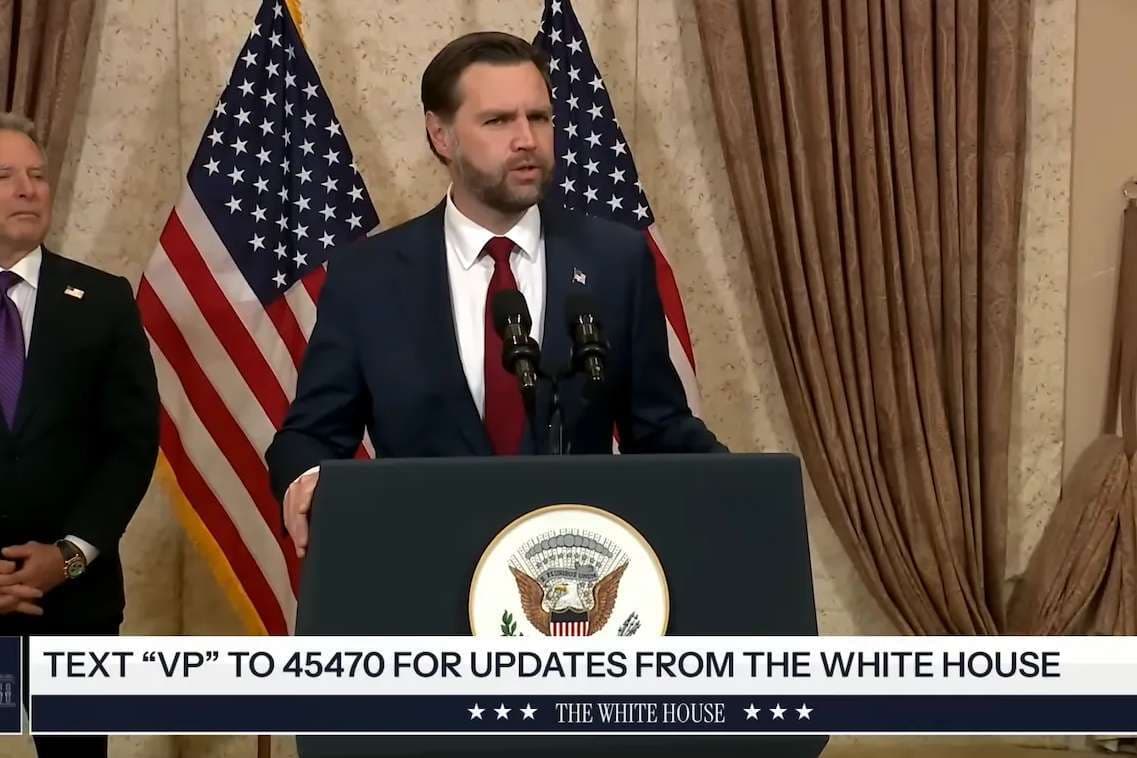
Negotiations between the U.S. and Iran looking to turn a fragile ceasefire into a broader peace deal ended without agreement April 11, and President Donald Trump announced a naval blockade of the Strait of Hormuz shortly after.
The negotiations, held in Islamabad and mediated by Pakistan, lasted roughly 21 hours and sought to solidify a two-week ceasefire announced days earlier.
>> Iran War Day 39: Trump announces 2-week Iran ceasefire after deadline threat <<
Points of contention included Iran’s nuclear program, control of the Strait of Hormuz, extending the ceasefire to Lebanon, and limits on Iran’s support for regional proxy groups, such as Hezbollah, Hamas, and the Houthis.
Despite the impasse, Iran signaled it remains open to continuing the dialogue, according to its state-run IRNA news agency. Pakistani Foreign Minister Ishaq Dar said his country will try to facilitate a new dialogue between the two sides in the coming days.
Vance: Iran has chosen ‘not to accept’ U.S. proposal
Vice President JD Vance, who led the U.S. delegation, said the U.S. had presented its “final and best offer” and that while a number of substantive discussions were conducted in “good faith,” the proposal had not been accepted.
“The bad news is that we have not reached an agreement, and I think that’s bad news for Iran much more than it’s bad news for the United States of America. So we go back to the United States having not come to an agreement. We’ve made very clear what our red lines are, what things we’re willing to accommodate them on and what things we’re not willing to accommodate them on… They have chosen not to accept our terms.”
“The simple fact is that we need to see an affirmative commitment that they will not seek a nuclear weapon,” Vance added, “and they will not seek the tools that would enable them to quickly achieve a nuclear weapon.”
Iran says no one should have expected deal in single session
Iran's Foreign Ministry spokesman pushed back against the suggestion that the first round of direct negotiations was a failure, saying expectations of a quick agreement were never realistic.
"We should not have expected from the beginning to reach an agreement within one meeting" spokesman Esmaeil Baghaei told Iranian state broadcaster IRIB following the talks.
Baghaei said the two sides found common ground on several issues but remained apart on two or three key matters, including the status of the Strait of Hormuz. He acknowledged the talks unfolded in an atmosphere of "mistrust and suspicion," but said progress remained possible.
Whether negotiations advance, he said, would depend on the United States demonstrating seriousness and good faith.
He also posted a statement on X which framed diplomacy as an extension of Iran's broader national struggle and cited unresolved grievances over what it called American "breaches of promise" and crimes committed alongside Israel during recent conflicts.
His comments echoed those of Iranian Parliament Speaker Mohammad Bagher Ghalibaf, who said separately that Washington had "failed to gain the trust of the Iranian delegation."
Ghalibaf framed the outcome as a test rather than a failure, saying the U.S. now understood Iran's position.
"America has understood our logic and principles, and now it's time for it to decide whether it can earn our trust or not," he wrote.
He vowed Iran would not ease pressure through diplomacy alone, saying the country views negotiation as one tool alongside others "for upholding the rights of the Iranian nation."
Trump announces naval blockade of Strait of Hormuz
President Donald Trump ordered the U.S. Navy to blockade the Strait of Hormuz and intercept any vessel that had paid tolls to Iran.
"Effective immediately, the United States Navy, the Finest in the World, will begin the process of BLOCKADING any and all Ships trying to enter, or leave, the Strait of Hormuz," Trump wrote in an April 12 post on Truth Social. He added that the Navy would destroy mines Iran had laid in the waterway and warned that "any Iranian who fires at us, or at peaceful vessels, will be BLOWN TO HELL."
Trump said U.S. forces were "fully 'LOCKED AND LOADED'" and threatened that the military would "finish up the little that is left of Iran.”
The announcement marked a significant escalation from earlier American operations to clear mines and escort commercial shipping through the strait, a narrow waterway through which roughly a fifth of the world's oil supply passes. Trump framed the blockade as a defense of global trade, saying nations including China and Japan benefit from free passage, while characterizing Iran's toll collection as "WORLD EXTORTION."
Trump claims Iran is ‘obliterated,’ says U.S. will accept nothing short of full surrender
Following the collapse of U.S-Iran talks, President Donald Trump spoke April 12 on Fox News' "Sunday Morning Futures" with Maria Bartiromo, casting Iran as militarily broken and predicting Tehran would ultimately accept American terms in full.
"They came in like they had the cards, but they don't have the cards," Trump said. "Their army and their whole military is obliterated. The whole place is obliterated."
He dismissed any suggestion that Iran was negotiating from strength, pushing back on media coverage he characterized as favorable to Tehran.
"When I read the Fake News talking about how 'well' Iran's doing — they're not doing well at all, they're getting killed," he said, adding that Iran had fired 101 missiles at U.S. forces and all were intercepted. "All 101 were shot down like nothing."
On the nuclear question Trump said “They can't have nuclear weapons," and added, "I think they would use it."
Trump said he had instructed his negotiating team to demand a complete capitulation. "I want everything. I don't want 90%, I don't want 95%. I told them, I want everything. They have no cards." He predicted Iran would return to the table. "I predict they come back, and they give us everything we want."
On the naval blockade, Trump described the strategy as absolute. "It's called all in, and all out," he said. "We're putting on a complete blockade. We're not going to let Iran make money on selling oil — to people that they like, and not people that they don't like. It's going to be all or none." He added that he believed other countries would join the effort.
Trump also told reporters April 11 that the outcome of the nuclear talks was irrelevant to the American position. "Whether we make a deal or not makes no difference to me," he said. "We've won. Regardless of what happens, we win. We've totally defeated that country."





Comments