Italy weighs banning burqas at schools in immigration-integration crackdown
Italy’s Prime Minister said that the Islamic face-coverings are incompatible with Italian culture, further pledging to cap the number of foreign students per class and requiring immigrants to learn Italian.
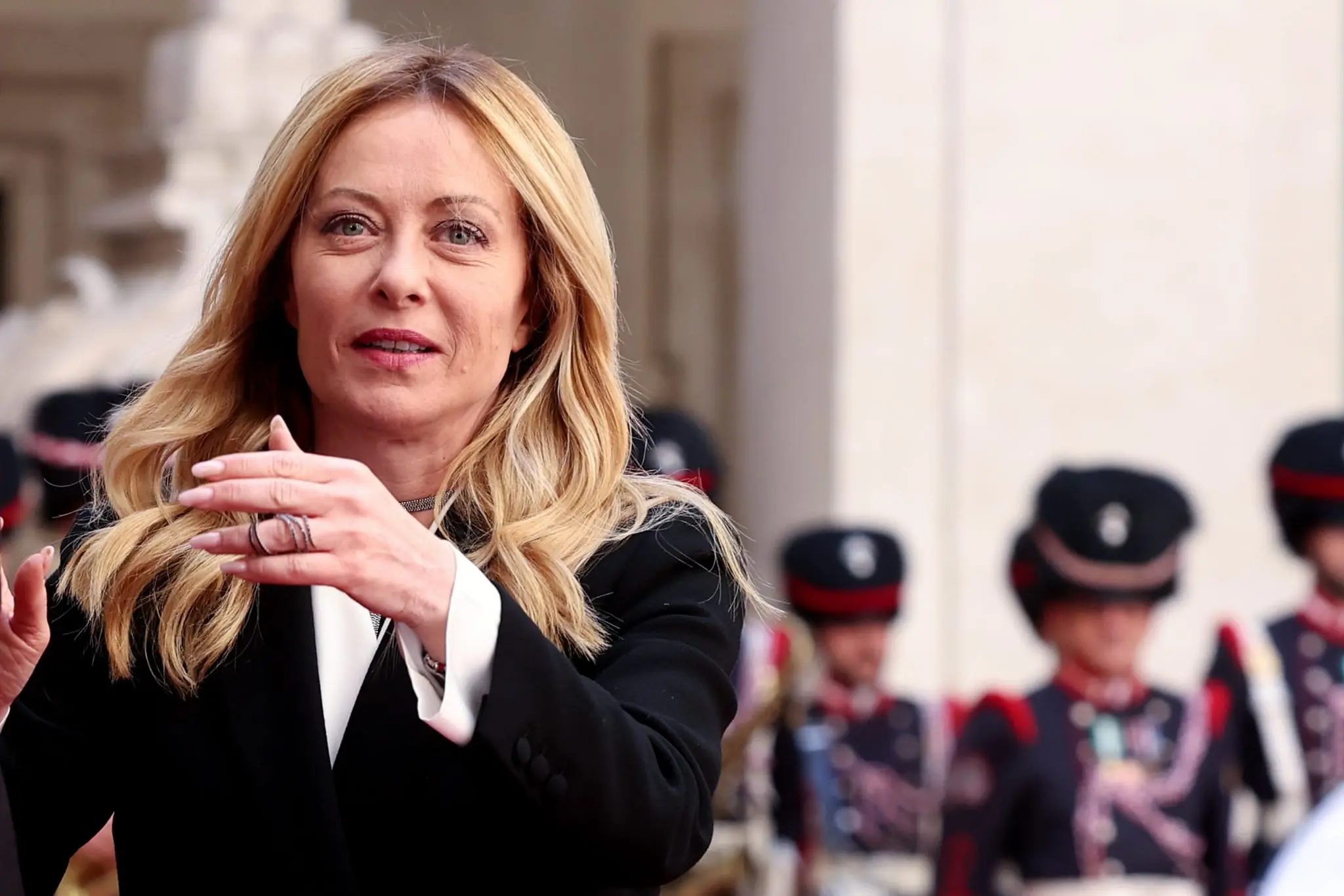
Amidst growing concerns over immigration, Italian Prime Minister Giorgia Meloni said Sept. 20 that her government will soon introduce measures to prevent native Italian children from becoming a minority in their own country. Meloni told Gioventù Nazionale, the youth wing of her party, Brothers of Italy, to expect legislation limiting the number of foreigners allowed in classrooms, banning certain Muslim garb from schools, and requiring foreign children to learn Italian.
“It’s unthinkable that in an Italian classroom, Italian children feel cornered because they’ve become the minority,” she said. “The Council of Ministers will soon introduce a law regarding the maximum number of foreign students in classes.”
Another law Meloni pledged would ban burqas and niqabs from being worn in Italian schools. Niqabs are long garments worn by some Muslim females, covering the face and body and leaving only the eyes exposed. Burqas are nearly identical, but with a screen or veil covering the eyes.
“We go to school with our faces uncovered, and in Italy, no one, in the name of a real or presumed tradition, can decide that a young woman must hide,” she said. “Gender equality is non-negotiable.”
The ban on burqas and niqabs would punish those making children wear the garments with up to two years in prison and fines of between €10,000 and €30,000 (approximately $115,000 to $150,000) and bar those convicted from obtaining Italian citizenship.
Meloni also said that the government will propose a “requirement” that the children of immigrants learn Italian in order to fully integrate into Italian society, referring to mass immigration and the Islamization of Europe as a “question of civilization.”
The promised legislation comes as Meloni prepares to face Elly Schlein of the Democratic Party in the next Italian general election, which will take place no later than December 2027. A recent Eurispes survey found that 63% of Italian voters consider immigration to be a significant problem, and almost 18% consider it the chief problem facing the country.
Meloni successfully campaigned on a platform of socially conservative policies and stringent immigration restriction in 2022, but she has faced criticism from the right for not doing enough to address the issue while in power.
During her tenure, Meloni has succeeded in securing a significant decrease in illegal immigration into Italy via Mediterranean boat crossings and has collaborated with leaders of other European nations to restrict the European Union’s (EU’s) immigration policies and implement measures to crack down further on illegal immigration.
In 2023, shortly after Meloni took office, illegal arrivals into Italy via the Mediterranean peaked at nearly 160,000. Within one year, Mediterranean crossings had fallen to fewer than 70,000 and, as of early September, stand at 21,800 for 2026. Meloni’s government largely achieved the results by brokering financial deals with key launching points for illegal immigration, tying funding for countries like Tunisia, Libya, and Egypt to border control partnerships.
Recently, Meloni partnered with Danish Prime Minister Mette Frederiksen to establish a legal framework at the EU-level for deporting illegal aliens to third countries when their home countries refuse to repatriate them. The Meloni government also partnered with Albania to establish detention centers to process asylum claimants outside Italy, rather than allowing them into Italy to await adjudication of their claims.
Retired Italian Army General Roberto Vannacci, however, has called on Meloni to introduce more stringent measures against mass immigration. Originally elected to the European Parliament as a member of the League, a faction of Meloni’s coalition government headed by Vice President of the Council of Ministers of Italy Matteo Salvini, Vannacci formed his own party, Futuro Nazionale, in February 2026.
Vannacci has often criticized Meloni for being slow to react to mass immigration and the Islamization of Europe, but his party played a key role in drafting the legislation that the Prime Minister promised on Sunday. Although, according to Breitbart News, he said that he “absolutely agrees” that the legislation is necessary, the Futuro Nazionale founder also said that Meloni should have introduced the bills “years ago.”


Comments