Memento mori: Why we should think about death
November's focus on praying for the dead, complete with its "memento mori" or "remember, you must die" mindset, is not morbid. Rather, the Church calls us to focus on the glory of the eternal life we hope to enjoy.

It is “spooky season.” The leaves are dropping from the trees, kids dressed up as ghosts haunt the sidewalks, and even the Church dedicates November to prayers for the dead. It can seem morbid, and perhaps over-the-top. After all, many costumes embrace death because of its grotesqueness, while in our own lives death is whitewashed or ignored. Family members who would have once lived and died in our homes now meet their end in sterilized nursing homes and hospitals. Death, in all its cold reality, is far away. In its place, skulls, zombies, and romanticized death have drawn near, making a mockery of that first of the four last things.
However, Catholics, as a whole, have a tendency to dwell on death. We all have statues of a crucified, dying Man in our house. The Latin words “memento mori” are inscribed in our Churches. We venerate dead bodies and place them in our altars. When we pray our daily rosary, the word “death” is said over 50 times. Where is God in this season of horror movies, ghosts, and ghouls? And why does the Catholic Church teach that it's important to think about death? Does this affirm the grosser excesses of “spooky season”?
Memento mori
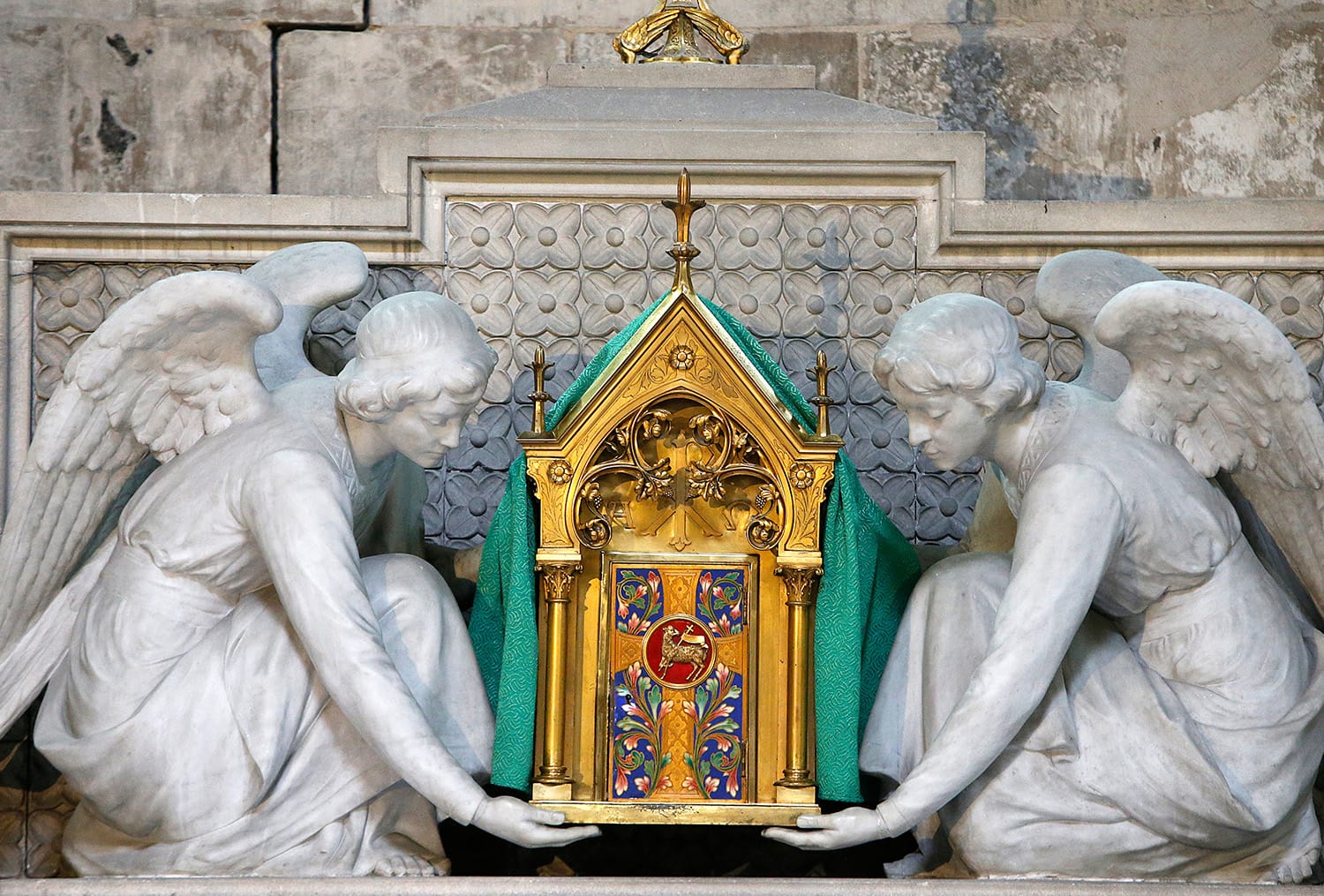
Memento mori translates to “remember, you must die.” It is a phrase that has been popular in Catholic and religious imagery for centuries. Catholics decorate tombs and churches with skulls and hourglasses, and some chapels, called “ossuaries” are built entirely out of the bones of the dead. In a Church that preaches eternal life, death seems a perpetual focus.
Catholics are not the only ones who practice memento mori. The concept of remembering your death goes back even further to ancient Grecian times. In the Phaedo, Socrates states, “I am afraid that other people do not realize that the one aim of those who practice philosophy in the proper manner is to practice for dying and death.”
To be a good philosopher is to anticipate one’s final moments. After all, looking at where you will end up is an excellent way to learn how to live.
In my end is my beginning
The philosophy of teleology examines the ends of things, asking what is the purpose of the thing? Why does it exist? Why was it made? A chair is made for sitting, a knife for cutting, and so on. Human beings also have a telos — an end — which is death, and whatever comes next. In the Bible, Sirach 7:36 states, “In all you do, remember the end of your life, and then you will never sin.” Remembering that we will die motivates us to choose well in this life.
The Catechism of the Catholic Church teaches that after death, we have no more opportunities to accept grace. This life is the only one we have, so it is now that we must choose Christ over sin and selfishness. The Catechism states, “Death puts an end to human life as the time open to either accepting or rejecting the divine grace manifested in Christ.” (CCC 1021) Death, then, is a reminder that God’s will in the present moment is all that need concern us. Thinking about our end, ironically, makes us more present to the here and now.
With grace power comes responsibility
The Catechism goes on to state that, “The affirmations of Sacred Scripture and the teachings of the Church on the subject of hell are a call to the responsibility incumbent upon man to make use of his freedom in view of his eternal destiny.” (CCC 1036) Our destiny, the Church teaches, is either Heaven or Hell. Death is only a doorway, and while terrifying in its own right, is not what gives us pause, nor is it the reason people dress as ghosts. As Shakespeare’s Hamlet states,
“Who would fardels bear,
To grunt and sweat under a weary life,
But that the dread of something after death,
The undiscovere'd country, from whose bourn
No traveller returns, puzzles the will,
And makes us rather bear those ills we have
Than fly to others that we know not of?”
In other words, the fear of what comes after death drives us to bear our present burdens rather than hurry death along. What is terrifying is not death, but the possibility of Hell and the uncertainty of Heaven. Our fate is in our own hands and while, as Christians, we live in faith and hope, we bear no presumption about what that fate shall be. Therefore, in his letter to the Philippians, Paul encourages the Church to “work out your own salvation with fear and trembling; for it is God who is at work in you, enabling you both to will and to work for his good pleasure.” (Philippians 2:12-13) This life has a time limit. We are living, yes, but also dying. We must use the time we have left for good. As St. John of the Cross states, “At the evening of our life, we shall be judged on our love.”
Death: An ‘awfully big adventure’
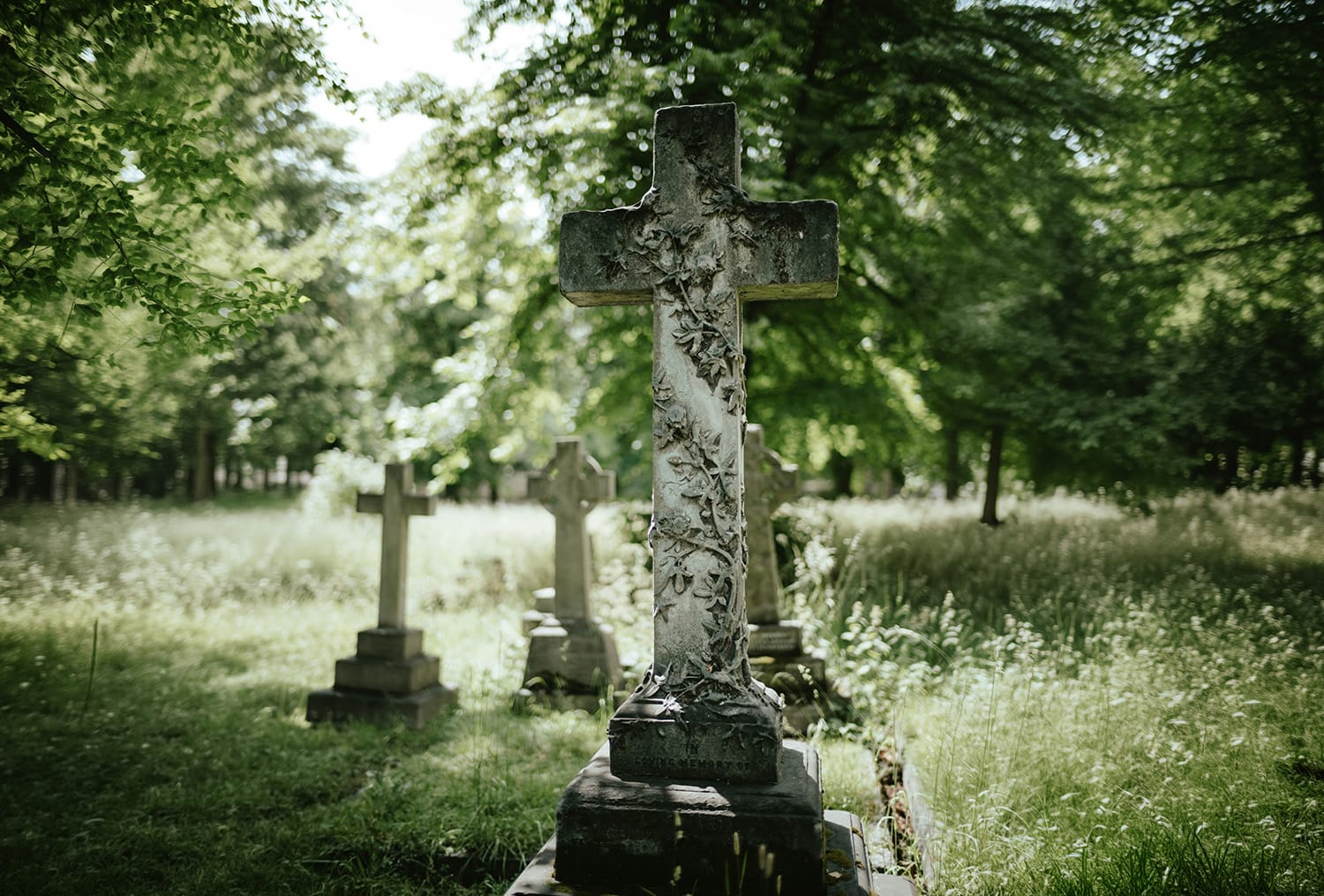
While we are called as Catholics to memento mori, our minds and hearts cannot stay there. We should not glorify death for death’s sake. It is a result of the fall, and therefore not something to be praised. Nor, however, should we fear it. In his book Peter and Wendy,author J.M. Barrie gives a wounded Peter Pan the famous line: “To die would be an awfully big adventure.” Death is an adventure, Hamlet’s “undiscover’ed country.” It is a door to pass through on our journey to be with Christ. As the Catechism states, “The Christian who unites his own death to that of Jesus views it as a step towards him and an entrance into everlasting life.” (CCC 1020) We work out our salvation in fear and trembling but we do so with faith in a loving God who gives us the grace we need.
The words of extreme unction, prayed over the dying, take a similar tone: “Go forth, Christian soul, from this world in the name of God the almighty Father, who created you, in the name of Jesus Christ, the Son of the living God, who suffered for you, in the name of the Holy Spirit, who was poured out upon you. Go forth, faithful Christian!”
Death, while helpful to think on, has lost its sting — and much of its horror. It has no power over us, not if we unite ourselves to Him. Instead, bedsheet ghosts and death alike serve as a reminder to further our resolve, to pick up our hearts, and to work and hope for Heaven.


Comments