Op-ed: Confidence in college has collapsed — and politics isn’t the only reason
Daniel Cox argues that politics only tells part of the story as working-class young people increasingly turn away from four-year degrees.

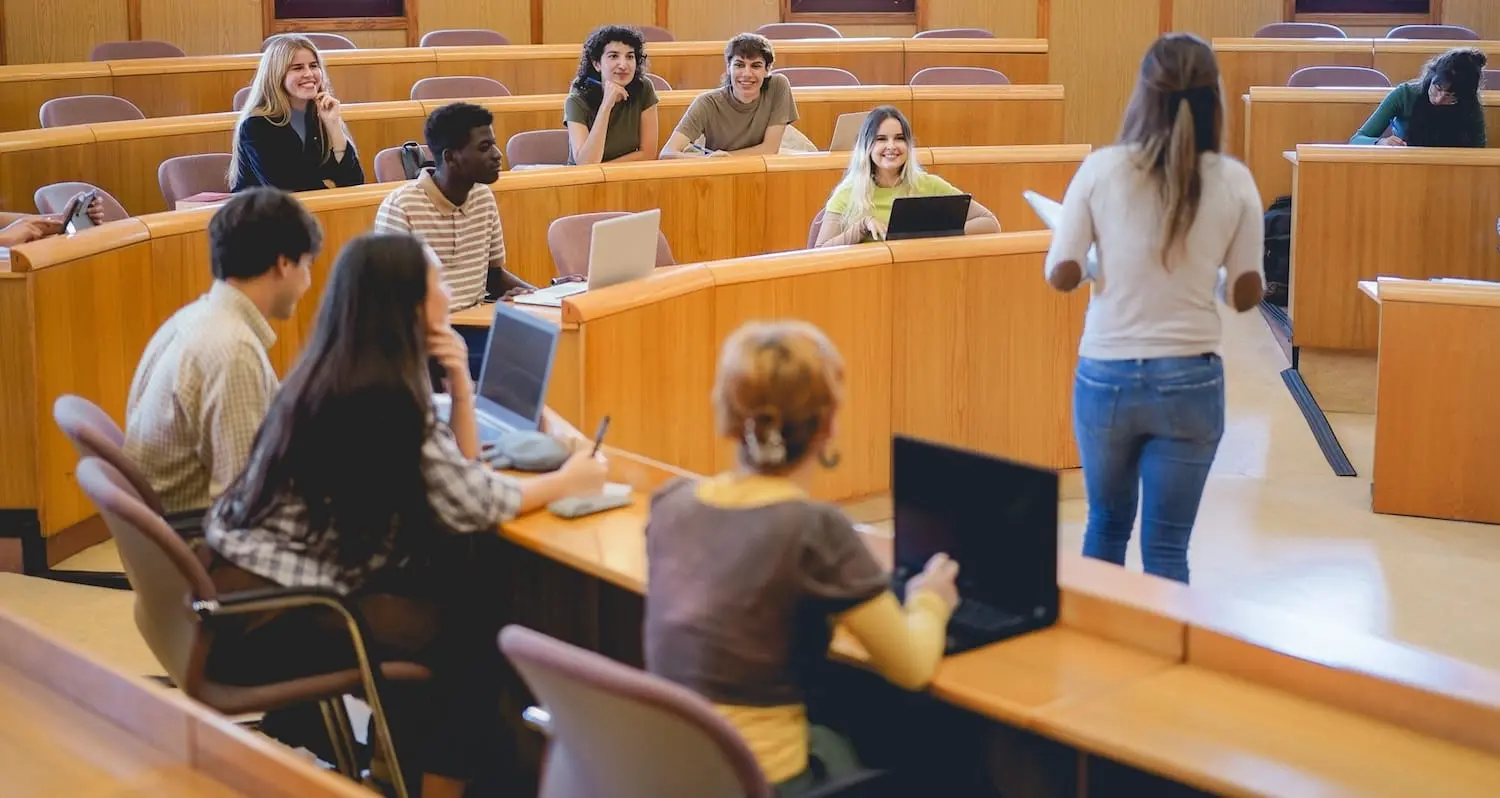
Americans’ confidence in higher education has collapsed as rising costs and campus politics leave more people questioning the value of a four-year degree, according to an Aug. 20 American Storylines opinion piece.
Although politics has contributed to the decline, Daniel Cox, who is the director of the Survey Center on American Life and a senior fellow at the American Enterprise Institute, said the focus on ideological debates on college campuses can obscure a growing class divide in who continues to pursue higher education.
“The ideological battles being fought on many campuses are almost exclusively waged among elites,” Cox wrote. “Debates over DEI initiatives, Gaza, antisemitism, and transgender rights dominate public attention rather than conversations about what can be done to make colleges work for the working class.”
Only 38% of Americans now — down 19 percentage points since 2015 — have a great deal or quite a lot of confidence in higher education, according to Gallup data cited in the piece.
The decline has been particularly steep among Republicans, expanding what Cox described as a once-modest partisan divide into a “chasm.”
Cost, however, remained a significant concern even among those most dissatisfied with higher education, who cited affordability and politics at similar rates, according to polling cited by Cox.
He pointed to the sharp rise in college prices over the past several decades. The average annual cost has risen from about $13,000 in the early 1970s to more than $30,000 today, Cox noted, while some small liberal arts colleges can approach $100,000 a year.
Cox said declining support for higher education could fall hardest on students who depend on college as a path to greater opportunity.
“When public support for higher education wanes,” he wrote, “the biggest losers are those who need them to work—not as bastions of progressive thought, but as drivers of economic opportunity, civic responsibility, and social solidarity.”
Citing the Survey Center on American Life’s survey of American teenagers, Cox found that teens with college-educated parents were far more likely to plan on attending a four-year college than those whose parents did not attend college, regardless of their parents’ politics.
More than six in 10 teens with college-educated parents planned to attend a four-year college, regardless of whether their parents supported President Donald Trump or former Vice President Kamala Harris.
“Put simply,” Cox wrote, “gender and class background, not politics, predict college attendance.”
Cox said the implications extend beyond earnings, pointing to differences in the relationships and community ties of Americans with and without college degrees.
“College graduates have more close friends, a greater network of personal support, and demonstrate more robust civic connections,” he wrote. “They belong to more clubs and organizations, participate more regularly in church, and are more active in sports leagues.”
College graduates were twice as likely as Americans without any college education to report having at least six close friends, at 33% and 17%, according to Survey Center research cited in the piece.
Cox pointed to research suggesting that professors rarely change their students’ partisan views.
“Of course, this does not mean we should ignore efforts by administrators or faculty to promote their preferred political agenda,” Cox wrote. “Students should feel that their professors are neutral in political discussions and are more focused on helping them identify when their arguments are weak, inconsistent, or incoherent rather than ‘right’ or ‘wrong.’”
Cox said addressing those concerns should be part of a broader effort to restore confidence in higher education.
“The situation on college campuses,” he wrote, “does not have to be as dire as some critics suggest for it to prod us into taking corrective action.”
He called on colleges to reaffirm that mission.
“America’s colleges need to reassert their necessary role in American society as not only sources of knowledge and learning, but experiences that encourage curiosity, reflection, and the cultivation of a broader civic purpose,” he wrote. “In college, we find out not only who we are, but what we owe to others.”


Comments