Our Lady’s Nativity: The hidden birth that heralded Christ’s coming
The ancient Sept. 8 feast celebrates the birth of the Theotokos and invites Catholics to imitate her humility and trust.

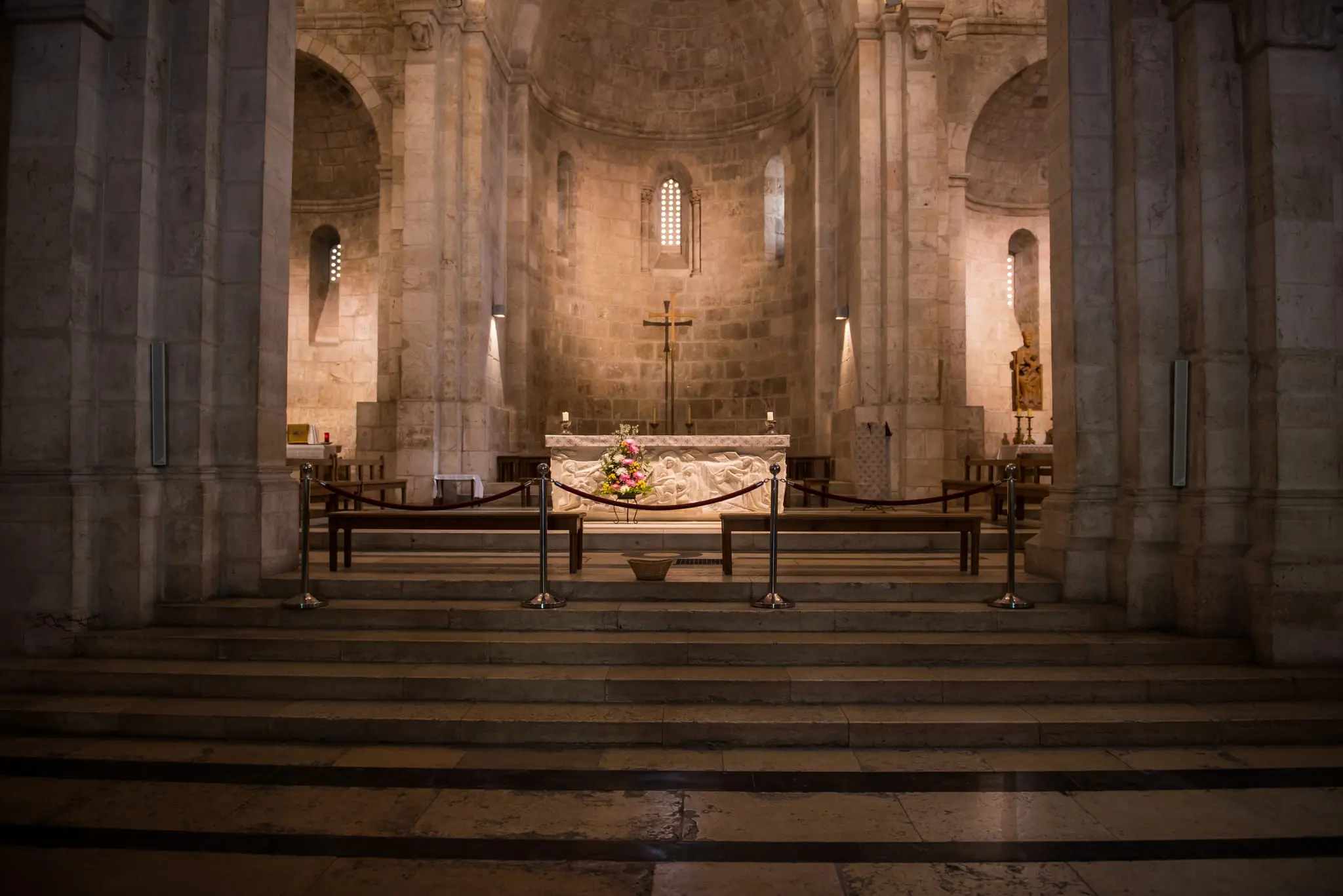
The Feast of the Nativity of the Blessed Virgin Mary, celebrated by Catholics around the world on Sept. 8, is one of the Church’s oldest Marian feasts and an occasion that calls the faithful to reflect on Our Lady’s profound humility and her extraordinary place in salvation history.
While Mary’s birth is not recorded in Scripture, tradition holds that Our Lady was born to Sts. Joachim and Anne, a devout couple who were advanced in age and had long prayed for a child. Much of the tradition surrounding Mary’s birth comes from the Protoevangelium of James, a second-century apocryphal Christian text often studied for its insights into early Christian devotion to Mary.
The feast itself is among the Church’s oldest celebrations honoring the Blessed Virgin Mary, believed to date to at least the sixth century, likely originating in the Eastern Church, probably in Syria or Palestine. Its development is traditionally associated with the dedication of a Marian church in Jerusalem on the site where Sts. Joachim and Anne were believed to have lived, and Mary was believed to have been born. The Basilica of St. Anne now stands near that traditional site.
St. Romanus the Melodist, a sixth-century hymnographer of the Eastern Church, composed a hymn for the feast drawing upon the account in the Protoevangelium of James that sings of Mary’s birth as a joyful triumph of grace over the failings of human nature.
Addressing St. Anne in his hymn, On the Nativity of the Virgin Mary, St. Romanos wrote, “Your birth is worthy of veneration, O holy woman, because you brought to light the joy of the world, the powerful mediatrix of graces for men. Indeed she is the rampart, the defense, and the haven of whoever trusts in her,” according to an English translation published in Luigi Gambero’s Mary and the Fathers of the Church.
The celebration later spread west. Rome adopted the feast from the Eastern Church by around the eighth century, and Pope Sergius I, who reigned from 687 to 701, prescribed a litany and procession for its observance.
Sept. 8 also falls nine months after the Solemnity of the Immaculate Conception on Dec. 8, which commemorates Mary’s conception.
One of only three birthdays celebrated by the Church
That the liturgical calendar includes Mary’s birthday is unusual because the Church generally celebrates saints on or near the date of their deaths — traditionally understood as their birth into eternal life. Only three births receive their own celebrations in the Roman liturgical calendar: Jesus Christ on Dec. 25, the Blessed Virgin Mary on Sept. 8, and St. John the Baptist on June 24.
Pope Benedict XVI explained in a 2012 Angelus that John’s birth is commemorated because of his unique connection to the Incarnation. According to the Gospel of Luke, John was filled with the Holy Spirit before birth and leapt in his mother Elizabeth’s womb when the pregnant Mary visited Elizabeth.
“He is the only saint — with the exception of the Virgin Mary — whose birth the liturgy celebrates,” Pope Benedict said, explaining that St. John’s nativity “is closely connected with the mystery of the Incarnation of the Son of God.”
Mary’s nativity has an even more direct connection to Christ, as her birth marks the arrival in human history of the woman from whom the Son of God would take flesh. Her birth prepares the way for the fiat she would later give at the Annunciation, when, as Pope Benedict XVI explained in a 2013 general audience, God received “a dwelling place in this world” through Mary — the “new holy tent, the new ark of the covenant.”
St. Louis de Montfort and Mary’s hidden beginning
St. Louis de Montfort, the 18th-century French priest whose writings profoundly influenced Catholic devotion to Mary, taught that her humility was so profound that she desired recognition from God alone. In True Devotion to the Blessed Virgin, he observed that much of her earthly life — including her conception and birth — remained largely hidden from the world.
St. Louis de Montfort explained that that obscurity did not lessen Mary’s importance in salvation history. Instead, it revealed God’s choice to enter the world not through worldly power but through a hidden, ordinary, humble life that went largely unnoticed.
“It is by the most holy Virgin Mary that Jesus has come into the world, and it is also by her that He has to reign in the world,” St. Louis de Montfort wrote in the opening lines of his work. “Mary has been singularly hidden during her life. It is on this account that the Holy Ghost and the Church call her alma Mater, — Mother secret and hidden. Her humility was so profound that she had no propensity on earth more powerful or more intermittent than that of hiding herself, even from herself, as well as from every other creature, so as to be known to God only.”
Mary’s birth and the renewal of creation
Early Christian writers viewed Mary’s birth not simply as the beginning of one human life but as a moment that pointed toward the renewal of creation itself.
“A place had to be prepared before the King’s arrival,” St. Andrew of Crete wrote in his third homily on Mary’s Nativity, according to a translation published in Gambero’s book. “The royal garments had to be woven before they could receive the royal Child at his birth. Finally, the clay had to be prepared before the Potter’s arrival.”
St. Andrew, a seventh- and eighth-century archbishop and theologian, described Mary as the beginning of a renewed cosmos. Through her, Christ, the new Adam, would enter the world to restore fallen humanity.
“Today pure human nature receives from God the gift of the original creation and reverts to its original purity,” he wrote in his first homily on Mary’s Nativity. “By giving our inherited splendor, which had been hidden by the deformity of vice, to the Mother of him who is beautiful, human nature receives a magnificent and most divine renovation, which becomes a complete restoration.”
The feast therefore directs attention beyond the infant Mary to the mystery for which God created and prepared her. Her quiet arrival heralded Christ’s own: The woman born in obscurity would become the living tabernacle for the incarnate Word and the ark of the new covenant.
Pope Benedict XVI drew upon the same theme in a 2008 Angelus address on the Immaculate Conception, explaining that Mary’s conception confronts humanity first with the reality of original sin and then with the victory of Christ’s grace over it — a victory that “shines in a sublime way in Mary Most Holy.”
Even as God respected human freedom and its telos of genuine love, His providential plan would unfold through Mary’s freely given “yes.” From the beginning, Pope Benedict explained, God promised that “a woman’s son” would “crush the head of the ancient serpent.”
“In Mary Immaculate we contemplate the reflection of the Beauty that saves the world: the beauty of God resplendent on the Face of Christ,” he said. “In Mary this beauty is totally pure, humble, free from all pride and presumption.”
Thus, in celebrating Our Mother’s nativity, Catholics honor the beginning of the Redemption and contemplate God’s providence. A birth that initially passed largely unnoticed by the world marked the beginning of humanity’s renewal in Christ. Mary’s hidden life reminds the faithful that holiness does not require recognition and that through a humble, self-giving “yes” to God, each person can become a dwelling place for His presence in the world.




Comments