Vatican warns of crisis in passing on Catholic faith, calls for renewed focus on Christ, family, and evangelization
The document highlights concerns regarding the erosion of the family's role as the primary setting for handing on the Catholic faith, and urges Catholics to renew their efforts to evangelize.
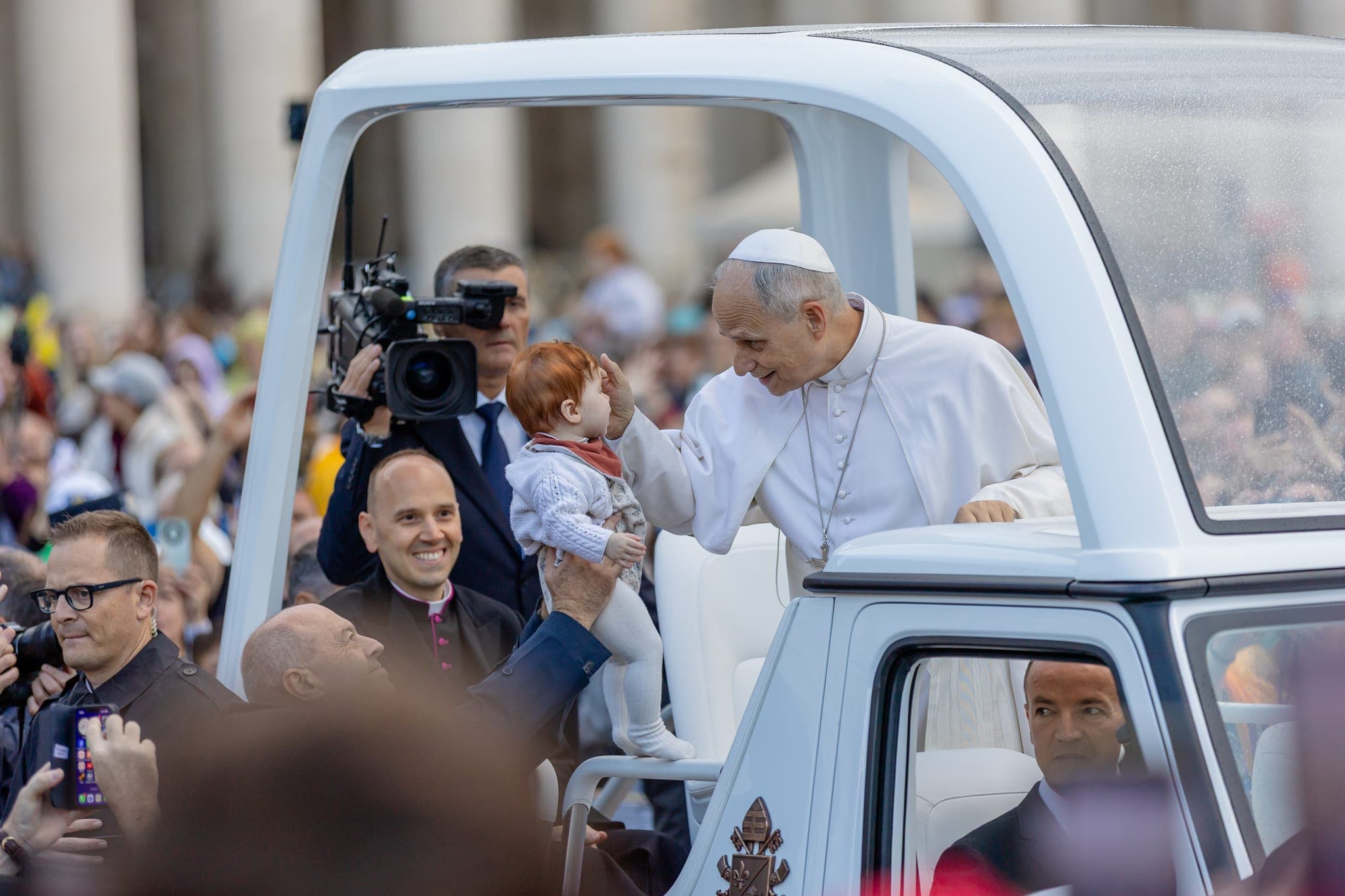
The Vatican's Dicastery for the Doctrine of the Faith released a major document Oct. 22 warning that the transmission of the Catholic faith from one generation to the next has broken down in many parts of the world, particularly in historically Christian societies, and calling for a renewed missionary effort centered on a personal encounter with Jesus Christ.
Titled Venite ad me: Considerations on the Transmission of the Faith in an Epochal Change, the document addresses the profound cultural transformations challenging the Church's evangelizing mission, from the decline of religious practice within families to the influence of digital technologies, artificial Intelligence (AI), and increasingly secularized societies.
The text was initially requested by Pope Francis, subsequently encouraged by Pope Leo XIV, and prepared with contributions from bishops' conferences around the world. Pope Leo approved it on August 21. It is signed by Cardinal Víctor Manuel Fernández, prefect of the Dicastery, and Msgr. Armando Matteo, secretary of its Doctrinal Section.
The document clarifies that its purpose "is primarily to stimulate ecclesial reflection and pastoral commitment regarding the transmission of the faith." For this reason, the text "examines a variety of points of view without, however, claiming to settle the matter, which remains open to further analysis and development."
"These Considerations," it further explains, "are not marked, as are other documents of the Dicastery for the Doctrine of the Faith, by terminological precision and systematic treatment, but instead allow a more discursive style, as is especially evident in the section on personal testimonies." The text includes several personal reflections from bishops around the world.
A crisis beginning in the family
One of the document's central concerns is the erosion of the family's historic role as the primary setting for transmitting the Catholic faith.
The Dicastery observes that, particularly in Europe, the United States, Canada, Australia, and New Zealand, fewer parents introduce their children to prayer, the sacraments, and the Christian understanding of life. As a result, many young people who grew up participating in parish activities enter adulthood with little religious commitment.
The phenomenon is not confined to the West. The document cites evidence from Latin America, Eastern Europe, Africa, and Asia, demonstrating how secularization, changing family structures, migration, and social transformations have disrupted traditional patterns of religious formation.
In some formerly communist countries, the faith survived through grandparents while an entire generation of parents ceased practicing it. In Latin America, the former cultural continuity between the Catholic family, school, parish, and broader society has weakened considerably.
"Ultimately, all these accounts indicate that a sort of ‘automatic’ transmission of the faith has ceased to exist," the document explains.
The Dicastery therefore insists that Catholic parents cannot simply delegate the formation of their children to schools or parish catechetical programs. Living the faith within the home, particularly through prayer, personal example, and sacramental participation, remains indispensable.
Rediscovering the central proclamation of Christianity
Venite ad me moves to the heart of its argument, the recovery of the kerygma, the fundamental proclamation that Jesus Christ, the Son of God, died and rose again, revealing the Father's love and offering salvation to humanity.
The document argues that passing on the faith cannot be reduced to transmitting religious information, ethical principles, or a set of doctrines. These remain essential, but they must be rooted in an authentic encounter with Christ and sustained through participation in the Church's life.
Drawing on the teaching of Popes Benedict XVI, Francis, and Leo XIV, the Dicastery emphasizes evangelization through personal witness, friendship, community, and the attraction exercised by lives transformed by grace, rather than by social pressure or merely inherited religious customs.
This approach is especially important for young people who have received sacramental instruction without developing a lasting relationship with Christ, according to the document. The Dicastery calls for catechetical methods capable of connecting Catholic teaching with the actual questions, experiences, and spiritual needs of contemporary men and women.
AI and the digital revolution
The document pays particular attention to digital technologies and AI, acknowledging their extraordinary potential for evangelization while warning that they are transforming not only how people communicate but also how they understand reality, relationships, and even religious authority.
Quoting Pope Leo’s encyclical Magnifica Humanitas, the text emphasizes that the implications of AI reach beyond technological innovation into fundamental questions about human identity and relationships: “The challenge, therefore, is not technological, but anthropological.”
The Dicastery warns against an individualized, consumer-oriented Christianity in which believers select religious teachings according to personal preferences, potentially separating themselves from the Church's authoritative teaching and sacramental life.
At the same time, it recognizes that digital communication offers unprecedented opportunities to spread Catholic teaching, share conversion stories, and reach people who might otherwise have little contact with the Church.
Liturgy, beauty, and the witness of Christian communities
Another major emphasis is the importance of the liturgy, especially the Eucharist, as a privileged setting for encountering Christ and handing on the faith.
The Dicastery cautions against reducing liturgy to a formal religious ceremony or treating catechesis as merely an intellectual exercise. Instead, it emphasizes the formative power of worship, sacred symbols, prayer, and participation in the Church's sacramental life.
Similarly, the document highlights sacred art, architecture, music, popular devotions, and the beauty of Christian culture as powerful instruments of evangelization.
It also stresses the importance of friendship, charitable works, volunteerism, and authentic Christian communities, particularly for younger generations seeking meaning and belonging. These experiences can open the door to faith even before an individual has received systematic religious instruction.
Evangelization without abandoning Catholic doctrine
Although the text calls for new forms of communication and greater sensitivity to different cultural contexts, it does not propose replacing Catholic doctrine with “subjective religious experiences”.
Instead, it distinguishes between the personal act of believing and the objective content of Catholic belief, insisting that authentic evangelization ultimately requires both.
The Dicastery also affirms the value of inculturation, through which the Gospel becomes intelligible within different societies without surrendering its essential truths.
In addressing the Church's missionary methods, it recalls Pope Benedict XVI's insistence: “The Church does not engage in proselytism.”
Rather, evangelization must make Christ known through the attractiveness of Christian love, the credibility of personal witness, and the transforming power of grace.
Real-life conversion stories
Significantly, the final chapter departs from conventional theological exposition to present personal testimonies collected from around the world.
These include accounts of conversion following addiction, grief, family crises, encounters with Catholic spouses, acts of charity, and experiences of beauty and prayer.
The testimonies illustrate the document's central argument: even in societies profoundly transformed by secularization and technological change, the desire for God has not disappeared.
The Dicastery concludes by encouraging Catholics to recover missionary confidence, renewed commitment to prayer, and a profound awareness that evangelization ultimately depends on the action of the Holy Spirit.








Comments