Pope Leo at Ash Wednesday Mass: We must take responsibility for sins and convert
Pope Leo XIV celebrated Ash Wednesday Mass at the Basilica of Santa Sabina, the mother church of the Dominican order, where he preached in the homily about the reality of death, the importance of conversion, and the countercultural attitude of acknowledging one’s sins.

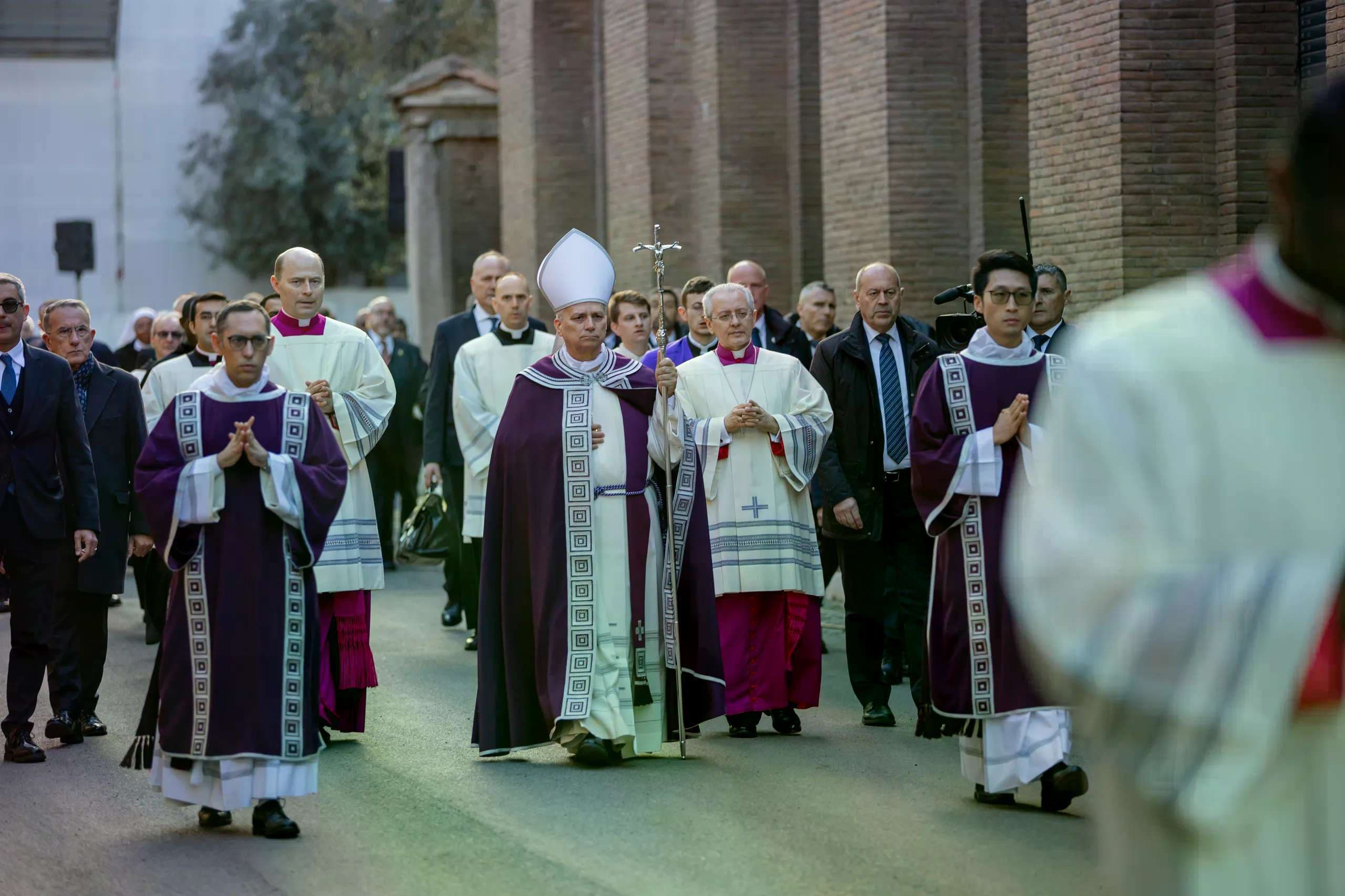
Pope Leo XIV celebrated Ash Wednesday Mass at the Basilica of Santa Sabina, the mother church of the Dominican order, where he preached in the homily about the reality of death, the importance of conversion, and the countercultural attitude of acknowledging one’s sins.
The first reading of the Feb. 18 liturgy relates when the prophet Joel calls for everyone to be assembled publicly, make a fast, and implore the mercy of God. Pope Leo said that the prophet shows “the urgent need for conversion, which is always both personal and public.” Thus, every year, Lent is a unique opportunity for deepening community, according to the Pope, because during this season, “a people is formed that recognizes its sins.”
“These sins are evils that have not come from supposed enemies, but afflicts our hearts, and exist within us,” Pope Leo said. “We need to respond by courageously accepting responsibility for them. Moreover, we must accept that while this attitude is countercultural, it constitutes an authentic, honest and attractive option, especially in our times, when it is so easy to feel powerless in the face of a world that is in flames. Truly, the Church exists as a community of witnesses that recognize their sins.”
He acknowledged that “sin is personal,” but that it manifests in societal contexts, both real and virtual. To embrace loving God and turning away from worship of idols in the world is an opportunity for freedom, the Pontiff said. He noted that it is rare to find adults, businesses, and institutions, who repent or acknowledge their faults, but said that the very possibility of repentance is central to the day’s reflection.
“Indeed, it is no coincidence that, even in secularized contexts, many young people, more than in the past, are open to the invitation of Ash Wednesday,” he continued. “Young people especially understand clearly that it is possible to live a just lifestyle, and that there should be accountability for wrongdoings in the Church and in the world.”
The Pope urged that because of this, the Lenten season — which is a time of personal conversion — should also be an opportunity to share the faith with others.
“Let us therefore embrace the missionary significance of Lent, not in a way that distracts us from our individual efforts,” he said, “but in a way that introduces this season to the many restless people of good will who are seeking authentic ways to renew their lives, within the context of the Kingdom of God and his justice.”
During the Mass, the Holy Father also received ashes on his forehead.
The pope’s receiving of ashes in public was something Pope Saint Paul VI started doing 60 years ago, Pope Leo explained in the homily.
In 1966 on Ash Wednesday, Pope St. Paul VI “spoke of it as a ‘severe and striking penitential ceremony’ that defies common sense and at the same time responds to the demands of our culture,” Pope Leo said.
He recalled how the late pontiff described the Rite of Ashes as “a severe reminder of the truth” that “brings us to an accurate perception of our existence and our destiny.”
Pope St. Paul VI said that the penitential practice involving ashes is in part vindicated by modern man’s acknowledgement that everything comes to an end.
“Today, we can recognize that his words were prophetic as we perceive in the ashes imposed on us the weight of a world that is ablaze, of entire cities destroyed by war,” Pope Leo said. “This is also reflected in the ashes of international law and justice among peoples, the ashes of entire ecosystems and harmony among peoples, the ashes of critical thinking and ancient local wisdom, the ashes of that sense of the sacred that dwells in every creature.”
But through this recognition of sin and death, Catholics are called to witness to the hope of the resurrection, according to the Pope.
“Yes, dear friends, history, and even more, our own conscience, asks us to call death for what it is, and to carry its marks within us while also bearing witness to the resurrection,” he said. “We recognize our sins so that we can be converted; this is itself a sign and testimony of Resurrection. Indeed, it means that we will not remain among the ashes, but will rise up and rebuild.
“Then the Easter Triduum, which we will celebrate as the summit of the Lenten journey, will unleash all its beauty and meaning. This will take place if we participate, through penance, in the passage from death to life, from powerlessness to the possibilities of God.”




Comments