Pope Leo points to ‘rebirth’ during apostolic journey
Recalling his apostolic journey to France, the Holy Father emphasized signs of renewal within the country’s Church, particularly among a new generation of Catholics.

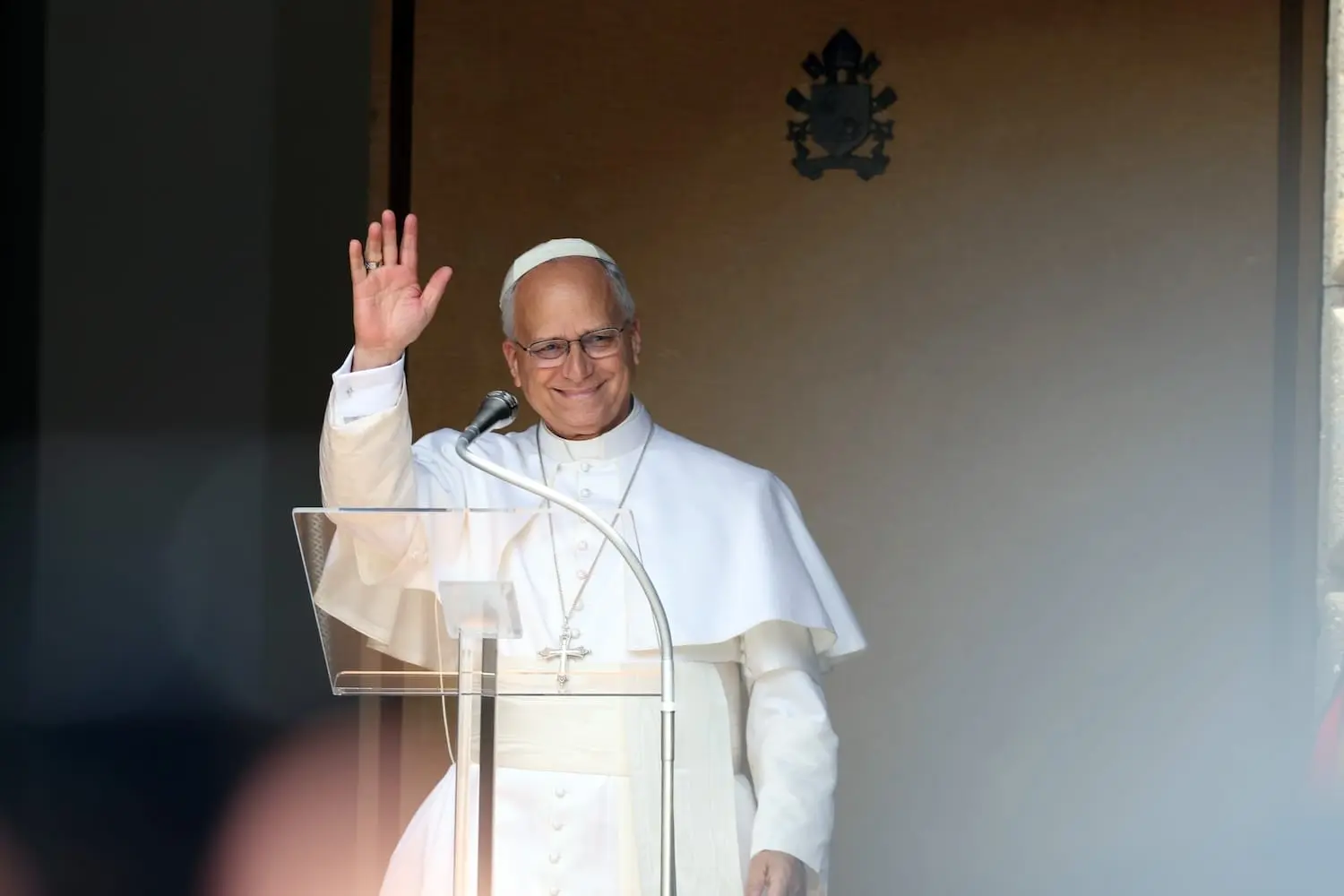
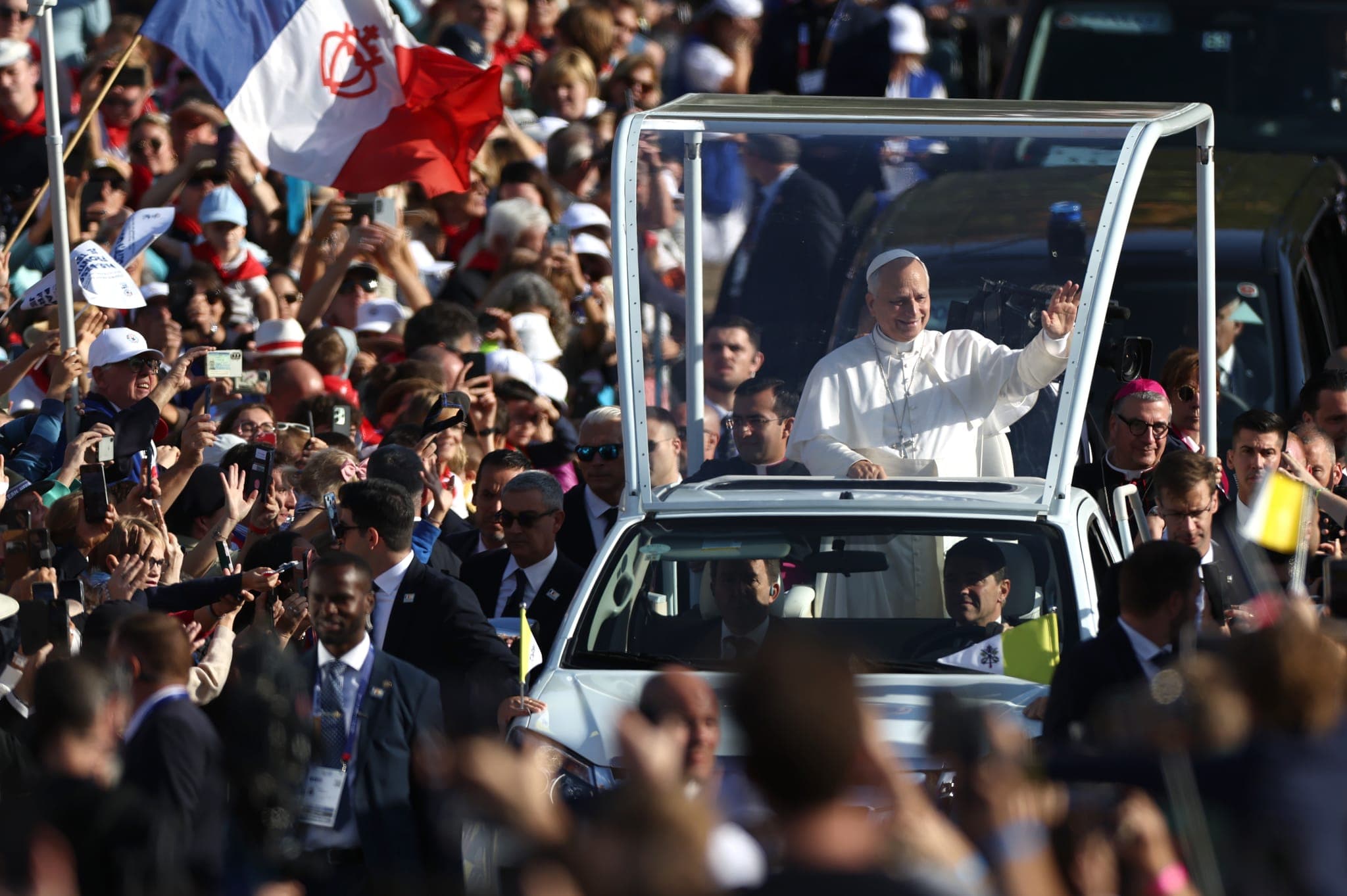
During his Wednesday Audience, Pope Leo XIV reflected on his recent apostolic journey to France, highlighting the defense of human dignity, signs of renewal in the Church, and Europe's call to peace.
Recalling the theme of his visit, “That the world may have life,” the Holy Father pointed to what he described as a theme of “rebirth,” comparing it to the revival of the Cathedral of Notre Dame following the devastating fire it endured in 2019.
“Its restoration was a test of the possible collaboration between the Church, the State, public institutions and civil society. This approach made it possible to make the most of both the generosity of benefactors and the expertise of professionals and skilled workers,” he said. “The synergy for the common good should be the norm for institutions, political and social forces, and all those with civil and economic responsibilities.”
Pope Leo said that cooperation for the common good must be rooted in the dignity of the human person.
“This is the message I wished to convey to the French authorities, as well as to the members of UNESCO, the United Nations Educational, Scientific and Cultural Organization, which has its headquarters in Paris, highlighting the fundamental criterion upon which such collaboration must be based: the dignity of the human person,” he said.
The Pontiff continued his reflection, recalling the celebration of Vespers at the cathedral and connecting it to a vigil with young people later that evening.
“Two completely different locations, yet two complementary events, almost united spiritually,” he said. “What united them? The Church, which is not made up of stones or cement, but of people who love Jesus Christ because they have been loved by Him.”
Pope Leo pointed to the people gathered at both events as an image of the Church.
“At Notre-Dame there were priests and deacons, consecrated persons, and pastoral workers; at the stadium there was the new French generation. New, I would say, not only in terms of age, but even more so in spirit, in the freedom of heart and faith. Young people who sang and shouted, but who also remained silent, listening. Attentive and emotional faces, which revealed hearts yearning for truth and love. To them I said with joy: ‘You are the saints of France!’ The Vigil was a great sign of hope.”
That hope, the Holy Father said, was also evident in the growing number of young people and adults seeking Baptism in the country.
>> Catholic baptisms surge among young adults in France <<
“In response to this beautiful “surprise” from God, a provincial synodal assembly is currently underway in Paris, at which I was able to speak, encouraging the journey of the catechumens and neophytes, together with the communities to which they belong,” he noted.
Pope Leo said signs of the rebirth he described were evident at the Mass at Place de la Concorde, where the Eucharist was distributed throughout the large crowd.
“This is the true reconstruction, the restoration of the Church that only God can bring about, through the intercession of the Virgin Mary.”
He then turned to his pilgrimage to Lourdes, where he connected that rebirth with hope and the dignity of human life.
“In Lourdes, the Lord, through the maternal care of the Virgin Mary, conveys to everyone, pilgrims and especially those who are sick in body and spirit, a message of hope and rebirth,” he said. “[A message that I wished to openly reaffirm]: every human life, in whatever condition, even in the most extreme frailty, retains its inviolable dignity and deserves to be cared for, accompanied and relieved of suffering with human compassion and with the aid of the means offered by science.”
Pope Leo continued, calling Lourdes a “sanctuary of the civilization of love” for the world.
The Holy Father concluded by reflecting on the final leg of his visit in Metz, a region marked by the destruction of World War II, and pointed to the Christian roots of Europe’s postwar renewal.
“Contemporary Europe was indeed born as a project for peace in the wake of the destruction wrought by war. We might say that what happened to Notre-Dame in Paris with the fire was what had happened to Europe during the Second World War. And Europe was reborn, founded on those principles of democracy, solidarity and fraternity amongst peoples, which owe much to its Christian roots. Even today, it is on these foundations and with this vital ‘lifeblood’ that the European project can be renewed, in a far more globalized world, where interreligious dialogue plays a role of primary importance.”
Pope Leo said he met with representatives of several religious traditions who signed the “Metz Appeal” for dialogue and peace in his presence.

Comments