SCOTUS allows congressional candidates to challenge state mail-in ballot laws
The Supreme Court ruled that congressional candidates may challenge state election laws governing when mail-in ballots are counted.

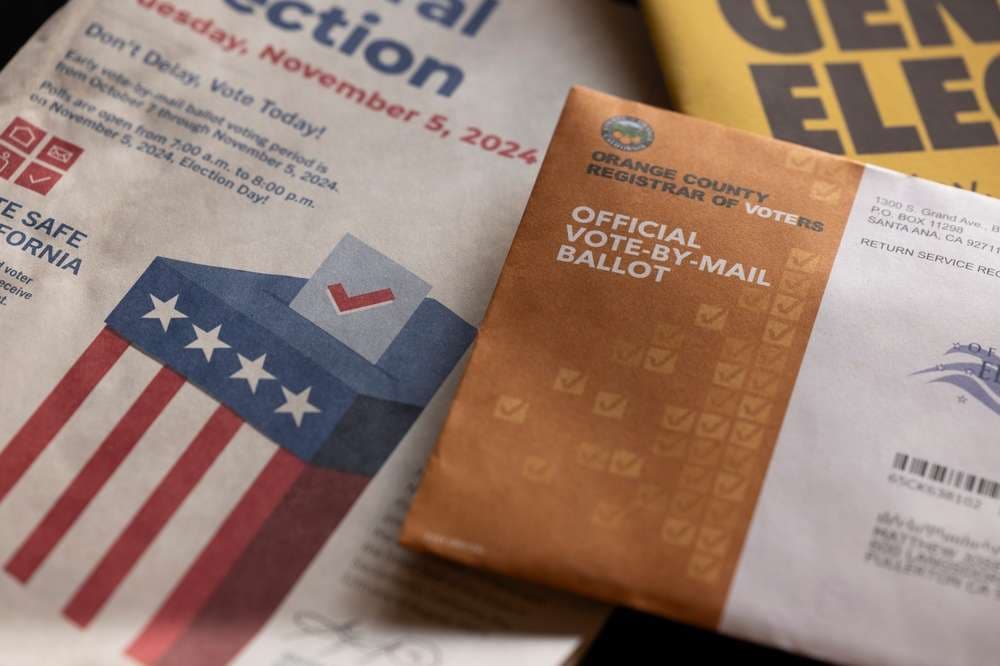
- The Supreme Court ruled 7–2 that congressional candidates have legal standing to challenge state election laws on mail-in ballots, reviving Illinois Republican Rep. Michael Bost’s lawsuit against Illinois election officials.
- The court did not rule on the legality of counting mail-in ballots received after Election Day. Instead, it sent the case back to lower courts to reconsider the issue.
- Bost argued that Illinois’ two-week window for receiving mail-in ballots violates federal Election Day laws and forced him to spend additional time and money after Election Day. He also claimed that the law potentially harms his electoral prospects and reputation.
The Supreme Court of the United States (SCOTUS) ruled 7-2 Jan. 14 that congressional candidates may challenge state election laws governing when mail-in ballots are counted, potentially opening the door to more lawsuits over election laws nationwide.
Rep. Michael Bost, R-Ill., sued the Illinois State Board of Elections over a state law that allows mail-in ballots to be counted if they are postmarked by Election Day and received within two weeks of Election Day. He argued that if a state allows ballots that are received after Election Day to be counted, the law violates federal code, which sets a specific day — the Tuesday after the first Monday in November — for ballots to be submitted.
In addition, Bost argued that extending the deadline for mail-in ballots to be received forced him to spend extra time and money to keep his campaign going even after Election Day. He also said the drawn-out process could cause him to lose the election or decrease his vote share and harm his reputation or future political prospects, according to SCOTUS’ opinion.
SCOTUS’ decision in favor of Bost overruled previous opinions from a district court and the Seventh Circuit Court of Appeals, which had rejected Bost’s claims and said he failed to demonstrate that the law personally harmed him. However, SCOTUS determined that Bost does have standing to sue and a “personal stake” in the case, reasoning that Bost “is a candidate for office. And a candidate has a personal stake in the rules that govern the counting of votes in his election.”
Chief Justice John Roberts authored the opinion, which Justices Samuel Alito, Clarence Thomas, Neil Gorsuch, and Brett Kavanaugh joined. Justices Amy Coney Barrett and Elena Kagan concurred, while Ketanji Brown Jackson and Sonia Sotomayor dissented.
Barrett wrote in the concurring opinion that she believes Bost has standing to sue because of a “traditional pocketbook injury,” not because of his status as a political candidate. Jackson’s dissent focused on the potential for the decision to cause upheaval in election law and warned of “far-reaching implications beyond Bost’s election.”
“By carving out a bespoke rule for candidate-plaintiffs — granting them standing ‘to challenge the rules that govern the counting of votes,’ simply and solely because they are ‘candidate[s]’ for office — the Court now complicates and destabilizes both our standing law and America’s electoral processes,” Jackson wrote.
The majority opinion did not decide whether state laws that allow late mail-in ballots violate federal law but rather reinstated Bost’s case and sent it back to the lower courts for further proceedings. According to CBS News, a different SCOTUS case surrounding Mississippi’s voting laws is scheduled for later this term and will provide more clarity on election law.





Comments