Trump approval hits new lows as Iran war and economic anxieties weigh on voters
Two major polls released this week show President Donald Trump's approval rating at the lowest point of his second term, with American families growing increasingly worried about the costs of the Iran war and its effects on the prices at the gas pump and grocery store.

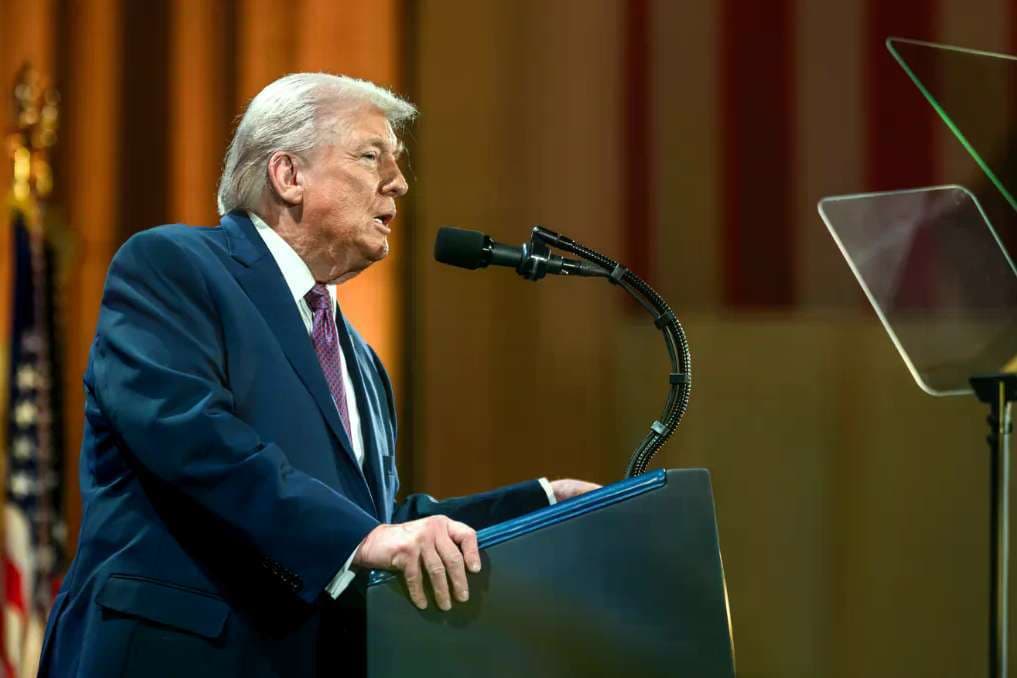
Two major polls released this week show President Donald Trump's approval rating at the lowest point of his second term, with American families growing increasingly worried about the costs of the Iran war and its effects on the prices at the gas pump and grocery store.
A Reuters/Ipsos poll completed March 24 found Trump's overall approval at 36% – a new low for his presidency. Just 29% of Americans approve of how he's handling the economy, the worst number of either of his presidential terms.
For context, according to Bloomberg's Joe Weisenthal, that figure is now lower than economic approval was at any point during the Biden administration.
A Quinnipiac University poll conducted March 19–23 found similar numbers, with Trump at 38% approval overall and 56% disapproval. On the economy specifically, Quinnipiac also found Trump's approval at a new low.
The Iran war is a significant driver. According to Quinnipiac, 54% of Americans oppose the military action, while just 39% support it. Forty-six percent say the war will make the United States less safe in the long run, compared to only 26% who think it will make the country safer. The Reuters/Ipsos poll put war approval slightly lower, at 35%.
On top of that, more than half of GOP voters – 51%, according to Quinnipiac – believe Iran did not pose an “imminent threat” ahead of the first U.S.-Israeli strikes on the Middle Eastern nation.
However, the same poll found 89% of GOP voters approve of Trump's job performance – marking a six-point increase in Republican support since March 8 and the highest since October 2025. Republican support for the military action against Iran is also high, standing at 86%. In addition, GOP voters give Trump a net positive rating on the economy, foreign policy, and Iran alike.
Nate Silver, who aggregates polling data across multiple surveys, put Trump's net approval at -15.3% – a new low in the pollster’s tracking model. He noted the Iran conflict has driven "a new net low" in the numbers. His Iran war polling average shows 39.5% of Americans support the war, while 52.1% disapprove or oppose it, with opposition “inching up” over time.
Gas prices are also part of the story. Fuel costs have surged since the U.S. and Israel launched coordinated strikes on Iran Feb. 28, and the Reuters/Ipsos poll found just 25% of Americans approve of Trump's handling of the cost of living.
Quinnipiac found that healthcare costs, food prices, and rent are the top financial concerns for American families right now – with gas prices close behind.
Finally, the generic congressional ballot is shifting. Quinnipiac found that 51% of Americans want Democrats to control the House, compared to 40% for Republicans. Among independent voters, Democrats hold a 31-point advantage. For comparison, Independent voters split evenly between then-candidate Trump and Vice President Kamala Harris in 2024, each of whom got 48% of the Independent vote, according to Pew Research.






Comments