Trump floats possible intervention in Cuba, Colombia, Greenland, and Mexico
The Trump administration hinted at openness to further interventions in Cuba, Colombia, Greenland, and Mexico, days after a U.S. operation led to the capture of Venezuelan leader Nicolás Maduro.

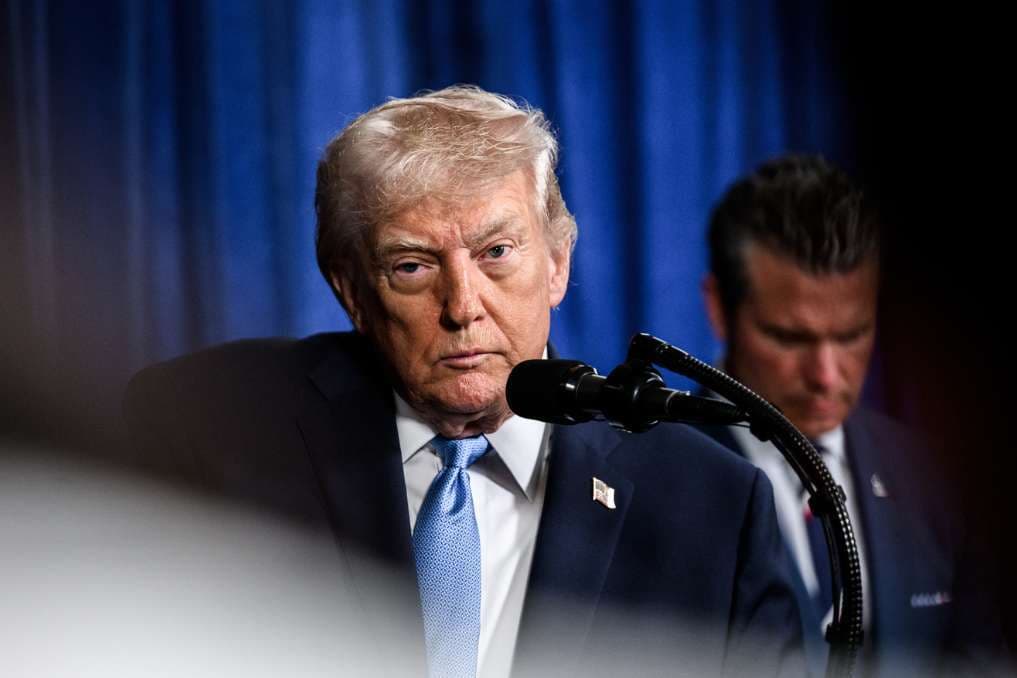
The Trump administration hinted at openness to further interventions in Cuba, Colombia, Greenland, and Mexico, days after a U.S. operation led to the capture of Venezuelan leader Nicolás Maduro.
President Donald Trump, responding to reporters’ questions aboard Air Force One on Jan. 4, made comments that touched on the possibility of U.S. action related to drug trafficking and national security.
The remarks came shortly after the Jan. 3 U.S. operation resulted in Maduro’s transfer to U.S. custody, where he faces drug trafficking and related charges. As CatholicVote previously reported, Secretary of War Pete Hegseth described the mission as an effort to curb gang violence and drug trafficking affecting the U.S., reclaim Venezuelan oil that the administration says was stolen, and reassert American dominance in the Western Hemisphere.
Cuba
Asked about Cuba, Trump said the country is unstable and said the loss of Venezuelan oil following Maduro’s capture could begin to strain Cuba’s economy.
“Cuba looks like it's ready to fall. I don't know if they're going to hold out,” Trump said. “But Cuba now has no income. They got all of their income from their Venezuela, from the Venezuelan oil. They're not getting any of it.”
When pressed on whether the U.S. would take action, Trump said he did not believe “we need any action” because “it looks like it’s going down.”
At a Jan. 3 news conference detailing Maduro’s capture, Secretary of State Marco Rubio warned Cuban officials that Maduro’s removal should concern them: “If I lived in Havana and I was in the government, I’d be concerned.”
Rubio, whose parents fled Cuba, later told NBC “Meet the Press” moderator Kristen Welker that Cuban personnel guarded Maduro in Venezuela prior to his capture. He declined to outline next steps.
“I’m not going to talk to you about what our future steps are going to be and our policies are going to be right now in this regard,” he told Welker. “But I don’t think it’s any mystery that we are not big fans of the Cuban regime, who, by the way, are the ones that were propping up Maduro.”
Colombia
Trump delivered sharper rhetoric when asked about Colombia. He accused its leadership of enabling cocaine production bound for the U.S and referred to Colombian President Gustavo Petro as “a sick man who likes making cocaine and selling it to the United States” who is “not going to be doing it very long.”
Asked whether the U.S. might conduct an operation in Colombia, Trump said: “Sounds good to me. You know why? Because he killed a lot of people.”
Petro responded with a lengthy statement on X, warning that arresting him would provide widespread resistance. He also ordered Colombian security forces to prioritize national sovereignty over cooperation with the U.S.
“Every soldier of Colombia has an order from now on: every commander of the public force who prefers the flag of the US to the flag of Colombia must immediately withdraw from the institution by order of the bases and the troops and mine,” Petro said.
Greenland
During the 37-minute exchange aboard Air Force One, a reporter asked whether Trump anticipated action against Greenland, to which he responded: “I don’t want to talk about Greenland. Let’s talk about Venezuela, Russia, Ukraine. We’ll worry about Greenland in about two months.”
He added, “We need Greenland from the standpoint of national security.”
As CatholicVote reported, Trump separately told The Atlantic in a Jan. 4 interview that “We do need Greenland, absolutely.” He cited the island’s military value and described it as “surrounded by Russian and Chinese ships.” Greenland Prime Minister Jens-Frederik Nielsen called Trump’s remarks from that interview “entirely unacceptable” rhetoric and a betrayal of long-standing relations between the two nations.
Mexico
Trump also signaled that action against Mexico could be forthcoming, particularly in the fight against drug cartels.
“Mexico has got to get their act together because they’re [drugs] pouring through Mexico,” Trump told reporters. “And we’re going to have to do something.”
He argued that cartels are effectively running the country and said Mexican President Claudia Sheinbaum has declined U.S. offers to send troops into Mexico to target cartels because she’s “concerned” and “afraid.”
In response, the Mexican government issued a statement condemning the U.S. operation in Venezuela, saying it violated the United Nations Charter, and reiterated its opposition to any American military action on Mexican soil.


_.jpg&w=3840&q=75)
Comments