Trump warns Iran of ‘decapitation’ as Tehran denies US talks
The President cast talks he says are underway as Iran’s last chance to reopen the Strait of Hormuz and avert major new U.S. strikes, but Tehran insists it is negotiating only with Oman.
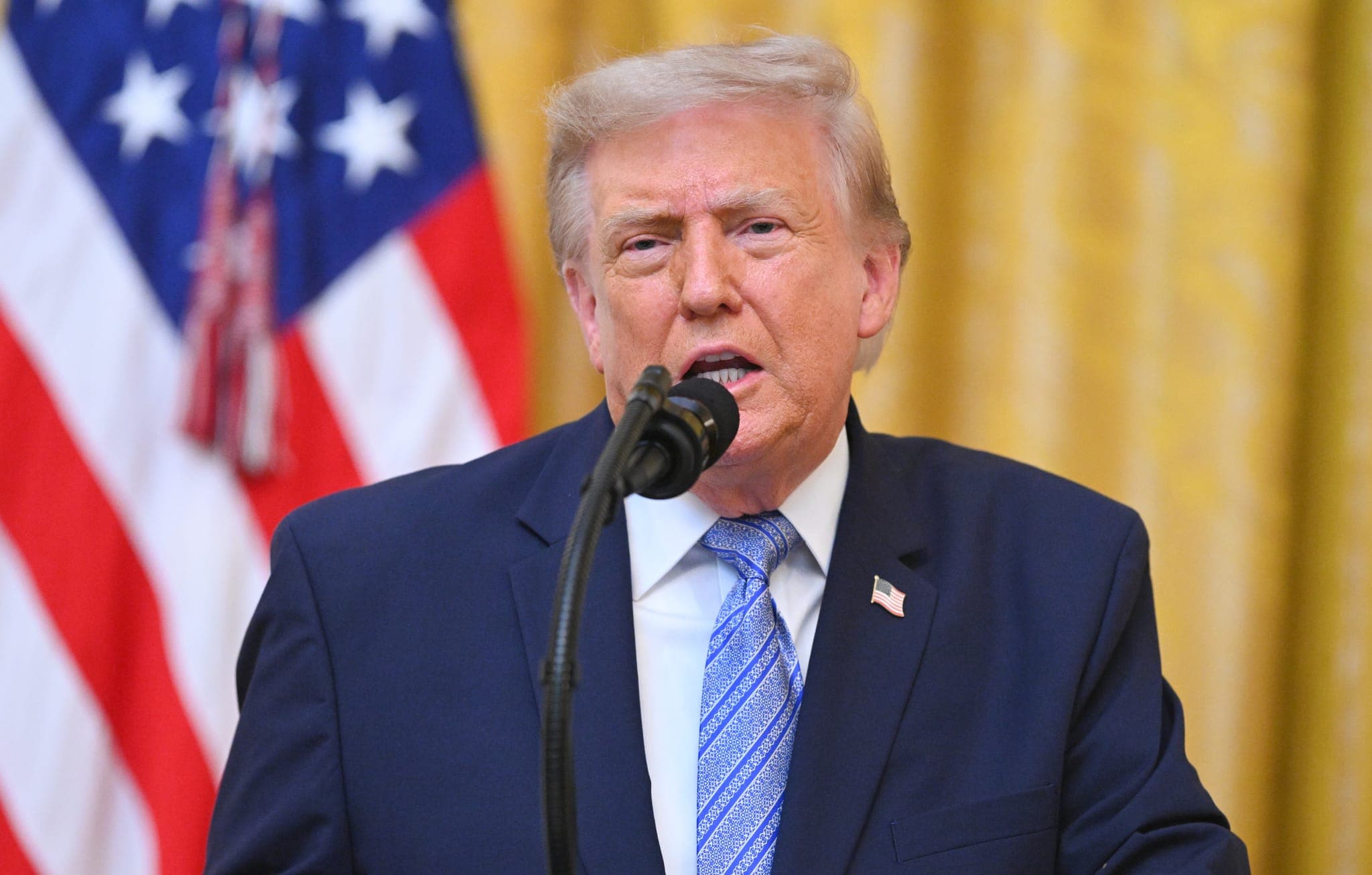
“I want to give them every last chance before decapitation,” President Donald Trump said Aug. 3, presenting this week’s new opening for negotiations as a final opportunity to reopen the Strait of Hormuz and avoid a major escalation in the Iran war.
The President said the outcome should become clear by Aug. 3 and described a two-stage process: first reopening the strait, potentially that same day, and then negotiating Iran’s denuclearization. The effort will move quickly “one way or the other,” he told reporters.
Trump said the discussions “are going on right now” at the request of Iran and with backing from Saudi Arabia, the United Arab Emirates, Qatar, and other countries. After Tehran denied his account, he accused Iran’s leaders of being “unbelievably duplicitous” and said additional talks were planned for the immediate future.
Iranian Foreign Ministry spokesman Esmaeil Baghaei offered a sharply different version of the state of things the same day. He said Iran was not currently negotiating with the U.S. at all and had no meeting with American officials scheduled. According to Baghaei, Tehran’s only current talks are with Oman over a temporary route intended to permit safe shipping through the Strait of Hormuz.
Baghaei added that even an agreement with Oman would not be enough to reopen the waterway while what he called U.S. “aggression” continues. The strait carried roughly one-fifth of the world’s oil and liquefied natural gas before the war, and its disruption has driven energy prices higher around the world.
The public accounts remained contradictory. U.S. officials told CBS News that no new or novel negotiating round had been planned Monday, but that Middle East envoy Steve Witkoff, Trump’s son-in-law Jared Kushner, and the U.S. negotiating team remained in contact with Iran’s team through mediators.
Separately, an unnamed regional official involved in mediation told AP News that a broader proposal under discussion would reopen the strait, halt attacks across the region – including strikes by Iran-backed militias – end the U.S. blockade, and permit Iranian oil exports. The official stressed that no agreement had been reached.
Trump’s ultimatum followed his decision over the weekend to withhold another large U.S. attack. The President said a plan had been in place to launch “the biggest attack since World War II” on Aug. 2, but that he backed away after appeals from Gulf governments – including Saudi Crown Prince Mohammed bin Salman – and unnamed Iranian officials.
In an Aug. 1 social media post, Trump said he had agreed to cancel the attack on the condition that the parties rapidly complete a deal providing for the “Immediate, Complete and Total” reopening of the strait and an end to Iran’s nuclear threat. Saudi Arabia’s crown prince had stressed the need to prioritize dialogue and de-escalation during a call with Trump, Reuters reported.
The pause has not ended the U.S. naval blockade of Iran. U.S. Central Command said Aug. 3 that American forces had redirected 44 commercial vessels, disabled two, and boarded two while enforcing the blockade. Trump said the U.S. Navy would decide what reached Iran and that nothing would pass unless a deal or “Total Surrender” was achieved.
The latest diplomatic push follows another rapid swing between threatened force and negotiations. As Zeale News reported July 31, Iran fired ballistic missiles at U.S. forces in Jordan before American forces struck dozens of Islamic Revolutionary Guard Corps targets and Tehran launched additional attacks toward Jordan and Kuwait. A June memorandum of understanding intended to end the war collapsed in early July amid a dispute over control and navigation through the strait.
At Pope Leo XIV’s Angelus address Aug. 2, the Holy Father renewed his prayers for wars to end and “diplomatic solutions to conflicts” to be found, asking the faithful to remember victims of hostilities, especially children, the elderly, and the sick. One week earlier, the Holy Father urged Middle Eastern leaders to suspend attacks and urgently reopen paths of dialogue and diplomacy.
No face-to-face U.S.-Iran meeting, venue, or delegation had been publicly confirmed by the evening of Aug. 3. Trump said the strike plan remains on the table if the diplomatic push fails, while a senior Iranian source told Reuters that Foreign Minister Abbas Araqchi, who was on a religious pilgrimage in Iraq, would be unavailable at least through the end of the week.



Comments