What Church leaders are saying about Pope Leo and the Latin Mass
A Vatican prefect recently said he doesn’t understand concerns about access to the traditional liturgy and claimed that Pope Leo XIV will not change restrictions on the Traditional Latin Mass (TLM). Meanwhile, other prominent clergy members continue to advocate for more generous allowance of the celebration of the TLM, especially in the wake of the SSPX schism.

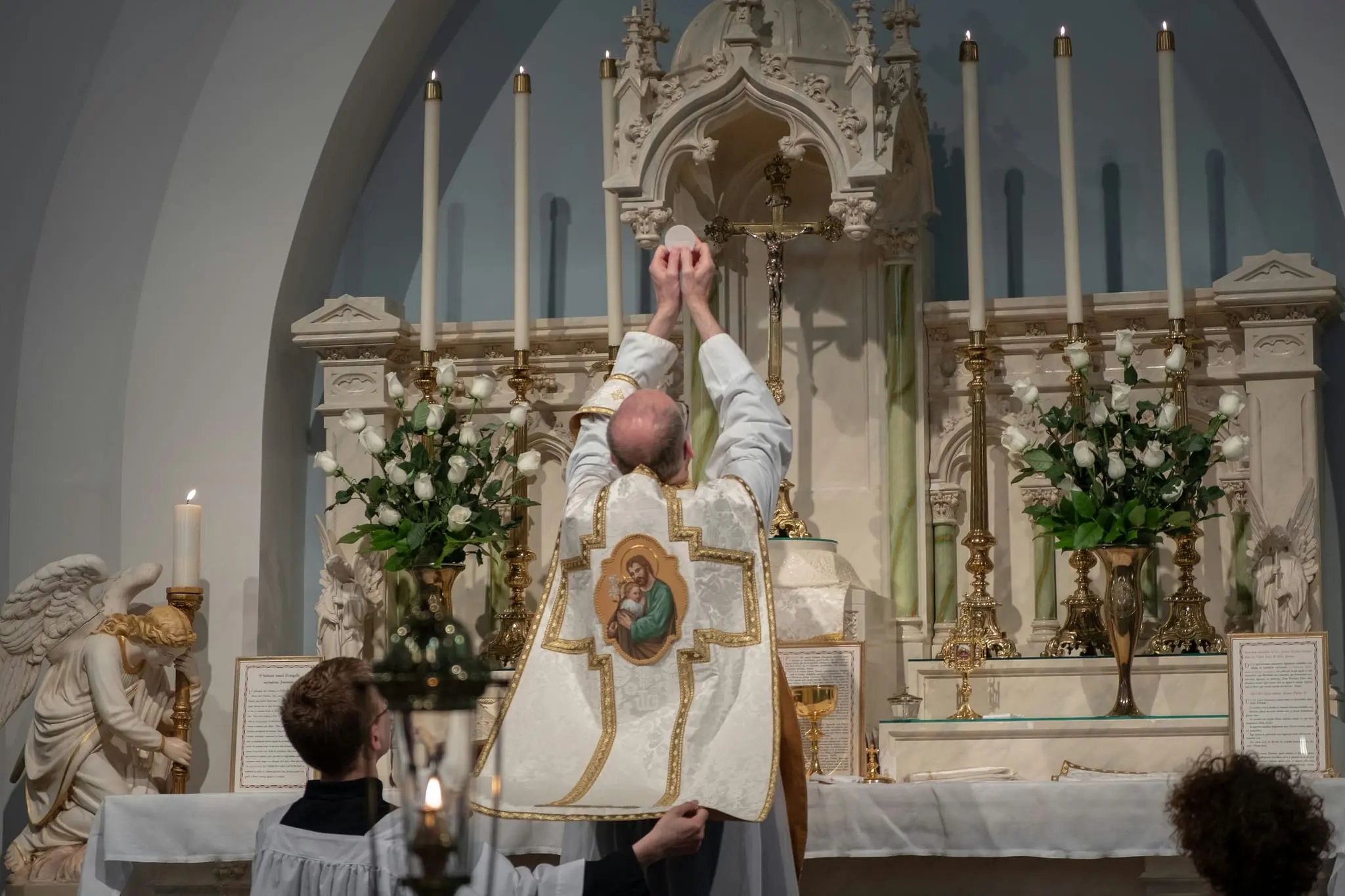
A number of high-profile Church leaders have commented in recent days about the current tensions and circumstances regarding the liturgy, specifically the Traditional Latin Mass (TLM), as many faithful continue to wonder what Pope Leo XIV may or may not change regarding access to the TLM.
Various perspectives offer insight and speculation on the topic, especially as some have commented on Pope Leo’s long-term plan although the Holy Father himself has not spoken directly about the TLM for several months. A Catholic Rome-based journalist this week criticized as “dubious claims” the reporting of a Spanish media outlet indicating Pope Leo is not concerned with expanding access to the TLM. The Spanish outlet drew from comments and an internal document regarding the TLM made by the Vatican prefect of the Dicastery for Divine Worship and the Discipline of the Sacraments, Cardinal Arthur Roche.
The prefect commented in a July 29 interview with British publication The Tablet that Pope Leo XIV is not going to change the 2021 motu proprio Traditionis Custodes, which heavily restricted the celebration of the TLM.
Cardinal Roche was appointed prefect just weeks before Pope Francis promulgated Traditionis Custodes. According to a July 31 report by journalist Diane Montagna, The Tablet had asked Cardinal Roche if Pope Leo will prioritize restricting the TLM similarly to Pope Francis.
The cardinal replied, “Well, let me say, first of all, it’s a very complex area. And it’s a very important area because the Eucharist is the sacrament of unity: it’s the place where we should all be able to be together to celebrate Mass. So if it begins to divide us, there’s something seriously amiss. But no, Pope Leo is not going to change Traditionis Custodes, and he’s not going back to Summorum Pontificum.” The latter title refers to the 2007 apostolic letter from Pope Benedict XVI that liberalized the celebration of the TLM.
Archbishop Cordileone, former prefect Cardinal Sarah share perspectives
Meanwhile, Archbishop Salvatore Cordileone of San Francisco, who was recently appointed by Pope Leo to serve on the Vatican’s highest court and who has called for greater TLM accessibility, last week commented on Cardinal Roche’s statement.
In a July 30 interview on EWTN’s “The World Over with Raymond Arroyo,” the archbishop said of Cardinal Roche’s remarks, “I donʼt know how well he knows the mind of the Holy Father. But I think one thing thatʼs clear to everyone is the Holy Father wants to bring everyone together. Heʼs all about unity.”
The concern of unity amid liturgy tensions was echoed in an Aug. 1 interview with Cardinal Robert Sarah, the former prefect of the same dicastery. Speaking to Matteo Matzuzzi, editor-in-chief of Il Foglio, Cardinal Sarah said the divisiveness over the TLM is harmful to the Church’s unity, according to an English report by AdVaticanum.
“It is a drama, indeed a true and proper sin, that on an essential theme such as the liturgy there should be a kind of war,” Cardinal Sarah told Il Foglio, according to AdVaticanum. “The liturgy is the source of the Church’s communion and it is unthinkable that on liturgical themes — indeed I would say ritual ones — there should be such opposition and such fierce confrontations.”
Cardinal Sarah pointed to the approach in Pope Benedict’s motu proprio Summorum Pontificum which allowed both forms of the Mass — Ordinary and Extraordinary — and called for a recovery of this position, which he described as “balanced, pastoral and theologically well-founded,” according to AdVaticanum.
Cardinal Sarah added, “I think the subject must be taken into serious consideration, recovering the balanced, pastoral and theologically well-founded position of Benedict XVI, who allowed both forms of the Latin rite to live, to enrich each other, and to be known by the holy people of God. Over the decades, they will be able to choose which form best corresponds to their need for faith, silence and spirituality.”
The cardinal also commented that “no one has authority over the rites, which are born from the centuries-old history of the Church. The rites cannot be arbitrarily abolished, and no one can say that a rite no longer exists, from one day to the next.”
Montagna criticizes Spanish outlet’s reporting on the issue, accuses Cardinal Roche of ‘gaslighting’
Montagna has indicated that the situation regarding the TLM is not as some have presented. This week, she analyzed claims about Pope Leo and the TLM made by Spanish secular daily La Razon regarding both Cardinal Roche’s remarks and a document about liturgy given to cardinals in January. While gathered at the Vatican in January for a meeting with the Pope, more than 100 cardinals received Cardinal Roche’s two-page document defending Traditionis Custodes. According to Montagna, La Razon said “this newspaper has confirmed that the cardinal distributed the text at Leo XIV’s request and therefore with the Pope’s approval of its contents.”
Montagna noted that Cardinal Roche would not have distributed the report without the Pope’s permission but added that its distribution “does not mean that he ‘therefore’ approved its contents in general or in its specific details.” On the contrary, Montagna wrote, what occurred “was a normal Vatican procedure” in which the Pope asked for reports on the topics that the cardinals’ meeting did not have time to discuss to be given to the cardinals.
Montagna also speculated whether the sudden influx in “media noise” could be “itself a form of pressure” on the issue, while pointing out that the Pontiff does not seem likely to act hastily.
“Is it a coincidence that Cardinal Roche’s interview appeared in The Tablet last week, and that the Razon article — which makes the egregious claim that Pope Leo had already made up his mind on the liturgy before a consultatory meeting with members of the Sacred College — appeared this week?” Montagna wrote. “Pope Leo seems to be a studious man who examines issues carefully and does not act hastily. Furthermore, it’s perfectly clear from his first two extraordinary consistories that he wishes to listen and not dictate, before he discerns and decides.”
Montagna also criticized Cardinal Roche’s framing of the current TLM accessibility experienced by the faithful. According to Montagna’s July 31 report, Cardinal Roche had also told The Tablet that when he has met with groups who want the TLM, he says, “Well, the Holy Father has given you that, so what’s the problem?’”
Cardinal Roche said that the groups “can’t answer. But then they go away and say, ‘We’re still being persecuted’. In what way persecuted? Why is the band still playing a tune that is discordant with the life of the Church?”
Cardinal Roche spoke similarly in a March interview with OSV News, during which he said that Catholics can still attend the TLM “by papal authority” and that he thus asks himself why is the intense liturgy debate going on.
“What else is going on when they have been given the concession of this Mass? What is the problem? Something else is clearly afoot,” Cardinal Roche told OSV News.
In her July 31 report, Montagna criticized the cardinal’s remarks as “unbelievable gaslighting.”
“Rarely has gaslighting been so nakedly displayed by a Curial official,” Montagna wrote. Outlining how the TLM is not as accessible or available as the cardinal made it sound, she argued that Traditionis Custodes “purportedly” put the permission to celebrate the TLM at the bishops’ discretion but in reality bishops were “strong-armed by Cardinal Roche and his officials into complying with their very narrow interpretation of the motu proprio. Bishops in fact received unexpected letters from the Dicastery for Divine Worship ordering compliance” to a vision significantly restricting the TLM.
She also related that a number of faithful now must drive hours every Sunday to the nearest TLM, if even possible for them, and that some young couples have been denied the possibility to receive the sacraments such as marriage and their children’s baptisms in the ancient rites.
SSPX and unity concerns
The tensions over the liturgy became heightened this summer when the Society of St. Pius X (SSPX), which celebrates the TLM, consecrated several bishops without the approval of Pope Leo. The involved clergy incurred automatic excommunication and the society was declared to be in schism. Many diocesan bishops have since warned the faithful to not associate with the SSPX out of concern of spiritual wellbeing and not risk being in schism themselves. Archbishop Cordileone spoke in the July 30 interview that he is concerned that if the current TLM restrictions remain, some faithful may feel their only remaining choice is “to go outside of officially approved institutions and communities.”
Archbishop Cordileone noted that “I think there’s concern for unity on both sides,” indicating that the restrictions in place could make unity more difficult to cultivate, while adding that on the other side, if the faithful are “allowed generously” to attend the TLM, it is also important to ensure that they “are in full communion in terms of their belief and their acceptance of the teachings of the Second Vatican Council.”
The archbishop also commented that he does not think it is realistic for the restrictions to continue, noting that people in the younger generation “all love the tradition,” the TLM, and have desire for a reverent, deep tradition.
“This is unstoppable, it’s what’s drawing young people in and will continue to do so,” he added.
Several days after the SSPX illicit episcopal consecrations took place, Archbishop Cordileone had stated on his X account calling for prayers “that an ardent effort toward sincere and honest dialogue will soon start up, and that easier access to the Traditional form of the Mass will be available to our people, so they will not feel as if they are constrained to seek spiritual nourishment outside of the family in union with Rome.”
What Pope Leo has said about the TLM
For his part, Pope Leo has yet to issue any formal documents related to the TLM, but one of his most recent comments on the topic was in a March 18 letter, penned by Vatican Secretary of State Cardinal Pietro Parolin, to the bishops of France. Acknowledging the divisive climate regarding liturgy, Pope Leo encouraged the bishops to be welcoming to people who have an attachment to the TLM.
“It is a cause for concern that a painful wound continues to open within the Church regarding the celebration of the Mass, the very sacrament of unity,” Cardinal Parolin wrote in the letter on behalf of the Pope. “To heal it, a new way of looking at one another — with greater understanding of each other’s sensibilities — is certainly necessary; a perspective that allows brothers, rich in their diversity, to welcome one another in charity and the unity of faith.”
“May the Holy Spirit inspire you with concrete solutions that allow for the generous inclusion of those sincerely attached to the Vetus Ordo,” he wrote, referring to the TLM by the Latin name for the “Old Order” of the Mass, “in accordance with the guidelines established by the Second Vatican Council regarding the Liturgy.”
In May, Pope Leo gave a catechesis address about Sacrosanctum Concilium, the Second Vatican Council’s document on the liturgy, highlighting how it says revisions of liturgical rites must be made carefully and that “any new forms adopted should in some way grow organically from forms already existing.”
At another point in the address, the Pontiff referred to the document’s 23rd paragraph to highlight the council’s call that both tradition and organic development should be cared for.
“To encourage the access of the faithful to the richness of the gifts of grace dispensed by the sacred liturgy,” Pope Leo said, “the Constitution Sacrosanctum Concilium thus indicates, with a very effective phrase, the direction to take: ‘That sound tradition may be retained, and yet the way remain open to legitimate progress.’”
The full General Audience address can be read here.



Comments