Pope Leo speaks on tradition and liturgy reform, asks clergy ‘to always uphold respect’ for liturgical texts
During his May 27 General Audience speaking about the Second Vatican Council document on liturgy, Pope Leo XIV called on clergy to maintain respect for the texts and regulations of the liturgy when celebrating Mass rather than adding, removing, or altering anything on their own.

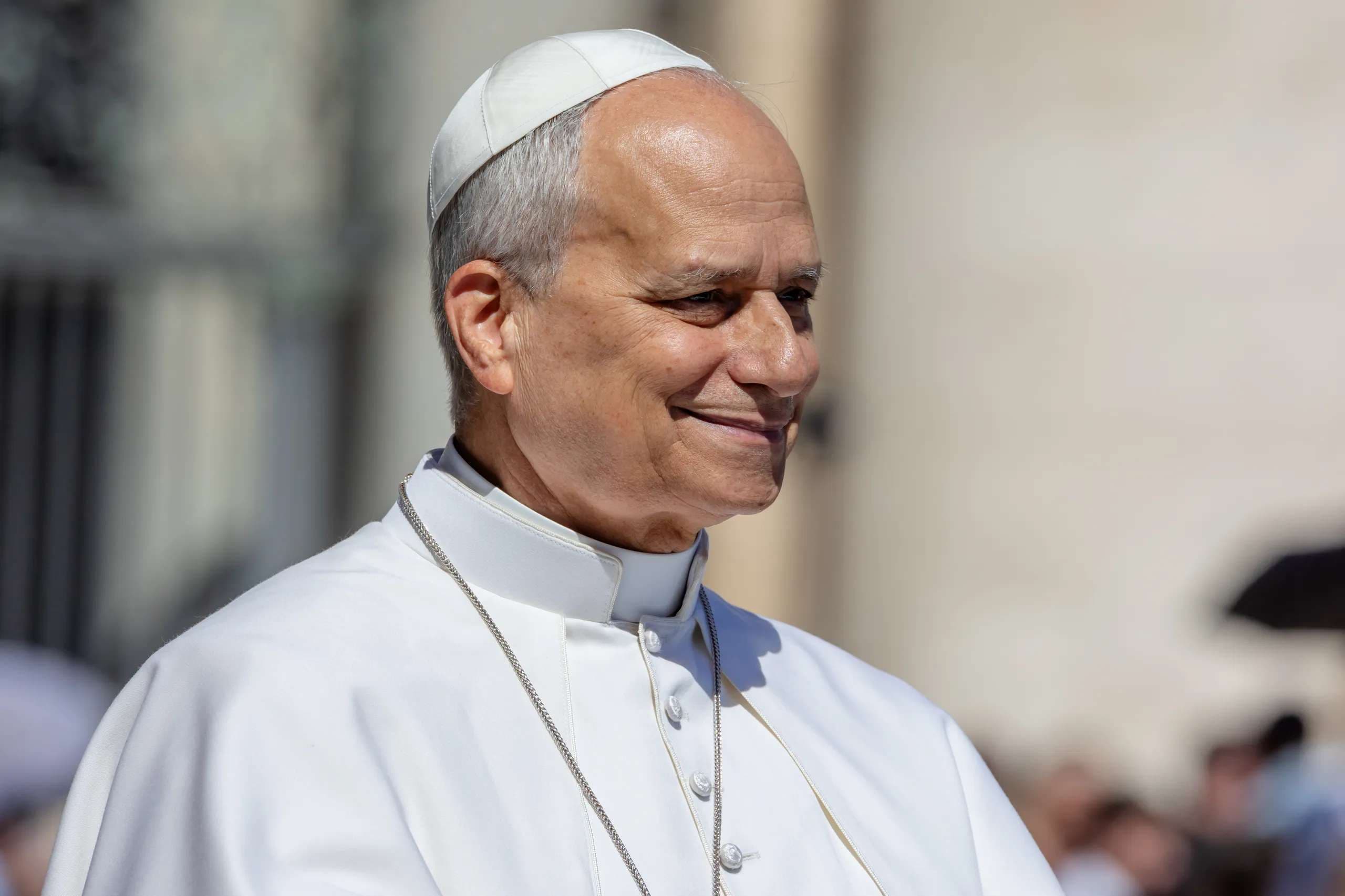
During his May 27 General Audience speaking about the Second Vatican Council document on liturgy, Pope Leo XIV called on clergy to maintain respect for the texts and regulations of the liturgy when celebrating Mass rather than adding, removing, or altering anything on their own.
Painting a historical context for the writing of the 1963 constitution Sacrosanctum Concilium and the liturgical reform that came after the Council, Pope said that, at the time, “there was a strong sense of the need for a renewal of the ritual forms through which, for centuries, the Church had glorified and sanctified the Christian people.”
He recalled how Pope Ven. Pius XII said the Church is “a living organism” and that Pope St. John Paul II observed that the renewal of both the liturgy and the whole life of the Church is closely linked. Pope Leo then spotlighted how the constitution underscored the importance of preserving tradition and leaving room for organic development.
“To encourage the access of the faithful to the richness of the gifts of grace dispensed by the sacred liturgy, the Constitution Sacrosanctum Concilium thus indicates, with a very effective phrase, the direction to take: ‘That sound tradition may be retained, and yet the way remain open to legitimate progress,’” he said, quoting the 23rd paragraph.
>> Analyst: Latin Mass restrictions have widened Church divisions <<
Pope Leo has been teaching about the documents of the Second Vatican Council during his weekly General Audiences for months now, beginning the document on liturgy last week. This week’s address focused heavily on liturgical reform, which has been a controversial and debated topic for decades with tensions heightening in recent months.
>> In Wednesday Audience, Pope Leo teaches about Vatican II’s document on the liturgy <<
The Pontiff said it is “understandable why the Council Fathers recommended” that the rites’ revision — when genuinely needed for the good of the Church — should be done carefully.
As Sacrosanctum Concilium stated, “any new forms adopted should in some way grow organically from forms already existing,” he quoted.
He also called on clergy to not change anything on their own accord.
“For the good of the entire Church, every reform must always be preceded by careful ‘theological, historical and pastoral’ investigation,” he said, citing the constitution. “The Council Magisterium, in this way, thus calls for the avoidance of confusion amongst the faithful, discouraging anyone from adding, removing or altering anything in liturgical matters on their own initiative. The progress evoked in the Conciliar Constitution in no way compromises ecclesial communion: rather, it seeks to confirm and foster it.
“I therefore urge all those called to prepare the celebration of the divine mysteries, in particular priests who exercise the ministry of liturgical presidency, to always uphold that respect for the texts and regulations of the liturgy which springs from an inner attitude of openness and trust in God, manifesting humility before His greatness and sincere fidelity to ecclesial communion.”
Pope Leo also recalled how Pope Benedict XVI recognized the balance and tension of the liturgical reform.
“Pope Benedict XVI grasped in this declaration of intent the ‘reform programme’ of the Council Fathers, ‘a balance between the great liturgical tradition of the past and that of the future’, noting that ‘tradition and progress are often clumsily opposed,’ whereas ‘actually, the two concepts merge: tradition is a living reality, which therefore includes in itself the principle of development, of progress,” Pope Leo recalled, quoting a 2011 address from the late pontiff. “‘It is as if to say that the river of tradition also carries its source in itself and flows towards the outlet.’”
Pope Leo then emphasized that, as Sacrosanctum Concilium reiterates, there are certain elements of the liturgy that can never be changed because they are instituted by God, and certain elements that the Church can change when appropriate.
“The Council affirms the legitimacy of this progress, rooted in authentic Tradition, distinguishing within the liturgy ‘immutable elements, divinely instituted’ from ‘elements subject to change [which] not only may but ought to be changed with the passage of time if they have suffered from the intrusion of anything out of harmony with the inner nature of the liturgy or have become unsuited to it,’” he said, quoting Sacrosanctum Concilium.
Pope Leo said that these kinds of changes “have taken place constantly over the centuries in order to enable the faithful to participate fruitfully, through ritual actions, in the Paschal Mystery of Christ, the foundation of the Christian faith.”
“The Church’s worship has thus been ‘embodied’ in the cultural forms of each age and has been able to influence them and even transform them,” he continued, saying that as a result, the liturgy has for centuries been a key way to evangelize.
In the present day, he said, this evangelistic effort “must be renewed in continuity with the authentic and living Catholic tradition,” aiming to introduce the faithful “to the fullness of the truth.”
Comments