Whitmer backs Haley Stevens over Abdul El-Sayed in Michigan Senate primary
The governor’s late endorsement further consolidates establishment support for Stevens as early voting opens in a race shaped by record AIPAC spending and Democratic divisions over Gaza.
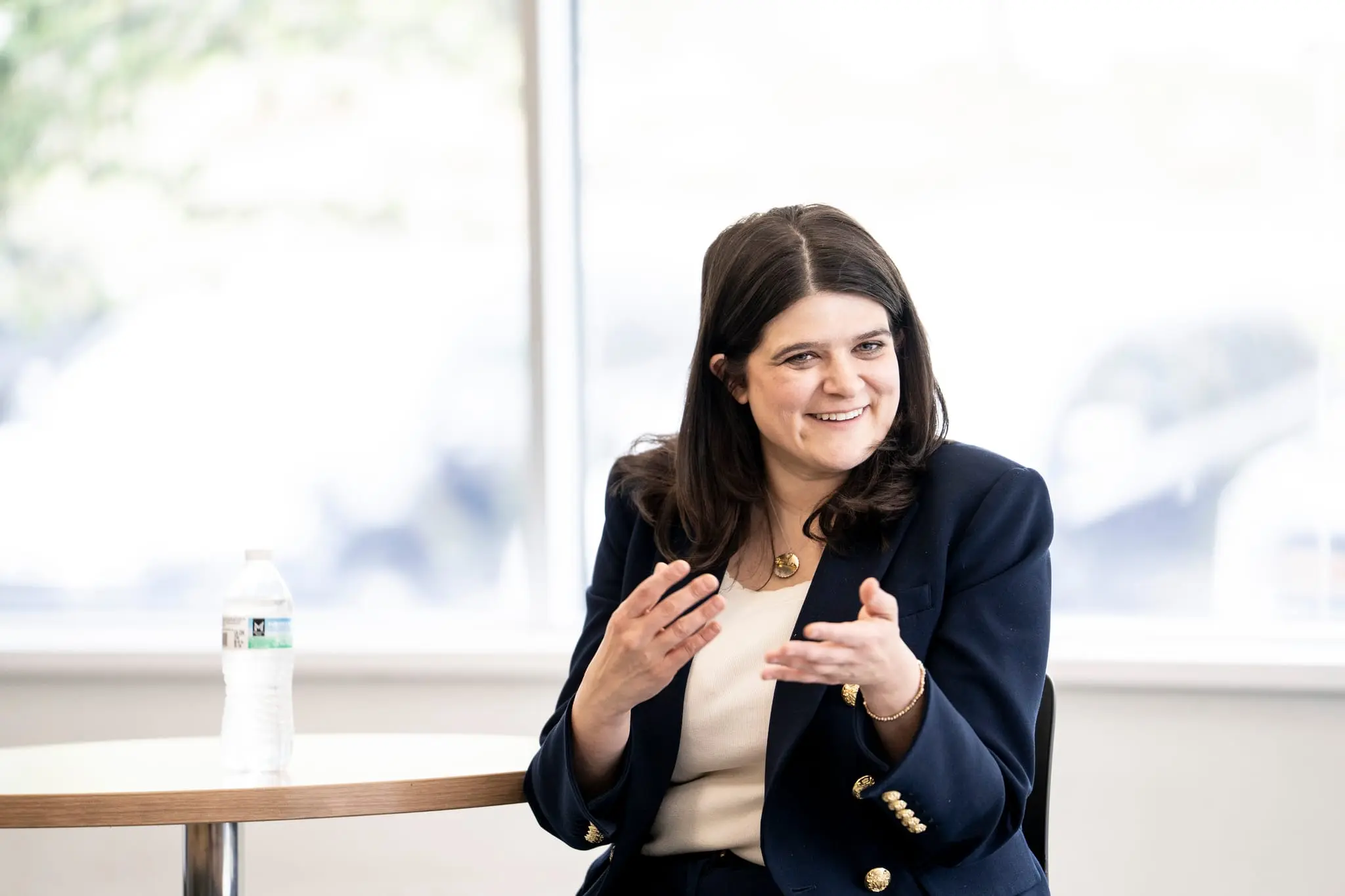
Michigan Democratic Gov. Gretchen Whitmer endorsed Rep. Haley Stevens on Friday in the Democratic primary for Michigan’s open U.S. Senate seat, lending her political weight to the establishment-backed candidate one day before statewide early voting begins.
“As governor, I have one strategy: Get things done,” Whitmer said in an endorsement video posted by Stevens’ campaign. “Just like me, Haley will do whatever it takes to get things done for the people of Michigan.”
Stevens said she was “absolutely thrilled” to receive the endorsement, adding that Whitmer “understands the stakes of this race” and the importance of nominating what Stevens called “the strongest Dem in this primary.”
Whitmer framed her endorsement around Stevens’ governing experience rather than the policy and campaign-finance disputes that have defined the increasingly contentious contest with progressive candidate Abdul El-Sayed.
The announcement came immediately before Michigan’s mandatory early-voting period, which runs from July 25 through Aug. 2. Primary Election Day is Aug. 4, although mail voting is already underway. The Michigan Department of State said absentee-ballot requests were running 68.5% ahead of the comparable point in the 2022 election.
Establishment and progressive coalitions
The primary became an effective two-candidate race after state Sen. Mallory McMorrow suspended her campaign July 5.
Whitmer joins a prominent coalition supporting Stevens that includes retiring Sen. Gary Peters, D-Mich., Senate Democratic leader Chuck Schumer, D-N.Y., former Sen. Debbie Stabenow, D-Mich., former Gov. Jennifer Granholm, D-Mich., Michigan Attorney General Dana Nessel, D-Mich., and former House Speaker Nancy Pelosi, D-Calif.
El-Sayed, a physician and former Detroit health director, is backed by Sens. Bernie Sanders, I-Vt., Elizabeth Warren, D-Mass., and Chris Van Hollen, D-Md., Rep. Alexandria Ocasio-Cortez, D-N.Y., and the United Auto Workers.
Recent polling has pointed in different directions. A Detroit News/WDIV survey conducted July 8-11 found Stevens leading El-Sayed 48.2% to 41.4% among likely Democratic primary voters.
The candidates’ committed support was virtually tied, however: 34.1% said they would “definitely” vote for Stevens, compared with 33.7% for El-Sayed. Other recent polls, including surveys conducted for groups supporting or aligned with El-Sayed, have shown him ahead.
The nominee will face Republican former Rep. Mike Rogers in November for the seat being vacated by Peters. Michigan is expected to be one of the central battlegrounds in the struggle for control of the Senate.
Record AIPAC spending shapes the race
The primary has also become the largest test to date of the American Israel Public Affairs Committee’s (AIPAC) influence in a single election.
AIPAC and its affiliated groups have spent nearly $30 million supporting Stevens, their largest investment ever in one race, according to the Associated Press. Outside groups had spent close to $50 million boosting Stevens overall as of July 19, including approximately $12 million from one organization that does not disclose its donors.
The advertisements financed by AIPAC have largely avoided discussing Israel, instead presenting Stevens as the stronger candidate to oppose President Donald Trump and win the general election.
Stevens has described herself as a “proud pro-Israel Democrat,” although she has also criticized Israeli Prime Minister Benjamin Netanyahu and said his government has failed to make Israel safer or bring the region closer to peace. She supports a two-state solution and has called for U.S.-Israeli cooperation in rebuilding Gaza.
El-Sayed has called Israel’s military campaign in Gaza a “genocide,” described the Israeli government as “evil,” and advocated an immediate halt to U.S. weapons transfers. If elected, he would become the first Muslim member of the U.S. Senate.
The issue carries particular political weight in Michigan, which is home to one of the country’s largest Arab-American communities.
On Friday, El-Sayed held a “Michigan Is Not For Sale” event with labor and community supporters, denouncing the money flowing into the contest. His campaign claimed that outside spending supporting Stevens had approached $60 million, while announcing that it had raised $3.3 million in July and assembled more than 10,000 volunteers.
El-Sayed has faced scrutiny of his own over his association with socialist streamer Hasan Piker. As Zeale News recently reported, El-Sayed campaigned with Piker before past footage resurfaced in which the streamer called Chinese communist dictator Mao Zedong “one of the great leaders of this world.”
El-Sayed defended appearing with Piker and has rejected attempts to label himself a socialist.





Comments