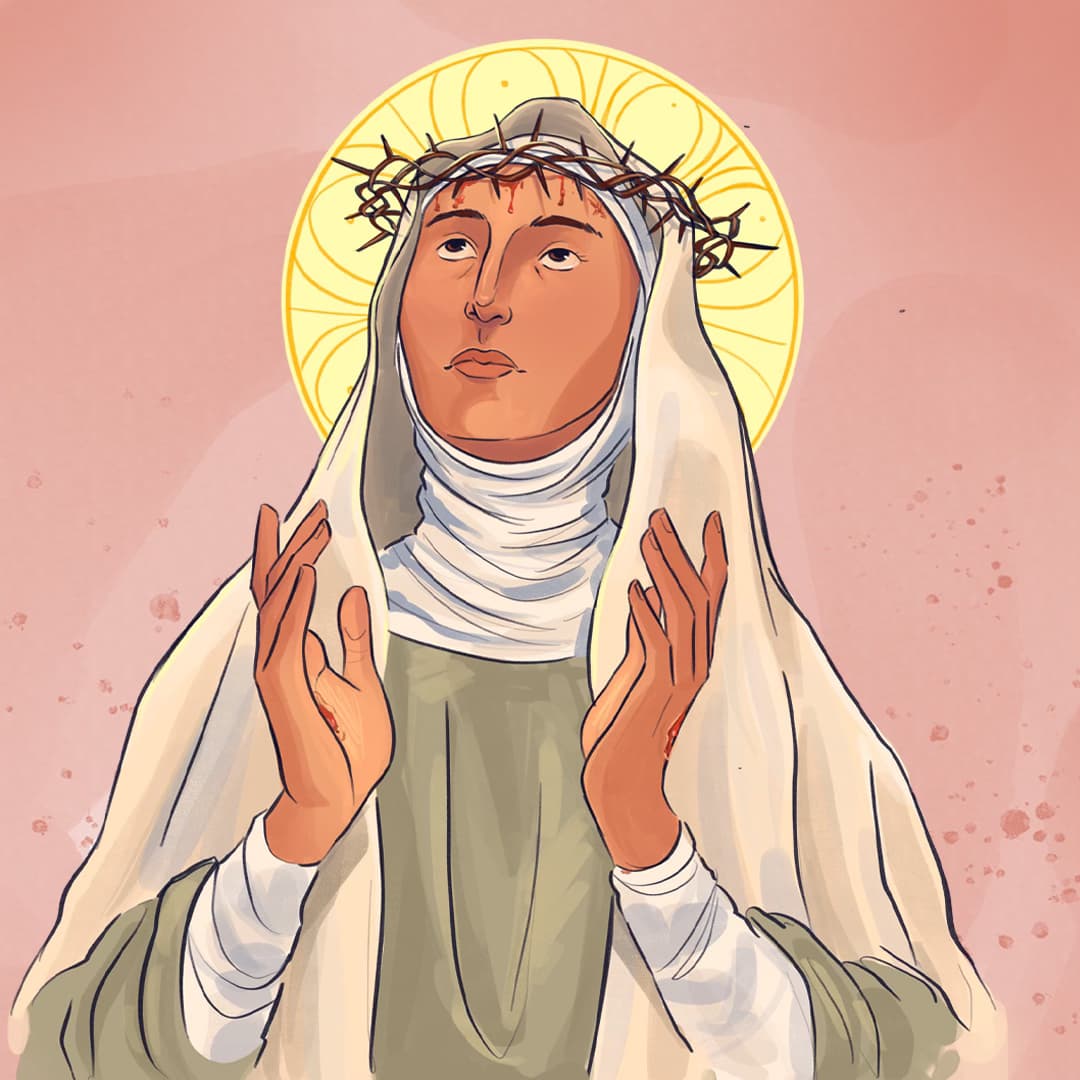
In this episode, we’ll explore the extraordinary life of Saint Catherine of Siena.
Transcript
Read the full transcriptAuto-generated · 776 words
Welcome, young history buffs and curious minds, to My Daily Saint, the podcast that digs deep into the incredible lives of the saints, those remarkable people who shaped history and continue to inspire us today. Forget dusty old portraits and boring stories. Today, imagine looking your parents in the eye and saying, no, I am not going to live the life you planned for me. Imagine growing up to be a person so fearless, so incredibly bold, that you write letters to the most powerful leaders on earth, even the Pope himself, and tell them they need to step up and do their jobs.
This was real, bold life in the 1300s for a young woman who refused to just sit down and be quiet. She fought unseen spiritual battles, she advised politicians, and she changed the course of European history. Saint Catherine of Siena.
Let's set the stage. Catherine was born on March 25, 1347, in Siena, Italy, right in the middle of a massive family. Back in the 14th century, the plan for a young woman was pretty straightforward – you get married. But Catherine had an intense religious drive right from the start, and she firmly resisted her parents' plans for her to marry. She decided to carve out her own totally unique path. She joined the Dominican Third Order, living her life as a laywoman out in the world, dedicating herself to heavy-duty prayer and serving others.
Her spiritual life was fiercely centered on Christ, involving intense fasting, confession, and devotion. She had profound mystical experiences, but she also went through intense spiritual warfare that resulted in her dying. Periods of spiritual dryness and carried a heavy burden of responsibility.
Her inner prayer life was so powerful that it began to overflow into a massive public mission. Soon, she wasn't just praying in her room. She became a trusted counselor to priests, civic leaders, and popes. At this time in history, the Church was dealing with some serious drama. The Pope wasn't even living in Rome. He was living in Avignon, France, and Church politics were all tangled up with European power struggles. Catherine looked at this mess and decided to take action. She started firing off letters to Pope Gregory XI, and these weren't polite little hope-you're-doing-well notes.
Her letters were astonishing. They were reverent, yes, but they were also incredibly direct, bold, and unwilling to flatter him. She treated the Pope like a loving father, but also like a man who was directly accountable to God. She urged him to pack his bags and get back to Rome, and it worked.
But the drama didn't end there. After Pope Gregory returned to Rome and passed away, a huge division called the Great Western Schism erupted. Catherine threw herself into the absolute agony of this division. She wasn't trying to be a slick political strategist. She did this because she truly believed the Church was the mystical body of Christ, and that all this division was a false interpretation of what Jesus was? painful spiritual wound. She pleaded with leaders to choose unity over their factions.
Catherine worked so hard, and did so much penance, that her body simply wore out. She died in Rome on April 29, 1380, at the young age of only 33. But she left behind an incredible legacy, hundreds of those bold letters, and a spiritual masterpiece called The Dialogue. This book was actually written as a direct conversation between God the Father and the And Catherine, during her mystical ecstasies. It focuses on divine providence, obedience, and beautifully describes Christ as a bridge to guide souls to God.
Her writings are so profound that in 1970, she was declared a doctor of the church. Catherine is the patron saint of Italy, Europe, nurses, and of those who are ridiculed for their piety. If anyone ever makes fun of you for taking your faith seriously or praying, Catherine has your back. She proves that sanctity is definitely not the same thing as just being quiet. Catherine also shows us how to combine deep, quiet prayer with incredible public courage. This week, try to practice.
Truth-telling with love, just like her. Maybe you see gossip dividing your friend group at school, or you know someone is doing something hurtful. Spend some time in prayer, then find the courage to speak up. Be direct, be bold, but do it with love and respect, aiming to heal divisions rather than create them. Be the bridge. Thank you for joining us on My Daily Saint. We look forward to sharing another incredible story of faith and courage with you tomorrow.
More from My Daily Saint

Listen Next

September 26: The Troublesome Dominicans
The American Catholic Daily Reader Podcast

Women of Chivalry: The Genius of Courage
The Shield and the Cross
The Virgin of the Poor: Mary's Smile in the Cold of Banneux
Mother's Mantle
Hallowed Hollows: From Hidden Gems to Discovered Treasures
Hollows of the Faithful