In this episode, we’ll explore the meaning behind Divine Mercy Sunday.
Transcript
Read the full transcriptAuto-generated · 912 words
Welcome, young history buffs and curious minds, to My Daily Saint, the podcast that digs deep into the incredible lives of the saints, those remarkable people who shaped history and continue to inspire us today. Forget dusty old portraits and boring stories. Today, imagine the air in the room is so thick you could choke on it. It is Jerusalem, nearly 2,000 years ago. Outside, the city is buzzing with rumors, soldiers, and threats. Inside, a group of men are huddled together in the shadows, terrified.
They have locked the doors tight. They are the apostles, and they are hiding. Why? Because just a few days ago, their leader was executed, and when he needed them most during his passion, almost every single one of them ran away. They abandoned him. Now, they are paralyzed by two things, fear that the soldiers are coming for them next, and a crushing, heavy guilt.
If Jesus did come back, what would he say to them? Would he be angry? Would he demand to know why they left him? Suddenly, He is there. The risen Christ stands among them. He doesn't knock. He doesn't unlock the door. He just appears. The apostles probably flinch, waiting for the scolding they think they deserve. But Jesus doesn't yell. He doesn't list their failures. Instead, He looks at the men who abandoned Him and says the last thing they expect.
Today, we are looking at one of the most powerful celebrations in the Catholic Church, Divine Mercy Sunday. This feast day happens on the second Sunday of Easter, closing out the massive eight-day celebration known as the Octave of Easter. And it connects that locked room in Jerusalem to a convent in Poland nearly 2,000 years later. Let's go back to that locked room.
Jesus showed the apostles his wounds. He greeted them with peace rather than reproach, and right there, he gave them the authority to forgive sins. This moment rooted Mercy right into the heart of the Church's mission. But the story gets even more dramatic when we fast forward to the 20th century. The year is 1931. We are in Pluk, Poland. A young religious sister named Faustina Kowalska is alone in her cell. She belongs to the congregation of the Sisters of Our Lady of Mercy.
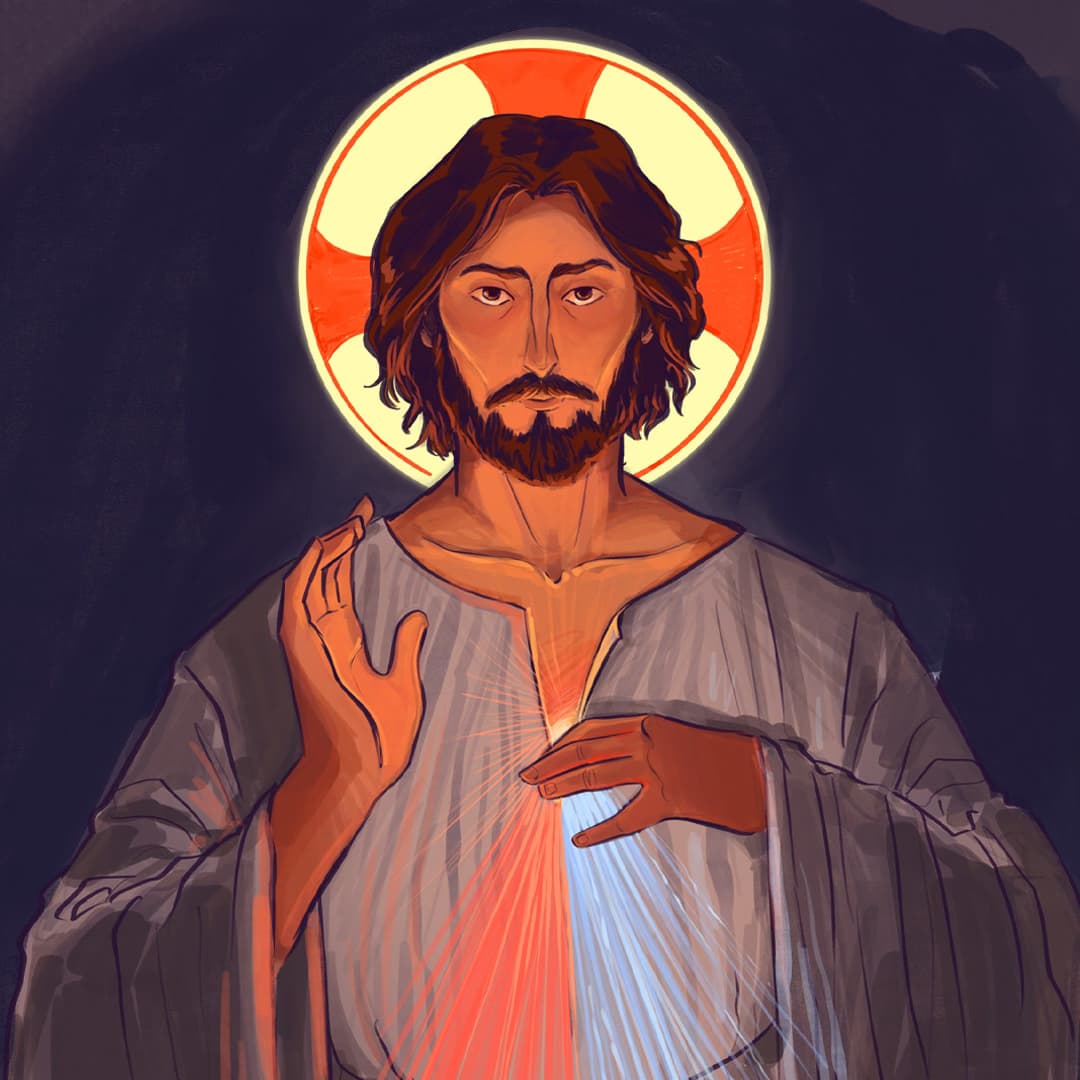
Sister Faustina begins to report incredible experiences, apparitions where she sees Jesus, but he doesn't look exactly like the statues she's used to. In these visions, which lasted from 1931 to 1938, Christ appears with one hand raised in blessing and the other touching his chest. From his heart, two giant rays of light are shining out, one pale and one red.
Jesus explained to Faustina exactly what this meant. The pale ray stands for the water of baptism that makes our souls right with God, and the red ray stands for the blood of the Eucharist, which gives life to the church. He told Faustina that he wanted this image painted and signed with three specific words, Jesus, I trust in you. He called this message of divine mercy his final and definitive appeal to humanity.
So, why do we celebrate this on the Sunday after Easter? It all comes back to the gospel, specifically the story of Doubting Thomas, which we read on this day. Remember Thomas? He wasn't in the locked room the first time Jesus appeared. He famously said he wouldn't believe it until he could touch the wounds himself.
A week after Easter, which is exactly when Divine Mercy Sunday is celebrated, Jesus comes back. He invites Thomas to touch his wounds. He meets Thomas' doubt not with anger, but with patience and condescension, which here means coming down to Thomas' level to help him understand.
The resurrection didn't erase Jesus' wounds. Instead, it transformed them into a source of mercy and faith. Even in the paintings St. Faustina saw, those wounds of the Passion are clearly visible. It's a reminder that mercy flows directly from the sacrifice Jesus made for us.
This feast is actually quite new in the long history of the Church. It was officially established for the Universal Church by St. John Paul II in the year 2000. Pope John Paul II wanted us to understand that forgiveness and trust aren't just sentimental ideas or fluffy feelings. They are the real, concrete ways that the Resurrection heals us and fixes our broken friendship with God.
So, what does this mean for you, right now, today? It means that no matter how much you think you've locked the door on God because of a mistake you made, He can walk right through that wall. Just like He did for the apostles who abandoned Him, He offers peace, not anger.
This week, when you are walking into a test you didn't study enough for, and you're panicking, say, Jesus, I trust in you. When you get into a fight with a friend, and you don't know how to fix it, say, Jesus, I trust in you. When you feel guilty about something you did, say, Jesus, I trust in you. And then, remember that He gave the apostles the authority to forgive sins, which means reconciliation is waiting for you. Mercy isn't about ignoring our mistakes.
It's about trusting that His love is stronger than our faults. Thank you for joining us on My Daily Saint. We look forward to sharing another incredible story of faith and courage with you tomorrow.
More from My Daily Saint

Listen Next

September 26: The Troublesome Dominicans
The American Catholic Daily Reader Podcast

Women of Chivalry: The Genius of Courage
The Shield and the Cross
The Virgin of the Poor: Mary's Smile in the Cold of Banneux
Mother's Mantle
Hallowed Hollows: From Hidden Gems to Discovered Treasures
Hollows of the Faithful