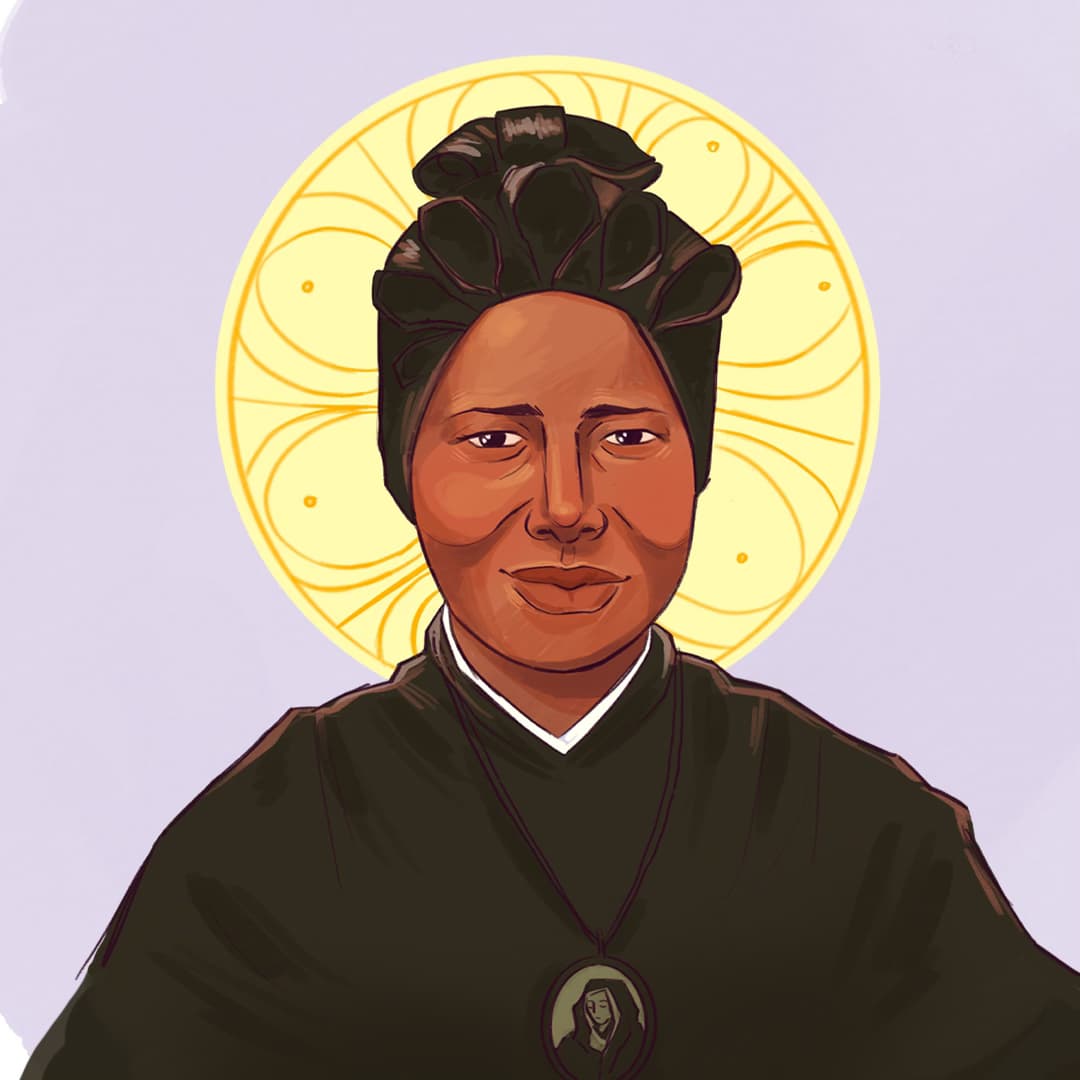
In this episode, we’ll explore the extraordinary life of Saint Josephine Bakhita.
Transcript
Read the full transcriptAuto-generated · 868 words
Welcome, young history buffs and curious minds, to My Daily Saint, the podcast that digs deep into the incredible lives of the saints, those remarkable people who shaped history and continue to inspire us today. Forget dusty old portraits and boring stories. Today, we are traveling to the vast landscapes of Africa and the quiet convents of Italy to meet a woman whose life is, honestly, one of the most shocking and inspiring stories you will ever hear. It begins with a nightmare, but I promise you, it ends with a smile that changed the world.
Imagine looking down at your arm. Now, imagine someone taking a knife and cutting you, not once, not twice, but 114 times. And just to make sure the scars never faded, they poured salt into the open wounds. But this woman, who bore the scars of torture all over her body, is now known as the patron saint of Sudan and human trafficking survivors.
Her name is St. Josephine Bakhita, and her story is absolutely unforgettable. Josephine was born in 1869 in a small village in the Darfur region of Sudan. She wasn't born a slave. She was a happy child with a family who loved her.
But one day, while she was just a young girl working in the fields with her family, her life was shattered. Kidnappers snatched her. She was taken away from everything she knew, and sold into slavery. The trauma was so severe, so terrifying, that when her captors asked for her name, she couldn't answer.
So, in a cruel twist of irony, her captors gave her a new name. They called her Bakita, which in Arabic means fortunate. Fortunate? She was passed around to different owners who beat her, branded her, and treated her like property. It seems like the worst name possible for someone in her situation.
But Bakhita had a secret strength. Even before she knew who Jesus was, she had a natural sense of wonder. She would look up at the sky, seeing the sun, the moon, and the stars, and she would think to herself, Who could be the master of these beautiful things? She felt a deep desire to know this master and pay him homage, even while she was suffering. Eventually, the fortunate nature of her name started to come true in a way her kidnappers never expected.
The Italian consul of Khartoum, the capital of Sudan, bought her. This was the turning point. He didn't treat her like the others. He took her to work as a nanny for a man named Augusto Michielli. When Michielli's family moved, Josephine Bikita traveled with them. She accompanied Michielli's daughter to a school in Venice, Italy, run by the Canossian sisters.
And that is where the girl who looked at the stars finally found out who made them. Josephine experienced a massive conversion and was baptized. But the drama wasn't over. Michelli eventually wanted to take his daughter and Josephine back to Sudan.
Josephine knew what that meant, leaving her new faith and her freedom behind. So, she did something incredibly brave. She refused to return. The conflict was so intense, it went all the way to the Italian courts. Can you imagine standing in a courtroom, fighting for your own life against powerful people?
The court looked at the facts. Slavery was not recognized in Italy, and by that time, it had actually been illegal in Sudan for a long time. The judge ruled that Josephine was a free woman. Josephine Bikitha was free. She decided to give her life to the Master of the Stars she had wondered about as a child. She entered the Canassian religious order in 1893 and made her profession as a nun in 1896.
She was sent to northern Italy, where she spent the rest of her life serving her community faithfully. Josephine Bikitha was known for her smile, her gentleness, and her holiness. And then, she said something that shocks people to this day. She said, If I were to meet the slave traders who kidnapped me, and even those who tortured me, I would kneel and kiss their hands. For if that did not happen, I would not be a Christian and religious today.
Wow! She said she would kiss their hands. She realized that even through the horror of her kidnapping, God had led her to freedom and faith. Josephine died in 1947. In the year 2000, Pope Saint John Paul II canonized her. Making her the first person to be canonized from Sudan.
It's easy to hold grudges. Think of one person who has been unkind to you, or who is difficult to deal with. You don't have to go and kiss their hands like Josephine would. That might be a little weird. Instead, offer a genuine smile or a kind word to someone you don't think deserves it. If Saint Josephine could forgive the men who stole her freedom and scarred her skin, we can definitely find the strength to smile at someone who annoyed us. Thank you for joining us on My Daily Saint. We look forward to sharing another incredible story of faith and courage with you tomorrow.
More from My Daily Saint

Listen Next

September 26: The Troublesome Dominicans
The American Catholic Daily Reader Podcast

Women of Chivalry: The Genius of Courage
The Shield and the Cross
The Virgin of the Poor: Mary's Smile in the Cold of Banneux
Mother's Mantle

Hallowed Hollows: From Hidden Gems to Discovered Treasures
Hollows of the Faithful