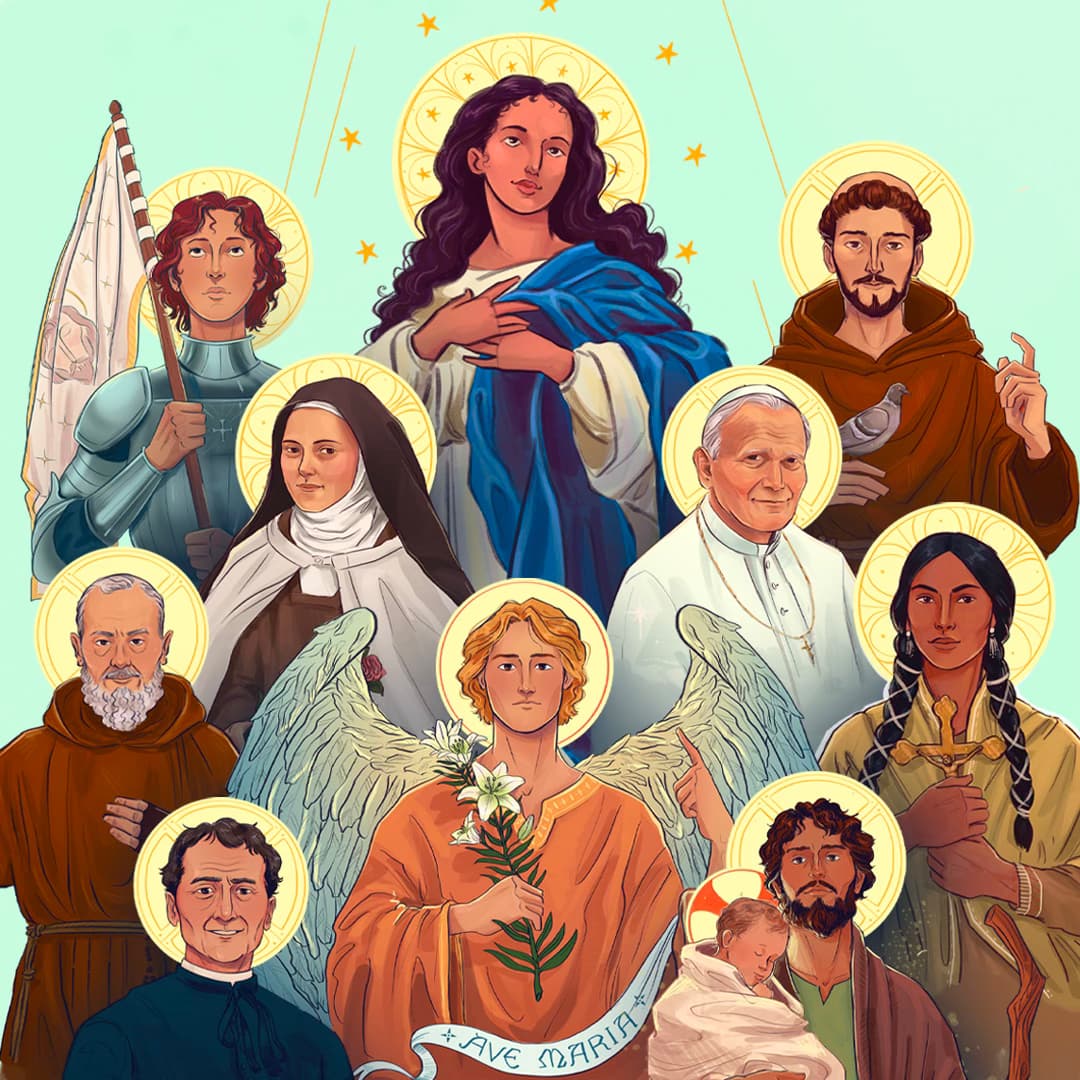
In this episode, we’ll explore the extraordinary life of Saint Methodius I of Constantinople.
Transcript
Read the full transcriptAuto-generated · 975 words
Welcome, young history buffs and curious minds, to My Daily Saint, the podcast that digs deep into the incredible lives of the saints, those remarkable people who shaped history and continue to inspire us today. Forget dusty old portraits and boring stories. Today, imagine stepping into the most beautiful ancient church you've ever seen. It's covered floor to ceiling in glittering, colorful mosaics of Jesus, Mary, and the saints. But suddenly, imperial soldiers burst through the doors. They have hammers, axes, and torches. They aren't there to pray.
They are there to destroy. They smash the mosaics, burn the paintings, and arrest Anyone who tries to stop them. This wasn't an invasion by a foreign enemy. This was ordered by the Christian emperor himself. It was a terrifying period known as the Byzantine Iconoclast Crisis. In fact, the word iconoclast literally means image smasher. But in the middle of this chaos, one man stood up to the empire. He threw away a life of wealth, defied the emperor, and was thrown into the dark shadows of a terrible prison.
His name was St. Methodius I of Constantinople. Methodius was born between the years 788 and 800 in Syracuse, Sicily. He didn't start out as a rugged, suffering prisoner. He was born into a very wealthy family. As a young man, he was sent to the capital city, Constantinople, to get an elite education. His family likely expected him to get a fancy, high-paying job working in the royal court, but Methodius had a different plan. The glamorous life of the royal court just didn't appeal to him.
Instead, he was drawn to the quiet, intense life of a monk. He joined up with the circle of the patriarch Nicephorus, a prominent leader who strongly supported the veneration of holy images. So, why were people fighting over paintings? It sounds crazy today, right? But back then, this wasn't just an argument about art. It was an argument about who Jesus really is. The iconoclasts, the image smashers, believed that painting God was a sin of idolatry, but Methodius and his allies argued something profound.
If Jesus, the Son of God, truly took on human flesh and became a physical man, then he would have been a man of God. Then the church can depict him. Methodius knew that if you smash images and say matter is evil, you are basically denying that the word truly became flesh. By the year 815, things had gotten incredibly dangerous. A new ruler, Emperor Leo V, cranked up the persecution against anyone who loved sacred images. Methodius was positioned right at the heart of the resistance.
He was sent as a diplomat to Rome, working at the highest levels of the church to fight back against the emperor's policies. But when Methodius bravely returned to the east, the authorities were waiting for him. He was arrested and severely punished by the iconoclast government. Under the emperors that followed, the pressure only got worse.
Methodius was thrown into prison and sent into exile. At times, he completely disappeared into the shadows of detention. He suffered so terribly for his beliefs that he earned the title Confessor of the Faith, a special term for someone who endures extreme torture and suffering for Christ without actually dying as a martyr.
But Methodius survived. He outlasted his persecutors. When Emperor Theophilus died, his widow, Empress Theodora, took over as regent for her young son. And Empress Theodora said, enough is enough. In the year 843, she completely reversed the iconoclast policy. Sacred art was legal again. This massive victory is still celebrated every single year in the Eastern Church as the triumph of orthodoxy. That same year, our heroic survivor, Methodius, was appointed as the Patriarch of Constantinople.
But here is where Methodius shows us what a true saint looks like. He faced a second, incredibly difficult challenge, keeping the church from tearing itself apart. Think about it. Methodius and his friends had been tortured, imprisoned, and exiled for decades. Now they were in charge. Many of the survivors wanted revenge. They demanded harsh punishments for the people who had locked them up.
But Patriarch Methodius said no. He refused to turn their triumph into a vendetta. Instead, he worked tirelessly to restore unity and discipline in the church. He forgave his enemies and made sure the return of the icons was celebrated as a victory for Jesus taking on human flesh, not just a political win. He spent his final years writing sermons and letters before passing away on June 14, 847.
Because of his incredible bravery and his peacemaking, St. Methodius I is recognized today as the patron saint of defenders of sacred images, those persecuted for their fidelity to the faith, and pastors working for ecclesial unity. Have you ever been in a fight with a friend or a sibling, and you turned out to be completely right? What did you do when you won? Did you rub it in their face? Did you try to get revenge for how they treated you? Your challenge today is to be a peacemaker like Methodius.
The next time you win an argument or overcome an unfair situation, don't turn your victory into a vendetta. Use your victory to build a bridge. Show forgiveness and restore unity. And while you're at it, take a look around your room. Do you have a crucifix, a picture of Jesus, or a holy card? Methodius went to a dark dungeon so you could have those physical reminders of God's love. Take a second today to look at a holy image and thank God that he loved us enough to take on human flesh. Thank you for joining us on My Daily Saint. We look forward to sharing another incredible story of faith and courage with you tomorrow.
More from My Daily Saint

Listen Next

September 26: The Troublesome Dominicans
The American Catholic Daily Reader Podcast
Women of Chivalry: The Genius of Courage
The Shield and the Cross
The Virgin of the Poor: Mary's Smile in the Cold of Banneux
Mother's Mantle
Hallowed Hollows: From Hidden Gems to Discovered Treasures
Hollows of the Faithful