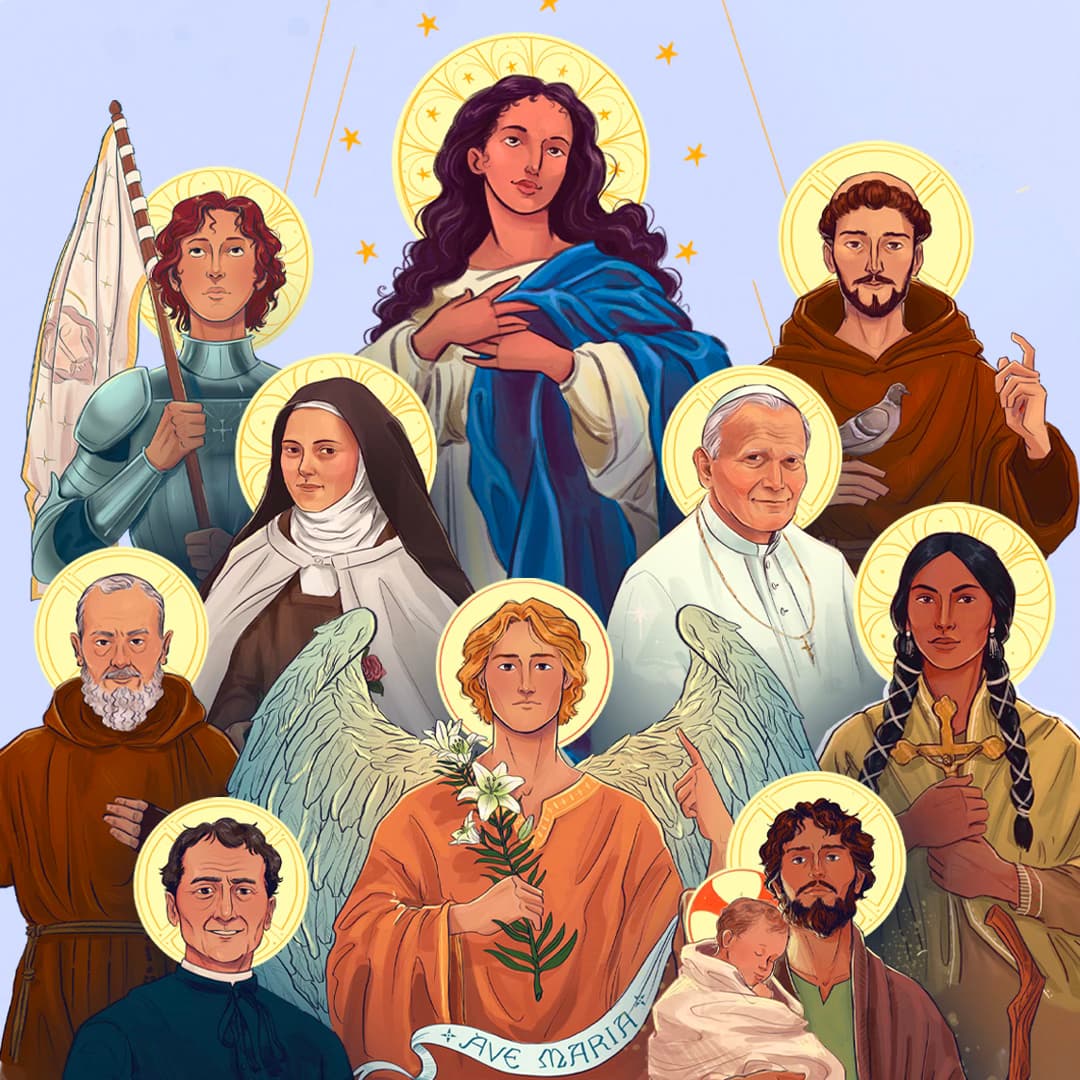
In this episode, we’ll explore the extraordinary life of Saint John Francis Regis.
Transcript
Read the full transcriptAuto-generated · 786 words
Welcome, young history buffs and curious minds, to My Daily Saint, the podcast that digs deep into the incredible lives of the saints, those remarkable people who shaped history and continue to inspire us today. Forget dusty old portraits and boring stories. Today, imagine it's the dead of winter in the jagged, freezing mountains of France. The year is 1640. A massive blizzard is raging, burying the dirt roads in thick, impassable snow.
But out in the white-out conditions, a lone figure in a simple black Jesuit cassock is fighting his way through the howling storm. He has no horse, no heavy winter coat, just a wooden walking staff, his rosary, and a burning, unstoppable desire to reach an isolated mountain village. His friends had begged him not to go, warning him that the freezing temperatures and dangerous roads could kill him. But he refused to slow down or turn back. Absolutely convinced that the isolated souls in that remote town needed him far more than his own exhausted body needed rest.
This unstoppable force of nature is St. John Francis Regis, a man who literally walked himself to death for the sake of others. John Francis Regis was born into a respected Catholic family in southern France on January 31, 1597.
He grew up in an incredibly turbulent period of French history. The fierce and bloody wars of religion had just recently ended, and the deep wounds in society were still painfully fresh. Whole regions of France were left spiritually neglected, and faith was still a hotly contested territory. At the age of 18, he entered the Society of Jesus, a religious order better known as the Jesuits.
He was drawn in by their strict discipline and their fearless missionary spirit. Jesuit training was incredibly demanding, requiring years of intense study, deep prayer, and total obedience. Regis proved himself to be highly intelligent and capable, and he was ordained a priest in 1630 to really begin his hands-on pastoral work.
Regis was assigned to preach missions in rural France. This was a task that demanded constant travel, insane physical endurance, and the willingness to live with absolutely no comforts whatsoever. The regions he served were deeply impoverished, bitterly divided, and often completely indifferent to religion because moral life had deteriorated after decades of conflict.
So, what did Regis do? He hit the road. He traveled entirely on foot, hiking from town to town. He spent his days preaching, hearing confessions, teaching catechism, and stepping right into the middle of conflicts to reconcile bitter enemies. When he spoke to the crowds, he didn't use fancy, complicated words or rhetorical flourishes. He spoke plainly and directly, but with such incredible conviction that massive crowds would gather just to listen. They didn't come to be entertained. They came because they knew that he truly believed every single word he said.
Regis rolled up his sleeves and cared intensely for his people. He stepped in to establish safe shelters for women who were in desperate danger of falling into prostitution. He found honest work for the unemployed and organized critical assistance for prisoners stuck in awful conditions.
One of his most lasting and famous works was helping poor, vulnerable girls find safe employment in the lace-making trade, fiercely protecting them from exploitation. Because of this amazing work, he later became the patron saint of lace-makers. He is also the patron saint of missionaries, social workers, the poor, illegitimate children, and those seeking conversion.
Regis traveled in the harshest weather, slept wherever he could find a spot, and ate whatever scraps were available. He intentionally chose to go on his hardest missions during the brutal winters because he knew that was when the remote mountain villages were the most isolated.
Tragically, his life ended exactly the way he lived it, out on the road. In December 1640, completely exhausted and terribly ill with a fever, he refused to quit and continued traveling into the mountains to preach. He arrived in the town of Lelouvesk right in the middle of severe winter weather, collapsed from his fever, and died on December 31st when he was only 43. Today, look around your classroom or your neighborhood. Who is sitting alone? Who is being ignored, left out, or treated like they are invisible?
You don't have to walk through a freezing snowstorm, but you can walk across the room. Go sit with them. Say hello. Put aside your own comfort or desires for just a few minutes today to make sure someone else knows they are seen and valued. Thank you for joining us on My Daily Saint. We look forward to sharing another incredible story of faith and courage with you tomorrow.
More from My Daily Saint

Listen Next

September 26: The Troublesome Dominicans
The American Catholic Daily Reader Podcast

Women of Chivalry: The Genius of Courage
The Shield and the Cross
The Virgin of the Poor: Mary's Smile in the Cold of Banneux
Mother's Mantle
Hallowed Hollows: From Hidden Gems to Discovered Treasures
Hollows of the Faithful