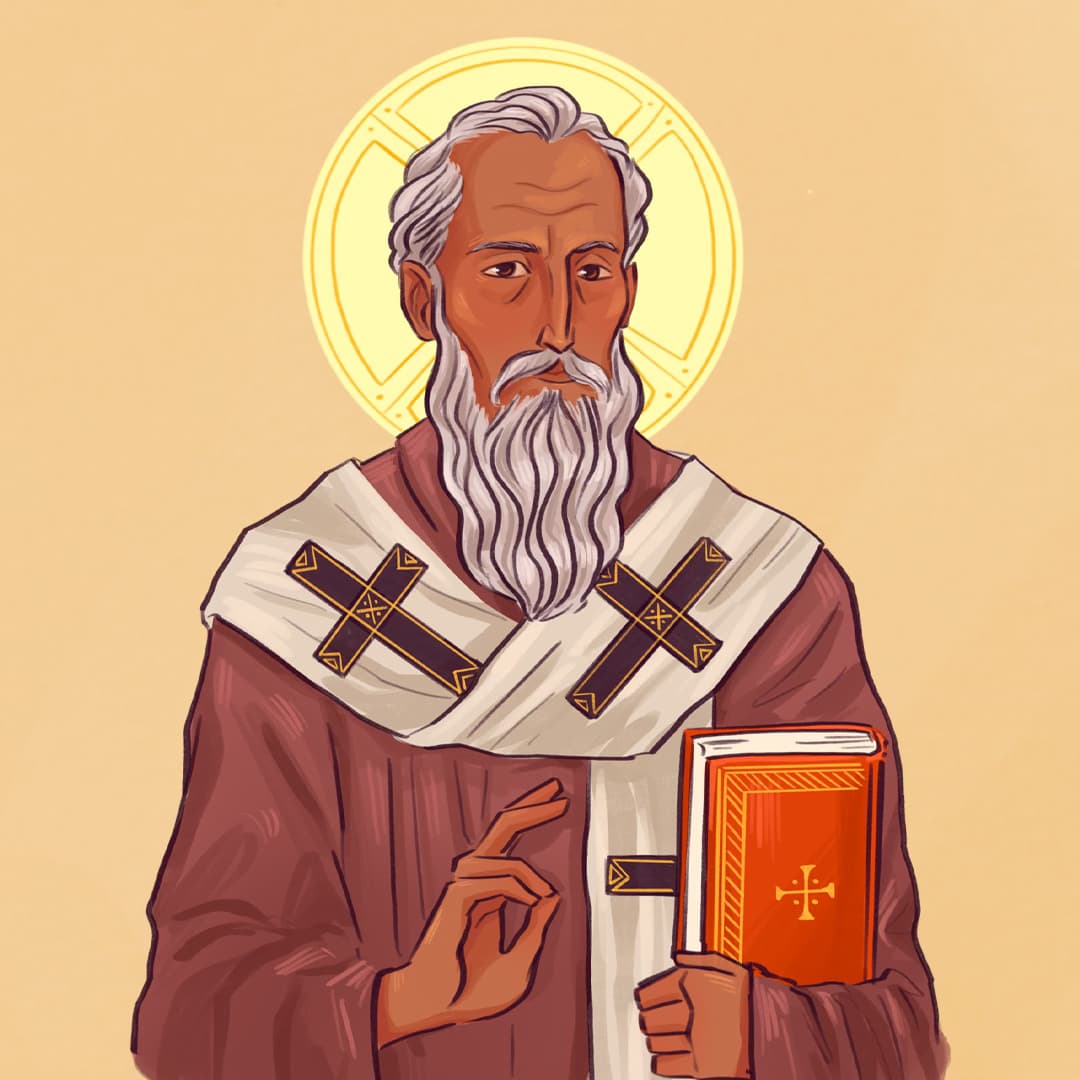
In this episode, we’ll explore the extraordinary life of Saint Athanasius.
Transcript
Read the full transcriptAuto-generated · 891 words
Welcome, young history buffs and curious minds, to My Daily Saint, the podcast that digs deep into the incredible lives of the saints, those remarkable people who shaped history and continue to inspire us today. Forget dusty old portraits and boring stories. Today, we're journeying back to a time of emperors and empires, to a world where the very nature of God was being fiercely debated.
Imagine a world on the brink of spiritual chaos, where a dangerous idea threatened to unravel the fabric of Christian society. In the midst of this turmoil, a young man rose, a fearless defender of truth, who would be able to change the world. He would be able to change the world, and he would Exiled? Not once, not twice, but five times for what he believed.
Picture this. It's the fourth century. The Roman Empire, though powerful, is wrestling with new ideas and beliefs. And within the burgeoning Christian community, a storm is brewing. A charismatic and persuasive preacher named Arius has begun to spread a shocking teaching—that Jesus Christ, while the highest of all created beings, was not truly divine. This idea, known as Arianism, was like a wildfire. Threatening to consume the early church.
But standing firm against this blaze was a man with the spirit of a lion and the wisdom of a scholar, Athanasius. Born in the vibrant Egyptian city of Alexandria around the year 296 to devout Christian parents, this young man received the best education of his time. This bright young mind caught the attention of the Bishop of Alexandria, a holy man now known as Saint Alexander.
Alexander became not just Athanasius' tutor, but his friend, guiding him in the ways of faith. But our young hero wasn't content with just books and lectures. When Athanasius was 19, he went to live in the Egyptian desert with one of the most legendary figures of early Christianity, Saint Anthony of the Desert. There, he spent time in stark silence, the intense prayer, the wrestling with temptation. Experiences that strengthened him for the battles to come.
When he returned from the desert, Athanasius was ordained a deacon in 319. His sharp intellect and unwavering faith made him an invaluable asset to Bishop Alexander, serving as his secretary. It was around this time that Athanasius penned his first major theological work, a powerful defense of Christ's divinity called On the Incarnation, taking aim at the dangerous teachings of Arianism.
By the year 325, the controversy over Arianism had reached a boiling point, causing turmoil throughout the church and even the Roman Empire. Recognizing the grave danger, Bishop Alexander, with the fiery support of Athanasius, rallied against the heresy. Together, they traveled to the momentous Council of Nicaea, a gathering of bishops from all over the world. In this historic assembly, Arianism was condemned, and the foundational beliefs about the divinity of Jesus Christ were solidified in what we now know as the Nicene Creed, a creed that Catholics still recite every Sunday.
Athanasius, though still a young deacon, was a powerful voice in these crucial debates. Just a few years later, in 328, Bishop Alexander passed away, and the mantle of leadership fell upon our courageous hero, and Athanasius became the Bishop of Alexandria. But the condemnation at Nicaea hadn't silenced the Arian movement. It continued to rage, and Athanasius stood as an unyielding wall against it, refusing to compromise the core beliefs of the church. This unwavering stance earned him the Bitter opposition of powerful figures who supported Arianism.
Through false accusations and political maneuvering, Athanasius was unjustly exiled, not just once, but five times. Imagine being forced to leave your people, your city, your home, simply for standing up for what you believe is true. Athanasius' resilience was incredible, his faith unshakable. Even in exile, he continued to write and preach, tirelessly reaffirming the divinity of Christ. He was a beacon of truth in a time of confusion, a shepherd who would not abandon his sheep. In total, he spent a staggering 17 years in exile.
Saint Athanasius died in Alexandria in the year 373. For his unwavering defense of the faith and his profound theological contributions, St. Athanasius is recognized as one of the Doctors of the Church, a title given to saints whose teachings have greatly shaped Christian doctrine. Because of his tireless work in defending the central beliefs of Christianity, St. Athanasius is the patron saint of theologians and faithful Orthodox and Roman Catholic Christians.
So, what can we learn from the dramatic life of St. Athanasius? We might not be battling ancient heresies or facing exile, but his courage in standing up for what he believed in, even when it was difficult and unpopular, is something we can all apply to our lives today.
Just like Athanasius refused to be swayed by false accusations or give up on his convictions, we too can strive to stand up for what is right. Even when it's hard, and to hold firm to our values and beliefs, even when others disagree.
His life reminds us that true strength lies not just in physical power, but in the power of conviction and unwavering faith. Thank you for joining us on My Daily Saint. We look forward to sharing another incredible story of faith and courage with you tomorrow.
More from My Daily Saint

Listen Next

September 26: The Troublesome Dominicans
The American Catholic Daily Reader Podcast

Women of Chivalry: The Genius of Courage
The Shield and the Cross
The Virgin of the Poor: Mary's Smile in the Cold of Banneux
Mother's Mantle

Hallowed Hollows: From Hidden Gems to Discovered Treasures
Hollows of the Faithful