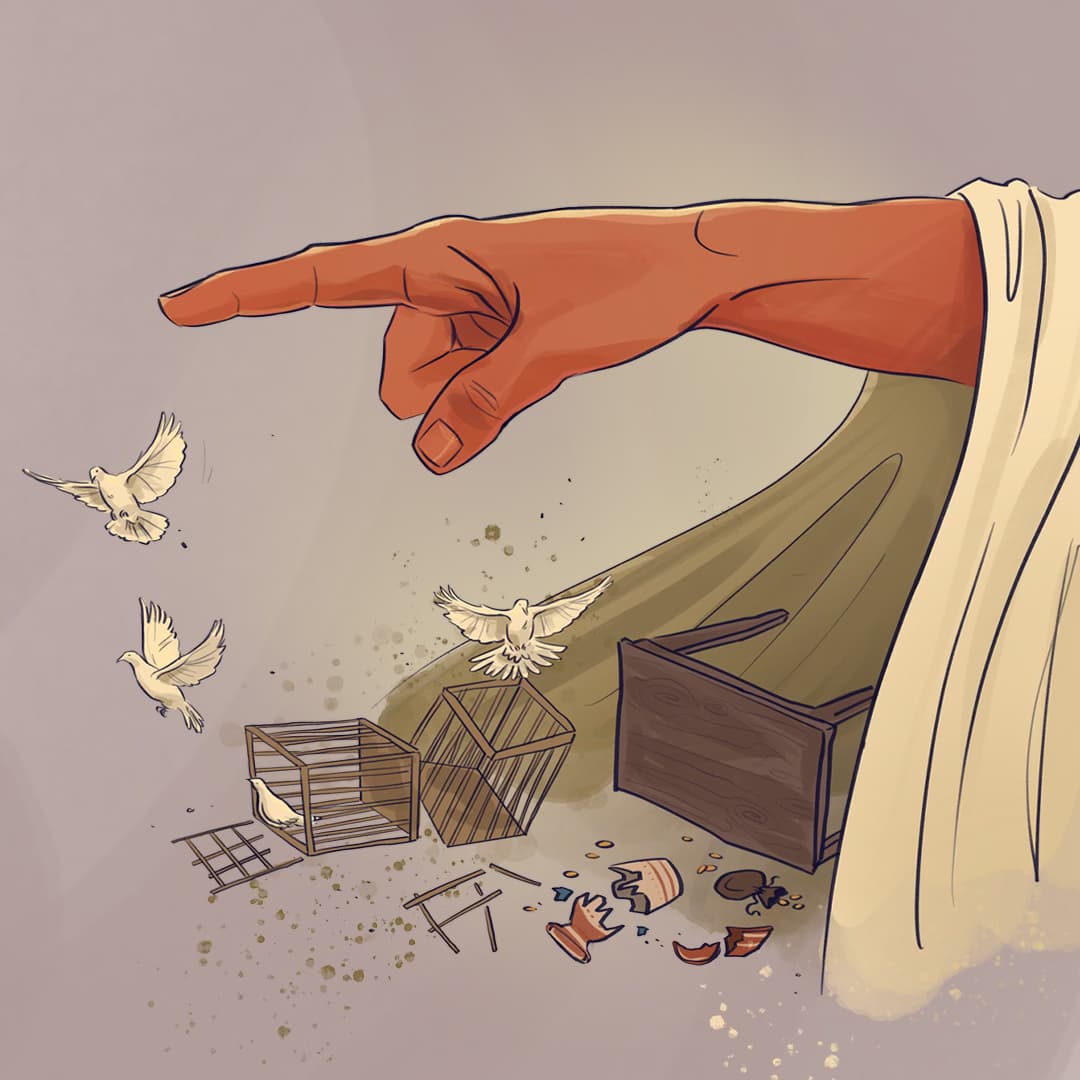
In this episode, we’ll explore the meaning behind the Monday of Holy Week.
Transcript
Read the full transcriptAuto-generated · 853 words
Welcome, young history buffs and curious minds, to My Daily Saint, the podcast that digs deep into the incredible lives of the saints, those remarkable people who shaped history, and continue to inspire us today. Forget dusty old portraits and boring stories. Today, we are walking into a room so tense you could cut the air with a knife. Imagine you are a teenager living in the suburbs of a major capital city, but the capital isn't safe. In fact, it's a death trap.
We are traveling back to a specific Monday, the Monday of Holy Week. The setting is Bethany, a small village just outside of Jerusalem. The air is thick with rumors. In the big city, there is mounting hostility against a man named Jesus of Nazareth. The authorities want him gone. It is dangerous to be seen with him. It is dangerous to be him.
But here, in Bethany, six days before the Passover, Jesus isn't hiding in a cave. He is at a dinner party. And this isn't just any house. This is the home of Lazarus, the man Jesus literally raised from the dead. You're sitting at a table with a guy who was in a tomb a little while ago, and the man who brought him back to life. It is an intimate and domestic setting, a safe haven standing in deliberate contrast to the violence brewing just down the road in Jerusalem.
But tonight, the drama doesn't come from the soldiers outside. It comes from a woman inside. A woman who does something so shocking, so awkward, and so expensive that it stops the conversation cold. Her name is Mary of Bethany. John chapter 12 tells us that during this meal, Mary does something unexpected. She doesn't just pass the bread. She brings out a jar of nard. This is costly perfume. In the ancient world, a jar like this represented a year's worth of wages.
Mary approaches Jesus. She breaks the seal. She pours this pure, strong perfume not on his head, but on his feet. And then she does the unthinkable. She wipes his feet with her hair. For a Jewish woman in that time, letting your hair down in public was scandalous. It was private. It was vulnerable. But Mary doesn't care about the social rules. The smell of the perfume fills the entire house, overpowering the smell of the food. It is a moment of total, reckless love.
But not everyone likes it. Judas Iscariot, one of the apostles, looks at this puddle of expensive perfume on the floor, and he gets angry. He immediately criticizes Mary. He asks, why wasn't this perfume sold and the money given to the poor? On the surface, Judas sounds like a good guy, right? He sounds responsible. He is using moral language, talking about charity and the poor. But the story tells us that this is a mask. Judas is cloaking his objection in concern for the poor, but really, he is hiding his own self-interest.
This is the central tension of Holy Week right here in this living room. Genuine love versus calculated piety. Judas is doing the math. He is thinking about efficiency. Mary isn't doing math. Her gesture is neither practical nor efficient, but it is personal and total. Jesus intervenes. He shuts Judas down. He publicly defends Mary, saying, leave her alone. Jesus interprets her action in a way that likely sent a chill down everyone's spine. He interprets her action as an anticipation of his burial.
While everyone else is eating and laughing, trying to ignore the death threats in Jerusalem, Mary is the only one who really gets it. She knows time is short. She knows Jesus is walking toward his death. And she decides that nothing, not money, not dignity, not social awkwardness, is worth holding back.
We live in a world that loves to be efficient. We like to ask, what do I get out of this, even when it comes to our faith? We ask, why should I pray if I don't feel anything? Or, why go to church if it's boring? Mary challenges us to do the opposite. Your mission today is to waste time on God. Mary's gift was excessive. It didn't accomplish anything practical. It didn't feed anyone or build a house. It was just an act of love.
Today, take 15 minutes. Don't listen to a podcast. Don't do homework. Don't text your friends. Go into your room, shut the door, and just sit with God. Read a chapter of the Gospels, or just pray. Your brain, the Judas part of your brain, might say, this is a waste of time. You could be doing something useful. Ignore it. Be like Mary. Offer love that is freely given. Do something that is personal and total. Because sometimes the most important thing you can do is pour out your time at the feet of Jesus without counting the cost. Thank you for joining us on My Daily Saint. We look forward to sharing another incredible story of faith and courage with you tomorrow.
More from My Daily Saint

Listen Next

September 26: The Troublesome Dominicans
The American Catholic Daily Reader Podcast

Women of Chivalry: The Genius of Courage
The Shield and the Cross
The Virgin of the Poor: Mary's Smile in the Cold of Banneux
Mother's Mantle

Hallowed Hollows: From Hidden Gems to Discovered Treasures
Hollows of the Faithful