Join us for a story of faith and courage in America on this episode of the American Catholic Daily Reader podcast.
Transcript
Read the full transcriptAuto-generated · 435 words
Welcome to the American Catholic Daily Reader podcast. Today is January 29th, and our story is The Poet of the Angelus. Fame found Edgar Allan Poe late. On January 29, 1845, four years before his death, and fourteen long years after he began attempting to earn his living as a writer, The Raven was published in the New York Evening Mirror. It was an overnight sensation, and Poe, suddenly, a household name. Its success, however, did little for Poe in his lifetime. He made almost no money from the poem, and he took little consolation in the applause.
His beloved wife, Virginia, was dying of tuberculosis, his debts were mounting, and his reputation as a hard drinker made it difficult for him to find steady work as an editor and critic. Not long after the publication of The Raven, Poe and Virginia moved to a small cottage in Brooklyn.
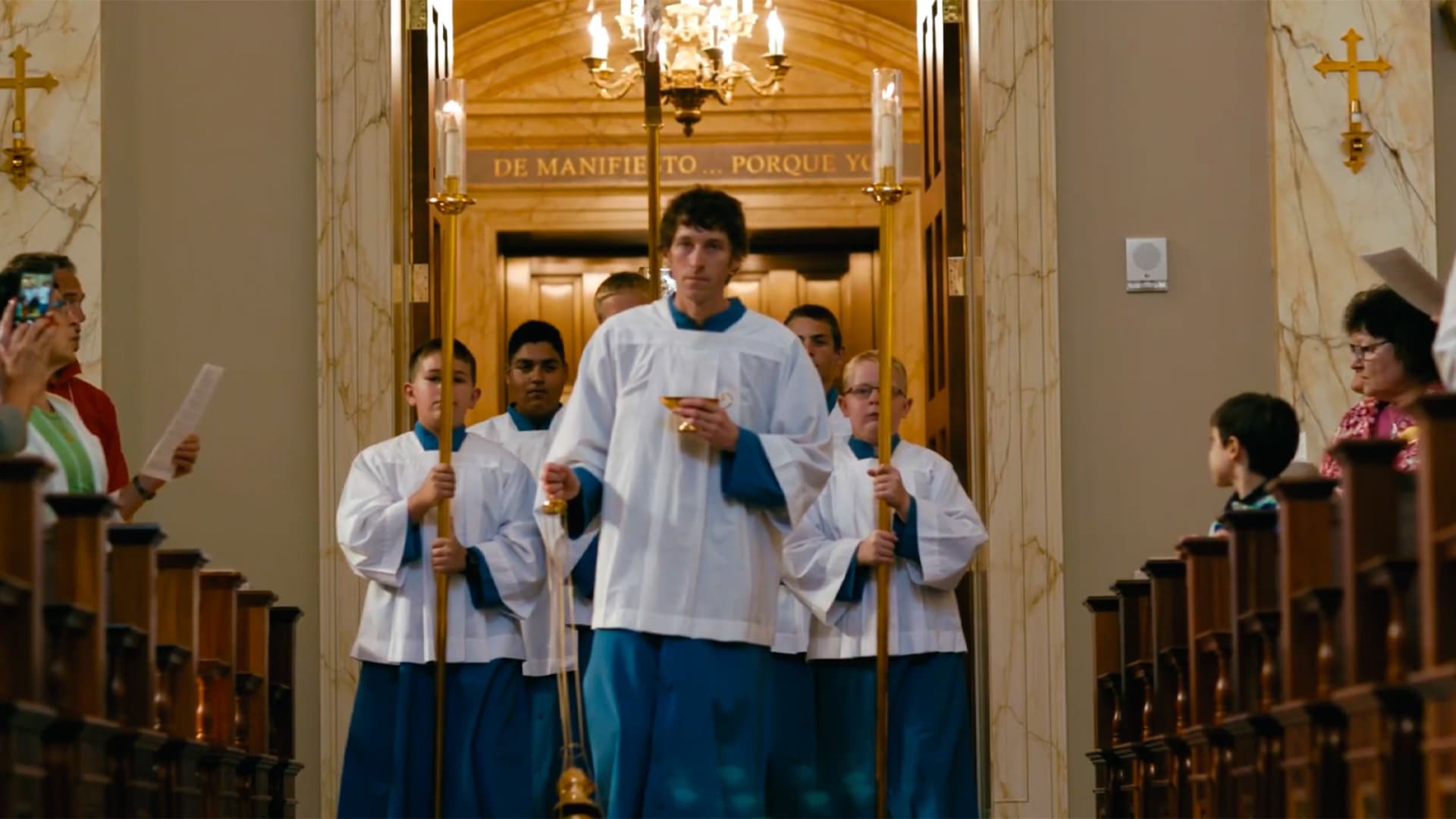
Following her death in 1847, Poe befriended his neighbors, the Jesuits of St. John's College, the future Fordham University. There, the father of the modern detective story spent long nights in conversation with the mostly French fathers, and when he couldn't bear the thought of returning home to an empty house, he would remain with the priests at the After the 40-year-old poet died in 1849 under mysterious circumstances, those Jesuits continued to pray for Poe's soul. That soul never embraced the Catholic faith, but as his poem, Hymn of the Angelus, attests, It was touched by the faith's beauty, nevertheless.
At morn, at noon, at twilight dim, Maria, thou hast heard my hymn. In joy and woe, in good and ill. Mother of God, be with me still. When the hours flew brightly by and not a cloud obscured the sky, my soul, lest it should truant be, thy grace did guide to thine and thee. Now, when the storms of fate overcast, darkly my present and my past, let my future radiant shine with sweet hopes of thee and thine. Poe's life illustrates that faith's influence often operates quietly, behind the scenes.
While he never fully embraced Catholicism, his poem, Hymn of the Angelus, shows the resonance of spiritual reflection even amidst personal turmoil. Poe's story encourages us to consider how our environment, mentors, and the communities we engage with influence our growth, even in subtle or unseen ways.
This week, work to cultivate or find spaces and relationships in your own circle that encourage virtue, reflection, and inspiration. Thank you for listening to the American Catholic Daily Reader podcast. Join us tomorrow, January 30th, for another story of faith and courage in America.