At the end of the famous Camino de Santiago, pilgrims who have walked the journey find themselves in the presence of the remains of St. James the Greater, Apostle of Jesus, and have a unique opportunity for veneration.
Transcript
Read the full transcriptAuto-generated · 404 words
If today, millions of pilgrims from every corner of the globe walk for weeks through sun and rain, along paths that cross mountains and plains, it is to arrive here, before the relics of St. James the Greater, preserved in the Cathedral of Santiago de Compostela in Spain.
According to tradition, following James' martyrdom in Jerusalem in 44 AD, his disciples brought his body by sea to the coasts of Galatia. His remains were interred in a place that remained hidden for centuries, until, in the 9th century, a mysterious light guided a hermit to the discovery of the tomb. From that moment, one of the greatest sanctuaries in Christendom was born.
Today, the relics are kept in a splendid silver urn, located in the crypt beneath the cathedral's main altar. There, pilgrims pause in silence, kneeling before the Apostle's sepulcher, after a journey that is never just physical, but always spiritual.
But before arriving at the crypt, there is a gesture that has now become a universal symbol of the pilgrimage, the embrace of the Apostle. After days or weeks of walking, across dusty trails and through silent villages, pilgrims finally reach the Cathedral of Santiago. Before them stands the great statue of St. James, which watches over the crypt where his relics are preserved.
Here, the most intense moment takes place. They embrace him, clasping him from behind, a gesture that encapsulates gratitude, hardship, and hope. The relics of St. James are not just bones enclosed in a reliquary. They are the concrete testimony of an apostle who gave his life for Christ, and who continues to generate faith even today.
For the faithful, kneeling before his urn means feeling part of a greater history, a path that links centuries and different generations. Every year, on July 25th, the feast day of St. James, the sanctuary explodes with light and joy.
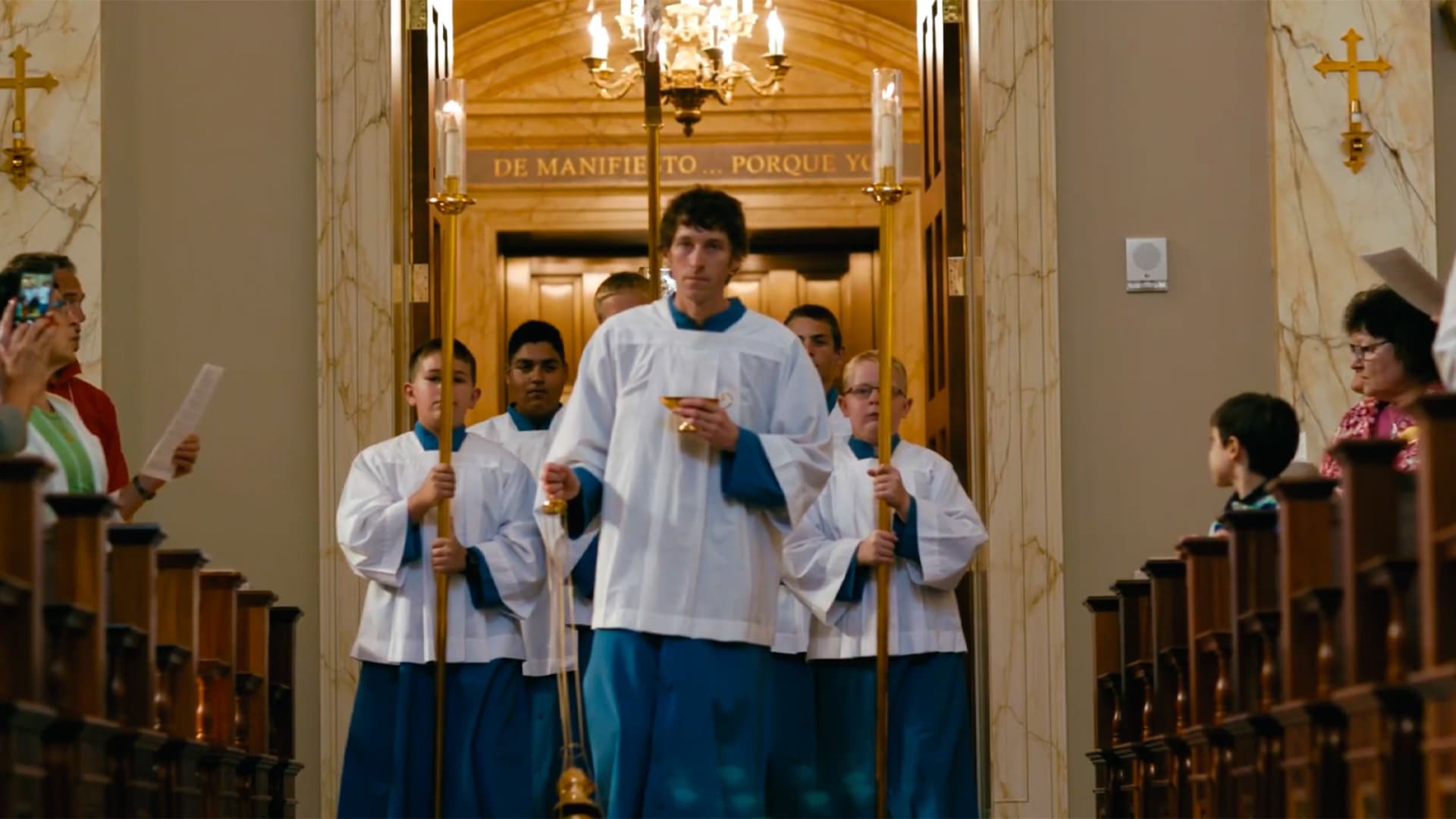
It is on that day that pilgrims and the faithful can experience the culmination of devotion, with the grand liturgy before the urn and the majestic Botafumero, the gigantic thurible that spreads incense like a fragrant river through the cathedral's naves.
Arriving at St. James' crypt and pausing before his relics means more than reaching a destination. It is an encounter. It is the embrace of an apostle who has ideally walked beside every pilgrim along the entire journey, and who continues to guide the steps of those who seek God.