5 things Catholics should watch for in Christopher Nolan’s ‘The Odyssey’
A new episode of Zeale’s “The Deep” looks beyond the casting controversies to examine what Nolan’s blockbuster says about heroism, guilt, homecoming, and the moral order.
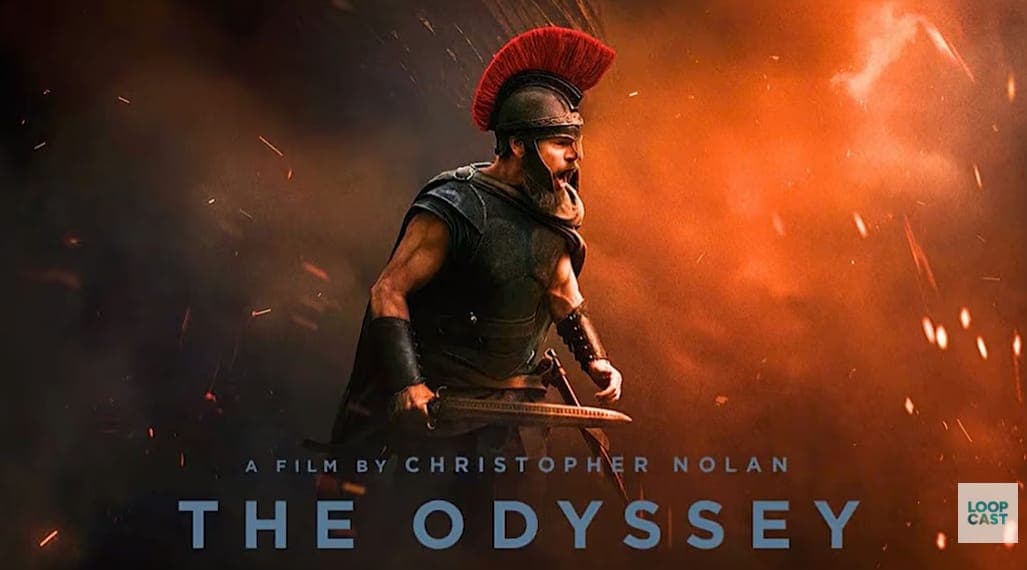
Christopher Nolan’s The Odyssey is visually magnificent, frequently thrilling, and not the shallow culture-war provocation many viewers feared, but Catholics should enter the theater knowing they are watching Nolan’s argument about Homer, not Homer delivered intact, according to a new episode of Zeale’s “The Deep.”
In the July 23 episode, “Nolan’s Odyssey Looks Like Homer. It Isn’t.”, host Erika Ahern praises the film’s ambition while arguing that its deepest departures from the ancient epic are moral and spiritual rather than cosmetic.
The film, which opened July 17, stars Matt Damon as Odysseus, Anne Hathaway as Penelope, and Tom Holland as Telemachus. The 172-minute, R-rated production was shot entirely with IMAX film cameras and earned more than $263 million during its opening weekend.
Ahern’s review contains major spoilers. The guide below avoids disclosing the final scene but identifies six questions Catholic viewers can carry into the theater.
1. Do not let online outrage make the decision for you
Much of the pre-release argument centered on casting, costumes, and conspicuously modern dialogue. Ahern understands the suspicion after years of Hollywood remakes that treat beloved source material as something to correct or dismantle.
Nevertheless, she tells viewers not to let social-media outrage keep them away. The Cyclops, Circe’s transformation of Odysseus’ men, the climactic bow sequence, and the large-format cinematography are all singled out for praise.
That distinction matters. Catholics need not choose between consuming a work uncritically and refusing to encounter it at all. Beauty, technical mastery, and moments of genuine dramatic power can be received without surrendering judgment about the story beneath them.
Parents should note that the film is rated R for violence and some language. Despite its literary source, this is not automatically a family movie.
2. Remember that this is Nolan’s Odyssey
Retelling an ancient story is not itself an offense. Homer has inspired works ranging from James Joyce’s Ulysses to the Coen brothers’ O Brother, Where Art Thou? Every adaptation selects, compresses, and interprets.
The question is whether an adaptation is candid about the interpretation it imposes. Nolan has spoken of being true to the epic’s spirit while adding to a cultural conversation stretching back 3,000 years. Ahern argues that such claims invite viewers to compare the film’s moral vision with Homer’s rather than treating every departure as a neutral update.
Catholics do not have to defend the Greek pantheon as true religion or mistake Odysseus for a Christian saint. They can still recognize the value of encountering another civilization on its own terms. An adaptation should begin with humility before its source, especially when the source helped form the civilization receiving it.
3. Listen for how modern language changes the hero
The film’s use of expressions such as “Daddy,” contemporary slang, and profanity can sound jarring beside its more elevated lines. For Ahern, however, the deeper linguistic choice is Nolan’s attraction to Emily Wilson’s 2017 translation, which opens: “Tell me about a complicated man.”
Nolan credited that line with helping shape his interest in Odysseus. Earlier translations emphasize a man of many turns, ways, or stratagems. “Complicated” nudges the character toward the contemporary psychological antihero: troubled, wounded, and haunted by his own actions.
Wilson herself has also criticized the film, saying Nolan packed in too much while missing themes essential to Homer. In a July 27 review, she went further, arguing that the screenplay lacked psychological, emotional, political, and ethical depth. She nevertheless welcomed the renewed interest in the poem and recommended seeing the spectacle on a large screen.
4. Notice what happens when transcendence becomes psychology
Ahern’s central criticism is that Nolan turns the epic into a “post-Christian therapeutic fantasy.” The gods may be mentioned, but divine figures are frequently presented as projections of trauma, temptation, or psychological insight.
Athena appears in a form tied to Odysseus’ wartime guilt. Circe’s violence is given a therapeutic explanation, while Calypso helps Odysseus escape or process painful memories. The result, according to “The Deep,” is a world in which the decisive struggle increasingly occurs inside the hero rather than between man and a moral order beyond himself.
That offers Catholics a useful distinction. Repentance is not the same thing as therapy or self-condemnation. Christian repentance names real guilt, but it also moves toward mercy, amendment of life, restored communion, and renewed duty. Viewers can ask whether the film’s Odysseus is being morally restored — or merely learning to regard himself as the problem.
6. Let the movie send you back to Homer
The best response to a disputed adaptation is not merely another round of online combat. It is to read the story.
St. Basil the Great advised Christians to draw what nourishes virtue from Greek literature while rejecting what damages the soul. That remains a sound approach to both Homer and Nolan: Neither pagan antiquity nor modern Hollywood should be received without discernment.
Read a portion of the poem before or after the movie. Compare translations. Ask what Odysseus believes he owes his wife, son, people, and the gods; whether guilt leads to restoration; and whether the journey home ends in renewed responsibility or escape.
Ahern’s final recommendation is neither boycott nor surrender. Enjoy the spectacle and the popcorn, but do not let a powerful filmmaker replace the inherited story in your imagination without first asking what he changed — and why.
The full episode of “The Deep” is available on Zeale and YouTube.






Comments