As Mamdani promises 30% grocery discounts, survivors of communism warn of bread lines
New York City has committed $70 million to five taxpayer-backed supermarkets, but the continuing subsidy remains unknown — and critics who lived under communist rule say government food retail carries familiar dangers.
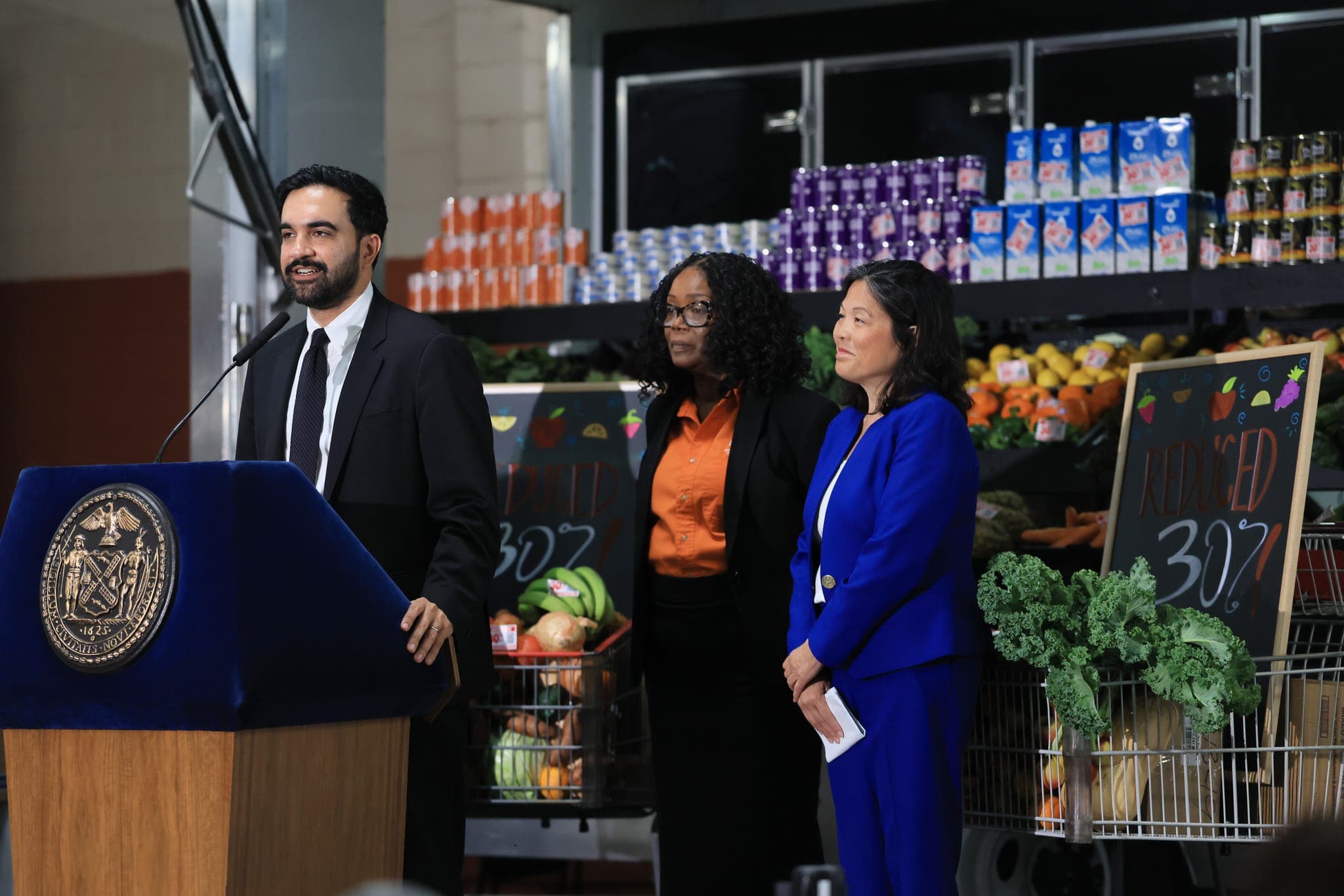
Mayor Zohran Mamdani announced July 27 that five city-owned grocery stores will offer produce, meat, seafood, and other staples at prices 30% below market rates, advancing one of his most controversial socialist campaign promises as survivors of communist regimes renewed warnings about government-controlled retail.
Under the newly detailed N.Y.C. Groceries program, the city will provide grocery-ready locations, cover rent and property taxes, finance construction, create a common public brand, and subsidize a discounted basket of food. Private contractors will handle sourcing, staffing, stocking, security, and other daily operations under pricing, labor, and performance rules imposed by City Hall.
The arrangement makes the stores city-owned, taxpayer-subsidized, and privately operated. They will not constitute a full Soviet-style monopoly over the food supply, but neither will they compete on the same terms as the private supermarkets and neighborhood bodegas expected to operate without taxpayer-covered rent, taxes, construction, and price reductions.
The city has allocated $70 million to construct and equip the five stores. That figure does not include their continuing operating subsidies. According to the New York Post, prospective operators are being asked to state how large an annual “Affordability Payment” they would require from the city. The total recurring cost to taxpayers therefore remains unknown.
The discounted basket will include fresh produce, meat, and seafood, along with approximately 20 categories of pantry, dairy, refrigerated, and frozen products. The discounts will be available regardless of income. The Mamdani administration projects that customers could reduce their total grocery bills by an average of 15%, saving approximately $90 per month or more than $1,000 annually.
“A trip to the grocery store shouldn’t spell dread for New Yorkers,” Mamdani said, citing the 33% national increase in grocery prices since 2019.
The first store is slated to open in Hunts Point in the Bronx by the end of 2027. Another store planned for La Marqueta in East Harlem has been assigned $30 million of the capital budget and is expected to open in 2029. Locations have not yet been selected in Brooklyn, Queens, or Staten Island.
Backlash from Victims of Communism
Critics who experienced communist economic systems firsthand have warned that the promises surrounding government food stores sound painfully familiar.
Republican New York City Councilwoman Inna Vernikov, who was born in Soviet Ukraine, warned during Mamdani’s mayoral campaign that government grocery stores and other “utopian-sounding policies” lead to “bread lines, desolation, no choice and no opportunity.”
“I grew up under communism,” Vernikov told the Brooklyn Paper. She argued that calling such policies “democratic socialism” did not alter the Marxist principles behind them.
Xi Van Fleet, a survivor of Mao Zedong’s Cultural Revolution in China, offered a similar firsthand recollection.
“I shopped in the government-owned grocery store,” Van Fleet said in a Fox News interview. “I know what it is like. Long line, ration, and empty shelf.”
Karol Markowicz, whose family escaped the Soviet Union and settled in New York, has also challenged Mamdani’s claim that municipal stores can save money by purchasing food in bulk, noting that private supermarket chains already buy in bulk.
“I come from a country that tried this and it led to widespread food shortages,” Markowicz wrote last year.
Venezuelan-born economist Daniel Di Martino, a fellow at the Manhattan Institute, has argued that the model weakens the market signals that compel private grocers to respond to their customers.
“Why does the grocery store have the items you want?” Di Martino asked in April. “Because they can make money from things you want.”
Private contractors operating Mamdani’s stores will still seek to make money, but City Hall will absorb expenses that ordinarily discipline a business, including rent, property taxes, construction, and the cost of the promised discounts.
The average net profit margin for food retailers was only 2.1% in 2025, according to the Food Industry Association. The figure indicates that a 30% discount cannot be financed simply by eliminating conventional grocery-store profits. The remaining cost must be covered through public subsidies, higher prices on nondiscounted products, or other revenue.
Independent grocers argue that they will bear the consequences. The National Supermarket Association, which represents approximately 450 independent New York City stores, called the taxpayer-backed competition a “slap in the face.” One bodega owner complained that the city was “using our tax money to compete with us.”
Mamdani has responded by promising that the municipal stores will not sell prepared hot food, alcohol, tobacco, or lottery tickets – higher-margin products on which bodegas commonly depend. He has also emphasized that five stores represent only a small fraction of the city’s grocery market.
The program may not remain limited to five locations, however. Councilwoman Jennifer Gutiérrez, D-Brooklyn, has introduced legislation that would make the municipal system permanent and eventually expand it to five stores in each borough.
The plan arrives amid a broader expansion of socialist influence in New York politics. As Zeale News previously reported, the Democratic Socialists of America’s current agenda calls for public ownership of the country’s largest corporations and essential industries. The organization, which has championed Mamdani, also contains an openly communist faction known as Red Star.
Catholic leaders have raised moral as well as economic objections to that ideology. Following Mamdani’s America 250 address, Bishop Robert Barron condemned its Marxist framing, while CatholicVote President Kelsey Reinhardt argued that Mamdani offered a “communist faith” rooted in state power and class conflict rather than the God-given dignity of every person.
Operator bids for N.Y.C. Groceries are due October 16. No store is expected to open before late 2027. Until those bids are submitted, New Yorkers will know the promised discount – but not the annual taxpayer cost of producing it.







Comments